LM-79 Moving Detector Goniophotometer (Mirror Type C)
LSG-6000
High Precision Rotation Luminaire Goniophotometer
LSG-1890B
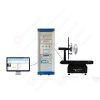
High Precision Rotation Luminaire Goniospectroradiometer
LSG-1890BCCD

Goniophotometer for Automotive and Signal Lamps
LSG-1950

Goniophotometer for Traffic Signal Lamps (Economical Model)
LSG-1950S
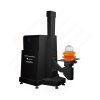
Aviation Ground Light Distribution Photometer Test System
LSG-1940
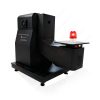
VAD Fire Alarm Visual Alert Device Goniophotometer
LSG-1930
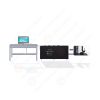
Compact Goniophotometer
LSG-1200A
LED Goniophotometer
LSG-1100

Near Field Moving Detector Goniophotometer
LSG-1900B
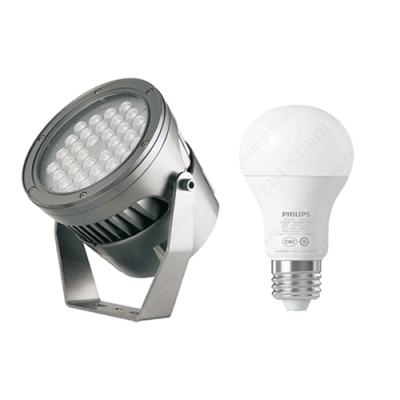 LEDs and Luminaire Test Solutions
 LM-79 and LM-80 Test Solutions
 LED Driver Test Solutions
 Household Appliances Test Solutions
 Mobile and Network Test Solutions
 Automotive Electronics Test Solutions
 Audio-Video and IT Test Solutions
 Cable and Wire Test Solutions
 Plugs and Sockets Test Solutions
 Power Switch Test Solutions
 Transformer Test Solutions
 Electric Toys Test Solutions
 Energy Meter Test Solutions
 Motor-Operated Tool Test Solutions
Select an organization
to browse standards
The surge tester is usually considered based on the maximum voltage but even this end of measurement alone does not say much about the actual performance of the instrument on actual immunity tests. The real or the actual worth of a tester is on the quality of pulses produced by it and also in the dependability of the generator which produces it with thousands of test cycles. In practice devices in test have dynamically-impeding components that clamp aggressively and coupling networks are complex. A tester that appears impressive on a datasheet may still provide false results when encountered when loaded, or when the performance of generators varies with temperature and age. Analysis of a surge tester thus needs to be done in a systematic manner that looks at the integrity of energy delivery of the waveform fidelity and their long term operational stability than headline specifications.
Pulse quality determines the proximity between the delivered surge that was delivered and the standard waveform prescribed by the relevant immunity standard. These are rise time decay time crest factor polarity and repeatability. In combination wave testing the voltage front and current tail are also required to be within control in both open circuit as well as when coupled to the equipment under test by coupling networks. Contrary to a no-load tester, a high quality tester maintains waveform shape at a prescribed load envelope but not just at no load.
The initial stage in the evaluation is through waveform capture with high bandwidth voltage dividers and current probes. The measurement system is required to confirm that front time and tail time do not change with different shots and polarities. Examines Overshoot ringing or truncation of the tail; as both indicative of parasitic inductance, or inadequacy of the energy storage. Accuracy is not as important as repeatability. A tester which gives out a compliant pulse once but shifts by many percent shot to shot invalidates comparative testing and margin testing.
Pulse quality is also dependent on the amplitude resolution and step size. Fine resolution allows accurate testing of margins and coarse steps either require an insightless pass or lose. The other indicator is trigger jitter. The timing variation that is excessive makes it difficult to correlate to functional monitoring and indicates instability in switching. Good quality systems control the switch timing and charge stability to maintain jitter minimization on duty cycles.
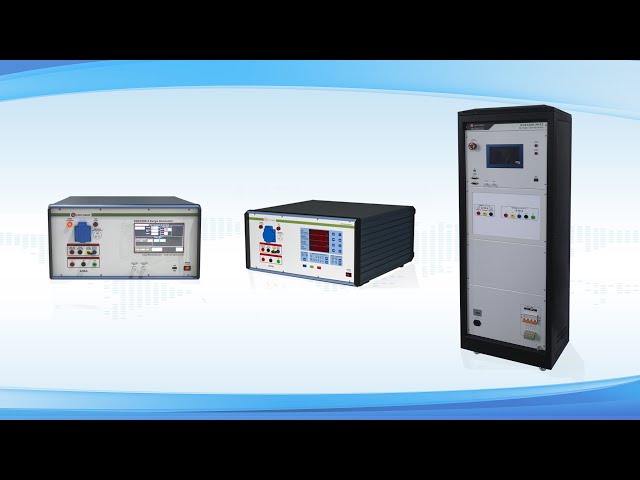
The quality of the pulse should also be maintained when there is a load. Test devices may contain transient voltage suppressors metal oxide varistors and gas discharge tubes that vary impedance pewteringly during a surge. In case the generator do not have the adequate stored energy the voltage drops and the current tail short cuts yielding a reduced stress than desired. Analysis of a tester would involve the analysis of the present capability and integrity of the waveforms during protection device conduction.
A realistic test makes sure that the required waveform of short circuit current is within tolerance by applying standardized loading and verifying it. Note the generator source impedance is kept to the required value and that the waveform returns to values immediately after each shot. The rate of repetition and endurance also depends on energy capability. Stress and heat are built up in internal components by high energy pulses. The performance of thermal load over a long sequence is maintained without derating or sliding to sustain the performance of reliable generators handling the thermal load.
There is also the correlation between energy and safety. Good discharge circuits and interlocks should not damage operators but should cut off the waveform. Proper designed systems factoring in safety aspects are transparent to pulse delivery.
No surge tester is more plausible than the measuring chain of the surge tester. Internal monitoring reporting the voltage and current delivered should be a good stable and traceable measure. Assess whether the tester offers the channels of calibrated measurement with described uncertainty and the records of calibration intervals and procedures are recorded. In-house capture of waveforms that confirm that each shot is up to specifications is confidence-giving and audit-making simple.
It is necessary to take external checks. The tester must also offer entry points of the independent probes without changing the waveform. Verbal consistency Insight, consistent design. Root cause analysis and compliance reporting uses logging facilities that archive waveforms parameters polarity and timestamps. In the long run using measurement integrity relies on component stability. Any drift in dividers sensors or digitizers compromises confidence despite the capability of the generating hardware.
Reliability of generators dictates if or not the quality of pulse will be maintained throughout the instrument life. Test component selections and thermal control. The use of capacitors resistors and switches should endure high energy discharge many times without distortion of parameters. There is an inverse relationship between the design that is based on the components working close to their limits and will exhibit an early drift or failure. Indicators could include reliability testing evidence and field service information.
Reliability and maintenance are influenced by switching technology. Spark gap systems are high-energy systems, and need periodic maintenance and are affected by wear-induced jitter. Solid state switching or hybrid switching is better repeatable but should be avoided in overcurrent and overvoltage. Determinist whether the manufacturer identifies the duty cycle limits the cooling requirements and preventive maintenance cycles.
Laboratories have a need to serviceability because they cannot afford downtime. Modular designs can be used to replace wear components without disassembling the entire system. The risk is minimized using diagnostics that proactive identifies failed parts. Calibration and repair support determine total cost of ownership. Suppliers that offer explicit maintenance instructions and are fast to act are usually appreciated in laboratories.
Even though pulse quality and reliability are technical bases control system design remains what defines the effectiveness of use of the capabilities. Automated processes that include guided workflows and lock parameters minimize the error/fail mode of the operator and enhance repeatability. Monitored closed loop control of delivered pulses and drift correction results in the improvement of consistency when using long campaigns.
Connection with lab processes is value addition. Surge application can be correlated with functional monitoring through communication interfaces that can synchronise the use of surges. Automated reporting lowers transcription mistakes and facilitates audit preparedness. Ecosystems of equipment are also important. Standardized laboratories under EMC make use of software and compatible accessories that interconnect their network.
Precise integration at the system level is highlighted by suppliers like LISUN by aligning surge testers, with compatible tools of measuring corresponding coupling networks as well as reporting. This strategy makes it easier to evaluate the data, as the reliability of pulse quality and measurement integrity are not thought of independently of each other, instead, they will be viewed as one.
The assessment of a surge tester requires a wide perspective that considers the quality of pulse and reliability of a generator rather than mere peak ratings. Enough energy delivery wise measurement and reliable hardware that can carry Waveform under load: Waveform fidelity under load is a feature of measurement between adequate energy delivery and sustainable hardware that allows a tester to yield meaningful results. The ability of these capabilities to become efficient repeatable testing depends on control systems and integration. Evaluation of these dimensions in a systematic manner, by taking into account the performance of the surge voltages generator in actual conditions of usage allow laboratories to choose equipment that provides believable immunity testing now, and with a long service presence in the future.
Tags:SG61000-5Your email address will not be published. Required fields are marked *

 English
 中文简体
中文简体 English
 Русский
 Español
 Português
 Türkçe
 العربية
 Deutsch
 Polski
 Italiano
 Français
 한국어
한국어 ไทย
ไทย Tiếng Việt
 日本語
日本語