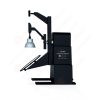
LM-79 Moving Detector Goniophotometer (Mirror Type C)
LSG-6000
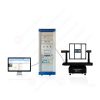
High Precision Rotation Luminaire Goniophotometer
LSG-1890B
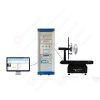
High Precision Rotation Luminaire Goniospectroradiometer
LSG-1890BCCD

Goniophotometer for Automotive and Signal Lamps
LSG-1950
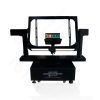
Goniophotometer for Traffic Signal Lamps (Economical Model)
LSG-1950S
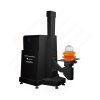
Goniophotometer for Airfield Lighting
LSG-1940
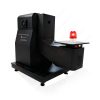
VAD Fire Alarm Visual Alert Device Goniophotometer
LSG-1930
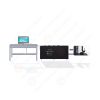
Compact Goniophotometer
LSG-1200A
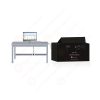
LED Goniophotometer
LSG-1100
Near Field Moving Detector Goniophotometer
LSG-1900B
 LEDs and Luminaire Test Solutions
 LM-79 and LM-80 Test Solutions
 LED Driver Test Solutions
 Household Appliances Test Solutions
 Mobile and Network Test Solutions
 Automotive Electronics Test Solutions
 Audio-Video and IT Test Solutions
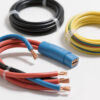 Cable and Wire Test Solutions
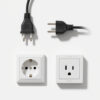 Plugs and Sockets Test Solutions
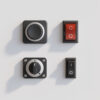 Power Switch Test Solutions
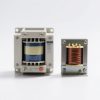 Transformer Test Solutions
 Electric Toys Test Solutions
 Energy Meter Test Solutions
 Motor-Operated Tool Test Solutions
Select an organization
to browse standards
Abstract
As a new generation of solid-state lighting sources, LED quality directly determines lighting effect, energy efficiency, and service life. Opto-electro-color parameters are the core indicators for measuring LED quality. Lumen testers, as key equipment for detecting LED opto-electro-color parameters, play an irreplaceable role in quality control. This paper takes the LISUN LPCE-2(LMS-9000) LED CCD Rapid Opto-Electro-Color Integrated Test System (hereinafter referred to as the LPCE-2 System), a professional lumen tester, as the research object. It systematically elaborates on the testing standards, core indicators, testing principles, and practical applications of LED opto-electro-color parameters. By comparing and analyzing the technical parameters of different system configurations, the high precision and reliability of the system in LED quality inspection are verified. This study provides a comprehensive quality control solution for LED manufacturers and testing institutions, promoting the high-quality development of the LED industry.
1. Introduction
With the rapid development of semiconductor lighting technology, LEDs have been widely used in general lighting, displays, automotive lighting, plant lighting, and other fields due to their advantages of high efficiency, energy saving, long service life, and environmental friendliness. However, the quality of LED products varies greatly, directly affecting user experience and industry reputation. As the core characterization of LED performance, the accuracy and comprehensiveness of opto-electro-color parameter detection have become the key to LED quality control.
A lumen tester is a professional instrument specifically designed to measure light flux (unit: lumen) and related opto-electro-color parameters of light sources, providing quantitative basis for LED quality evaluation. The LPCE-2(LMS-9000) LED CCD Rapid Opto-Electro-Color Integrated Test System developed by LISUN GROUP, as a leading lumen tester in the industry, integrates core components such as a high-precision spectroradiometer, integrating sphere, and electrical parameter measuring instrument. It can realize comprehensive and high-precision testing of LED opto-electro-color parameters, fully meeting the requirements of multiple international and domestic standards. This paper will focus on this lumen tester to discuss in detail the testing technology and quality control applications of LED opto-electro-color parameters.
LED opto-electro-color parameter testing must comply with strict international and domestic standards to ensure the authority and comparability of test results. As a professional lumen tester, the LPCE-2 System fully meets a number of key standards, providing a solid guarantee for the validity of test results. The specific standards are as follows:
• International standards: CIE 177 “Color Rendering of White LED Sources”, CIE-13.3 “Method of Measuring and Specifying Color Rendering Properties of Light Sources”, CIE-84 “Measurement of Luminous Flux”, ANSI-C78.377 “Chromaticity Specifications for Solid-State Lighting Products”, IESNA-LM-63-2 “Standard Format for Lighting Photometric Data Files”, LM-79-19/24 “Electrical and Photometric Measurements of Solid-State Lighting Products”, IES LM-80-08 “IES Approved Method for Measuring Lumen Maintenance of LED Light Sources”, (EU) 2019/2015 “New ErP Energy Label”, etc.;
• National standards: GB/T5702-2003 “Method of Measuring and Specifying Color Rendering Properties of Light Sources”, GB/T 24824 “Test Methods for LED Modules for General Lighting”, etc.
These standards clearly specify the testing methods, precision requirements, and environmental conditions for LED opto-electro-color parameters, serving as the technical basis for lumen testers to carry out detection work.
LED quality evaluation must cover multiple dimensions including chromaticity, photometry, electrical parameters, and lumen maintenance rate. The LPCE-2 lumen tester can realize comprehensive detection of the following core parameters:
• Chromaticity parameters: Chromaticity coordinates, correlated color temperature (CCT), color ratio, peak wavelength, half-bandwidth, dominant peak wavelength, color purity, color rendering index (including CQS, TM-30-24), spectral diagram, etc., which directly affect the color consistency and visual comfort of LEDs;
• Photometric parameters: Luminous flux, luminous efficacy, radiant power, WPE (Wall-Plug Efficiency), EQE (External Quantum Efficiency), EEI (Energy Efficiency Index), energy efficiency class, pupil flux, pupil flux efficiency, PAR (Photosynthetically Active Radiation) and PPF (Photosynthetic Photon Flux) for plant growth lamps, etc., which are key indicators for measuring LED lighting effect and energy-saving performance;
• Electrical parameters: Voltage, current, power, power factor, phase shift factor DF, harmonics, etc., reflecting the electrical performance and power efficiency of LEDs;
• Lumen maintenance rate parameters: Through LM-80 testing, record the change curves of luminous flux, color temperature, color rendering index, power, power factor, current, luminous efficacy, etc., over time to evaluate the long-term service life of LEDs.
The LPCE-2 lumen tester adopts a core architecture of “spectroradiometer + integrating sphere”, combined with a high-precision electrical parameter measurement module, to achieve synchronous detection of opto-electro-color parameters. Its core principles are as follows:
• Integrating sphere technology: Adopting a one-piece molding technology to produce a stage-equipped integrating sphere. Compared with traditional spliced integrating spheres, the test precision is significantly improved, ensuring that the light emitted by LEDs is uniformly scattered inside the sphere and avoiding measurement errors caused by direct light;
• Spectroradiometer detection: Capturing the spectral distribution of LEDs through a high-precision CCD spectrometer, and calculating chromaticity, photometry, and other parameters based on spectral data. The wavelength test precision is as high as ±0.2nm (scientific-grade configuration), ensuring the accuracy of parameter calculation;
• Synchronous measurement of electrical parameters: Integrating digital electrical parameter measuring instruments, AC variable frequency power supplies, DC regulated power supplies, and other equipment to synchronously collect electrical parameters such as voltage, current, and power of LEDs while measuring opto-color parameters, realizing the collaborative analysis of photoelectric performance;
• Temperature control and correction: Optional IS-1.5MT constant temperature integrating sphere and TMP-8 multi-channel temperature data logger can test the internal and external temperatures of the integrating sphere. Combined with the self-absorption coefficient correction function of the software, the impact of temperature changes on test results is eliminated.
According to different application scenarios, the LPCE-2 lumen tester is divided into high-precision configuration and scientific-grade configuration, which are suitable for enterprises and testing institutions of different sizes. The specific configurations are shown in the following table:
Table 1 Comparison Table of LPCE-2 Lumen Tester System Configurations
| Configuration Type | Applicable Objects | Core Components | Wavelength Range (Standard Model) |
| High-precision configuration (LMS-9000C) | Small and medium-sized enterprises, general testing institutions | institutions LMS-9000C high-precision CCD spectrometer, optical fiber (CFO-1.5M), digital electrical parameter measuring instrument (LS2050B/LS2050C/LS2012), AC variable frequency power supply (LSP-500VARC/LSP-500VARC-Pst), DC regulated power supply (DC series), integrating sphere (IS-1.5MA, IS-0.3M), standard light source (SLS-50W, SLS-10W), 19-inch standard cabinet (CASE-19IN) | 350-800nm |
| Scientific-grade configuration (LMS-9500C) | Large and medium-sized enterprises, third-party testing institutions | LMS-9500C scientific-grade CCD spectrometer (Hamamatsu refrigerated type, -10°C ±0.05°C), optical fiber (CFO-1.5M), digital electrical parameter measuring instrument (LS2050C), AC variable frequency power supply (LSP-500VARC/LSP-500VARC-Pst), DC regulated power supply (DC series), integrating sphere (IS-1.5MA, IS-0.3M), standard light source (SLS-50W, SLS-10W), 19-inch standard cabinet (CASE-19IN) | 350-800nm |
In addition, both configurations provide extended models, which can cover the wavelength range of 200-800nm (UV-VIS) or 350-1050nm (VIS-NIR) to meet the testing needs of special scenarios.
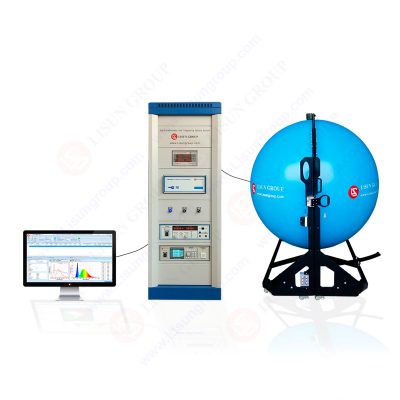
LPCE-2(LMS-9000)High Precision Spectroradiometer Integrated Sphere System
The technical parameters of the LPCE-2 lumen tester reach the leading level in the industry, ensuring the high precision and reliability of test results. The comparison of core technical parameters is shown in the following table:
Table 2 Comparison Table of Core Technical Parameters of LPCE-2 Lumen Tester
| Technical Parameters | High-precision configuration (LMS-9000C) | Scientific-grade configuration (LMS-9500C) |
| Wavelength test precision | ±0.3nm | ±0.2nm |
| Wavelength repeatability | ±0.1nm | ±0.1nm |
| Sample scanning interval | ±0.1nm | ±0.1nm |
| Chromaticity coordinate precision (under standard A light source) | ±0.002 | ±0.0015 |
| Correlated color temperature test range | 1,500K~100,000K | 1,500K~100,000K |
| Correlated color temperature precision | ±0.3% | ±0.2% |
| Color rendering index range | 0~100.0 | 0~100.0 |
| Color rendering index precision | ±(0.3%rd±0.3) | ±(0.3%rd±0.3) |
| Luminous flux test range | 0.01-200,000lm | 0.01-200,000lm |
| Photometric linearity | ±0.5% | ±0.2% |
| Stray light (600nm/435nm) | <0.015%/<0.03% | <0.015%/<0.03% |
| Integration time | 0.1~10,000ms | 0.1ms-60s |
| Data interface | USB (Microsoft certified driver) | USB (Microsoft certified driver) |
| Supported operating systems | Win7/Win8/Win10/Win11 (Chinese and English software) | Win7/Win8/Win10/Win11 (Chinese and English software) |
| Report export formats | PDF (LM-79), Excel/PDF (LED lumen maintenance) | PDF (LM-79), Excel/PDF (LED lumen maintenance) |
High-precision detection: Adopting advanced CCD spectrometer and one-piece integrating sphere, the test precision of key parameters reaches the international leading level. The chromaticity coordinate precision is up to ±0.0015, and the luminous flux linear error is as low as ±0.2%, ensuring the accuracy of test results;
• Comprehensive parameter coverage: It can detect all-dimensional indicators such as chromaticity, photometry, electrical parameters, and lumen maintenance rate, meeting the multi-scenario needs of LED production, R&D, and detection without the need for additional configuration of other testing equipment;
• High efficiency and convenience: The integration time can be adjusted within the range of 0.1ms-60s, supporting the switching between rapid detection and high-precision detection modes; the Chinese and English software is easy to operate, supporting the export of reports in PDF and Excel formats, facilitating data archiving and analysis;
• Strong compatibility: Compatible with a variety of LED products, including energy-saving lamps, fluorescent lamps, HID lamps, cold cathode fluorescent lamps, LEDs, and LED modules. It also supports various standard tests such as LM-79, LM-80, and LM-82, with a wide range of applications;
• Stability and reliability: The product has been applied in the market for more than 10 years, with mature technology and a sound after-sales service system. The engineer team has summarized rich after-sales Q&A, which can quickly solve problems encountered by users during use.
In the LED production line, the LPCE-2 lumen tester can be used as a key quality control point to conduct sampling inspection or full inspection of each batch of products. By quickly measuring core parameters such as luminous flux, color temperature, color rendering index, and power, unqualified products can be found in a timely manner to prevent inferior products from flowing into the market. For example, in the production of LED bulbs, the lumen tester is used to detect whether the luminous flux meets the design requirements (such as above 1000lm) and whether the color temperature is within the target range of 3000K-6500K, ensuring the consistency of product performance.
In the LED product R&D stage, the lumen tester can provide comprehensive opto-electro-color parameter data support to help R&D personnel optimize product design. For example, by testing the impact of different chips, packaging materials, and drive circuits on LED luminous efficacy, color rendering index, and service life, the optimal solution is selected; through LM-80 lumen maintenance rate testing, the long-term reliability of the product is evaluated, and the R&D cycle is shortened.
Third-party testing institutions need to conduct testing and certification of LED products in accordance with international and domestic standards to provide impartial quality evaluation for the market. The scientific-grade configuration of the LPCE-2 lumen tester fully meets the high-precision requirements of third-party testing institutions, and can issue test reports compliant with standards such as LM-79 and (EU) 2019/2015, providing necessary certification basis for products to enter domestic and foreign markets.
Market supervision departments can use the LPCE-2 lumen tester to conduct quality supervision and sampling inspection of LED products sold in the market, verify whether the products meet the requirements of national standards, and crack down on illegal acts such as false labeling and shoddy products. For example, detecting whether the actual luminous efficacy of LED products meets the energy efficiency class requirements and whether the color rendering index is consistent with the marked value, so as to maintain market order and consumer rights and interests.
6. Conclusions and Prospects
The core of LED quality lies in the quality of opto-electro-color parameters, and lumen testers, as key testing equipment, are important means to achieve LED quality control. With the advantages of high precision, full parameters, and strong compatibility, the LISUN LPCE-2(LMS-9000) LED CCD Rapid Opto-Electro-Color Integrated Test System meets the testing needs of enterprises and testing institutions of different sizes, providing strong support for the quality improvement of the LED industry.
With the development of LED technology towards higher luminous efficacy, better light color, longer service life, and smarter direction, lumen testers will continue to upgrade and iterate. In the future, lumen testers will further improve detection precision and efficiency, expand intelligent interconnection functions, support multi-device collaborative testing and cloud-based data management; at the same time, they will adapt to the testing needs of more special scenarios, such as opto-electro-color parameter detection of new display technologies such as Micro LED and Mini LED, providing technical guarantee for the continuous innovation of the LED industry.
Under the background of green and low-carbon development, as a core representative of energy-saving lighting products, LED quality control is particularly important. Lumen testers will continue to play a key role in all links of the LED industrial chain, promoting the standardized and high-quality development of the industry and contributing to the global energy conservation and emission reduction cause.
Tags:LPCE-2 (LMS-9000)Your email address will not be published. Required fields are marked *

 English
 中文简体
中文简体 English
 Русский
 Español
 Português
 Türkçe
 العربية
 Deutsch
 Polski
 Italiano
 Français
 한국어
한국어 ไทย
ไทย Tiếng Việt
 日本語
日本語