LM-79 Moving Detector Goniophotometer (Mirror Type C)
LSG-6000
High Precision Rotation Luminaire Goniophotometer
LSG-1890B
High Precision Rotation Luminaire Goniospectroradiometer
LSG-1890BCCD

Goniophotometer for Automotive and Signal Lamps
LSG-1950
Goniophotometer for Traffic Signal Lamps (Economical Model)
LSG-1950S
VAD Fire Alarm Visual Alert Device Goniophotometer
LSG-1930
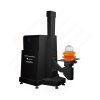
Goniophotometer for Airfield Lighting
LSG-1940
Compact Goniophotometer
LSG-1200A
LED Goniophotometer
LSG-1100
Near Field Moving Detector Goniophotometer
LSG-1900B
 LEDs and Luminaire Test Solutions
 LM-79 and LM-80 Test Solutions
 LED Driver Test Solutions
 Household Appliances Test Solutions
 Mobile and Network Test Solutions
 Automotive Electronics Test Solutions
 Audio-Video and IT Test Solutions
 Cable and Wire Test Solutions
 Plugs and Sockets Test Solutions
 Power Switch Test Solutions
 Transformer Test Solutions
 Electric Toys Test Solutions
 Energy Meter Test Solutions
 Motor-Operated Tool Test Solutions
Select an organization
to browse standards
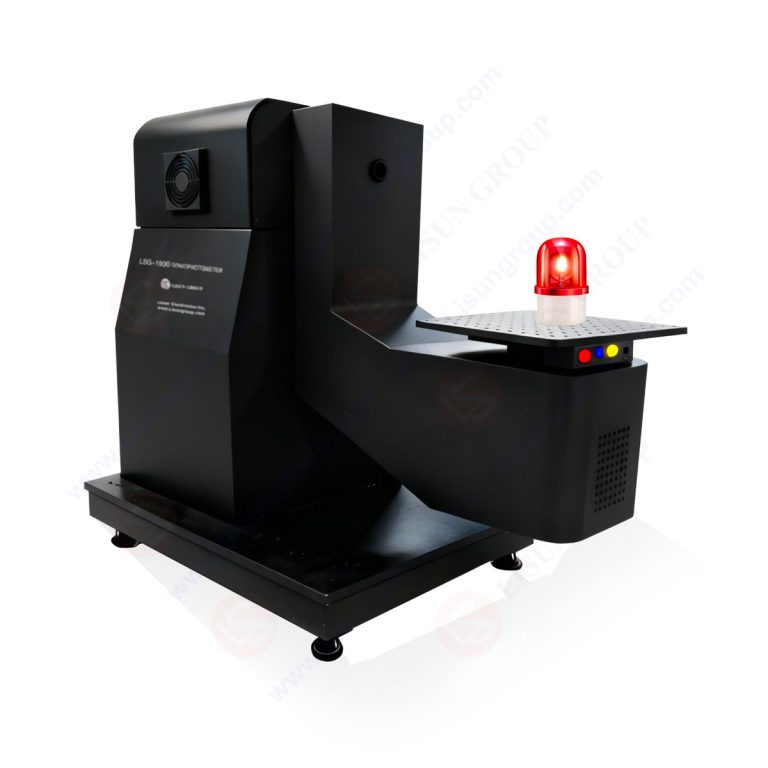
Product No: LSG-1930
The LSG-1930 VAD Fire Visual Alarm Distributed Photometer | Fire Alarm Photometric Testing System is specifically developed for fire visual alarm devices (VADs). It can perform a full range of photometric tests, including flash frequency, flash duration, effective luminous intensity, spatial light distribution, light output drift, and consistency. It outputs complete test data such as C-x-y/W-x-y coverage volume, effective luminous intensity in each direction, light output timing variation, and maximum/minimum effective luminous intensity. It automatically compares the data with standard limits to determine pass/fail results. It is widely used in the research and development, type testing, and factory testing of fire audible and visual alarms and visual alarm signal devices.
1 Standards:
| Standards No | Standards Name |
| ANSI/UL1638:2023 | Safety Standard for Audible and Visual Signaling Appliances for Fire Alarm and Signaling Systems (Including Accessories) |
| EN 54‑23:2010 | Fire detection and fire alarm systems — Part 23: Fire alarm devices — Visual alarm devices |
| ISO 7240‑23:2013 | Fire detection and fire alarm systems — Part 23: Method of measuring the light‑distribution of visual alarm devices |
| GB/T 22907‑2008 | 灯具的光度测试和分布光度学 |
| GB/T 39585‑2020 | 光电测量 配光测试系统的性能要求和检测方法 |
| GB/T 42064‑2022 | 普通照明用设备 闪烁特性 光闪烁计测试法 |
| GB 26851‑2026 | 火灾声和 / 或光警报器 |
System Configuration List (LSG-1930 includes all the following devices and accessories):
| Item | Equipment Name and Configuration | Quantity | Specifications |
| 1 | Distribution photometer main unit, fire alarm light distribution test system software, cross laser alignment device, customized sample clamp. | 1 set | Japanese servo motors; German encoders; dedicated central control rotary platform reducer; supports user-defined editing test software. |
| 2 | Flash illuminance meter (including lifting platform) | 1 set | Level 1 photometric intensity; Illuminance: 0.01 lx ~ 10000 lx; Maximum sampling rate: 100 kS/s |
| 3 | Precision digital display DC regulated power supply | 1 set | DC3010 maximum output: 30V, 10A |
| 4 | Luminous intensity standard lamp (with reflector device) | 1 set | The SLS-150W is used for system calibration; the measurement values are traceable to the National Institute of Metrology (NIM). |
2 Laboratory Environment Requirements:
• Darkroom: Recommended dimensions ≥ 3m(H) * 4m(W) * 6m(L), customizable according to the sample being tested and available space; used to house the rotary table and photometric probe; walls and ceiling painted with matte black paint, floor covered with high-absorption black carpet; ambient stray light ≤ 0.2lx; test optical path distance not less than 3 meters; ambient temperature controllable to meet standard testing conditions.
• Control Room: Recommended dimensions ≥ 2.5m(H) * 3m(W) * 4m(L), used to house the control cabinet, computer, and printer peripherals.
3 Main Standard Technical Judgment Requirements:
GB 26851-2026 Fire Alarm and/or Light Alarm
• Flashing Frequency: 1Hz~2Hz
• Flashing Duration: ≤0.2s
• Effective Luminous Intensity: Wall-mounted ≥10cd; Ceiling-mounted ≥5cd
• Effective Luminous Intensity of VAD in Any Direction: 1cd ~ 500cd, and not lower than the manufacturer’s nominal value for that direction|
• Wall-mounted: Effective luminous intensity in the horizontal 75° direction ≥30% of the nominal value directly in front; Effective luminous intensity in the vertical 45° direction ≥34% of the nominal value directly in front
• Ceiling-mounted: Effective luminous intensity in 8 directions at 75° angles ≥3cd, and ≥30% of the nominal value directly in front
• Luminous Intensity Consistency: Maximum / Minimum ≤1.5
EN 54-23:2010 / ISO 7240-23:2013 Visual Alarm Devices (See EN 54-23:2010 Test Report)
• Light Output Stability: After sample preheating for 30 min, the effective luminous intensity change within 30 min is <25%; record the effective luminous intensity at 1 min, 10 min, 20 min, and 30 min respectively; Pmax / Pmin ≤1.33 is acceptable.
• Light Intensity Distribution: 70% of measurement points have an effective luminous intensity ≥1 cd; the total luminous intensity at all measurement points does not exceed 500 cd.
• Flash Parameters: Flash frequency 0.5 Hz~2 Hz; flash duration ≤0.2 s
• Tests are conducted in three ranges according to the product’s nominal effective distance: <10m, 10m~17m, >17m, to complete the coverage characteristic evaluation.
ANSI/UL 1638:2023 (See UL 1638:2023 test report)
• Effective luminous intensity of VAD in any direction: 15cd ~ 1000cd
• Flash frequency: 1Hz~2Hz
• Flash duration: ≤200ms
• Supports equivalent correction of light output based on a 20ms pulse width
• Completes minimum percentage testing and judgment of horizontal and vertical dispersion
4 Core Component Technical Specifications:
4.1 Photometer Main Unit

| Item | Specifications |
| Luminaire Rotation Angle Range | Vertical axis: -180° ~ +180°, horizontal axis: -120° ~ +120° |
| Scanning Angle Positioning Accuracy | 0.01° |
| Maximum Load Capacity of the Workbench | 8 kg |
| Drive Unit | Japanese Mitsubishi servo motors and German high-precision encoders ensure smooth operation and vibration-free start-stop. |
| Slip Ring Mechanism | Precious metal steering slip rings support uninterrupted continuous rotation measurement, avoiding sample lead entanglement issues. |
| Control Method | The turntable is controlled by software and a mobile app, facilitating sample clamping and improving testing efficiency. |
| Supporting Software | The fire alarm light distribution testing system software supports customized testing procedures, automatic data interpretation, and report export. |
4.2 Flash Light Source Illuminance Meter: Specifically developed for photometric measurement of flash and pulse transient light sources; suitable for testing pulse light sources such as fire alarms, traffic warning lights, aviation obstruction lights, and pulsed LEDs.
Technical Features:
• High-speed 16-bit A/D acquisition, maximum sampling rate of 1MS/s, capable of recording 20 million sampling points;
• High-performance microprocessor with strong anti-interference capability;
• V(λ) human visual function matching, meeting Class A photometer requirements;
• Adaptable to any flash waveform, not limited to square waves; supports pulse train flash measurement;
• Threshold-triggered testing, supports background light subtraction;
• Built-in 4 effective light intensity algorithms: Blondel Rey Douglas, Form Factor, Allard, and Modified Allard.
Specifications:
| Items | Specifications: |
| AD digits | 16 bit |
| Illuminance measurement range | 0.01 lx ~ 20,000 lx;four measurement ranges, with the option to extend the range via an external attenuator. |
| probe accuracy | Class A |
| Optional sampling rate | 1kS/s ~100kS/s multiple options available |
| Test time window | 100 ms ~10 s |
| Time resolution | 10 μs |

 English
 中文简体
中文简体 English
 Русский
 Español
 Português
 Türkçe
 العربية
 Deutsch
 Polski
 Italiano
 Français
 한국어
한국어 ไทย
ไทย Tiếng Việt
 日本語
日本語