LM-79 Moving Detector Goniophotometer (Mirror Type C)
LSG-6000
High Precision Rotation Luminaire Goniophotometer
LSG-1890B
High Precision Rotation Luminaire Goniospectroradiometer
LSG-1890BCCD

Goniophotometer for Automotive and Signal Lamps
LSG-1950
Goniophotometer for Traffic Signal Lamps (Economical Model)
LSG-1950S
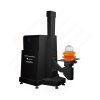
Goniophotometer for Airfield Lighting
LSG-1940
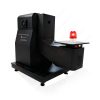
VAD Fire Alarm Visual Alert Device Goniophotometer
LSG-1930
Compact Goniophotometer
LSG-1200A
LED Goniophotometer
LSG-1100
Near Field Moving Detector Goniophotometer
LSG-1900B
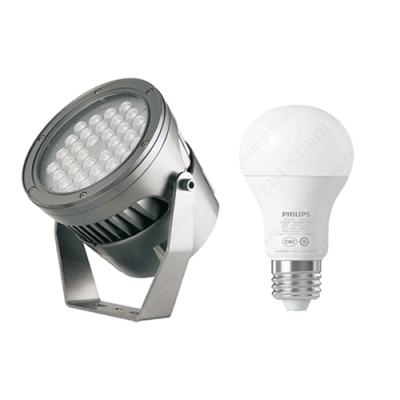 LEDs and Luminaire Test Solutions
 LM-79 and LM-80 Test Solutions
 LED Driver Test Solutions
 Household Appliances Test Solutions
 Mobile and Network Test Solutions
 Automotive Electronics Test Solutions
 Audio-Video and IT Test Solutions
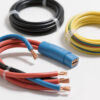 Cable and Wire Test Solutions
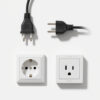 Plugs and Sockets Test Solutions
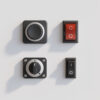 Power Switch Test Solutions
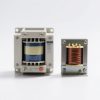 Transformer Test Solutions
 Electric Toys Test Solutions
 Energy Meter Test Solutions
 Motor-Operated Tool Test Solutions
Select an organization
to browse standards
Electrostatic discharge is also one of the most hazardous and destructive dangers to present-day electronic circuits. With the shrinkage, quicker, more complexified devices, even the slightest discharge, whether low-energy or not, will cause system problems, overwritten data, or irreversible damages. ESD test equipment is uniquely cultured to determine the sensitivity of circuits to electrostatic stress alternatively by simulating controlled discharges. ESD gun test equipment is a key component in the professional laboratory environment and is used to identify inappropriate discharge reaction that might not be evident when the test is operating during normal functioning but could also reveal under the contingent stress circumstances. The key to engineers handling high-density and low-voltage electronics is in knowing its use in bringing out the latent flaws.
The perverse release behavior does not necessarily lead to an immediate breaking down. In most instances, circuits would remain active but be affected by intermittent resets, timing errors, or poor performance. ESD testing is aimed at revealing these hidden blemishes prior to products being flowing to the field, where in the real-life discharges are much less controlled.
Based on design, layout and protection measures, sensitive circuits will respond in different ways to electrostatic events regardless of the event. Abnormal behavior can be either a surprise reset, latch-up, corrupting logic state or distorted analog signal. The effects manifest themselves in the system, in nanoseconds and vanish before normal diagnostic equipment can detect them.
The main difficulty faced with ESD is the fact that damage could be cumulative. A circuit may also be able to live through multiple charge discharges but may wear out in the long run. The ESD test equipment is set up in a way that they can repeatable, well-defined discharges in order that the engineers can view patterns rather than isolated incidents.
The ES testing devices produce sparks that are similar to the actual human or machine contact occurrences in the real-life scenario. As a discharge is placed on a test point, the reaction of the circuit is observed in real time. Any behavior that is not normal is registered and associated with discharge parameters. Repeat of abnormal response at a given voltage or position of contact is one of the indications of inefficient protection or grounding design.
The fact that, in that way, the same discharge can be used repeatedly allows engineers to determine the reproducibility of a given behavior. This repeatability is what is required to determine the actual design flaws and not a one-time anomaly.
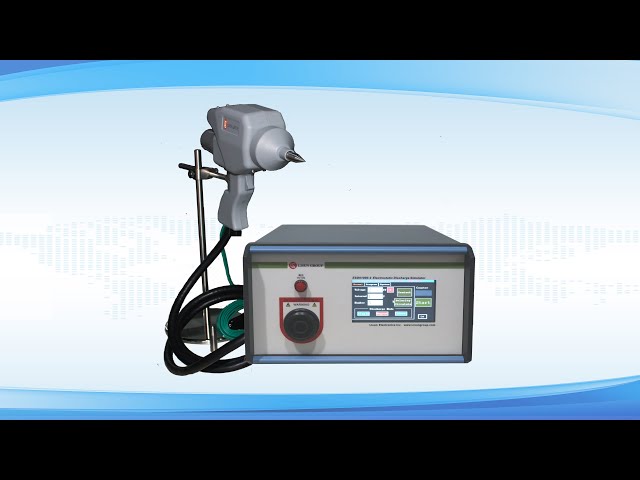
In contrast to the destructive testing, the ESD testing is usually performed when the way the device under testing is set up is powered, and is operating normally. ESD test equipment is utilized together with functional monitoring systems that observe key performance indicators namely, output signals, communication integrity, timing accuracy and control logic state.
In case there is a temporary malfunction due to discharge, it is watched at once by the monitoring system. As much as the machine might automatically restart, the incident is registered as abnormal behavior. Such temporary effects tend to be even more significant than disastrous breakdowns since they demonstrate reliability issues in a realistic operating context.
Exceptional setups enable engineers to coordinate the discharge to occur at particular operating conditions and this results in the capability to identify weaknesses that are only manifested during particular processing jobs or load conditions.
The unintended discharge paths in a circuit are usually connected with the abnormal discharge behavior. ESD test equipment applies discharges of well-defined current waveforms enabling engineers to examine the application of energy within the system.
When there are varying discharge points, by comparing circuit response, the engineers can make conclusions on internal current paths.
Examples of high-quality systems like those created by LISUN exhibit characteristics of their waveforms that do not vary after repeated testing, and so the observed behavior is that of the circuit and not of the generator.
Electrostatic discharges may be either of a positive or negative charge, and usually, circuits differ in their responses to each of the two. ESD test equipment is capable of enabling close control over the polarity resulting in the ability to detect asymmetric vulnerabilities. Other protection gadgets fit well in a direction but do not work well in the other direction.
The repetition rate also has effect on the behavior. Repetitive use in a controlled way enables engineers to see cumulative impact occur and marginal designs will be identified.
This feature is of great significance to products likely to work in the environment where human contact or automated manipulation are frequent.
Among the most important benefits of ESD testing, the option of progressive discharge voltage raises and the presence of the abnormal behavior onset should be noted. ESD test equipment can fine tune the voltage, so that engineers are able to measure the immunity thresholds accurately.
Designers can determine the level of voltage at which malfunction is experienced to determine safety margins in comparison with the norm requirements. In case of abnormal behavior at much lower compliance levels, they should be improved in design. The design can be said to be robust in case it looks close to or higher than limits.
This voltage analysis gives quantitative data instead of pass or fail data.
The correct discrimination of abnormal discharge behavior will be enabled by a controlled test setting. Poor grounding causes variability, which has the potential to conceal or amplify circuit response. ESD test equipment used to obtain results depends on defined reference planes and grounding structures so as to guarantee repeatability.
In appropriate grounding, it is safe to ascertain abnormalities to be due to the design of the circuit. In the case of grounding change variability, the discharge paths vary at random and thus difficult to treat. This is the reason why professional testing systems focus on grounding checks prior to every test sequence.
Early identification of an anomalous discharge is a cost saving design that helps in speeding up product development. Most engineering design teams have adopted the method of including ESD testing in early prototype tests as opposed to confirmation tests at complete compliance phases.
The development process can use ESD test equipment to test the protection measures which can be either transient voltage suppressors, layout modifications or shielding additions. Every change is immediately evaluated building a feedback loop that enhances the quality of design.
LISUN systems have typically been deployed in development laboratories since they trade off between professional measurement behaviour and usability.
Permanent damage is not necessarily demonstrated by all the abnormal behaviors. ESD test equipment is useful in the process of distinguishing between recoverable and irreversible failures. Temporary effects may involve firmware changes, filtering or layout optimization; whereas permanent failures point at poor component protection.
Through repeated discharges and locating long term behavior, engineers can be able to find out whether performance declines with time. This difference is paramount to reliability evaluation and warranty risk evaluation.
ESD test devices are important in exposing unusual discharge patterns that are not identified by the ordinary testing. Engineers can use controlled electrostatic stress using ESD test equipment to get an insight into how sensitive circuits react to discharge events in the real world. ESD testing can now be seen as a powerful design instrument due to the possibility to observe state transient malfunctions, analyze discharge pathways, and determine immunity threshold.
Modern systems provide the accuracy in diagnosing latent weaknesses and predictability as they have stable waveforms, good voltage control and can repeat this over time. Manufacturers like LISUN are still striving in advancing ESD testing technology, which helps engineers to build a strong and reliable product to be able to sustain the unexpected amount of electrostatic discharge in actual operational conditions.
Your email address will not be published. Required fields are marked *

 English
 中文简体
中文简体 English
 Русский
 Español
 Português
 Türkçe
 العربية
 Deutsch
 Polski
 Italiano
 Français
 한국어
한국어 ไทย
ไทย Tiếng Việt
 日本語
日本語