LM-79 Moving Detector Goniophotometer (Mirror Type C)
LSG-6000
High Precision Rotation Luminaire Goniophotometer
LSG-1890B
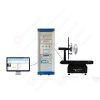
High Precision Rotation Luminaire Goniospectroradiometer
LSG-1890BCCD

Goniophotometer for Automotive and Signal Lamps
LSG-1950
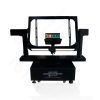
Goniophotometer for Traffic Signal Lamps (Economical Model)
LSG-1950S
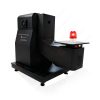
VAD Fire Alarm Visual Alert Device Goniophotometer
LSG-1930
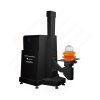
Goniophotometer for Airfield Lighting
LSG-1940
Compact Goniophotometer
LSG-1200A
LED Goniophotometer
LSG-1100
Near Field Moving Detector Goniophotometer
LSG-1900B
 LEDs and Luminaire Test Solutions
 LM-79 and LM-80 Test Solutions
 LED Driver Test Solutions
 Household Appliances Test Solutions
 Mobile and Network Test Solutions
 Automotive Electronics Test Solutions
 Audio-Video and IT Test Solutions
 Cable and Wire Test Solutions
 Plugs and Sockets Test Solutions
 Power Switch Test Solutions
 Transformer Test Solutions
 Electric Toys Test Solutions
 Energy Meter Test Solutions
 Motor-Operated Tool Test Solutions
Select an organization
to browse standards
The modern power distribution networks have been based on the use of protective devices that do not fail when responding to sudden changes in electricity. The origin of these transients can be lightning, switching of loads with high inductance, grid noise, capacitor bank energization or equipment faults. Surge protecting elements, insulation systems, arrestors, breakers in a distribution, and relay-remedial equipment should have the capability to survive such brief yet dramatic bursts of voltage. Laboratory control over surge generators is the key to validating such performance, since realistic disturbance patterns are reproduced under reproducible conditions.
In actual systems, transient occurrences are hardly uniform. Steeper voltage waveforms are caused by lightning strike, and capacitor switching causes slower yet high-energy spikes. The industrial machines, which jump to start, cause repetitive disturbances. The power distribution protective devices need to be aware of such occurrences, be able to absorb such energy and be able to respond without degrading. Simulation of surges enables the engineers to see these capabilities before equipment’s can be assembled in the field.
Protective equipment is in place to conduct or revert energy before it comes into contact with delicate equipment at the workstations. Each of these functions is checked by surge simulation utilizing controlled overvoltage pulses. In the absence of such validation, equipment can work beautifully in its under-rated operating modes, but fail in unforeseen transient interaction.
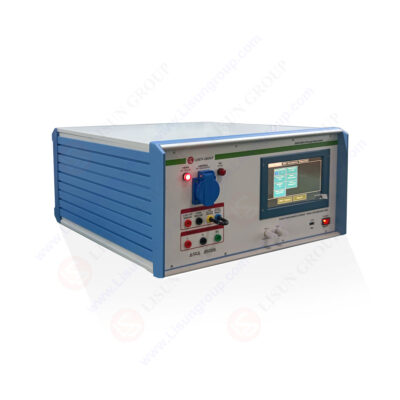
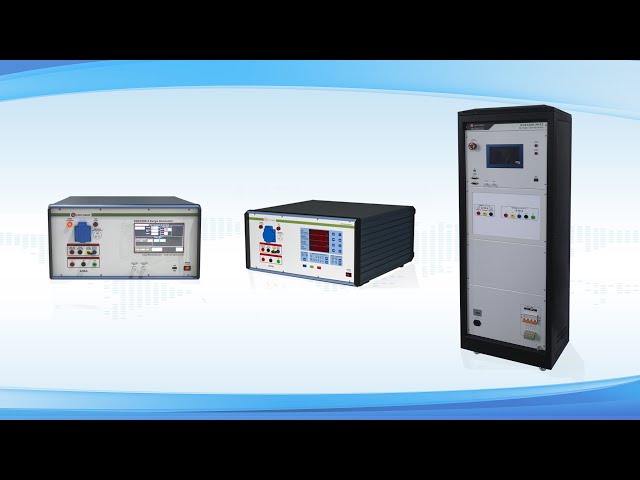
An impulse surge tester is a duplicator of waveforms of a surge that are exactly defined in both rise time, maximum voltages and decays. This enables the engineers to test not only the withstand capacity, but also the operation sequence of protective devices. The manufacturers like LISUN provide calibrated surge system specially used in the electrical safety testing of high repeatability to assure that electrical transient behavior is measured instead of approximate values.
The initial prevention of transient voltage is frequently insulation. Cables, windings, bushings, and connector housings should be resistant to high changes in electrical stresses. Constant AC or DC testing fails to indicate the behavior of insulation under the abrupt increase in voltage. Surge equipment is stressed dynamically by the generation of waveforms like the standardized 1.2/50 ms impulse. As the voltage increases quickly, the electrical fields are concentrated in the bonds of microscopic holes, cracks and the material boundaries.
The test indicates that the insulation is able to recover following a temporary situation or internal partial discharges build up into a breakdown path. Surge generators determine the voltage at which the breakdown occurs exactly and where the energy is focused and whether the pattern of failure is indicative of manufacturing flaws.
Surge protecting devices (SPD) and arresters are crafted so as to absorb momentary power. The values rated on paper however should be similar to the characteristics of actual responses under real conditions. Surge testing consists of analyzing the behavior of clamps, uniformity of reactions among phases and stability of the energy dissipation.
A protective device that is activated later will give too much transient energy flowing through distribution circuits. One of them that triggers prematurely can act as short circuit overloading upstream breakers. Surge generators assist in ensuring that there is no discrepancy in operating thresholds in multiple loops. Aging behavior is also exhibited in the impulse test.
The use of digital protection relays and circuit breakers in modern distribution networks are crucial and they have to behave appropriately in times of surge conditions. Measuring the voltage signatures and acting on the fly, relays monitor the voltage levels. Breakers clear faults only upon request and at such a time need to coincide with transient recognition.
Even breakers themselves should not be damaged physically during the events of high energy. The arc-quenching chambers inside of them are highly stressed electrically in transient occurrences. The conditions are safely reproduced and in a controlled environment in the surgeon generators. Measuring breaker opening speed under peak transient voltages, engineers verify that operating mechanisms can be consistent at cycle to cycle.
Transformers experience harsh strains on occurrences of surges. Coupling of the incoming wave form into windings is uneven and this leads to concentration of electric field between turns. Surge generators are used in the determination of lightning impulse withstand capability, insulation coordination parameters, turn-to-turn stress behavior.
In most instances, transformer winding can seem stable at normal conditions but fail with insulation falling when transiently rapidly increasing. Patterns of resulting oscillation, electrical resonance behavior, and damping characteristics are analyzed by engineers. These parameters will decide between a race geometry and insulation thickness that is fit to use in the field. The results of testing by a calibrated impulse surge tester are much more accurate as compared to theoretical modeling only.
Through long distances of transmissions, power cables, connectors and terminators experience voltage surges. These components are more susceptible to dust contamination, ingress of moisture and old insulators. Surge testing determines the resistance of connector housings and cable dielectric-layers to peak voltages without developing partial discharge channels.
The momentary waveform executes with the connectors holding metal edges or insulation unevenness. In case there is a weak location, the surge forms focal fields, which may burn microscopic passages. The testing will maintain cable assemblies stable during extreme conditions eliminating occurrence of failures in future underground and overhead setups.
Waveform fidelity to surge testing is an accurate way to test it. A waveform with wrong front time or tail therefore depicts not the actual field conditions. Surge generators light-up impulses in exactly the fashion that allows protection devices to be subjected to realistic electrical stress.
Repeatability guarantees the consistency of the performance when measured between batches. Test results are unreliable in case the waveform varies at a huge frequency. Quality systems like those made by LISUN have internal calibration systems that allow accuracy of the waveforms even after prolonged use. This stability is applied by engineers to compare the materials, insulation designs, protective devices and switching systems in extended periods.
Surge performance documentation shortly preceding approval of products is mandatory in most electrical safety standards. The multiple types of surges are frequently required in the national and international certification programs, such as lighting impulse testing and switching surge testing and combination wave testing. Surge generators enable manufacturers to address such needs well.
Laboratory controlled impulse testing is also important to certifying bodies as field-based observation of surges is not predictable. One lightning season will cause a protective device to survive and the next season failure will only be caused by a difference in waveforms. The randomness is eliminated with laboratory simulation and reliability assured.
Dependable distribution of power is a concern of the components that could endure high-energy electrical surge. The exact waveforms required to verify the insulation strength of the components, the response of a relay, the clamping behavior of an arrester, the coordination of a breaker, the integrity of the windings of a transformer, and the dielectric survivability of a cable are found in laboratory-grade surge generators.
Calibrated impulse surge tester, particularly combination provided by reputed manufacturers such as LISUN, allows the engineers to have proper understanding of the protective capability of the distribution components. This predictive confirmation eliminates field failure and guarantees the safety requirements are adhered to and the durability of power infrastructure is increased.
Your email address will not be published. Required fields are marked *

 English
 中文简体
中文简体 English
 Русский
 Español
 Português
 Türkçe
 العربية
 Deutsch
 Polski
 Italiano
 Français
 한국어
한국어 ไทย
ไทย Tiếng Việt
 日本語
日本語