LM-79 Moving Detector Goniophotometer (Mirror Type C)
LSG-6000
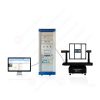
High Precision Rotation Luminaire Goniophotometer
LSG-1890B
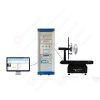
High Precision Rotation Luminaire Goniospectroradiometer
LSG-1890BCCD

Goniophotometer for Automotive and Signal Lamps
LSG-1950
Goniophotometer for Traffic Signal Lamps
LSG-1950S
VAD Fire Alarm Visual Alert Device Goniophotometer
LSG-1930
Compact Goniophotometer
LSG-1200A
LED Goniophotometer
LSG-1100
 LEDs and Luminaire Test Solutions
 LM-79 and LM-80 Test Solutions
 LED Driver Test Solutions
 Household Appliances Test Solutions
 Mobile and Network Test Solutions
 Automotive Electronics Test Solutions
 Audio-Video and IT Test Solutions
 Cable and Wire Test Solutions
 Plugs and Sockets Test Solutions
 Power Switch Test Solutions
 Transformer Test Solutions
 Electric Toys Test Solutions
 Energy Meter Test Solutions
 Motor-Operated Tool Test Solutions
Select an organization
to browse standards
One of the most common tools of immunity testing is an ESD generator, which is necessary to test the achievable robustness of electronic products related to electrostatic discharge. Although engineers are usually preoccupied with accuracy of the waveforms, compliance and test procedures, safety and appropriate procedure remain vital issues. ESD generators produce very high-voltage bursts of many tens of kilovolts (depending on the model) which implies improper use may cause the equipment to break, the test results to be corrupted or pose a shock hazard to the operator.
The need to carry out proper and safe ESD gun test procedures are on the rise as the products become more sensitive and incorporate a lot of electronics. Labs by profession have safe handling protocols to make sure that all forms of discharge are provided properly and safely and to the full mandate of the IEC 61000-4-2.
Even though an ESD generator does not employ continuous electrical current as found in power equipment, its pulse of discharge is very high-energy and is very rapid. High voltage coupled with fast rise time and sharp spike of current can cause immediate damage to hardware when incorrectly dealt with.
The risks include:
• Non-Knowingly caused personal injury.
• Shock to users, ungrounded body potential.
• Breakage of delicate elements in the test set-up.
• Destruction of semiconductor families or Control boards.
• Polluted test samples due to twin discharges.
• During tests on flammable substances, fire hazards exist.
• Uncontrolled testing of electronic products results in hidden flaws in products.
These dangers increase further when high output generators are used like 15 kV, 20 kV or 30 kV. This is the reason why the laboratory activities of professionals have a strict set of safety precautions to be followed prior to conducting an ESD gun test.
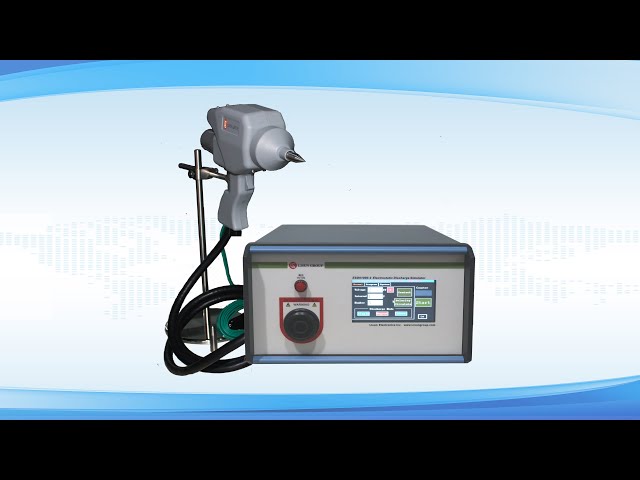
The test area should be ready before switching an ESD generator on. The environment must be non-conductive, dry and clean. Hand tools and accessories that are made of metal should stay out of the line of discharge. Moisture is also known to enhance conductivity on the surface and may cause erratic sparking.
The test table is to be configured as per IEC 61000-4-2, i.e. isolated except were stated otherwise. There should not be any equipment that has any upholstery or surfaces which are made of static generators.
The level of ventilation should be satisfactory since high-frequency discharges can lead to the minimal generation of ozone. The ozone concentration is not very high, but due to the lack of proper ventilation, the continual testing might be uncomfortable.
The operator is not allowed to be on the discharge way. It is risky to use an ESD generator without following grounding measures:
• Stand on an insulated mat
• Speed up, do not make direct contact with ground planes.
• Wear ESD-safe shoes or grounding straps, when necessary, in the lab.
• Hands should also be dry to prevent the change in conductivity.
• Take off all metallic objects such as rings or watches.
The operator should not in any way touch exposed conductive parts of the DUT during discharge or shortly after discharge. A DUT can contain residual charge after past discharges particularly in higher-voltage ESD gun test sequences.
According to professional laboratories, ESD generators should be used only by qualified employees. The new operators should go through controlled training to learn the arc distance, discharge polarity and areas of possible danger.
The ESD generator is fitted with high voltage charging systems. The residual charge left on the internal capacitor bank can be left behind when it is not properly handled. The operator has to switch the instrument off, and then leave it to discharge fully before making any alterations on the discharge tip or accessories.
Safe handling includes:
• Grasping the ESD gun using insulated places.
• Eternal touching of the discharge tip.
• Handling both hands when it is not specified in the design of the manufacturer.
• Holding the gun pointing out of a people.
• Not swinging or rotating it suddenly as it can be exposed to unintentional conductive surface.
In case of dropping of the ESD gun, the same should be checked and then reused. Unsafe discharge behavior can be occasioned by internal misalignment or damage.
In conducting an ESD gun test, positioning accuracy is a safer and more compliant measure. The operator is expected to be in a stable stance, which is comfortable and grip the generator. Distance and angle should abide by the plan of the test. Wrong positioning may result in misfiring or arc path that is not as expected by the standard.
Contact discharge must have solid perpendicular contact with the test point. When the operator presses the gun at an angle, the gun could either discharge internally or on the incorrect surface. Air discharge must be done attentively so as not to have pre-arc formation that can lead to irregular outcomes.
A malfunctioning discharge route will bring about extreme harm. Unintended arcs may be formed by the ESD generator to:
• Table edges
• Metal screws
• Exposed cable shields
• Operator body parts
• Ground plane corners
• Test instruments
Every unwanted arc has the potential to cause damage as well as invalidate findings or nullify the DUT. An operator will make a dry-run check of the equipment before introducing any voltage. They need to reposition their items in such a way that the sole possible discharge outlet points to the desired position of test.
ESD generator usually provides the option of positive and negative polarity. Semiconductor devices are prone to negative polarity which imposes greater stress. The change in the polarity should not be made unless the gun touches the DUT. This may be dangerous when done mid-contact as it may accumulate so much static that arcing can occur or may happen at any time.
Also, the operators need to check the polarity indicators on display and ensure that there is the use of the correct polarity as per the test plan. One can cause over-stress damage due to the misinterpretation of the polarity.
The physical state of a generator also implies safety. On-check-up coming makes sure that:
• The discharge terrace is clean and intact.
• The ground cable is intact completely.
• The grip insulation does not have any cracks.
• Internal parts do not have moisture.
• Safety patches are done on firmware.
• ESD wireless guns have a stable battery condition.
LISUN and other manufacturers have recommended schedule intervals of maintenance in order to operate safely. Those instruments that do not pass internal self-check diagnostics should not be used before services.
By conducting ESD gun test, operators should take very serious precaution measures to prevent DUT or surrounding equipment damage.
Key practices include:
• Failure to use greater voltage than required.
• UT power that is surge-limited by surge-limiting circuits where necessary.
• Recovery interval between discharges
• Not letting ventilation areas have direct discharge unless necessary.
• Protecting sensors, ports and connectors
Some DUTs may retain charge. Once the tests have been passed, exposed conductive surfaces should be grounded manually by the operator, using an insulated grounding stick.
Once the test is complete the ESD generator should be switched off and stored in a secure location. The operators are expected to make sure that the device is completely discharged internally. Any charged ESD generator should not be stored, particularly in a common test facility.
Grounding of all DUT surfaces that can be carrying residual charge should be done. It is required that the chamber or laboratory area is swept of conductive objects and reinspected prior to the operating the next test.
ESD generator is a necessary device to ESD immunity test but should be operated with high level of safety discipline. Pre-test preparation, grounding, positioning, polarity management, post-test recovery, etc. All of them are significant in safeguarding the operator and the DUT. The professionals realize that accurate ESD gun test can only be performed when the safety guidelines are carefully followed. Through regularly exercised handling behavior, adequately controlled environment, and good advice of trusted manufactures like LISUN, laboratories can carry out high volatility ESD analysis with reliability, precision and at no harm.
Lisun Instruments Limited was found by LISUN GROUP in 2003. LISUN quality system has been strictly certified by ISO9001:2015. As a CIE Membership, LISUN products are designed based on CIE, IEC and other international or national standards. All products passed CE certificate and authenticated by the third party lab.
Our main products are Goniophotometer, Integrating Sphere, Spectroradiometer, Surge Generator, ESD Simulator Guns, EMI Receiver, EMC Test Equipment, Electrical Safety Tester, Environmental Chamber, Temperature Chamber, Climate Chamber, Thermal Chamber, Salt Spray Test, Dust Test Chamber, Waterproof Test, RoHS Test (EDXRF), Glow Wire Test and Needle Flame Test.
Please feel free to contact us if you need any support.
Tech Dep: Service@Lisungroup.com, Cell/WhatsApp:+8615317907381
Sales Dep: Sales@Lisungroup.com, Cell/WhatsApp:+8618117273997
Your email address will not be published. Required fields are marked *

 English
 中文简体
中文简体 English
 Русский
 Español
 Português
 Türkçe
 العربية
 Deutsch
 Polski
 Italiano
 Français
 한국어
한국어 ไทย
ไทย Tiếng Việt
 日本語
日本語