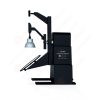
LM-79 Moving Detector Goniophotometer (Mirror Type C)
LSG-6000
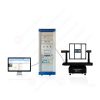
High Precision Rotation Luminaire Goniophotometer
LSG-1890B
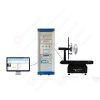
High Precision Rotation Luminaire Goniospectroradiometer
LSG-1890BCCD

Goniophotometer for Automotive and Signal Lamps
LSG-1950
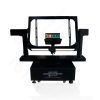
Goniophotometer for Traffic Signal Lamps (Economical Model)
LSG-1950S
VAD Fire Alarm Visual Alert Device Goniophotometer
LSG-1930
Goniophotometer for Airfield Lighting
LSG-1940
Compact Goniophotometer
LSG-1200A
LED Goniophotometer
LSG-1100
Near Field Moving Detector Goniophotometer
LSG-1900B
 LEDs and Luminaire Test Solutions
 LM-79 and LM-80 Test Solutions
 LED Driver Test Solutions
 Household Appliances Test Solutions
 Mobile and Network Test Solutions
 Automotive Electronics Test Solutions
 Audio-Video and IT Test Solutions
 Cable and Wire Test Solutions
 Plugs and Sockets Test Solutions
 Power Switch Test Solutions
 Transformer Test Solutions
 Electric Toys Test Solutions
 Energy Meter Test Solutions
 Motor-Operated Tool Test Solutions
Select an organization
to browse standards
Modern lighting design, compliance and performance validation require accurate assessment of luminous intensity distribution. The goniophotometer operation is the basis of this assessment as they allow the angular analysis with great precision of the light produced on luminaire. This is the core step in professional laboratories in light measurement, particularly in measuring fixtures that are planned as used in architecture, roadways, industrial, or outside. The Type C goniophotometer is highly popular among other geometries of the system because it is flexible in covering both symmetric and asymmetric luminaires in standardized test conditions.
Type C systems are characterized by their coordinate geometry and the rotation axis allowing full measure of luminous intensity of various planes. The knowledge on the operating differences between a goniophotometer used on a symmetric and asymmetric luminaire will aid the engineer to know that engineered results are right and can counter any mischaracterization of an optical performance.
The decision to use a goniophotometer of type C adheres to a spherical coordinate system which places the luminaire in a setup of measurements in relation to both the vertical and horizontal angles. The characteristic of the given system is that luminous intensity is measured as a dependence on two angular coordinates, which are usually called C and gamma angles.
When the goniophotometer is being operated, a luminaire is moved past a fixed pair of rotational axes with the photometric detector kept at a constant distance with the source. It is a geometry that enables one to acquire the intensity values of the entire spatial emission pattern of the luminaire.
Type C systems are specifically most suited to luminaires that down light or project light outwards of a defined reference plane, as is typical in the majority of application of lighting.
It starts with the luminaire mounted in the goniophotometer. The mechanical stability during this stage is important because a little misalignment may cause angular errors, which are transmitted across through the measurement data set.
After being powered and thermally tapped, the luminaire is measured over a range of predetermined angular positions. Each position is recorded using luminous intensity by the detector and the system software is used to compile this data into a full spatial intensity map.
Goniophotometer requires accurate coordination between mechanical motion and data acquisition. Modern systems have good rotation and angular positioning to ensure that the measurements remain intact during long test durations.
Symmetric luminaires produce light that does not follow a central direction. This is with round downlights, omnidirectional fixtures as well as a number of decorative luminaires. The light distribution in such instances is even on all the horizontal planes.
In goniophotometer when working with symmetric luminaires, efficiency is higher since fewer angular planes are used to characterize the entire distribution.
This symmetry makes analysis easier and shortening the test time and does not impair the accuracy. Nonetheless, proper alignment is necessary since any skew along the actual axis of symmetry will cause distortion of the measurements and generate artificial asymmetry on the measured data.
Asymmetric luminaires are created to put light in particular directions in preference. This category includes streetlights, wall washers, floodlights and tunnel luminaires. Their optical systems purposely create an uneven distribution of light, to satisfy application-specific needs.
In the case of asymmetric product, the goniophotometer operation is more complicated. Measurement should also be done across various C-planes in order to obtain the complete directional variation. Lack or inadequate angular coverage may result in incompleteness of photometric data or an inaccurate view.
Type C geometry gives distinct benefit in such situations, as it can be angled, and extensive angular mapping can be conducted without manually reorientation of the luminaire. Directional variations in intensity are captured by the system making the system evaluate optical performance reliably.
The degree of accuracy of the measurement is critical concerning the steady state of the detector and the precision of its movements. When using a goniophotometer, the detector needs to stay at fixed distance/orientation to the luminaire during the test.
Intensity readings are introduced to uncertainty with mechanical vibration, backlash or uneven motion. These effects are mitigated using rigidity of mechanical structure, accuracy of bearings and control of motion profiles in high-quality systems.
Some manufacturers like LISUN make Type C goniophotometers that are specifically built in a manner that mechanical stability is taken into consideration so that there is no possibility of stopping detector motion even when performing a long measurement period.
Proper calibration of the photometric detector and angular positioning system is needed to give a reliable light measurement. Calibration is done to make sure the values of intensity recorded are reflective of actual luminous output.
Calibration of goniophotometers Type C Goniophotometers are calibrated with reference sources that are traceable, and verified with angular test. Periodic calibration ensures that there is confidence in the results particularly where the data is submitted to the regulator or product certification.
Particular care is taken over calibration consistency where interpretation is being done between symmetric and asymmetric luminaires since the differences in distribution shape are likely to be due to real optical behaviour but not bias in measurements.
| Parameter | Symmetric Luminaires | Asymmetric Luminaires |
| Angular plane requirement | Limited planes | Multiple planes required |
| Measurement time | Shorter | Longer |
| Sensitivity to alignment | Moderate | High |
| Data processing complexity | Lower | Higher |
| Risk of incomplete characterization | Low | High if insufficient coverage |
This comparison points out the need to master the functioning of the goniophotometer in the choice of test parameters and interpretation of results.
Once measured, the data obtained is converted to standard photometric data that are used by lighting designers and compliance agencies. Such files are the spatial light distribution in a format understandable by simulation and design software.
In the case of symmetric luminaires, file creation is quite simple as it is rotational consistent. The asymmetric luminaires are sensitive to data interpolation and verification of data to make sure that the directional aspects are retained as desired.
Lighting calculates the basis of C goniophotometer data to estimate the level of illuminance in the actual installation, glare control, and energy efficiency.
Proper operation of the goniophotometers can be beneficial to meet the international levels of lighting standards and the application requirements. Project requirements and regulatory agencies use photometric data to ensure that the luminaires behave as they are expected to.
In the case of roadway lighting, asymmetricity achieves adequate placement of the light and minimization of glare. In the case of architectural lighting, aesthetic and functional results are determined by symmetry or controlled asymmetry. To objectively validate these designs Type C goniophotometers give the flexibility of measurement required.

This is necessary in professional testing environments in the aspect of consistency with time. The goniophotometer use should be able to ensure similar results with a series of test runs and product generations.
Mechanical design, dependable electronics and good software integration ensure that one does not lose performance in the use of measurement. LISUN Type C goniophotometer systems are designed to allow the operation of laboratories over a long period, with minimum drift issues, which means that data is reliable during the equipment life cycle.
It is important to know how the goniophotometer works under Type C systems for light measurement of both symmetric and asymmetric luminaires. Type C goniophotometer has an elastic structure, which enables a thorough analysis of angles without any deterioration of measurement accuracy in a wide range of luminaire designs. Symmetric products require effective testing, whereas asymmetric luminaires can be completely defined using multi-plane testing.
Type C goniophotometers are also a part of professional photometric testing with stable mechanical design, fine-controlled detector and predictable data processing. This measuring method with the help of the sophisticated mechanisms provided by LISUN allows making sure about the performance validation, the compliance with the regulations and making the decisions on the lighting design in the diverse most applications.
Your email address will not be published. Required fields are marked *

 English
 中文简体
中文简体 English
 Русский
 Español
 Português
 Türkçe
 العربية
 Deutsch
 Polski
 Italiano
 Français
 한국어
한국어 ไทย
ไทย Tiếng Việt
 日本語
日本語