LM-79 Moving Detector Goniophotometer (Mirror Type C)
LSG-6000
High Precision Rotation Luminaire Goniophotometer
LSG-1890B
High Precision Rotation Luminaire Goniospectroradiometer
LSG-1890BCCD

Goniophotometer for Automotive and Signal Lamps
LSG-1950
Goniophotometer for Traffic Signal Lamps (Economical Model)
LSG-1950S
VAD Fire Alarm Visual Alert Device Goniophotometer
LSG-1930
Goniophotometer for Airfield Lighting
LSG-1940
Compact Goniophotometer
LSG-1200A
LED Goniophotometer
LSG-1100
Near Field Moving Detector Goniophotometer
LSG-1900B
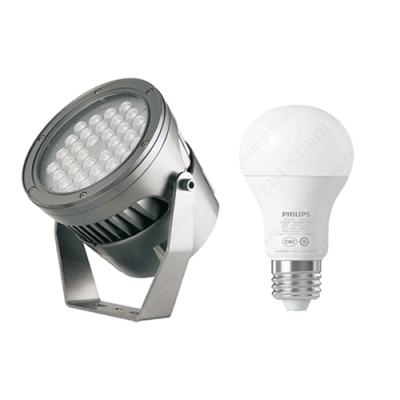 LEDs and Luminaire Test Solutions
 LM-79 and LM-80 Test Solutions
 LED Driver Test Solutions
 Household Appliances Test Solutions
 Mobile and Network Test Solutions
 Automotive Electronics Test Solutions
 Audio-Video and IT Test Solutions
 Cable and Wire Test Solutions
 Plugs and Sockets Test Solutions
 Power Switch Test Solutions
 Transformer Test Solutions
 Electric Toys Test Solutions
 Energy Meter Test Solutions
 Motor-Operated Tool Test Solutions
Select an organization
to browse standards
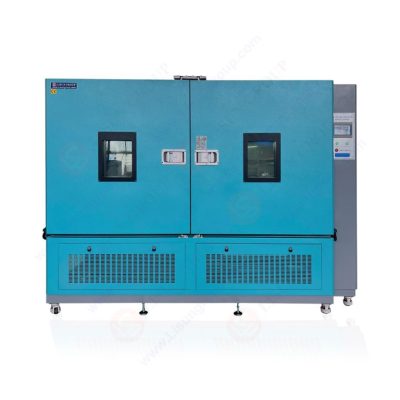
Innovative products are supposed to perform in various weather conditions under extreme temperatures and humidity, high or low rates of climatic changes, as well as being exposed to stress in the course of many years. The issue is eradicated by means of an environmental test chamber through which the controlled laboratory solution will reproduce these conditions with repeatability and accuracy. At the very initial stage of planning, manufacturers tend to compare specifications and even take into account the price of a thermal chamber, yet the actual worth of an environmental test chamber is the degree to which it adheres to the recognized standards that represent the actual operating scenario.
There are environmental testing standards which determine the way chambers should control temperature, humidity, ramp rates, stability, and exposure duration. These norms also make the test results depict the real service conditions and not random laboratory conditions. In the absence of conformity to standard procedures, the test data becomes invalid and can never be comfortably predictive with respect to the behavior of the product under real-life application.
Standards in environmental test chambers are established in an attempt to establish uniformity between the testing laboratories, industries as well as the regions. They establish the way stresses on the environment are to be implemented in order to compare the results in the interconnecting manner. The behavior of a given product tested in a certain laboratory should be similar when it is tested in another laboratory using the same standard.
Standards give assurance that one does not make the testing conditions excessively gentle or unrealistically harsh. Excessively aggressive conditions can result in failure modes that never exist in practice, and a low level of stress can conceal weaknesses resulting in premature failures. By defining the parameters of tests, standards give a compromise between realism and acceleration and engineers can test realism on time bounds.
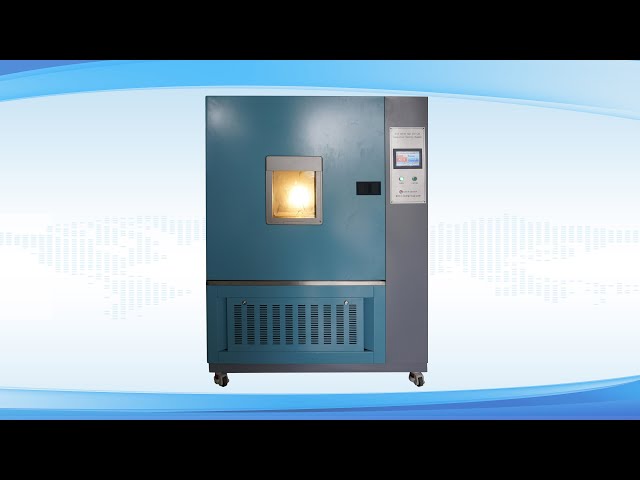
There are numerous environmental factors that influence product performance and temperature is one of them. Standards establish permissible temperature, tolerance limits of stability and uniformity within the chamber. These parameters make sure that all the test specimens undergo similar conditions irrespective of their position.
Monotonic temperature distribution is vital to proper testing. Uneven stress can be caused by hot or cold spots inside a chamber and this causes inconsistent results. Acceptable limits in levels of temperature deviation are normally outlined by standards to ensure integrity in tests.
As such, environmental test chambers developed to fulfill these needs have high specificity in control systems, properly designed airflow. LISUN has developed systems to preserve a stable thermal condition throughout long test periods, to enable testing to conform to international standards of testing.
Humidity is also an important element in environmental testing besides temperature. Moisture increases corrosion, insulation resistance and changes material properties. Measures are used to set humidity limits, control preciseness, and stabilization period to guarantee reproducible exposure.
Electronics, automotive and outdoor equipment are the industries in which humidity testing is especially valuable. Environmental test chamber standards state the combination of humidity and temperature, with steady-state exposure, and cyclic profiles, which recreates change of day and seasons.
There must be combined temperature control, as well as generation of moisture, to achieve accurate humidity control. Standards provide the assurance that humidity measurements indicate the true content of vapor as opposed to condensation at a specific point or may be a mistake on the sensor.
The real world is seldom in situations where it stands still. The temperature of products varies due to day-night cycles, operational load and transportation. To represent these effects, environmental test chambers standards establish thermal cycling procedures.
Ramp rate limits define the rate of transition of temperature. The too fast tempo of changes can cause an unrealistic stress, whereas overly slow changes can not help reveal problems that are connected with fatigue. Standards would be used to determine ramp rates that indicate the actual operating conditions but would still enhance the ageing effects.
Another important factor that is characterized by standards is the duration of the test. Depending on the use of a certain compound, environmental exposure can be up to a few hours, days, or weeks. The short tests are used to test the immediate response and the long duration exposure tests are used to test aging and long-term stability.
Exposure sequencing is also determined by standards. Indicatively, temperature and humidity can be used by either applying them both or alternately. These sequences do not mimic the interactions of environmental stress on their own but are based on the situation on the ground.
These complicated sequences can be supplied by environmental test chambers with programmable test profiles that can create exposure following patterns defined by the standard more precisely instead of simplified laboratory procedures.
Correlation is the final purpose of environmental testing. Standards are elaborated based on field data, history data of failures and industry experiences. This makes chamber-based testing as realistic as possible in terms of actual service conditions.
An illustration is an automotive standard which takes into account engine heat, cold starts and seasonal variation. Aerospace standards are referring to temperature extremities on altitude and the fast changeover. Standards of consumer electronics are directed to the indoor humidity and transport stress.
When applying established standards of the environmental test chambers, the manufacturers develop the confidence that the results of these tests will reflect real world performance and not the artifact witnessed in the lab.
Whereas standards can specify test requirements, equipment choice can be used to identify whether the requirements can be fulfilled on a regular basis. Most buyers will often be drawn to specifications or price of thermal chambers; however, long term adherence is determined by control precision, consistency and durability.
A chamber that is not able to provide even conditioning and constant ramp rates might be able to obtain target temperatures, but not satisfy standard tolerances. It results into invalid findings and possible re-test expenses.
The choice of the chamber that should conform to uniform compliance is a sure way of testing to remain consistent over years of use. The LISUN environmental test chambers are designed with an international standard in mind, which is suited to development and also qualification testing.
The environmental testing standards also focus on documentation. To show compliance, test parameters, calibration records and exposure profiles have to be recorded. This documentation helps in certification submissions, audits and qualification of customers.
Data logging and monitoring systems are commonly incorporated in environmental test chambers and record real-time conditions during the test. With proper records, any failure to the normal requirements would be identified early enough and corrected accordingly.
Credibility is promoted by traceability. In case of challenge or review on the results, written adherence to standards safeguards the integrity of the test process.
Standards of environmental test chambers are utilized at all the stages of product movement. In the initial stages of development testing helps to detect weaknesses in the design. During validation stages, it establishes production preparedness. It guarantees continuity during quality control.
The manufacturers ensure that there is continuity in the performance assessment by administering the same standardized tests at every stage. This minimizes future failures at later stages and helps in constant improvement programs.
Benchmarking is also made possible through standards. One can objectively compare products to competitors or that of the past by subjecting them to the same type of environmental stress.
Meanwhile, adherence to the standards of environmental test chambers will help achieve long-term reliability instead of short-term pass results. Multiple experimentation with standardized conditions demonstrates the tendencies and slow deterioration that can not be perceived with one exposure experiments.
This understanding enables engineers to perfect materials, designs, and guarding in advance. Gradually, standardized testing leads to strong products and fewer failure of products in the field.
Environmental test chamber standards give the guideline on the simulation of the real-life operating environments in a repeatable and controlled way. They assign temperature, humidity, cycling and exposure needs to guarantee that an environmental testing facility yields meaningful and comparable data. Although the price of thermal chamber might be a determining factor in making purchasing choices, the real importance is on whether the chamber can yield conditions and keep them at the standard parameters across the board.
Laboratories can safely exercise these standards at stages of development, validation and quality assurance with well-engineered systems by such manufacturers as LISUN. By following the environmental test chamber specifications, laboratory testing has become one of the most accurate predictors of actual performance, which are more stable, less risky, and more reliable products.
Your email address will not be published. Required fields are marked *

 English
 中文简体
中文简体 English
 Русский
 Español
 Português
 Türkçe
 العربية
 Deutsch
 Polski
 Italiano
 Français
 한국어
한국어 ไทย
ไทย Tiếng Việt
 日本語
日本語