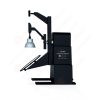
LM-79 Moving Detector Goniophotometer (Mirror Type C)
LSG-6000
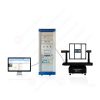
High Precision Rotation Luminaire Goniophotometer
LSG-1890B
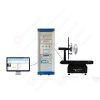
High Precision Rotation Luminaire Goniospectroradiometer
LSG-1890BCCD

Goniophotometer for Automotive and Signal Lamps
LSG-1950
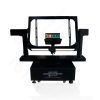
Goniophotometer for Traffic Signal Lamps (Economical Model)
LSG-1950S
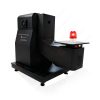
VAD Fire Alarm Visual Alert Device Goniophotometer
LSG-1930
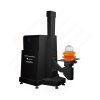
Goniophotometer for Airfield Lighting
LSG-1940
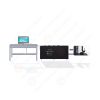
Compact Goniophotometer
LSG-1200A
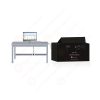
LED Goniophotometer
LSG-1100
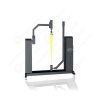
Near Field Moving Detector Goniophotometer
LSG-1900B
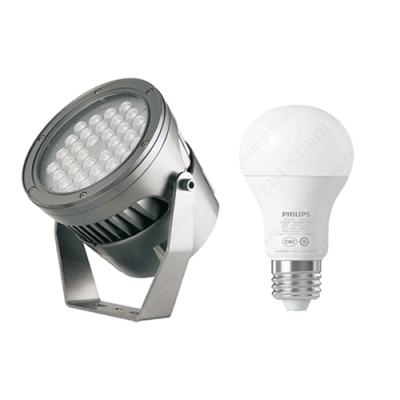 LEDs and Luminaire Test Solutions
 LM-79 and LM-80 Test Solutions
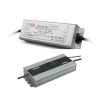 LED Driver Test Solutions
 Household Appliances Test Solutions
 Mobile and Network Test Solutions
 Automotive Electronics Test Solutions
 Audio-Video and IT Test Solutions
 Cable and Wire Test Solutions
 Plugs and Sockets Test Solutions
 Power Switch Test Solutions
 Transformer Test Solutions
 Electric Toys Test Solutions
 Energy Meter Test Solutions
 Motor-Operated Tool Test Solutions
Select an organization
to browse standards
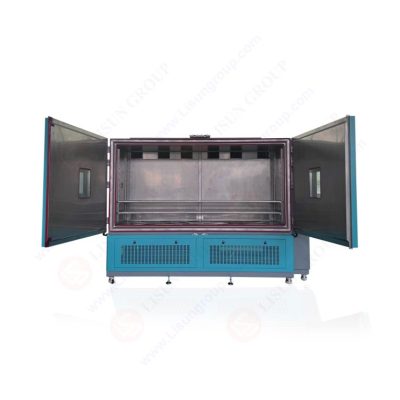
Humidity chamber is not a generic laboratory enclosure but it is a precision system that has a direct effect on the validity of reliability stability and compliance testing. Moisture forms interactions with materials and assemblages in complicated manners. It hastens the corrosion modifications mechanical qualities modifies electrical batteries and causes interface breakdowns that would not be evident in a dry state. The choice of humidity chamber is therefore the factor that helps identify which failures are the actual deficiencies of a product and which are the results of inadequate environmental regulation.
Humidity exposure is considered in most qualification programs together with other forms of stress, which include temperature cycling or even thermal shock test. Although these approaches vary in their degree of seriousness and the intent, they all have one thing in common. Conditions in the environment should be valuable and traceable. A room that fails to keep humid is not only discrediting its test outcome but is also jeopardizing that of the whole verification procedure.
The stability requirement is the most important selection criteria of humidity chamber. Relative humidity should be kept on narrow margins during long periods of time due to the fact that constructions whose mechanisms rely on moisture are very sensitive to change. The behavior of both condensation and corrosion can be modified by small oscillations. A steady chamber holds the setpoint without changing or recovers over hours days or weeks.
The real stability is based on the fact of coordinated regulation of the temperature and the humidity. Relative humidity is an operation of temperature hence any instability in temperature is directly converted into humidity error. Rich quality chambers apply internally-operated algorithms that operate together to control the functions of heating cooling humidification and dehumidification, rather than separate loops. This co-ordination inhibits the hunting habit and facilitates regulation.
The consistency in the test volume is also critical. There are wet or dry areas that cause localized stress and the erroneous report. The design of the chambers ought to facilitate free air movement and equal distribution of moisture. Uniformity mapping provides verification of the fact that the state of stability is not localized to a single point but is instead applicable to the whole region of usage. In making a choice of a chamber engineers must look at the uniformity specification and the loading patterns which might influence the airflow.
Components also need to be strong to maintain stability over a long period of time. Sensors and seals of humidifiers need to be consistent and unclogged. Intermittent use chambers tend to fail when subjected to continuous test. It should be picked on thus based on duty cycles ratings and reported long term performance.
Accuracy is used to determine how close the programmed humidity value in the chamber is realized. The accuracy at which that value can be changed is controlled by the resolution of the control. Both are important when it comes to contemporary qualification and compliance testing and acceptance margins are restricted.
The main degree of accuracy lies in humidity sensors. Capacitive sensors are widespread and have quick reaction however, they need regular calibration and location. Mirror sensors that are chilled are accurate and well-stable in the long run but become more complicated. The choice must be done based on the desired accuracy class and the calibration strategy that can be enabled by the camera design.
It is not possible to isolate temperature accuracy and humidity accuracy. A damp chamber that permits temperature deviation, even though good in controlling humidity, will still provide wrong relative humidity. Due to this reason temperature control accuracy and stability must then be considered together in conjunction with humidity performance and not as secondary specifications.
The issue of control resolution is important in the design of the stepped or cyclic profile. Fine resolution enables engineers to detect thresholds. The coarse resolution moves simple test areas that can be obscured by important transitions. High end chambers are equipped with programmable profiles and have the ability to set ramps dwells and transitions with precision to allow advanced moisture sensitivity studies.
The use of data logging and monitoring increases the confidence of the accuracy. Constant humidity temperature and dew point monitoring can be used to ensure that the state was not exceeding the tolerated levels during the test. Deviation alarming functions safeguard test validity and ensure wastage of exposure time is avoided.
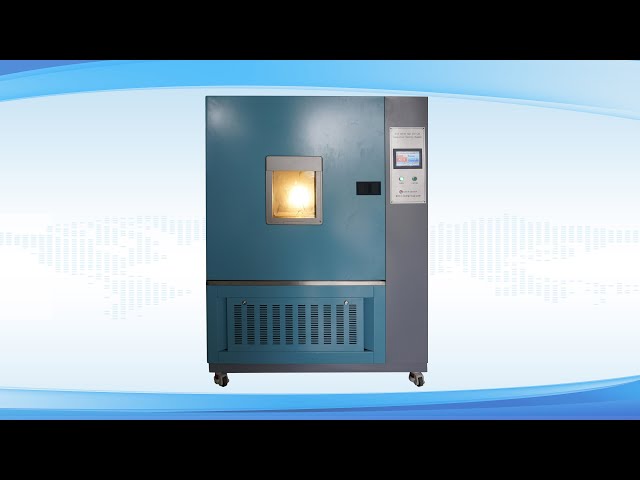
Humidity chambers are highly affected by compliance requirements. Most industry standards do not only provide test conditions but also the manner in which the latter should be accomplished and recorded. Compliance testing chambers should be able to prove that they are capable of addressing these requirements over time and traceably.
Standards are frequently to be the of defined humidity tolerances stabilization criteria and environmental history documentation. A room with no proper logging or alarm system can give technically valid exposure but an audit with not enough evidence may fail. The sample must then be based on the type of software that has features of reporting the format and data retention capabilities.
The other compliance factor is calibration traceability. Calibration of sensors and control systems should also be at defined intervals and records made available to be inspected. Administering simplified chambers that do not demand advanced administrative backing and audit risk decrease administrative load and risk of audit.
Consistency of equipment across equipment is important in a program that includes humidity exposure with other programs like temperature cycling or thermal shock test sequences. The difference in the control philosophy or format makes interpretation more difficult. The choice of chambers forming integral components of the current laboratory functioning facilitates consistent compliance reporting.
A humidity chamber can hardly exist on its own. It is normally included within a larger environmental test plan that can also encompass temperature cycling vibration corrosion or thermal shock testing. The choice to be made should thus be based on how the chamber will work in supplement to other systems and not to repeat or conflict with them.
To facilitate early development and screening, smaller chambers can be used and can offer fast feedback whereas bigger systems can aid in qualification. The ease of comparison of stages is achieved through compatibility of control interfaces and data systems. Such chambers where transition between steady state humidity and combined temperature humidity profile can be easily made enhance flexibility and long term worth.
To make sure that humidity chambers are in accordance with the international standards and have a long service life, many laboratories choose the providers of humidity chambers used internationally. An example LISUN has humidity and environmental chambers that are controlled to help with stable control, precise sensing and compliance centered documentation features suitable to meet the needs of qualification and audit needs in all industries.
As performance and compliance are key focused constraints in the real world, selection is also influenced. Energy consumption and budget space has to be taken into account. Nevertheless, putting an emphasis on the initial cost usually results in trade-offs that compromise data integrity and validity. Any chamber that is unable to offer stability and precision poses retesting risk and prolongs certification which is more expensive in the end.
Concerns about the needs in the future should be taken into consideration as well. Test profiles tend to grow with the changing nature of the products. The choice of chamber that has headroom in terms of performance and programmability is a safeguard to investment. Modular architecture and software serviceability increase their lifespan and remodelling to new standards.
The total cost of ownership is a more realistic parameter through which decision making is built. The maintainability of energy efficiency requirements calibration frequency and downtime are all the parameters that play a role in long term cost and must be balanced with the technical specifications.
The choice of a humidity chamber depending on stability accuracy and compliance is a strategic process which has firsthand impact on reliability and acceptability of test results. Stable control is provided to ensure that moisture driven mechanisms are triggered at all times. Incorrect sensing and imprecise resolution result in insignificant assessment and threshold detection. The presence of compliance checks like data logging calibration ensures and the audit readiness safeguard credibility between regulatory fields. Thermal shock testing humidity chambers when implemented in a considered manner alongside other techniques such as temperature cycling or a thermal stress test lays out fundamental block in solid environmental qualification. Selecting a well-prepared system with vendors that are experienced would guarantee that testing of humidity generates reasonable insight and not suspicion.
Tags:GDJS-015BYour email address will not be published. Required fields are marked *

 English
 中文简体
中文简体 English
 Русский
 Español
 Português
 Türkçe
 العربية
 Deutsch
 Polski
 Italiano
 Français
 한국어
한국어 ไทย
ไทย Tiếng Việt
 日本語
日本語