LM-79 Moving Detector Goniophotometer (Mirror Type C)
LSG-6000
High Precision Rotation Luminaire Goniophotometer
LSG-1890B
High Precision Rotation Luminaire Goniospectroradiometer
LSG-1890BCCD

Goniophotometer for Automotive and Signal Lamps
LSG-1950
Goniophotometer for Traffic Signal Lamps (Economical Model)
LSG-1950S
VAD Fire Alarm Visual Alert Device Goniophotometer
LSG-1930
Goniophotometer for Airfield Lighting
LSG-1940
Compact Goniophotometer
LSG-1200A
LED Goniophotometer
LSG-1100
Near Field Moving Detector Goniophotometer
LSG-1900B
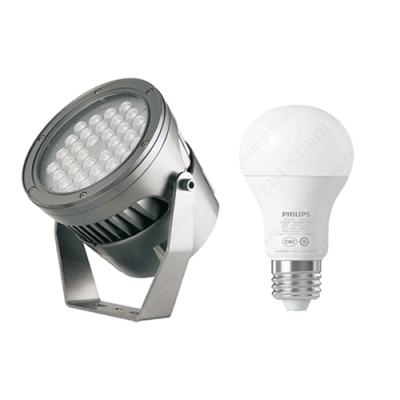 LEDs and Luminaire Test Solutions
 LM-79 and LM-80 Test Solutions
 LED Driver Test Solutions
 Household Appliances Test Solutions
 Mobile and Network Test Solutions
 Automotive Electronics Test Solutions
 Audio-Video and IT Test Solutions
 Cable and Wire Test Solutions
 Plugs and Sockets Test Solutions
 Power Switch Test Solutions
 Transformer Test Solutions
 Electric Toys Test Solutions
 Energy Meter Test Solutions
 Motor-Operated Tool Test Solutions
Select an organization
to browse standards
Abstract:
Lumen measurement is a core method for evaluating the photometric performance of lighting sources, which directly reflects the luminous capacity and energy efficiency level of light sources. Taking the LISUN LPCE-2 (LMS-9000) LED CCD Rapid Photometric, Colorimetric and Electrical Comprehensive Testing System (for details, please visit: https://www.lisungroup.cn/products/712.htmll) as the test platform, this paper conducts a systematic test on the photometric, colorimetric and electrical parameters of HID lamps (high-pressure sodium lamps, high-pressure mercury lamps), cold cathode fluorescent lamps and LED lamps around lumen measurement technology, analyzes the differences in the performance of different types of light sources in core indicators such as lumen value, luminous efficacy, color temperature and color rendering index, and verifies the importance of the comprehensive detection of photometric, colorimetric and electrical parameters of LED lamps for their quality evaluation. The research shows that the LISUN LPCE-2 (LMS-9000) system can achieve high-precision lumen measurement of multiple light sources and integrated detection of photometric, colorimetric and electrical parameters, providing a scientific basis for light source quality judgment and lighting product research and development.
1. Introduction
The performance of lighting sources directly affects the lighting effect, energy consumption and service life. As the legal unit of measurement for luminous flux, the lumen makes lumen measurement a core link in the detection of the photometric performance of light sources. HID lamps (high-pressure sodium lamps and high-pressure mercury lamps) are widely used in outdoor lighting due to their high luminous flux characteristics; cold cathode fluorescent lamps are mostly used in backlight lighting and decorative lighting because of their excellent starting performance; LED lamps, as a new generation of energy-saving light sources, have gradually become the mainstream of the lighting market by virtue of their high energy-saving performance and long service life. There are significant differences in the luminous principles and structural designs of different types of light sources, leading to distinct lumen measurement methods and evaluation criteria for photometric, colorimetric and electrical performance. In particular, the quality of LED lamps cannot be judged by the single index of lumen measurement, but needs to be comprehensively detected by combining photometric, colorimetric and electrical parameters.
The LISUN LPCE-2 (LMS-9000) LED CCD Rapid Photometric, Colorimetric and Electrical Comprehensive Testing System adopts high-precision CCD spectrometer and one-piece integrating sphere technology, which can realize synchronous detection of lumen measurement and photometric, colorimetric and electrical parameters of various light sources such as HID lamps, cold cathode fluorescent lamps and LED lamps. Its test accuracy and efficiency are in line with international standards such as CIE and IESNA as well as relevant national specifications. Based on this system, this paper carries out experiments on lumen measurement and photometric, colorimetric and electrical parameter testing of multiple light sources, compares and analyzes the performance characteristics of various light sources, and provides experimental data and technical references for the quality detection and selection application of lighting sources.
2. Lumen Measurement and Core Characteristics of the Test System
2.1 Application Value of Lumen Measurement
By quantitatively detecting the human eye-perceivable light energy radiated by a light source per unit time, lumen measurement directly reflects the luminous capacity of the light source and serves as a core basis for judging the energy efficiency grade and classifying the quality of light sources. For HID lamps, the lumen value directly determines the irradiation range and brightness of their outdoor lighting; the lumen stability of cold cathode fluorescent lamps affects the uniformity of their backlight lighting; for LED lamps, lumen measurement needs to be combined with luminous flux maintenance rate to comprehensively evaluate their long-term luminous performance. At the same time, the combination of lumen measurement with parameters such as luminous efficacy and power can calculate the luminous efficiency of light sources, providing data support for the research, development and promotion of energy-saving light sources.
2.2 Core Characteristics of LISUN LPCE-2 (LMS-9000) System
The LISUN LPCE-2 (LMS-9000) system is an integrated photometric, colorimetric and electrical testing equipment specially designed for the detection of lighting sources. With the LMS-9000C high-precision rapid spectral radiometer as the core, combined with supporting equipment such as a one-piece integrating sphere with a stage, a digital electrical parameter measuring instrument and an AC variable frequency power supply, it can realize synchronous detection of lumen measurement and photometric, colorimetric and electrical parameters. Its core characteristics are reflected in the following aspects:
• High-precision lumen measurement: The luminous flux test range covers 0.01-200,000 lm with a photometric linearity of ±0.5%, which can meet the lumen measurement needs of miniature cold cathode fluorescent lamps and high-power high-pressure sodium lamps. Equipped with an auxiliary lamp device and a self-absorption coefficient correction function, it effectively eliminates the measurement error caused by light loss in the integrating sphere.
• Integrated detection of multiple parameters: While completing lumen measurement, it can synchronously detect colorimetric parameters (chromaticity coordinates, correlated color temperature, color rendering index, etc.) and electrical parameters (voltage, current, power, power factor, etc.). In particular, it can additionally detect exclusive parameters such as color tolerance and luminous flux maintenance rate for LED lamps.
• Wide light source compatibility: It is perfectly suitable for HID lamps such as high-pressure sodium lamps and high-pressure mercury lamps, cold cathode fluorescent lamps, and LED lamps of various powers, complying with international test standards such as IES LM-79 and LM-80.
• Intelligent operation: Equipped with Chinese and English operation software, it supports the full system operation from Win7 to Win11, and the test data can be directly exported as PDF/Excel format reports, greatly improving the detection efficiency.
• High spectral detection accuracy: The wavelength test accuracy is ±0.3 nm and the stray light is <0.015% (600 nm), which provides hardware guarantee for the accuracy of lumen measurement. The test accuracy of the one-piece integrating sphere is much higher than that of the traditional spliced integrating sphere.
The system can complete lumen measurement through three methods: spectral method, photometric method and spectrophotometric method, meeting the needs of different detection scenarios, and is a core equipment for lighting enterprises and testing institutions to carry out light source quality detection.
3. Experiments on Lumen Measurement and Photometric, Colorimetric and Electrical Testing of Multiple Light Sources
3.1 Experimental Samples and Test Conditions
Four types of mainstream commercially available light sources were selected as experimental samples, with 3 samples for each type to ensure the representativeness of the test results. The specific specifications of the samples are as follows: high-pressure sodium lamp (70 W, outdoor lighting type), high-pressure mercury lamp (40 W, industrial lighting type), cold cathode fluorescent lamp (20 W, backlight lighting type), and LED lamp (15 W, general lighting type).
The test conditions strictly followed GB/T 26178-2010 Methods for the Measurement of Luminous Flux and IES LM-79 standard: the experimental ambient temperature was controlled at 25±1℃, the power supply voltage was 220V±1%, all light sources were preheated for 30 minutes to reach the working steady state before testing. Lumen measurement and photometric, colorimetric and electrical parameter detection were repeated 3 times for each sample, and the average value was taken as the final experimental result. All tests were completed by the LISUN LPCE-2 (LMS-9000) system.

LPCE 2(LMS 9000) Spectrophotometer & Integrating Sphere Test System
3.2 Test Indicators and Methods
Taking the luminous flux obtained by lumen measurement as the core photometric index, this experiment synchronously detected the key photometric, colorimetric and electrical parameters of various light sources. In particular, color tolerance detection was added for LED lamps to fully cover their quality evaluation requirements. The specific test indicators are as follows:
• Photometric indicators: Luminous flux (lumen value), luminous efficacy (lm/W);
• Colorimetric indicators: Correlated color temperature (CCT, K), color rendering index (Ra);
• Electrical parameters: Measured power (W), power factor (PF);
• Exclusive indicators for LED lamps: Color tolerance (SDCM).
Lumen measurement adopted the spectrophotometric method. The LMS-9000C spectrometer of the LISUN LPCE-2 (LMS-9000) system was used to collect the spectral power distribution of the light source, and the luminous flux calculation was completed by combining the correction algorithm built in the system. Colorimetric parameters were detected with reference to the CIE 1931 standard, and electrical parameters were synchronously collected by the digital electrical parameter measuring instrument supporting the system, realizing fully automated detection without manual intervention throughout the process.
3.3 Experimental Results and Data Analysis
Lumen measurement and photometric, colorimetric and electrical parameter detection of HID lamps, cold cathode fluorescent lamps and LED lamps were completed by the LISUN LPCE-2 (LMS-9000) system. The experimental results are shown in Table 1, and all data are the average values of 3 repeated tests.
Table 1 Lumen Measurement and Photometric, Colorimetric and Electrical Parameter Test Results of Multiple Light Sources
| Light Source Type | Rated Power (W) | Measured Luminous Flux (lm) | Luminous Efficacy (lm/W) | Correlated Color Temperature (K) | Color Rendering Index (Ra) | Power Factor (PF) | Color Tolerance (SDCM) |
| High-pressure Sodium Lamp (HID) | 70 | 6250 | 89.3 | 2250 | 28 | 0.68 | – |
| High-pressure Mercury Lamp (HID) | 40 | 1420 | 35.5 | 4480 | 42 | 0.46 | – |
| Cold Cathode Fluorescent Lamp | 20 | 1080 | 54 | 6520 | 82 | 0.55 | – |
| LED Lamp | 15 | 1410 | 94 | 4000 | 85 | 0.92 | 3 |
It can be seen from the experimental results that different types of light sources show significant differences in lumen measurement and photometric, colorimetric and electrical parameters, with the specific analysis as follows:
• Lumen value and luminous efficacy: The high-pressure sodium lamp has the highest measured luminous flux, reaching 6250 lm, which is suitable for large-space outdoor lighting such as roads and squares; the LED lamp has the optimal luminous efficacy of 94.0 lm/W, much higher than that of high-pressure mercury lamps and cold cathode fluorescent lamps, reflecting significant energy-saving advantages, which is the core reason why LED lamps gradually replace traditional light sources; the high-pressure mercury lamp has the lowest luminous efficacy of only 35.5 lm/W, with poor energy efficiency performance.
• Colorimetric parameters: The high-pressure sodium lamp has the lowest color temperature of only 2250 K and the lowest color rendering index of only 28. Although it has a high luminous flux, its color reproduction ability is poor, making it suitable for outdoor lighting with no requirements for color rendering; the color rendering indexes of LED lamps and cold cathode fluorescent lamps both exceed 80. Among them, the color temperature of the LED lamp is 4000 K, which belongs to neutral white light, taking into account color reproduction ability and visual comfort, and is suitable for indoor general lighting; the cold cathode fluorescent lamp has a relatively high color temperature, which is more suitable for backlight lighting scenarios.
• Electrical parameters: The LED lamp has the highest power factor of 0.92, with the optimal electric energy utilization efficiency; the high-pressure mercury lamp has the lowest power factor of only 0.46, with obvious electric energy loss; the power factor of HID lamps is generally low, reflecting the deficiencies of traditional gas discharge lamps in electrical performance.
• Exclusive parameters for LED lamps: The color tolerance of the LED lamp tested in this experiment is 3 SDCM, which meets the national first-class product standard, indicating its good photometric and colorimetric consistency. Only by combining lumen measurement with parameters such as color tolerance and color rendering index can the quality grade of LED lamps be comprehensively judged, and a single lumen value cannot reflect its comprehensive performance.
In addition, during the lumen measurement, it was found that the repeatability error of the LISUN LPCE-2 (LMS-9000) system for lumen measurement of high-power high-pressure sodium lamps is <0.3%, and the measurement error for miniature cold cathode fluorescent lamps is <0.5%, both far lower than the national standard requirements, reflecting the high-precision advantage of the system in lumen measurement of different types of light sources.
4. Significance of Comprehensive Testing of Photometric, Colorimetric and Electrical Parameters for LED Lamp Quality Evaluation
As a semiconductor lighting product, the luminous performance of LED lamps is affected by many factors such as chips, packaging processes and driving power supplies. The quality of LED lamps cannot be comprehensively evaluated only by lumen measurement, but needs to be comprehensively judged by combining photometric, colorimetric and electrical parameters, which is also the core reason why the LISUN LPCE-2 (LMS-9000) system is designed with multi-parameter detection functions for LED lamps.
From the perspective of photometric parameters, the lumen value reflects the initial luminous capacity of LED lamps, while the luminous flux maintenance rate reflects their luminous stability in long-term use. The LISUN LPCE-2 (LMS-9000) system can complete the test of LED lamp luminous flux maintenance rate in accordance with the LM-80 standard, track the lumen changes at different time nodes, and evaluate their service life; from the perspective of colorimetric parameters, color temperature and color rendering index determine the lighting effect of LED lamps, and color tolerance reflects their photometric and colorimetric consistency. If the color tolerance is too large, obvious color difference will appear in LED lamps of the same batch, affecting the lighting experience; from the perspective of electrical parameters, the stability of power factor and working current directly affects the electric energy consumption and use safety of LED lamps. If the driving power supply is unstable, it will lead to the fluctuation of lumen value and shorten the service life of LED lamps.
The 15 W LED lamp in this experiment showed good initial luminous capacity in lumen measurement, and its parameters such as color tolerance, color rendering index and power factor all met the national high-quality product standards, so it was comprehensively judged as a high-quality LED lamp; if an LED lamp meets the lumen value standard but has a color tolerance exceeding 5 SDCM or a power factor lower than 0.7, it is judged as an unqualified product and cannot be put on the market. It can be seen that the comprehensive test of photometric, colorimetric and electrical parameters is a necessary means for LED lamp quality evaluation, and the LISUN LPCE-2 (LMS-9000) system realizes the integrated and high-precision completion of such tests, providing an effective means for LED lamp quality control.
5. Conclusions and Prospects
Based on the LISUN LPCE-2 (LMS-9000) system, this paper carried out photometric, colorimetric and electrical performance tests of HID lamps, cold cathode fluorescent lamps and LED lamps around lumen measurement technology. The experimental results show that different types of light sources have significant differences in lumen value, luminous efficacy and photometric, colorimetric and electrical parameters. High-pressure sodium lamps are suitable for high-power outdoor lighting, and LED lamps have become the light source with the best comprehensive performance by virtue of high luminous efficacy, excellent photometric and colorimetric performance and high electric energy utilization efficiency. The LISUN LPCE-2 (LMS-9000) system shows the advantages of high precision and high repeatability in the lumen measurement of multiple light sources, and can realize the integrated detection of photometric, colorimetric and electrical parameters, meeting the quality detection needs of different light sources. In particular, the exclusive parameter detection for LED lamps provides a scientific and efficient solution for their comprehensive quality evaluation.
With the continuous development of lighting technology, the miniaturization, intellectualization and energy-saving of light sources have become the development trend, and lumen measurement technology will also develop towards a more accurate and faster direction. In the future, the LISUN LPCE-2 (LMS-9000) system can further combine the Internet of Things technology to realize remote detection and data sharing of light source lumen measurement and photometric, colorimetric and electrical parameters; at the same time, special detection functions for new light sources such as plant growth LED lamps and vehicle LED lamps can be further developed, providing more comprehensive technical support for the high-quality development of the lighting industry. As a core means of light source detection, lumen measurement will be deeply integrated with photometric, colorimetric and electrical comprehensive testing technology, and continue to empower the quality control and R & D innovation of lighting products.
Tags:LPCE-2 (LMS-9000)Your email address will not be published. Required fields are marked *

 English
 中文简体
中文简体 English
 Русский
 Español
 Português
 Türkçe
 العربية
 Deutsch
 Polski
 Italiano
 Français
 한국어
한국어 ไทย
ไทย Tiếng Việt
 日本語
日本語