LM-79 Moving Detector Goniophotometer (Mirror Type C)
LSG-6000
High Precision Rotation Luminaire Goniophotometer
LSG-1890B
High Precision Rotation Luminaire Goniospectroradiometer
LSG-1890BCCD

Goniophotometer for Automotive and Signal Lamps
LSG-1950
Goniophotometer for Traffic Signal Lamps (Economical Model)
LSG-1950S
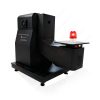
VAD Fire Alarm Visual Alert Device Goniophotometer
LSG-1930
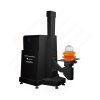
Goniophotometer for Airfield Lighting
LSG-1940
Compact Goniophotometer
LSG-1200A
LED Goniophotometer
LSG-1100
Near Field Moving Detector Goniophotometer
LSG-1900B
 LEDs and Luminaire Test Solutions
 LM-79 and LM-80 Test Solutions
 LED Driver Test Solutions
 Household Appliances Test Solutions
 Mobile and Network Test Solutions
 Automotive Electronics Test Solutions
 Audio-Video and IT Test Solutions
 Cable and Wire Test Solutions
 Plugs and Sockets Test Solutions
 Power Switch Test Solutions
 Transformer Test Solutions
 Electric Toys Test Solutions
 Energy Meter Test Solutions
 Motor-Operated Tool Test Solutions
Select an organization
to browse standards
Abstract
As core equipment for verifying the environmental adaptability and reliability of industrial products, the temperature and humidity environmental chamber can accurately reproduce the dynamic changes of temperature and humidity in natural environments through manual intervention, enabling the simulation of extreme and cyclic climatic conditions. Taking the LISUN GDJS-015B temperature & humidity alternating test chamber as the research object, this paper systematically analyzes the climate simulation principles and core technical parameters of the temperature and humidity environmental chamber, expounds its simulation implementation of typical climatic scenarios such as low-temperature resistance, high-temperature heat resistance, humidity aging, and dry-wet alternation, and verifies its testing efficiency combined with practical application cases. Studies show that this model of temperature and humidity environmental chamber features wide temperature range, high precision and high stability in climate simulation, which can meet the product testing requirements of LED lighting, electronic appliances, automotive electronics and other industries, providing scientific testing solutions for product R&D verification, production quality inspection and compliance certification.
1 Introduction
Against the background of high-quality development in manufacturing, products face increasingly complex natural climatic conditions during their full life cycle. Climatic factors such as low temperature, high temperature, high humidity, and dry-wet alternation tend to cause performance degradation, structural deformation, material corrosion and other problems, directly affecting the service safety and service life of products. Restricted by region, season, cycle and other factors, traditional natural environment testing has disadvantages such as low efficiency, high cost and poor data repeatability, which can no longer meet the efficient verification needs of modern industry.
As key equipment for artificial climate simulation, the temperature and humidity environmental chamber can accurately simulate various natural climatic conditions in a laboratory environment by integrating heating, cooling, humidification, dehumidification, cycle control and other systems, realizing accelerated aging tests of products and quickly assessing their performance stability and structural reliability under extreme or cyclic climates. The LISUN GDJS-015B temperature & humidity alternating test chamber, a typical representative of temperature and humidity environmental chambers, has been widely used in environmental reliability tests in many industries thanks to its core advantages of wide temperature range coverage, high-precision temperature and humidity control, and multiple safety protections. This paper conducts research around this equipment, deeply analyzing the climate simulation characteristics and application value of the temperature and humidity environmental chamber.
2 Core Technical Basis of the Temperature and Humidity Environmental Chamber
2.1 Overall Structural Design of the Equipment
The LISUN GDJS-015B temperature and humidity environmental chamber adopts a modular integrated design, and its overall structure is divided into four core parts: test chamber body, temperature and humidity control system, control system, and safety protection system. The coordinated operation of each system ensures the accuracy and stability of climate simulation. The inner tank of the test chamber is made of SUS304 stainless steel, which is corrosion-resistant and easy to clean, adapting to long-term damp heat test scenarios; the insulation layer adopts a composite structure of “rigid polyurethane foam + ultra-fine glass fiber”, matched with high-temperature aging silicone rubber sealing strips on the door frame, effectively reducing temperature and humidity exchange inside and outside the chamber and preventing temperature and humidity leakage.
The control system adopts a dual-core control mode of self-developed temperature control instrument + PLC, supporting Chinese and English operation interfaces, equipped with USB/RS-232/RS-485 interfaces, enabling connection with a computer to realize remote setting of test parameters, real-time monitoring of the test process, and retrospective storage of test data. The safety protection system integrates multiple protection mechanisms such as electric leakage, short circuit, heater overheating, motor overheating, and compressor overpressure/overload/overcurrent, comprehensively ensuring the safety of equipment operation and the test process.
2.2 Configuration of Core Components
The climate simulation accuracy of the temperature and humidity environmental chamber relies on the support of high-precision components. The GDJS-015B is equipped with a variety of imported and self-developed high-precision components: platinum resistance PT100Ω/MV temperature sensors are used for temperature detection, featuring high precision and anti-interference, capable of real-time and accurate feedback of temperature changes inside the chamber; Vaisala humidity sensors from Finland are selected for humidity detection, which have higher precision and require no regular maintenance compared with traditional wet-dry bulb humidity detection, greatly reducing operation and maintenance costs; the refrigeration system is equipped with original French TECUMSEH fully enclosed air-cooled single-stage compressors, with high refrigeration efficiency and convenient global after-sales service; the heating system adopts independent nickel-chromium alloy electric heaters, with uniform heating and no local overheating, realizing precise temperature control with the temperature control system; the circulation system is equipped with temperature-resistant low-noise air-conditioning motors (≤65dB) and multi-blade centrifugal wind wheels, ensuring uniform distribution of temperature and humidity inside the chamber and avoiding local temperature and humidity differences affecting test results.
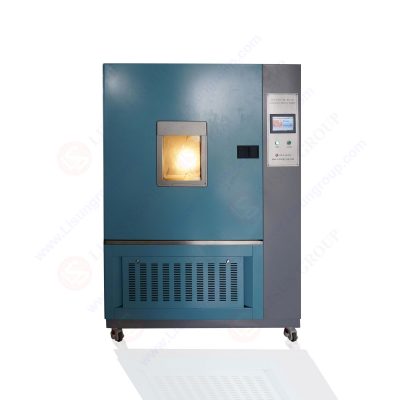
GDJS-015B Temperature Humidity Chamber | Thermal Chamber
2.3 Key Technical Parameters
As a representative model of the LISUN GDJS series temperature and humidity environmental chambers, the GDJS-015B boasts excellent temperature and humidity control performance. The comparison data of its core technical parameters with products of the same series are shown in Table 1. This model has an inner chamber size of 100×100×150cm, an external dimension of 245×160×231cm, and a working power of 16.5kW; the temperature range covers -70℃~150℃ (Type D), the temperature rise rate is 1.0℃~3.0℃/min, the temperature drop rate is 0.7℃~1.0℃/min, the temperature fluctuation is ±0.5℃ and uniformity ±2℃; the humidity range is 20%~98%RH, with a humidity deviation of -2%~-3%, enabling accurate simulation of climatic conditions with different temperatures and humidity.
Table 1 Core Technical Parameters of LISUN GDJS Series Temperature and Humidity Environmental Chambers
3 Realization of Typical Climate Condition Simulation by the Temperature and Humidity Environmental Chamber
Through the coordinated operation of the temperature and humidity control system, the LISUN GDJS-015B temperature and humidity environmental chamber can accurately simulate four typical climatic scenarios in the natural environment: low-temperature resistance, high-temperature heat resistance, humidity aging, and dry-wet alternation, reproducing the dynamic changes of temperature and humidity to achieve a comprehensive assessment of product climate adaptability.
3.1 Simulation of Low-Temperature Resistance Climate Scenarios
Low-temperature resistance simulation mainly targets natural environments such as high latitudes, high altitudes, and winter low temperatures, assessing the performance stability and structural integrity of products under low-temperature conditions. The GDJS-015B outputs cooling capacity through the refrigeration system composed of original French TECUMSEH compressors, and realizes precise control of the low-temperature environment with real-time monitoring by platinum resistance PT100Ω/MV temperature sensors. During the test, the refrigeration system continuously outputs cooling capacity according to instructions from the control system, and the temperature inside the chamber steadily drops to the target value (down to -70℃) at a preset cooling rate of 0.7℃~1.0℃/min and remains constant. This simulation method can accurately restore low-temperature environments in polar and frigid regions, suitable for low-temperature performance tests of electronic components, outdoor lighting, automotive electronics and other products.
3.2 Simulation of High-Temperature Heat Resistance Climate Scenarios
High-temperature heat resistance simulation targets working conditions such as tropical regions, poor internal heat dissipation of equipment, and summer high temperatures, assessing the heat resistance and performance attenuation of products under high-temperature environments. The heating system of the GDJS-015B adopts independent nickel-chromium alloy electric heaters, featuring high heating efficiency and uniform heating, which can raise the temperature inside the chamber to the target value (up to 150℃) at a temperature rise rate of 1.0℃~3.0℃/min. Through closed-loop control of the temperature control system, the temperature fluctuation inside the chamber is controlled within ±0.5℃, accurately maintaining the target high-temperature environment, simulating high-temperature natural environments such as deserts and tropical coasts, meeting the high-temperature aging test requirements of LED lamps, plastic parts, electronic appliances and other products.
3.3 Simulation of Humidity Aging Climate Scenarios
Humidity aging simulation mainly targets high-humidity marine climates, rainy seasons, humid areas in southern China and other environments, assessing the anti-mold, anti-corrosion and anti-deliquescence capabilities of products. The GDJS-015B is equipped with high-precision Vaisala humidity sensors from Finland, matched with an automatic purified water supply system, achieving precise adjustment of humidity in a wide range of 20%~98%RH. In humidity aging tests, the humidification and dehumidification systems adjust in real time according to feedback from the humidity sensor, controlling the humidity inside the chamber within the target range, with a humidity deviation of only -2%~-3%. This simulation method can accurately restore high-humidity natural environments, suitable for damp heat resistance assessment of metal materials, electronic components, outdoor equipment and other products.
3.4 Simulation of Dry-Wet Alternating Climate Scenarios
Dry-wet alternation simulation targets dynamic climatic processes such as day-night temperature differences, sunny-rainy alternations, and seasonal changes in the natural environment, assessing the structural reliability and performance stability of products under cyclic temperature and humidity stress. In accordance with standards such as GB/T 2423.4-2008 and IEC 60068-2-30:2005, the GDJS-015B can set dry-wet alternating test programs with cycle periods such as 12h+12h. Through the coordinated operation of the temperature and humidity control systems, periodic alternating changes of temperature and humidity are realized, for example, in one cycle, a 12h high-temperature and high-humidity environment is first simulated, then switched to a 12h low-temperature and low-humidity environment, with precise control of temperature and humidity parameters throughout the process and no obvious fluctuations. This simulation method can comprehensively assess the adaptability of products under dynamic climatic conditions, serving as an important means for environmental reliability tests of automotive electronics, rail transit, communication equipment and other products.
4 Industry Application Cases of the Temperature and Humidity Environmental Chamber
Focusing on the core testing needs of LED lighting, electronic appliances, automotive electronics and other industries, the LISUN GDJS-015B temperature and humidity environmental chamber has formed mature application cases in many fields with its accurate climate simulation capability, providing reliable support for product quality control and compliance certification.
4.1 Lumen Maintenance Test in the LED Lighting Industry
In the LED lighting industry, lumen maintenance is a core indicator for evaluating the service life of LED lamps, requiring long-term high-temperature and high-humidity aging tests in accordance with the IES LM-80-08 standard. An LED lamp manufacturer adopted the GDJS-015B temperature and humidity environmental chamber to simulate a high-temperature and high-humidity aging scenario of 85℃ and 85% RH, conducting a 6000-hour lumen maintenance test on new LED lamps. During the test, the equipment accurately maintained the target temperature and humidity environment without obvious deviation, and the computer 端 recorded the luminous flux data of the lamps in real time through the RS-485 interface. The test results showed that the lumen maintenance rate of the lamps reached more than 90%, meeting the requirements of the IES LM-80-08 standard, providing key test basis for the product’s market access.
4.2 Extreme Temperature Performance Test in the Electronic Appliance Industry
Electronic components are prone to encounter extreme low and high temperatures during outdoor use, and their performance stability directly affects the overall operation of equipment. To verify the extreme temperature adaptability of capacitors, an electronic component enterprise used the GDJS-015B to conduct -40℃ low-temperature resistance tests and 125℃ high-temperature heat resistance tests respectively, with a test duration of 1000 hours for each scenario. After the test, core parameters such as capacitance value and insulation resistance of the capacitors were tested, and the results showed that the capacitance change rate was less than 5% and the insulation resistance met industry standards, proving that the capacitors could work stably in harsh extreme temperature environments, providing reliable performance verification for their application in outdoor electronic equipment.
4.3 Dry-Wet Alternating Reliability Test in the Automotive Electronics Industry
During vehicle operation, automotive electronic equipment must withstand dynamic climatic conditions such as day-night temperature differences and sunny-rainy alternations, imposing high requirements on their structural reliability and performance stability. A auto parts manufacturer conducted 50 cycles of dry-wet alternating tests on the vehicle navigation system using the GDJS-015B, with the test program set to 12h high-temperature and high-humidity (85℃, 95%RH) + 12h low-temperature and low-humidity (-40℃, 30%RH), complying with the standard requirements of GB/T 28046.4-2011 Road vehicles – Environmental conditions and testing for electrical and electronic equipment – Part 4: Climatic loads. After the test, functions such as the display screen, buttons and communication modules of the vehicle navigation system remained normal, with no looseness or deformation in the structure, verifying the product’s climate adaptability and providing quality assurance for its vehicle-mounted application.
5 Application Value and Development Trend of the Temperature and Humidity Environmental Chamber
5.1 Core Application Value
As key equipment for environmental reliability testing of industrial products, the LISUN GDJS-015B temperature and humidity environmental chamber has four main application values: first, shortening the test cycle, reducing the test cycle of several years in the traditional natural environment to days, weeks or months through accelerated aging tests, greatly improving the efficiency of product R&D and launch; second, reducing test costs, enabling the simulation of multiple climate scenarios in a laboratory environment without investing a lot of manpower and material resources in outdoor site construction and maintenance; third, improving product quality, exposing potential defects of products in material selection and structural design in advance through accurate climate simulation tests, providing a scientific basis for enterprises to optimize product design and improve production processes; fourth, supporting compliance certification, the equipment complies with many authoritative domestic and international standards such as the GB/T 2423 series, IEC 60068 series, and IES LM-80-08, and the test results are highly recognized and credible, providing key support for products to pass various compliance certifications.
5.2 Industry Development Trend
With the transformation of manufacturing towards intelligence and high-end, as well as the development of emerging industries such as new energy, semiconductors and aerospace, the market has put forward higher requirements for the climate simulation capability of temperature and humidity environmental chambers. In the future, temperature and humidity environmental chambers will develop towards higher precision, wider temperature and humidity ranges, intelligence and customization: first, continuously improving temperature and humidity control accuracy to meet the testing needs of high-end products such as micro-nano electronics and precision instruments; second, expanding the temperature and humidity simulation range to realize the simulation of special climatic conditions such as ultra-low temperature, ultra-high temperature, ultra-low humidity and ultra-high humidity; third, integrating artificial intelligence and Internet of Things technologies to realize fully automatic control, remote diagnosis and big data analysis of the test process; fourth, providing customized climate simulation solutions according to the personalized testing needs of different industries to further improve the industry adaptability of the equipment.
6 Conclusion
As core equipment for artificial climate simulation, the temperature and humidity environmental chamber can break through the limitations of natural environments and accurately simulate various typical climatic conditions such as low-temperature resistance, high-temperature heat resistance, humidity aging, and dry-wet alternation, serving as an important tool for product environmental reliability testing. Taking the LISUN GDJS-015B temperature & humidity alternating test chamber as the research object, this paper deeply analyzes the structural design, component configuration, technical parameters and climate simulation implementation of the temperature and humidity environmental chamber, and verifies its accurate, stable and efficient climate simulation capability combined with application cases in LED lighting, electronic appliances, automotive electronics and other industries.
With core advantages such as wide temperature range coverage (-70℃~150℃), high-precision temperature and humidity control (temperature fluctuation ±0.5℃, humidity deviation -2%~-3%), and multiple safety protections, this model of temperature and humidity environmental chamber can meet the product testing needs of various industries, providing scientific testing solutions for product R&D verification, production quality inspection and compliance certification. With the high-quality development of manufacturing and the rise of emerging industries, temperature and humidity environmental chambers will continuously improve their climate simulation capabilities through technological innovation, providing stronger support for quality control and reliability improvement of industrial products.
Tags:GDJS-015BYour email address will not be published. Required fields are marked *

 English
 中文简体
中文简体 English
 Русский
 Español
 Português
 Türkçe
 العربية
 Deutsch
 Polski
 Italiano
 Français
 한국어
한국어 ไทย
ไทย Tiếng Việt
 日本語
日本語