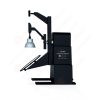
LM-79 Moving Detector Goniophotometer (Mirror Type C)
LSG-6000
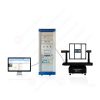
High Precision Rotation Luminaire Goniophotometer
LSG-1890B
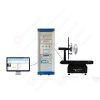
High Precision Rotation Luminaire Goniospectroradiometer
LSG-1890BCCD

Goniophotometer for Automotive and Signal Lamps
LSG-1950
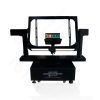
Goniophotometer for Traffic Signal Lamps (Economical Model)
LSG-1950S
VAD Fire Alarm Visual Alert Device Goniophotometer
LSG-1930
Goniophotometer for Airfield Lighting
LSG-1940
Compact Goniophotometer
LSG-1200A
LED Goniophotometer
LSG-1100
Near Field Moving Detector Goniophotometer
LSG-1900B
 LEDs and Luminaire Test Solutions
 LM-79 and LM-80 Test Solutions
 LED Driver Test Solutions
 Household Appliances Test Solutions
 Mobile and Network Test Solutions
 Automotive Electronics Test Solutions
 Audio-Video and IT Test Solutions
 Cable and Wire Test Solutions
 Plugs and Sockets Test Solutions
 Power Switch Test Solutions
 Transformer Test Solutions
 Electric Toys Test Solutions
 Energy Meter Test Solutions
 Motor-Operated Tool Test Solutions
Select an organization
to browse standards
Abstract
Waterproof performance is a critical determinant of product reliability and lifespan across numerous fields, including consumer electronics, outdoor lighting, household appliances, and automotive components. Within the IP (Ingress Protection) rating system defined by the International Electrotechnical Commission standard IEC 60529 (equivalent to GB/T 4208), IPX1 and IPX2 serve as the foundational waterproof levels. These tests simulate environments with vertically falling drips and dripping water at a tilted angle, representing the first line of defense against liquid ingress. This article provides a detailed explanation of the physical principles, standard requirements, testing methodologies, and significance of IPX1 and IPX2 waterproof testing in product design validation. It further elaborates on the core technical features of the specialized equipment essential for conducting these tests—the drip test apparatus—and introduces how a modular, high-precision test system (such as one extended from an oscillating tube spray system) can achieve complete and compliant verification of waterproof performance from IPX1 to higher levels, offering systematic technical reference for R&D and quality engineers.
Introduction
IPX1 and IPX2 waterproof testing, as the two fundamental levels within the globally recognized IP (Ingress Protection) rating system, are often misunderstood as having “low requirements” or “needing little attention.” However, it is precisely these tests, which simulate natural condensation, light drizzle, or water droplets falling on a tilted device, that reveal initial flaws in a product’s enclosure sealing design, seam treatment, and internal layout. Many products that appear intact under normal conditions expose early risks of PCB corrosion, short circuits, or functional failure under the persistent challenge of vertically dripping water or tilted dripping water. Understanding the strict stipulations of IPX1 and IPX2 testing and employing a scientifically validated drip test apparatus compliant with the IEC 60529 standard are prerequisites for ensuring product safety and stability during storage, transportation, and specific usage scenarios. This article will delve into the technical details of these two ratings and explore efficient and accurate testing solutions.
1. IPX1 and IPX2 under IEC 60529: Definitions and Application Scenarios
The IEC 60529 standard defines the degree of protection provided by an enclosure against solid foreign objects (first characteristic numeral) and liquids (second characteristic numeral, where ‘X’ is used when dust protection is not considered for waterproof testing). IPX1 and IPX2 focus on protection against water droplets falling vertically or at a small angle.
IPX1: Vertically falling drops. The test simulates conditions where equipment is exposed to condensation or minor dripping water (e.g., indoor high-humidity environments, outdoor sheltered areas not directly exposed to rain). The core requirement is that the enclosure must protect against harmful effects from water droplets falling vertically when in its normal operating position (i.e., top facing upwards).
IPX2: Vertically falling drops when the enclosure is tilted up to 15°. This rating simulates situations where a device encounters dripping water when installed not perfectly level or tilted slightly due to use or transport. It complements and strengthens IPX1, requiring the enclosure to maintain protection within a defined tilt range.
These two levels are commonly found on indoor appliances (e.g., TVs, audio equipment, power adapters), control cabinets, internal lighting components, and some outdoor equipment with less stringent waterproof requirements. They serve as the “entry threshold” for products to meet basic operational environmental demands.
2. Core Parameter Comparison of IPX1 and IPX2 Test Methods
Although both are drip tests, IPX1 and IPX2 have distinct differences in testing conditions, primarily in sample orientation, drip hole specifications and flow rate, and test duration.
| Test Parameter | IPX1 (Vertical Drip) | IPX2 (15° Tilt Drip) | Technical Implication & Purpose |
|---|---|---|---|
| Sample Orientation | Sample placed normally, top surface horizontal. | Sample fixed, tilted to 15° from its normal position around all relevant axes, OR subjected to water spray from an oscillating tube within a 15° arc. | IPX2 tests enclosure sealing performance under non-ideal installation conditions; seams and openings may become ingress points when tilted. |
| Drip Apparatus | Dedicated drip box with a grid of holes on the bottom. | Same as IPX1 drip box, OR an oscillating tube may be used for comprehensive coverage. | Ensures water droplets are evenly distributed over the top surface, simulating natural falling drops. |
| Drip Hole & Flow Rate | Hole spacing: 20×20 mm. Hole diameter: 0.4 mm. Water flow rate: 1.0 ±0.5 mm/min (equivalent to 3-5 mm/min rainfall intensity). | Identical to IPX1. | Strictly controls droplet size and intensity to ensure test consistency and repeatability. |
| Test Duration | 10 minutes. | Total of 10 minutes. Sample tested for 2.5 minutes in each of four tilted positions (or covered by oscillating tube sweep) to ensure all directions are assessed. | Sufficient time for water to penetrate potential defects; short tests may fail to expose issues. |
| Pass Criteria | After testing, upon opening the enclosure, no traces of water ingress should be observed inside, OR ingress should not cause harmful effects to normal operation (minor ingress not affecting safety or performance is permissible). | Identical to IPX1. | Emphasizes “harmful effects,” focusing not just on whether water enters, but on the consequences for electrical safety and functionality if it does. |

3. Key Considerations and Equipment Requirements for Compliant Testing
Accurately performing IPX1/IPX2 tests requires more than simply sprinkling water; it demands strict adherence to standard specifications for test equipment:
• Drip Box Precision: The drip box must ensure uniform water emission from each hole, with stable and adjustable flow rate to meet the precise requirement of “1.0 ±0.5 mm/min.” The machining precision of hole spacing directly affects droplet distribution uniformity.
• Precise Control of Sample Orientation: For IPX2 testing, the accuracy of the sample tilt angle (15° ±1°) is critical. Manual adjustment is inefficient and prone to inaccuracies. Integrated test equipment typically features a programmable, precision-controlled tilting table or turntable.
• Test Repeatability and Automation: Manual timing and direction changes introduce errors. A modern drip test apparatus should feature automatic timing and switching between test orientations (for IPX2), ensuring consistent conditions for every test.
• Compatibility with Higher-Level Testing: From R&D to quality inspection, products often require verification across multiple IP ratings. An ideal test system should offer excellent expandability. For example, LISUN’s Oscillating Tube Water Spray Test System (e.g., JL-34 Series) is designed to meet IPX3/IPX4 requirements. However, by selecting a standard drip test box module (often available as an accessory), it can be seamlessly extended to perform IPX1/IPX2 testing. This modular approach allows a laboratory or production line to cover testing needs from IPX1 to IPX4 and beyond with one main system, saving space and cost while ensuring all tests are traceable to the same high-standard platform.
4. From Drip to Spray: The Value of an Integrated Testing Solution
As indicated, integrating basic drip testing with higher-level oscillating tube spray testing represents a technological trend. Taking LISUN’s JL-34 system as an example, while its core parameters (e.g., oscillating tube radius, number of holes, water flow rate) are designed for IPX3 (120° oscillation) and IPX4 (180° oscillation) spray and splash protection tests, its precise PLC control system, high-precision rotary table (1-5 r/min adjustable), and robust mechanical structure form a solid foundation for a complete waterproof testing environment.
When validating products for IPX1 and IPX2 waterproof testing, users can add a dedicated drip box accessory to a main system platform like the JL-34. The benefits are:
• Data Consistency: All waterproof tests are completed on the same platform, with unified data recording and report formats.
• Efficiency Gains: No need to move samples between different devices; automated sequential testing (e.g., IPX1, then IPX2, then IPX3) can be programmed.
• Maximized ROI: Meets current basic testing needs while providing capacity for future, more stringent waterproof tests as products evolve.
Conclusion
IPX1 and IPX2 waterproof testing, as the cornerstone of product waterproof performance evaluation, should not be underestimated. They provide a scientific, quantitative method to reveal a product’s vulnerabilities in the most common drip environments. Strict adherence to the IEC 60529 standard and verification using a high-precision, automated drip test apparatus are essential for companies to control product quality, prevent early failures, and mitigate market risks. Integrating basic drip testing with more complex oscillating tube spray tests into a single modular, expandable system (such as LISUN’s JL-34 series and its extended capabilities) represents an efficient, professional, and forward-thinking approach to building a test laboratory. A deep understanding of the testing logic—from vertically dripping water to tilted dripping water and on to omnidirectional spray and splash protection—coupled with the corresponding advanced tools, is fundamental to constructing a robust, multi-tiered defense line for waterproof performance evaluation, from basic to advanced levels.
Your email address will not be published. Required fields are marked *

 English
 中文简体
中文简体 English
 Русский
 Español
 Português
 Türkçe
 العربية
 Deutsch
 Polski
 Italiano
 Français
 한국어
한국어 ไทย
ไทย Tiếng Việt
 日本語
日本語