LM-79 Moving Detector Goniophotometer (Mirror Type C)
LSG-6000
High Precision Rotation Luminaire Goniophotometer
LSG-1890B
High Precision Rotation Luminaire Goniospectroradiometer
LSG-1890BCCD

Goniophotometer for Automotive and Signal Lamps
LSG-1950
Goniophotometer for Traffic Signal Lamps (Economical Model)
LSG-1950S
Goniophotometer for Airfield Lighting
LSG-1940
VAD Fire Alarm Visual Alert Device Goniophotometer
LSG-1930
Compact Goniophotometer
LSG-1200A
LED Goniophotometer
LSG-1100
Near Field Moving Detector Goniophotometer
LSG-1900B
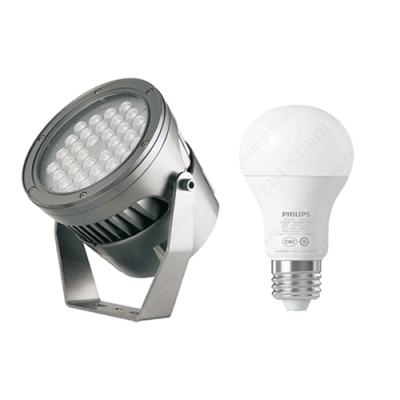 LEDs and Luminaire Test Solutions
 LM-79 and LM-80 Test Solutions
 LED Driver Test Solutions
 Household Appliances Test Solutions
 Mobile and Network Test Solutions
 Automotive Electronics Test Solutions
 Audio-Video and IT Test Solutions
 Cable and Wire Test Solutions
 Plugs and Sockets Test Solutions
 Power Switch Test Solutions
 Transformer Test Solutions
 Electric Toys Test Solutions
 Energy Meter Test Solutions
 Motor-Operated Tool Test Solutions
Select an organization
to browse standards

Figure: ESD Testing
During the production, use and transportation of electrical and electronic equipment, electrostatic discharge caused by human body static electricity, friction static electricity and other factors easily generates instantaneous high-voltage pulses, which interfere with or even damage core components such as circuits, chips and interfaces of equipment, leading to abnormal functions, data loss or permanent failures. Especially for equipment in consumer electronics, automotive electronics, industrial control and other fields, the sensitivity to electrostatic interference is higher, and electrostatic discharge immunity has become one of the core indicators of electromagnetic compatibility testing of products.
To evaluate the performance of electrical and electronic equipment under electrostatic interference scenarios, professional instruments are required to simulate different levels of electrostatic discharge pulses and carry out standardized immunity tests. The ESD Gun Test is a high-precision instrument specially developed for such tests. Its core function is to accurately reproduce electrostatic discharge waveforms and voltage levels in line with international and domestic standards, providing controllable and repeatable test conditions for detecting equipment operation stability. The LISUN ESD61000-2 ESD Gun Test is developed for the ESD immunity test requirements of electrical and electronic equipment. It not only meets the stringent requirements of standards such as IEC/EN 61000-4-2, but also has technical advantages such as wide voltage coverage, multi-mode testing and high-precision calibration, making it an important tool for ESD immunity tests in consumer electronics, automotive electronics, industrial instruments and other fields.
The core working principle of the ESD Gun Test is to generate electrostatic charges of specified voltage through a high-voltage generating circuit, which is discharged to the equipment under test (EUT) by means of contact or air discharge through discharge electrodes, simulating the electrostatic interference process in actual scenarios. At the same time, precise control of discharge waveform, current rise time, discharge interval and other parameters ensures that the test meets standard requirements and realizes scientific evaluation of equipment immunity performance.
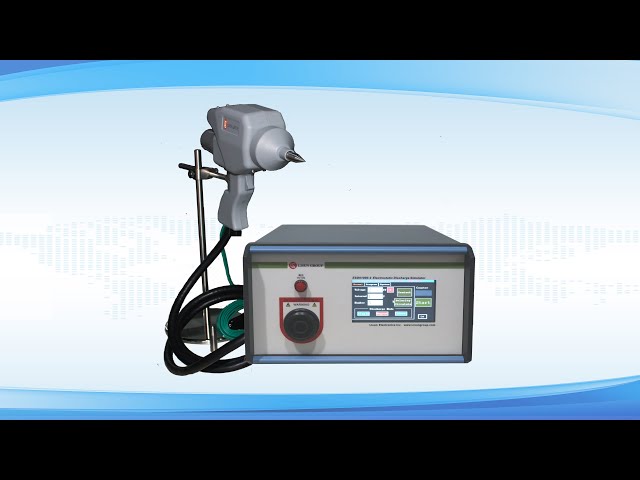
2.1 Core Principle of Electrostatic Discharge Immunity Test
Electrostatic discharge immunity tests are mainly divided into two modes: contact discharge and air discharge. The former is applied to metal accessible parts of equipment, releasing static electricity through a pointed electrode directly contacting the measured point, simulating electrostatic discharge caused by human touch on metal components. The latter is applied to insulating surfaces of equipment, generating air breakdown discharge through a round electrode within a certain distance, simulating electrostatic discharge when the human body approaches insulating parts.
Through built-in RC modules, high-voltage generators and waveform control circuits, the ESD Gun Test can accurately generate discharge waveforms in line with IEC/EN 61000-4-2 standards, with the discharge current rise time controlled within 0.7~1ns to ensure consistency with the pulse characteristics of actual electrostatic discharge. During the test, the generator can simulate electrostatic interference of different severity levels by adjusting output voltage, discharge polarity, discharge times and intervals, ranging from the basic level of 2kV to the highest level 4 of 15kV, fully covering the application scenario requirements of various equipment. The immunity performance level is determined by observing the operation status of the tested equipment under different levels of electrostatic discharge.
2.2 Test Requirements of Various Industries for ESD Gun Test
Electrical and electronic equipment in different industries have different ESD immunity test requirements due to different application scenarios. ESD Gun Test must have multi-mode, wide-range and high-compatibility characteristics to adapt to the test needs of various industries. For products such as mobile phones and tablets in the consumer electronics field, contact and air discharge tests on shells, buttons, charging interfaces and other parts are required, requiring the generator to have fine low-voltage adjustment and high-frequency discharge functions. For automotive electronic components such as on-board controllers and sensors, in addition to meeting general standards, special requirements of ISO 10605 must also be met, requiring the generator to be compatible with special accessories such as ESD field coupling plates. For inverters, instruments and other equipment in the industrial control field, stable operation under the highest level of 15kV electrostatic discharge is required, requiring the generator to have high voltage output and precise waveform control capabilities.
The LISUN ESD61000-2 ESD Gun Test can cover an output voltage range of 0.1~20kV, and its upgraded ESD61000-2A can reach 30kV, far exceeding the standard requirement of 15kV for level 4 air discharge. It supports two discharge modes (contact and air) and three voltage polarities (positive, negative, positive-negative alternation), which can meet the ESD immunity test requirements of consumer electronics, automotive electronics, industrial control and other industries, providing customized test solutions for different types of equipment.
The LISUN ESD61000-2 ESD Gun Test adopts the core design concept of high precision, high compatibility and high operability, with significant advantages in technical parameters, hardware configuration and test functions. The comparison of its core technical parameters with models of the same series fully reflects the performance characteristics of the equipment, providing reliable technical support for ESD immunity tests, as shown in the table below:
| Technical Parameter | ESD61000-2 | ESD61000-2A | ESD61000-2C |
| Output Voltage | 0.1~20kV ±5% | 0.1~30kV ±5% | 0.1~30kV ±5% |
| Output Polarity | Positive, Negative, Alternating | Positive, Negative, Alternating | Positive, Negative, Alternating |
| Discharge RC Module | 330Ω/150pF (replaceable) | Multi-specification replaceable | Multi-specification replaceable |
| Current Rise Time | 0.6~1ns | 0.6~1ns | 0.6~1ns |
| Discharge Electrode | Pointed (contact), Round (air) | Pointed, Round, 30mm large round | Pointed, Round, 30mm large round |
| Discharge Count | 1~9999 | 1~9999 | 1~9999 |
| Discharge Interval | 0.05s~99.99s | 0.05s~99.99s | 0.05s~99.99s |
| Complied Standards | GB/T 17626.2 (IEC/EN 61000-4-2) | GB/T 17626.2, GB/T 19951 (ISO 10605) | GB/T 17626.2, GB/T 19951 (ISO 10605) |
| Power Supply | AC220V (110V optional) ±10%, 50/60Hz | AC220V (110V optional) ±10%, 50/60Hz | AC220V (110V optional) ±10%, 50/60Hz |
3.1 Wide-range High-precision Voltage Output and Waveform Control
The ESD61000-2 ESD Gun Test features an output voltage range of 0.1~20kV with voltage accuracy controlled at ±5%, enabling fine adjustment from low to high ESD levels to meet test requirements of different severity. The equipment’s discharge current rise time is 0.6~1ns, fully complying with the IEC/EN 61000-4-2 standard for discharge waveforms, ensuring that simulated ESD pulses are highly consistent with real-world scenarios.
In addition, the equipment is equipped with a replaceable 330Ω/150pF RC module, allowing matching RC parameters to be selected according to different test standards and tested equipment types, further improving test accuracy and compatibility. Third-party CNAS calibration data shows that under positive and negative voltage outputs of 2~8kV, the first peak current, currents at 30ns and 60ns remain stable, and the rise time is controlled between 0.89~0.97ns. The consistency and reliability of calibration data provide a solid guarantee for accurate test results.
3.2 Multi-mode and Multi-function Test Operation Design
To adapt to different types of ESD immunity tests, the LISUN ESD61000-2 ESD Gun Test is designed with abundant test functions and trigger modes, supporting single test, count test, 20PPS continuous discharge, IEC level automatic test, programming mode and custom mode, which can meet different test requirements such as manual single-point test, automatic batch test and standard level test.
The equipment’s trigger modes are divided into manual and automatic. Manual trigger is suitable for single-point tests with precise positioning of measured points, while automatic trigger enables multi-point and high-frequency continuous discharge tests. The discharge count can be set from 1 to 9999 times, and the discharge interval ranges from 0.05s to 99.99s, which can be flexibly set according to standard requirements and test needs. In addition, the equipment is equipped with an LCD display supporting Chinese and English interface switching, with a simple and intuitive operation interface, greatly reducing the operating difficulty for testers and improving test efficiency.
3.3 Highly Compatible Standard Adaptation and Accessory Expansion
The ESD61000-2 ESD Gun Test fully complies with GB/T 17626.2 (IEC/EN 61000-4-2). The 2A and 2C models of the same series are also compatible with GB/T 19951 (ISO 10605) for automotive electronics. Test results can be used as important evidence for products to apply for CCC, CE, FCC and other domestic and international certifications, providing standardized test data for global market access.
To further enhance the professionalism and integrity of testing, the equipment can be equipped with a variety of special supporting accessories from LISUN: the ESD-DESK ESD test bench is designed in accordance with standards, including reference metal grounding plates, horizontal/vertical coupling plates and other components to provide a standardized test environment; the ESD-CALA ESD gun calibration kit enables precise calibration of the generator to ensure long-term test accuracy; the ESD-FCP ESD field coupling plate is specially designed for automotive electronics testing, simulating ESD field coupling interference to meet special test requirements of automotive electronic equipment. The comprehensive accessories make this ESD Gun Test a complete ESD immunity test solution, adapting to multi-scenario and multi-industry test needs.
As a professional ESD immunity test instrument, the LISUN ESD61000-2 ESD Gun Test is not only an important tool for product quality inspection and compliance certification, but also plays a key role in R&D optimization and production quality control of electrical and electronic equipment, providing technical support for ESD immunity management throughout the product life cycle and promoting the overall improvement of industry product quality.
4.1 Immunity Design Optimization in Product R&D Stage
In the R&D stage of electrical and electronic equipment, the ESD Gun Test can conduct multiple rounds of ESD immunity tests on product prototypes. By simulating ESD of different levels and parts, defects in circuit design, shielding protection, grounding methods and other aspects can be quickly identified. For example, in mobile phone R&D, 6kV contact discharge and 8kV air discharge tests can be performed on charging interfaces, earpieces, cameras and other parts using this equipment. If problems such as screen flickering or communication interruption occur, targeted protection measures such as adding TVS diodes and strengthening signal line shielding can be taken to improve the ESD immunity performance of products from the source.
4.2 Product Batch Inspection in Production Quality Control Stage
In the large-scale production stage, the ESD Gun Test can realize batch sampling and factory inspection of products. By randomly selecting samples for standard-level ESD tests, unqualified ESD immunity caused by component batch differences and production process fluctuations can be detected in a timely manner, preventing unqualified products from entering the market. For products with high safety requirements such as automotive electronics and industrial control, ESD immunity testing can be used as a mandatory factory inspection item. 15kV high-level air discharge testing ensures stable operation of products in harsh environments and improves quality reliability.
4.3 Standardized Test Basis in Compliance Certification Stage
Economies around the world have formulated strict standards for ESD immunity of electrical and electronic equipment. Products must pass corresponding tests to obtain market access qualifications. As a general international standard for ESD immunity testing, IEC/EN 61000-4-2 divides test levels into 4 levels, with the highest level 4 requiring 8kV contact discharge and 15kV air discharge. Most industrial equipment and consumer electronics need to reach level 3 or above.
The LISUN ESD61000-2 ESD Gun Test can accurately simulate ESD pulses of all levels, with test data meeting standard requirements and featuring repeatability and comparability, which can be directly used as test evidence for products to apply for domestic and foreign certifications. At the same time, the equipment’s calibration data is certified by third-party CNAS, ensuring the authority and universality of test results, helping enterprises shorten certification cycles, reduce certification costs, and provide technical support for the global market layout of products.
As a core instrument for evaluating ESD immunity of electrical and electronic equipment, the ESD Gun Test is an important tool for electromagnetic compatibility testing of products. Its accurate voltage output, waveform control and mode design directly determine the scientificity and reliability of test results. The LISUN ESD61000-2 ESD Gun Test is specially developed for ESD immunity testing of electrical and electronic equipment. Through 0.1~20kV wide-range high-precision voltage output, 0.6~1ns standard discharge waveform and multi-mode multi-function test operation, it accurately reproduces ESD pulses and provides standardized test conditions for equipment immunity testing.
The equipment not only fully complies with GB/T 17626.2 (IEC/EN 61000-4-2), but also can adapt to special test requirements of automotive electronics and other industries through accessory expansion. It plays an important role in product R&D optimization, production quality control and compliance certification, effectively solving the performance evaluation needs of various products under electrostatic interference scenarios, and providing technical support for product quality improvement in consumer electronics, automotive electronics, industrial control and other fields.
With the development of 5G, Internet of Things, artificial intelligence and other technologies, the integration and intelligence of electrical and electronic equipment continue to improve, and core components such as chips and sensors are more sensitive to electrostatic interference. The requirements for accuracy, efficiency and intelligence of ESD immunity testing will continue to increase. In the future, ESD Gun Test will develop towards intelligent control, multi-channel synchronous testing and big data analysis. The introduction of artificial intelligence algorithms will realize fully automatic control of test processes and intelligent analysis of test data. Combined with big data technology, it will provide accurate suggestions for product ESD immunity optimization. At the same time, the equipment will further expand voltage range and waveform types to adapt to test needs of more new equipment such as millimeter-wave equipment and quantum communication equipment, providing a more comprehensive and professional solution for ESD immunity testing of electrical and electronic equipment.
Tags:ESD61000-2Your email address will not be published. Required fields are marked *

 English
 中文简体
中文简体 English
 Русский
 Español
 Português
 Türkçe
 العربية
 Deutsch
 Polski
 Italiano
 Français
 한국어
한국어 ไทย
ไทย Tiếng Việt
 日本語
日本語