LM-79 Moving Detector Goniophotometer (Mirror Type C)
LSG-6000
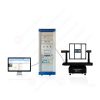
High Precision Rotation Luminaire Goniophotometer
LSG-1890B
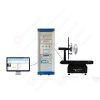
High Precision Rotation Luminaire Goniospectroradiometer
LSG-1890BCCD

Goniophotometer for Automotive and Signal Lamps
LSG-1950
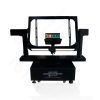
Goniophotometer for Traffic Signal Lamps (Economical Model)
LSG-1950S
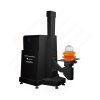
Goniophotometer for Airfield Lighting
LSG-1940
VAD Fire Alarm Visual Alert Device Goniophotometer
LSG-1930
Compact Goniophotometer
LSG-1200A
LED Goniophotometer
LSG-1100
Near Field Moving Detector Goniophotometer
LSG-1900B
 LEDs and Luminaire Test Solutions
 LM-79 and LM-80 Test Solutions
 LED Driver Test Solutions
 Household Appliances Test Solutions
 Mobile and Network Test Solutions
 Automotive Electronics Test Solutions
 Audio-Video and IT Test Solutions
 Cable and Wire Test Solutions
 Plugs and Sockets Test Solutions
 Power Switch Test Solutions
 Transformer Test Solutions
 Electric Toys Test Solutions
 Energy Meter Test Solutions
 Motor-Operated Tool Test Solutions
Select an organization
to browse standards
In the R&D and quality inspection of products in LED lighting, electrical and electronic, and electronic component industries, environmental adaptability and reliability verification are core processes. As a key device for simulating natural climatic environments, a Thermal Test Chamber can achieve precise control and cyclic simulation of temperature and humidity. Taking the LISUN GDJS-015B Thermal Test Chamber as the research object, this paper analyzes its adaptability to scenarios such as lumen maintenance rate testing for LED luminaires, expounds on the core technical advantages of wide temperature range coverage and high-precision temperature and humidity control, and discusses the application value of this device in environmental testing of various industries combined with hardware configuration and safety system design, providing technical reference for R&D verification and compliance certification of industrial products.
With the rapid development of the LED lighting and electrical & electronic industries, the application scenarios of products are becoming increasingly complex. Extreme temperature and humidity changes, as well as dry-wet alternating environments, can easily lead to product performance degradation and structural failure, directly affecting product service life and operational safety. Therefore, in the stages of product R&D, production quality inspection and compliance certification, it is a necessary link to ensure product quality by simulating the dynamic changes of natural climate through professional equipment and carrying out environmental adaptability and reliability tests.
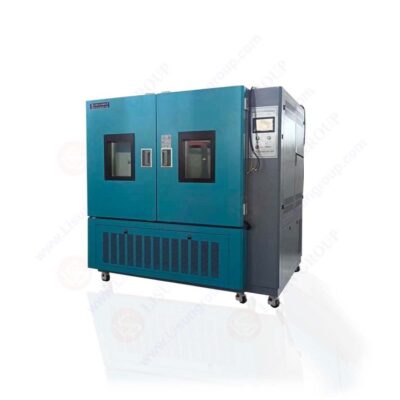
Figure: Humidity chamber
As the core equipment for environmental simulation testing, a Thermal Test Chamber can accurately reproduce multi-climate scenarios such as low temperature tolerance, high temperature heat resistance, humidity aging, and dry-wet alternation, accelerating the assessment of product performance stability under extreme or cyclic climatic conditions. The LISUN GDJS-015B Thermal Test Chamber is specially developed for the core testing needs of the LED lighting, electrical and electronic, and electronic component industries. It not only fully meets the stringent requirements of the IES LM-80-08 standard for LED lumen maintenance rate testing but also, with the core advantages of wide temperature range coverage and high-precision temperature and humidity control, combined with imported components and multiple safety protection systems, has become an important tool for conducting environmental tests in various industries, providing scientific and reliable test data for the determination of product weather resistance.
The core value of a Thermal Test Chamber lies in providing environmental simulation tests that fit the actual usage scenarios for products in various industries. Among them, the lumen maintenance rate test in the LED lighting industry is a typical application scenario, and the device can also meet the high and low temperature, humidity and aging test requirements of electrical and electronic products and electronic components, adapting to the core testing requirements of multiple industries.
2.1 Adaptability to Lumen Maintenance Rate Testing in the LED Lighting Industry
Lumen maintenance rate is a core indicator measuring the service life and performance of LED luminaires. As the authoritative standard for this test, the IES LM-80-08 standard requires the test to be conducted at at least two different temperatures, 55°C and 85°C, with a test duration of not less than 6000 hours, and even more than 10000 hours for high-demand tests. Moreover, the test process needs to maintain a long-term stable temperature and humidity environment to avoid environmental fluctuations affecting the measurement accuracy of luminous flux and color coordinates.
The LISUN GDJS-015B Thermal Test Chamber is specially designed for LED lumen maintenance rate testing. It can provide a long-term stable temperature and humidity control environment, accurately maintain the test standard temperatures such as 55°C and 85°C, and control the temperature fluctuation within ±0.5°C, fully meeting the stringent requirements of the IES LM-80-08 standard on the test environment. At the same time, the humidity adjustment range of the device covers 20%~98%RH. According to the actual application scenarios of LED luminaires, it can simulate the lumen degradation under different humidity environments, providing precise environmental conditions for evaluating the lumen maintenance rate and color maintenance rate of LED luminaires. Its test data can be directly used as key evidence for LED products to apply for Energy Star, China Energy Efficiency Label and other certifications.
2.2 Environmental Testing Requirements for Electrical and Electronic and Electronic Component Industries
Electrical and electronic products and core components inevitably experience changes in different regions and climates during production and use. High and low temperature shock and damp heat aging can easily cause problems such as component solder joint shedding, circuit board corrosion, and plastic brittleness. A Thermal Test Chamber can accelerate the assessment of product performance stability in extreme environments by simulating a wide temperature range change of -70°C~150°C and a 12h+12h cyclic damp heat cycle.
The LISUN GDJS-015B Thermal Test Chamber can accurately simulate the alternating damp heat environment specified in the GB/T 2423.4-2008 standard, and also meets the requirements of international standards such as IEC 60068-2-30:2005. Whether it is the comprehensive high and low temperature damp heat test for the whole machine of electrical and electronic products, or the separate environmental test for resistors, capacitors, chips and other components, it can provide customized test schemes, effectively discover product defects in environmental adaptation, and provide data support for product structure optimization and material selection.
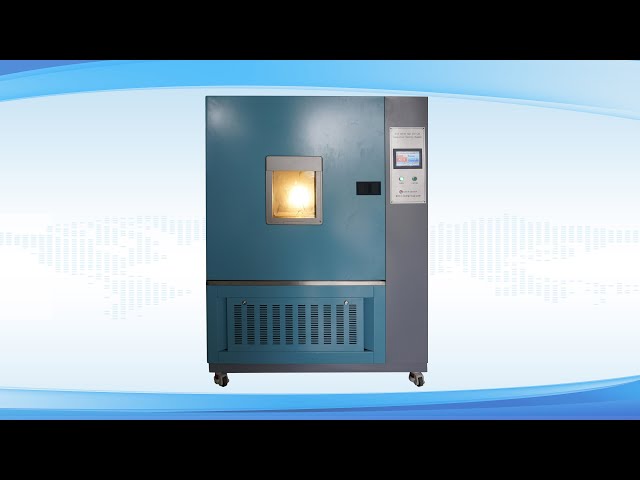
The core competitiveness of the LISUN GDJS-015B Thermal Test Chamber is reflected in the core advantage of wide temperature range coverage + high-precision temperature and humidity control. At the same time, relying on high-quality hardware configuration, intelligent control system and perfect safety protection system, it ensures the accuracy, stability and safety of the test process. The comparison of its core technical parameters with the same series products further reflects the performance advantages of the device, as shown in the table below:
| Technical Parameter | GDJS-015B | GDJS-225* | GDJS-500* |
|---|---|---|---|
| Working Chamber Size (cm) | 100*100*150 | 50*60*75 | 70*80*90 |
| External Dimensions (cm) | 245*160*231 | 105*102*200 | 132*132*217 |
| Operating Power | 16.5kW | 7.0kW | 13.5kW |
| Temperature Range | A: -20°C~150°C B: -40°C~150°C C: -60°C~150°C D: -70°C~150°C | Same as left | Same as left |
| Temperature Fluctuation/Uniformity | ±0.5°C/±2°C | ±0.5°C/±2°C | ±0.5°C/±2°C |
| Temperature Rise/Temperature Drop Rate | 1.0°C~3.0°C/min / 0.7°C~1.0°C/min | Same as left | Same as left |
| Humidity Range | 20%~98%RH | 20%~98%RH | 20%~98%RH |
| Humidity Deviation | -2%~-3% | -2%~-3% | -2%~-3% |
3.1 Wide Temperature Range Coverage and High-Precision Temperature and Humidity Control
The GDJS-015B Thermal Test Chamber has four temperature ranges from A to D, which can achieve the widest full temperature range coverage of -70°C~150°C, and can simulate extreme temperature environments in different regions such as frigid zones and tropical zones. The device uses a platinum resistance PT100Ω/MV as the temperature sensor, which has the characteristics of high precision and anti-interference. Combined with the refrigeration and heating system composed of an independent Ni-Cr alloy electric heater and the original TECUMSEH compressor from France, it achieves precise temperature control. The temperature fluctuation is as low as ±0.5°C, and the uniformity is maintained within ±2°C.
In terms of humidity control, the device is equipped with a Vaisala humidity sensor from Finland. Compared with the traditional wet-and-dry bulb humidity measurement method, it has higher precision and does not require regular maintenance. Combined with an automatic purified water supply system, it achieves a wide humidity range adjustment of 20%~98%RH, with humidity deviation controlled at -2%~-3%. It can accurately simulate different humidity environments such as humidity and dryness, meeting the damp heat aging test requirements of multiple scenarios.
3.2 High-Quality Hardware Configuration and Intelligent Control System
In terms of hardware configuration, the GDJS-015B Thermal Test Chamber uses imported core components to ensure the stability and service life of the device. The inner tank is made of SUS304 stainless steel, which is corrosion-resistant and easy to clean, adapting to the long-term damp heat test environment; the insulation layer is a composite structure of “rigid polyurethane foam + ultra-fine glass fiber”, and the door frame is equipped with high-temperature aging silicone rubber sealing strip, which effectively prevents temperature and humidity leakage and ensures the stability of the environment inside the chamber.
The circulation system of the device consists of a temperature-resistant low-noise air-conditioned motor (≤65dB) and a multi-blade centrifugal fan wheel, ensuring uniform temperature and humidity distribution in the chamber and avoiding local temperature and humidity deviations affecting the test results. The control system adopts a self-developed dual-core design of temperature control instrument + PLC, supporting Chinese and English operation interfaces, and is equipped with multiple interfaces such as USB/RS-232/RS-485, which can connect to a computer to realize remote monitoring of the test process and full traceability of test data, greatly improving the efficiency of the test and the convenience of data management.
3.3 Design of Multiple Safety Protection Systems
To ensure the safety of the device and test samples during the test, the GDJS-015B Thermal Test Chamber integrates an all-round safety protection system, covering electrical protections such as leakage, short circuit, electric heater overheating, and motor overheating, as well as refrigeration system protections such as compressor overpressure, overload, and overcurrent. If any abnormality occurs in any link, the device will automatically alarm and stop running, effectively avoiding test sample damage caused by equipment failure.
At the same time, the water circuit and circuit system of the device are separately designed to avoid circuit faults caused by water leakage from the humidification pipeline; the working voltage adopts AC 380V±10% three-phase power supply, adapting to the power supply environment of industrial production. Moreover, the device only needs to operate in an environment of 5°C~30°C and humidity ≤85%RH (no condensation, good ventilation), which has loose requirements on the use environment, making it easy to deploy in enterprise laboratories and third-party testing institutions.
As a professional environmental simulation test device, the LISUN GDJS-015B Thermal Test Chamber is not only an important tool for carrying out product R&D verification in the LED lighting, electrical and electronic, and electronic component industries, but also plays a key role in production quality inspection and compliance certification, providing technical support for the whole life cycle of product quality control.
4.1 Support for Design Optimization in the Product R&D Stage
In the product R&D stage, a Thermal Test Chamber can conduct multiple rounds of environmental simulation tests on product prototypes. By simulating product performance changes under different temperature and humidity environments, it can quickly discover defects in product structure design, material selection, and process manufacturing. For example, in the R&D of LED luminaires, the device can be used to test the lumen degradation of different heat dissipation structures and packaging materials in high temperature and high humidity environments, providing data basis for optimizing lamp heat dissipation design and selecting packaging materials with better weather resistance, thereby improving the environmental adaptability of products from the source.
4.2 Guarantee for Quality Control in the Production Quality Inspection Stage
In the stage of large-scale production, a Thermal Test Chamber can realize batch sampling inspection of products. By randomly selecting samples for high and low temperature damp heat alternating tests, it can timely detect product quality problems caused by differences in component batches and production process fluctuations, avoiding unqualified products from entering the market. At the same time, the device can conduct incoming inspection of core components in the production process to ensure that the environmental adaptability of electronic components meets the product production requirements, and control product quality from the supply chain end.
4.3 Standard Test Basis for Compliance Certification Stage
All economies in the world have formulated stringent environmental adaptability standards for products such as LED lighting and electrical and electronic products, such as China’s GB series standards, international IEC series standards, and North American IES LM-80-08 standards. Products can only obtain market access qualifications after passing corresponding environmental tests. The LISUN GDJS-015B Thermal Test Chamber complies with multiple domestic and international standards such as GB/T 2423.1-2008, GB/T 2423.4-2008, IES LM-80-08, and IEC 60068-2-30:2005. Its test data is authoritative and universal, and can be directly used as the test basis for products to apply for CCC, CE, Energy Star and other certifications, helping enterprises shorten the certification cycle and reduce certification costs.
The LISUN GDJS-015B Thermal Test Chamber, with its high adaptability to the core testing needs of the LED lighting, electrical and electronic, and electronic component industries, has become a high-quality device in the field of environmental simulation testing. It can not only provide a long-term stable temperature and humidity environment for LED lumen maintenance rate testing, fully meeting the requirements of the IES LM-80-08 standard, but also, with the core technical advantages of wide temperature range coverage and high-precision temperature and humidity control, combined with imported components and multiple safety protection systems, ensure the accuracy, stability and safety of the test process.
In practical applications, the Thermal Test Chamber provides comprehensive technical support for product R&D design optimization, production quality control, and compliance certification, effectively improving the environmental adaptability and reliability of products, and helping enterprises enhance product quality and market competitiveness. With the development of 5G, Internet of Things, new energy and other technologies, the integration and intelligence level of electrical and electronic and LED lighting products will be further improved, and the requirements for the accuracy, efficiency and customization of environmental simulation testing will continue to increase.
In the future, Thermal Test Chambers will develop towards the direction of intelligence, high precision and multi-function. The introduction of artificial intelligence algorithms will realize fully automatic control of the test process and intelligent analysis of test data, and combined with big data technology, provide more accurate suggestions for product environmental adaptability optimization. At the same time, the device will further expand the temperature and humidity adjustment range to adapt to the environmental test requirements of more new products, such as extreme environment tests in high-end fields such as new energy vehicle electronics and aerospace electronic components, and provide technical guarantee for product quality improvement in more industries.
Tags:GDJS-015BYour email address will not be published. Required fields are marked *

 English
 中文简体
中文简体 English
 Русский
 Español
 Português
 Türkçe
 العربية
 Deutsch
 Polski
 Italiano
 Français
 한국어
한국어 ไทย
ไทย Tiếng Việt
 日本語
日本語