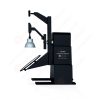
LM-79 Moving Detector Goniophotometer (Mirror Type C)
LSG-6000
High Precision Rotation Luminaire Goniophotometer
LSG-1890B
High Precision Rotation Luminaire Goniospectroradiometer
LSG-1890BCCD

Goniophotometer for Automotive and Signal Lamps
LSG-1950
Goniophotometer for Traffic Signal Lamps (Economical Model)
LSG-1950S
VAD Fire Alarm Visual Alert Device Goniophotometer
LSG-1930
Goniophotometer for Airfield Lighting
LSG-1940
Compact Goniophotometer
LSG-1200A
LED Goniophotometer
LSG-1100
Near Field Moving Detector Goniophotometer
LSG-1900B
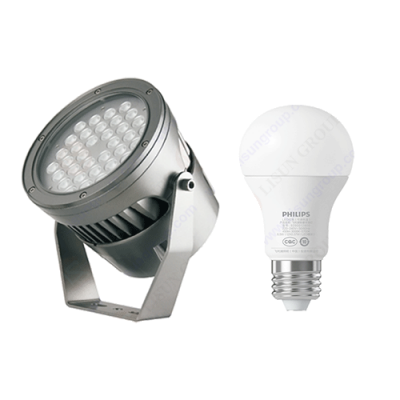 LEDs and Luminaire Test Solutions
 LM-79 and LM-80 Test Solutions
 LED Driver Test Solutions
 Household Appliances Test Solutions
 Mobile and Network Test Solutions
 Automotive Electronics Test Solutions
 Audio-Video and IT Test Solutions
 Cable and Wire Test Solutions
 Plugs and Sockets Test Solutions
 Power Switch Test Solutions
 Transformer Test Solutions
 Electric Toys Test Solutions
 Energy Meter Test Solutions
 Motor-Operated Tool Test Solutions
Select an organization
to browse standards
Abstract
On May 5, 2026, Brazil’s INMETRO officially issued Portaria nº 231/2026, replacing the old Portaria nº 69/2022 as the unified technical quality specification and conformity assessment regulation for LED light sources and LED luminaires. The biggest change in this revision is that LED luminaires are formally included in the scope of mandatory certification, instead of only regulating integrated LED lamps. It covers indoor, outdoor, commercial, industrial and household LED lighting products, with a transition period ending on May 5, 2030. After the transition period, LED lamps and luminaires without INMETRO certificates and registration will be prohibited from import, circulation and sales. The new regulation has also tightened indicators including photometric performance, electrical requirements, EMC harmonics, reliability, IP protection and L70 lumen maintenance. It brings new pressure on laboratory testing, sample verification and quality control for lighting enterprises exporting to Brazil. The complete set of photoelectric, safety, environmental reliability and EMC test instruments from LISUN (Shanghai LISUN) can match all test items specified in Portaria nº 231/2026, helping lighting manufacturers complete pre-testing and pre-submission verification efficiently and reduce the risk of certification failure.
1. Core Regulatory Changes and Scope of Application
The full name of Portaria nº 231/2026 is Regulamento Técnico da Qualidade e os Requisitos de Avaliação da Conformidade para Lâmpadas e Luminárias com Tecnologia LED – Consolidado, namely the consolidated technical quality regulation and conformity assessment requirements for LED lamps and LED luminaires.
1. Expanded regulated scope: The old Portaria 69/2022 only applied to LED lamps with integrated drivers. The new version covers both LED lamps and LED luminaires, including fixed, recessed, suspended, floodlights, garden lights, submersible pool LED luminaires, etc. Smart dimmable and CCT-tunable LED lighting products are also within the regulated list.
2. Clear exemption list: LED strips, festive decorative lights, empty luminaire bodies for replaceable light sources, public road lighting luminaires, OLED products, professional stage lighting and independent PV matching products are exempt from mandatory certification under this regulation. Enterprises shall classify products in advance to avoid unnecessary certification work.
3. Transition arrangement: The regulation took effect upon release on May 5, 2026. Voluntary certification and registration applications are acceptable from now on. **The mandatory compliance deadline is May 5, 2030. Full market access control will be enforced after this date; products without INMETRO registration numbers cannot clear customs or be sold locally.
4. Applicable test standard system: Photometric performance follows ANSI/IES LM-79-24; harmonic current complies with IEC 61000-3-2; product safety is based on ABNT NBR IEC 60598-1, while LED drivers follow NBR IEC 61347; the minimum required L70 lumen maintenance life is 15,000 hours, together with supporting environmental reliability tests including temperature cycling, damp heat, salt spray and IP dust & water ingress protection.
2. Key Technical Indicators of Portaria nº 231/2026
Compared with the previous version, the quantified requirements are stricter and these are the items most likely to fail during testing:
– Power tolerance: The deviation between measured power and rated power ≤ ±10%; for rated power below 5W, the limit is ±0.5W.
– Power Factor (PF) classification: No PF requirement for products ≤2W; minimum PF 0.4 for 2–5W; minimum PF 0.7 for 5–25W (minimum PF 0.9 for LED tubes); minimum PF 0.9 for products >25W.
– Lumen maintenance: Measured luminous flux shall not be less than 90% of the rated value; CCT and CRI must be measured and marked, and correlated color temperature shall refer to ANSI C78.377.
– EMC harmonics: Limits follow the latest edition of IEC 61000-3-2. Harmonic performance of LED drivers is a frequent non-conformity item.
– Additional requirements for outdoor luminaires: IP protection rating, salt spray, temperature-humidity cycling and UV aging, to simulate high temperature, high humidity and coastal salt corrosion working conditions in Brazil.
– Durability: Minimum L70 lumen depreciation life of 15,000 hours. Manufacturers can evaluate long-term reliability in advance via accelerated aging testing to avoid non-compliance in certification sampling tests.
All above parameters require raw test data generated by calibrated, traceable instruments. Third-party INMETRO-accredited laboratories will review certification applications based on these test reports. Therefore, in-house pre-test capability has become an important competitive threshold for the Brazilian lighting market.
3. LISUN Test Solutions Matching Portaria nº 231/2026
To meet the full test requirements of INMETRO 231/2026, LISUN provides an integrated test solution covering four major sections: photoelectric performance, electrical safety, EMC harmonics and environmental reliability, aligned with standards referenced in the regulation such as LM-79, IEC 60598 and IEC 61000-3-2.
1. Photoelectric Performance Test (Luminous Flux, CCT, CRI, Spectrum, Luminous Intensity Distribution, Efficacy)
LSG-6000 LM-79 Moving Detector Goniophotometer (Mirror Type C) together with LPCE-2(LMS-9000) High Precision Spectroradiometer Integrating Sphere System supports testing per LM-79. It directly outputs luminous flux, CCT, CRI, R9, spectrum curve and luminous efficacy data to fully verify the photometric parameters required by the new regulation. Combined with a goniophotometer, it can complete light distribution curve testing for floodlights, garden lights and industrial LED luminaires. Many lighting customers use this system for self-inspection before sending samples to Brazilian accredited labs, to correct issues such as low PF, insufficient luminous flux or unsatisfactory CRI at an early stage.
2. Electrical and EMC Harmonic & Flicker Test
LISUN LSHF61000-3-2/3 Harmonics and Flicker Analyzer Test System complies with IEC 61000-3-2 and IEC 61000-3-3, used to measure input current harmonics, voltage fluctuations and flicker. Paired with a programmable AC power supply, it simulates Brazilian grid voltage variation conditions and monitors input power and power factor simultaneously, to accurately check power deviation and PF classification. It is the core instrument for pre-compliance harmonic testing of LED drivers and luminaires.
3. In addition to EMC requirements concerning harmonics and voltage fluctuations, the technical specifications referenced in Portaria 231/2026 also mandate performance controls for LED luminaires regarding the dynamic stability of light output, startup behavior, and the stabilization process during the initial ramp-up phase. When implementing Portaria 231/2026, many certification laboratories in Brazil also conduct additional evaluations of optical flicker (distinct from grid-related Pst) for dimmable and smart luminaires. The LISUN LSRF-3 Lamp Start, Run-up Time and Flicker Test System is capable of meeting these specific testing requirements.
4. Environmental Reliability and Weathering Test (Critical for Outdoor Luminaires)
GDJS series Temperature Humidity Chamber | Thermal Chamber is used for temperature cycling and constant damp heat tests. IPX water spray test equipment and dust test chambers verify IP protection grades; salt spray chambers assess corrosion resistance for coastal applications; xenon aging test chambers simulate long-term UV exposure in outdoor Brazil, to evaluate performance degradation of housings, lenses and sealing structures, support L70 life assessment and material reliability verification.
5. Safety Supporting Tests
With hipot testers, insulation resistance testers and earth continuity testers, we cover safety tests per ABNT NBR IEC 60598, LISUN LS9955 Automatic Electrical Safety Tester including insulation resistance, touch current and other routine safety items for LED luminaires.
The advantages of this complete solution include unified software platform and metrological traceability. The data format is compatible with third-party laboratories. Customers can build their own in-house laboratories for incoming inspection and finished product sampling, or iterate product design against Portaria nº 231/2026 indicators during new product development, to avoid hardware defects found only at the certification stage, which lead to extra sample cost, cycle delay and certification expense.
4. Implementation Suggestions for Export Manufacturers
First, complete correct product classification. Distinguish whether products fall under mandatory scope or exemption. Do not start 231/2026 certification blindly for LED strips or empty luminaire bodies without light sources. Submersible pool LED luminaires are regulated products with stringent IP waterproof requirements, so sealing reliability testing must be strengthened.
Second, plan the compliance timeline reasonably. Although the mandatory deadline is several years away, Brazilian certification generally has a long lead time, including sample rectification and factory audits. Leading manufacturers have arranged pre-testing in advance to secure registration numbers and seize online and offline sales channels.
Third, establish regular reliability verification mechanisms. Given the L70 15,000-hour life requirement and outdoor weathering requirements in the new regulation, relying solely on third-party laboratories for long-term aging tests will incur high costs. Equipped with LISUN spectrophotometric and environmental test instruments, factories can carry out accelerated aging and periodic sampling tests independently to stabilize batch consistency continuously.
Fourth, upgrade documentation systems synchronously. Besides test reports, INMETRO review also covers product labels, nameplates, user manuals and Procel energy efficiency information. All marked parameters such as PF, luminous flux and CCT must be consistent with measured values; nominal values shall not be overstated.
5. Conclusion
INMETRO Portaria nº 231/2026 marks a major regulatory upgrade for Brazil’s LED lighting market. Supervision has expanded from single light sources to complete luminaires, with higher market access thresholds and stricter technical specifications. For Chinese LED lighting exporters, compliance is no longer a one-time sample submission for certification. It is a systematic work running through R&D, incoming material control, mass production and shipment. LISUN (Shanghai LISUN) has long focused on lighting photoelectric and reliability testing. Our instruments are designed to align with international standards referenced by INMETRO, providing stable and traceable test hardware and technical support for Chinese LED manufacturers targeting the Brazilian market, helping them meet the compliance requirements of Portaria nº 231/2026 and steadily expand lighting business in Latin America.
Tags:GDJS-015B , JL-X , LPCE-2 (LMS-9000) , LS9955 , LSG-6000 , LSRF-3 , SC-015 , XD-WAT-Ci3000 , YWX/Q-010Your email address will not be published. Required fields are marked *

 English
 中文简体
 English
 Русский
 Español
 Português
 Türkçe
 العربية
 Deutsch
 Polski
 Italiano
 Français
 한국어
 ไทย
 Tiếng Việt
 日本語