LM-79 Moving Detector Goniophotometer (Mirror Type C)
LSG-6000
High Precision Rotation Luminaire Goniophotometer
LSG-1890B
High Precision Rotation Luminaire Goniospectroradiometer
LSG-1890BCCD

Goniophotometer for Automotive and Signal Lamps
LSG-1950
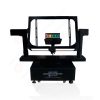
Goniophotometer for Traffic Signal Lamps (Economical Model)
LSG-1950S
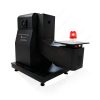
VAD Fire Alarm Visual Alert Device Goniophotometer
LSG-1930
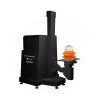
Goniophotometer for Airfield Lighting
LSG-1940
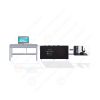
Compact Goniophotometer
LSG-1200A
LED Goniophotometer
LSG-1100
Near Field Moving Detector Goniophotometer
LSG-1900B
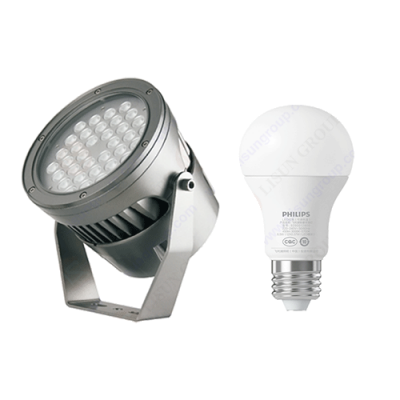 LEDs and Luminaire Test Solutions
 LM-79 and LM-80 Test Solutions
 LED Driver Test Solutions
 Household Appliances Test Solutions
 Mobile and Network Test Solutions
 Automotive Electronics Test Solutions
 Audio-Video and IT Test Solutions
 Cable and Wire Test Solutions
 Plugs and Sockets Test Solutions
 Power Switch Test Solutions
 Transformer Test Solutions
 Electric Toys Test Solutions
 Energy Meter Test Solutions
 Motor-Operated Tool Test Solutions
Select an organization
to browse standards
Abstract
Temperature and humidity in natural environments change continuously with seasons and day-night cycles. Climatic conditions including low temperature, high temperature, high humidity and alternating dry-wet cycles exert cumulative impacts on material properties, structural integrity and electrical performance of products. The temperature and humidity controlled chamber reproduces such dynamic temperature and humidity environments under laboratory conditions, which accelerates the evaluation of product performance stability and structural reliability under extreme or cyclic climatic conditions. Taking the LISUN GDJS-015B programmable temperature and humidity alternating test chamber as an example, this paper describes its working principle for multi-climatic simulation, system configuration, key specifications and applicable standards. It provides technical support for product R&D verification, production quality inspection and compliance certification in the industrial sector.
1. Introduction
Electronic products, LED luminaires, components and on-board equipment are exposed to repeated environmental transitions from severe cold, high temperature, high humidity to dry conditions throughout their service life. Without sufficient climatic assessment before mass production, products may suffer accelerated light attenuation and structural deformation in mild cases, or insulation failure and safety hazards in severe cases. Traditional aging tests can only cover single working conditions and fail to restore the coupling effect of temperature and humidity. The temperature and humidity controlled chamber can adjust temperature and relative humidity simultaneously within one unit and execute multi-stage alternating cycles according to preset programs, making it the core equipment for environmental adaptability testing.
2. Multi-Climatic Scenario Simulation and Accelerated Assessment Mechanism
By coordinated control of temperature field and humidity field, the temperature and humidity controlled chamber realizes four typical climatic test scenarios:
| Climatic Scenario | Typical Working Condition | Test Object | Potential Failure Risk |
| Low temperature resistance | Constant temperature -20℃~-70℃ | Shrinkage of structural parts, sealing performance | Cold brittleness, cracking, stress concentration |
| High temperature heat resistance | Constant high temperature up to +150℃ | Thermal aging and flame retardancy of materials | Deformation, softening, insulation degradation |
| Humidity aging | High temperature & high humidity (e.g. 85℃/85%RH) | Coatings, connectors, PCB | Corrosion, mildew, electrochemical migration |
| Dry-wet alternation | 12h humid cycle + 12h dry cycle | Sealing structure, bonding interface | Condensation, blistering, degradation of bonding strength |
The core logic of accelerated assessment lies in equivalent stress amplification. By elevating temperature and humidity stress and applying cyclic loading, degradation processes that normally take months to appear can be reproduced within weeks, so as to quickly judge whether the weather resistance of products meets the expected service life requirements.
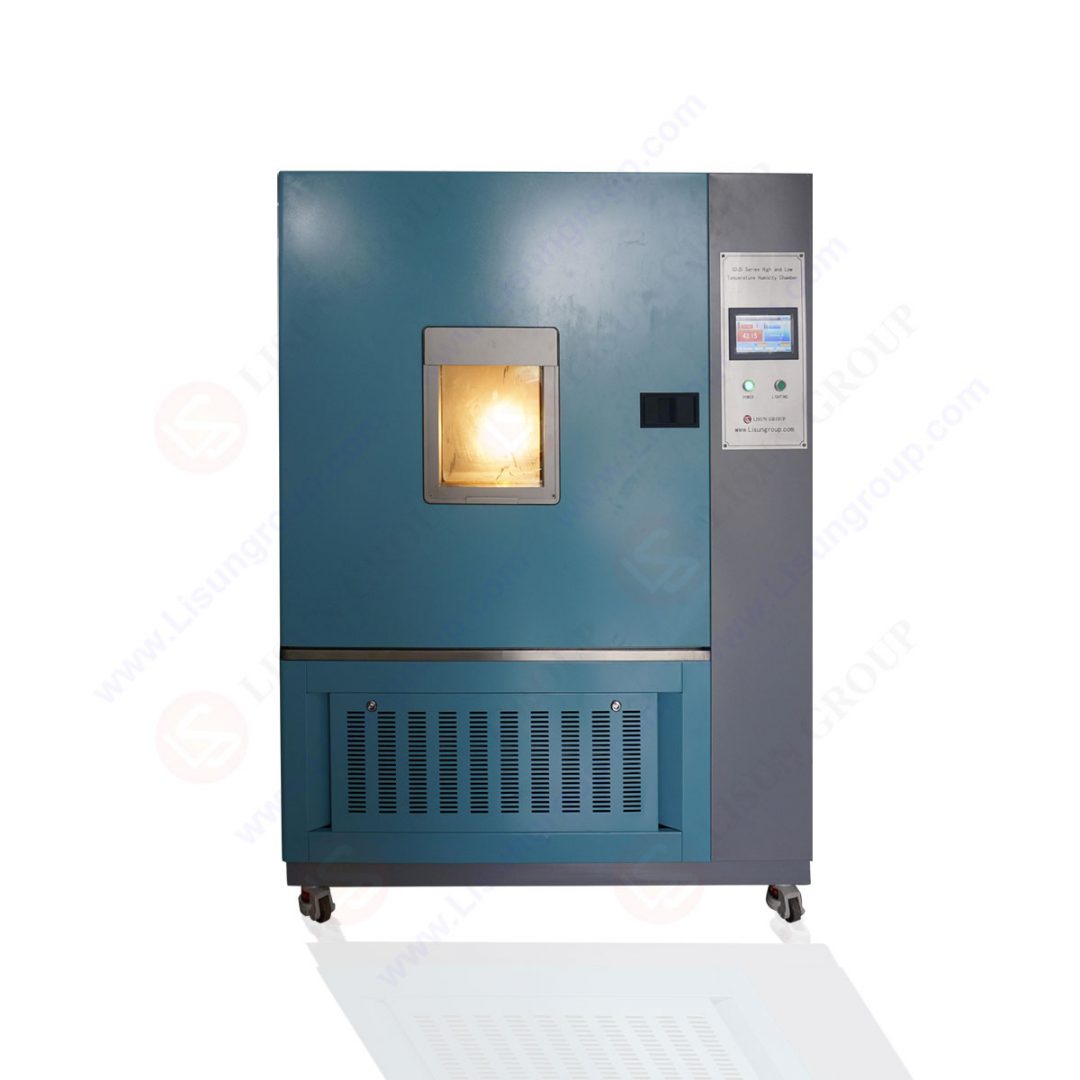
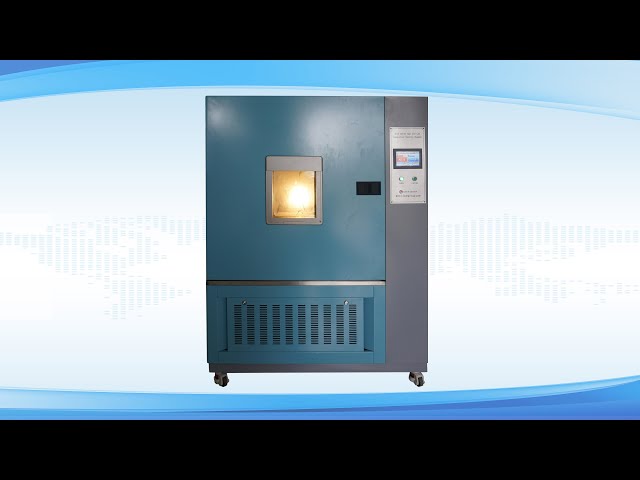
GDJS-015B Temperature Humidity Chamber | Thermal Chamber
3. Technical Configuration of LISUN GDJS-015B Temperature and Humidity Controlled Chamber
GDJS-015B is a representative model of the GDJS series programmable temperature and humidity alternating test chamber. Its system composition is described as follows:
– Chamber Body: SUS304 stainless steel inner tank with good corrosion resistance and easy cleaning for long-term humid and hot tests. The thermal insulation layer consists of rigid polyurethane foam and superfine glass fiber. The door frame is equipped with high-temperature aging silicone rubber sealing strips to prevent leakage of temperature and humidity.
– Temperature Control System: Dual-core control of self-developed temperature controller and PLC, supporting Chinese and English operation. It is equipped with USB/RS-232/RS-485 interfaces for remote monitoring and data traceability via computer.
– Humidity Acquisition: Vaisala humidity sensor from Finland, which delivers higher precision than traditional wet-dry bulb sensors and requires less regular maintenance. It is matched with an automatic purified water supply system to reduce operation and maintenance costs.
– Temperature Acquisition: PT100Ω/MV platinum resistance sensor with high precision and anti-interference performance.
– Heating System: Independent nichrome alloy electric heater for uniform heating without local overheating.
– Refrigeration System: Hermetic air-cooled compressor with original TECUMSEH compressor imported from France.
– Circulation System: Low-noise air-conditioning motor (≤65dB) and multi-blade centrifugal wind wheel to ensure uniform distribution of temperature and humidity inside the chamber.
– Safety Protection: Integrated protection against electric leakage, short circuit, heater overheat, motor overheat, compressor overpressure, overload and overcurrent.
4. Key Performance Specifications
The main technical parameters of GDJS-015B are listed in the table below:
| Item | Specification |
| Inner Chamber Dimension | 100×100×150 cm |
| Temperature Range | A: -20℃~150℃; B: -40℃~150℃; C: -60℃~150℃; D: -70℃~150℃ |
| Temperature Fluctuation / Uniformity | ±0.5℃ / ±2℃ |
| Heating Rate | 1.0℃~3.0℃/min |
| Cooling Rate | 0.7℃~1.0℃/min |
| Humidity Range | 20%~98%RH |
| Humidity Deviation | -2%~-3%RH |
| Rated Power | 16.5kW |
| Working Voltage | AC 380V±10%, 50Hz/60Hz |
With a wide temperature range from -70℃ to +150℃ and humidity coverage of 20%~98%RH, this temperature and humidity controlled chamber can complete the full range of low temperature resistance, high temperature heat resistance and humidity aging tests in one unit. It is especially suitable for long-term stable temperature and humidity environment required by LED lumen maintenance tests.
5. Applicable Standard System
The design and test method of GDJS-015B temperature and humidity controlled chamber comply with a set of domestic and international standards for home appliances, luminaires, electronic components and automotive electrical products:
| Standard No. | Standard Title |
| GB/T 2423.1-2008 | Environmental testing – Test A: Cold |
| GB/T 2423.2-2008 | Environmental testing – Test B: Dry heat |
| GB/T 2423.4-2008 | Environmental testing – Test Db: Damp heat, cyclic (12 h +12 h cycle) |
| IEC 60068-2-30:2005 | Environmental testing – Part 2-30: Tests – Test Db: Damp heat, cyclic (12 h +12 h cycle) |
| IEC 60068-2-14:2009 | Environmental testing – Part 2-14: Tests – Test N: Change of temperature |
| IEC 60598-1:2024 | Luminaires – Part 1: General requirements and tests |
| AEC-Q102:2020 | Stress Test Qualification for Discrete Optoelectronic Semiconductors |
| ISO 16750-4:2018 | Road vehicles – Environmental conditions and testing for electrical and electronic equipment – Part 4: Climatic loads |
| IES LM-80-08 | Approved Method for Measuring Lumen Maintenance of LED Light Sources |
Compliance with the above standards guarantees repeatable test conditions and traceable results, providing compliance support for products entering domestic and overseas markets.
6. Conclusion
As critical equipment for environmental reliability testing, the temperature and humidity controlled chamber accurately reproduces multi-climatic scenarios including low temperature, high temperature, high humidity and dry-wet alternation with accelerated stress loading. It fully exposes potential material degradation and structural failure risks before mass production. Featuring wide temperature range, high-precision temperature and humidity control, imported core components and multi-layer safety protection, LISUN GDJS-015B provides a scientific, stable and traceable testing solution for LED lighting, electrical appliances and electronic components. It is an irreplaceable environmental simulation instrument for R&D verification, production quality inspection and compliance certification.
Tags:GDJS-015BYour email address will not be published. Required fields are marked *

 English
 中文简体
 English
 Русский
 Español
 Português
 Türkçe
 العربية
 Deutsch
 Polski
 Italiano
 Français
 한국어
 ไทย
 Tiếng Việt
 日本語