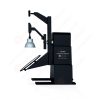
LM-79 Moving Detector Goniophotometer (Mirror Type C)
LSG-6000
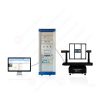
High Precision Rotation Luminaire Goniophotometer
LSG-1890B
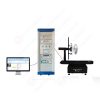
High Precision Rotation Luminaire Goniospectroradiometer
LSG-1890BCCD

Goniophotometer for Automotive and Signal Lamps
LSG-1950
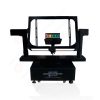
Goniophotometer for Traffic Signal Lamps (Economical Model)
LSG-1950S
VAD Fire Alarm Visual Alert Device Goniophotometer
LSG-1930
Goniophotometer for Airfield Lighting
LSG-1940
Compact Goniophotometer
LSG-1200A
LED Goniophotometer
LSG-1100
Near Field Moving Detector Goniophotometer
LSG-1900B
 LEDs and Luminaire Test Solutions
 LM-79 and LM-80 Test Solutions
 LED Driver Test Solutions
 Household Appliances Test Solutions
 Mobile and Network Test Solutions
 Automotive Electronics Test Solutions
 Audio-Video and IT Test Solutions
 Cable and Wire Test Solutions
 Plugs and Sockets Test Solutions
 Power Switch Test Solutions
 Transformer Test Solutions
 Electric Toys Test Solutions
 Energy Meter Test Solutions
 Motor-Operated Tool Test Solutions
Select an organization
to browse standards
Abstract
Automotive electronic devices operate in complex natural climatic environments. Alternation between day and night and seasonal changes on vehicles can bring drastic sudden temperature variations. Differences in thermal expansion coefficients of different materials may trigger failures such as solder joint cracking, seal failure and drift of electrical performance. As an important international standard for climatic load testing of electrical and electronic equipment for road vehicles, ISO 16750-4 clearly specifies test requirements for thermal shock and rapid temperature change to evaluate the operating reliability of on-board electronic components under alternating extreme temperature difference conditions. The High and Low Temperature Thermal Shock Chamber is the core environmental simulation equipment for such tests. The LISUN HLST-500D High and Low Temperature Thermal Shock Chamber belongs to the two-zone model of the HLST series. It can realize instantaneous temperature switching within the wide temperature range of -50℃~150℃ and replicate the extreme rapid temperature difference environment during real vehicle service by means of a basket shuttle mechanism. Combined with the test clauses of ISO 16750-4, this paper describes the equipment principle, hardware performance and test implementation process of the High and Low Temperature Thermal Shock Chamber, and analyzes its practical application in reliability verification of automotive MCUs, on-board displays, lamp assemblies, PCB circuit boards and other components. It provides references for automotive electronics R&D and quality inspection laboratories to carry out standardized thermal shock tests.
With the continuous advancement of automotive intelligence and electrification, the number of electronic components equipped on complete vehicles keeps increasing. MCU control chips, on-board displays, battery management modules, lamp drive units and other electronic parts are installed in different areas such as the cabin, engine compartment and chassis, and subjected to severe thermal shock conditions. When vehicles are parked outdoors in winter, component temperature may drop to -40℃ or even lower. After vehicle startup, heat from the engine and direct sunlight can quickly raise component temperature above 85℃, creating a huge temperature difference within a short period. Mismatched thermal expansion coefficients among various materials lead to accumulated internal stress from repeated thermal expansion and contraction, resulting in latent defects including microcracks on PCB solder joints, cracking of housing seals and drift of component parameters. Such defects may not be exposed in conventional high-low temperature cycling tests and can only be effectively stimulated by thermal shock tests with instantaneous high and low temperature switching.
For climatic loads of on-board electronics, ISO 16750-4 specifies multiple test items including constant temperature test, temperature step test, temperature cycling test and thermal shock test. Among them, thermal shock test mainly assesses the tolerance of samples to rapid temperature switching, and imposes strict constraints on equipment temperature switching time, temperature recovery time and cavity temperature uniformity. Ordinary high and low temperature chambers have limited heating and cooling rates and cannot achieve high-speed switching between high and low temperature environments, failing to meet the thermal shock test conditions specified in the standard. The High and Low Temperature Thermal Shock Chamber is specially developed for instantaneous temperature variation conditions, and is divided into two structural types: two-zone model (Type D) and three-zone model (Type T). The two-zone model uses a sample basket to rapidly move samples between the high-temperature zone and low-temperature zone; the three-zone model keeps samples fixed in the test zone and achieves shock effects by switching hot and cold airflow. Both structures can realize extreme temperature switching within a short time and satisfy the thermal shock test requirements of ISO 16750-4. The LISUN HLST series High and Low Temperature Thermal Shock Chamber adopts imported compressor assemblies and an intelligent touch control system, equipped with a complete set of safety protection mechanisms. It can be used both for R&D screening of small-batch samples in laboratories and reliability verification of mass-produced components on production lines, and is widely applied in compliance certification tests for automotive electronics, aerospace, semiconductor components and other industries.

HLST-500D-C_High and Low Temperature Thermal Shock Chamber
According to the clauses related to thermal shock test in ISO 16750-4, automotive electronic samples shall be alternately exposed to specified high and low temperature extremes. The transfer time for samples moving from one temperature extreme to the other must be strictly controlled. After samples enter the target chamber, they must reach the target test temperature within the specified recovery time. Excessively long transfer time will place samples under slow temperature variation and fail to simulate thermal shock stress in real scenarios. Unqualified temperature recovery time or poor temperature uniformity inside the cavity will lead to inconsistent thermal stress on different samples in the same batch, making test results incomparable.
The standard also requires complete recording of temperature curves throughout the test for later report traceability. Therefore, the High and Low Temperature Thermal Shock Chamber shall have programmable functions, allowing free setting of high/low temperature dwell time and thermal shock cycles, and supporting storage and export of temperature data. For on-board components installed in engine compartments and chassis, the commonly used shock temperature range is -40℃~125℃; components inside the cabin generally adopt -20℃~85℃ for shock verification. During the test, samples shall not contact the air duct of the chamber, and the placement position shall ensure sufficient airflow circulation to avoid abnormal local temperature. Traditional environmental test equipment can hardly meet multiple requirements including second-level transfer, rapid temperature recovery and long-term continuous cyclic operation. In contrast, the HLST series High and Low Temperature Thermal Shock Chamber has a temperature conversion time ≤10 seconds and temperature recovery time ≤5 minutes for two-zone models, with temperature fluctuation ≤±0.5℃ and temperature uniformity ≤2℃. Its hardware indicators can cover the equipment constraints of thermal shock tests specified in ISO 16750-4.
The HLST-500D is a two-zone (Type D) High and Low Temperature Thermal Shock Chamber. The equipment is equipped with mutually independent high-temperature chamber and low-temperature chamber, and an automatically moving sample basket. During the test, samples are fixed inside the basket. The automatic basket shuttle mechanism rapidly sends tested samples into the preheated high-temperature chamber or pre-cooled low-temperature chamber, so samples are directly exposed to extreme temperature environments to complete thermal shock. The refrigeration system adopts hermetic cascade compressors from France TECUMSEH or Germany Bitzer to ensure the low-temperature chamber can stably maintain the low-temperature condition of -50℃. The heating unit uses independent nichrome electric heaters with high heating efficiency and stable temperature output. The outer cabinet shell is made of high-quality carbon steel treated with phosphate electrostatic spraying. The inner cavity is made of SUS304 stainless steel plate, resistant to thermal aging and easy to clean. The thermal insulation layer is a composite of rigid polyurethane foam and fine glass fiber cotton, which reduces heat exchange between hot and cold chambers and cuts equipment energy consumption.
The control system adopts self-developed color liquid crystal touch screen with temperature display resolution of 0.1℃. Test duration can be freely set within 0.1~999.9H/M/S. PT100Ω/MV platinum resistance temperature sensors are equipped, featuring strong anti-electromagnetic interference and high temperature acquisition accuracy. The device integrates multiple protections against leakage, short circuit, heater overheat, motor overheat and compressor overpressure & overcurrent. It automatically triggers alarms under abnormal working conditions to guarantee equipment and sample safety during unattended long-time cyclic tests. The table below lists key specifications of main models of the LISUN HLST series High and Low Temperature Thermal Shock Chamber. The HLST-500D has a large working chamber volume, suitable for batch thermal shock tests of medium-sized automotive electronic parts such as on-board modules, display screens and lamp assemblies.
| Parameter Item | HLST-100D-* | HLST-250D-* | HLST-500D-* | HLST-100T-* | HLST-250T-* | HLST-500T-* |
|---|---|---|---|---|---|---|
| Chamber Structure | Two-zone | Two-zone | Two-zone | Three-zone | Three-zone | Three-zone |
| Inner Chamber Dimension (mm) | 450×450×500 | 600×600×600 | 800×800×800 | 450×450×500 | 600×600×600 | 800×800×800 |
| Temperature Range A | -20℃~150℃ | |||||
| Temperature Range B | -40℃~150℃ | |||||
| Temperature Range C | -50℃~150℃ | |||||
| High-Low Temperature Conversion Time | ≤10S | |||||
| Temperature Recovery Time | ≤5min | |||||
| Temperature Fluctuation | ≤±0.5℃ | |||||
| Temperature Uniformity | ≤2℃ | |||||
| Power Supply | 3-phase 5-wire AC380V, 50Hz/60Hz | |||||
Before the formal thermal shock test for automotive electronics, preliminary verification of the High and Low Temperature Thermal Shock Chamber shall be completed. The installation environment of the equipment shall be controlled at ambient temperature of 5℃-30℃, relative humidity no higher than 85%RH, with good site ventilation and reserved heat dissipation space, to avoid attenuation of cooling and heating performance caused by poor heat dissipation. Perform no-load verification to confirm that the high and low temperature chambers of the equipment can normally reach the set extreme temperatures, check that temperature conversion time and temperature recovery time meet standard limits, and verify normal functions of touch screen program editing, data logging and alarm protection. Test samples shall undergo initial inspection for appearance and electrical performance, and record initial functional parameters of samples. Samples shall be placed on the sample rack of the basket with gaps reserved between samples. Air ducts shall not be blocked to prevent local temperature deviation caused by obstructed airflow circulation.
Write the equipment test program in accordance with ISO 16750-4 requirements, set high-temperature shock temperature, low-temperature shock temperature, high and low temperature dwell time and total number of cycles. The dwell time shall ensure that the sample body fully reaches the set temperature instead of only referring to the air temperature inside the chamber. The number of cycles is determined according to the component installation position and complete vehicle specification requirements, commonly ranging from 50 cycles to 300 cycles. Start automatic operation of the High and Low Temperature Thermal Shock Chamber. The equipment will automatically complete preheating and pre-cooling of high-temperature and low-temperature chambers. Afterwards, the basket shuttles back and forth to make samples alternately subjected to high-temperature and low-temperature shock, and continuously record historical temperature data of the chamber throughout the process. After completing a certain number of cycles, the test can be suspended to take out samples for power-on function inspection, observe failures such as housing cracking, seal water seepage, communication abnormality and parameter drift, and make complete performance judgment after finishing all cycles.
In addition to thermal shock tests, this High and Low Temperature Thermal Shock Chamber can also comply with domestic and international thermal shock related standards such as GJB 150.5A-2009, MIL-STD-883H and IEC 60068-2-14. Apart from automotive electronics, it can be used for reliability verification of aerospace components, semiconductor chips, optoelectronic components and polymer materials. For tested objects of different sizes, two-zone and three-zone models can be selected as required. Two-zone models are preferred for small-size samples, while three-zone models can be adopted for some large samples unsuitable for moving, where samples remain fixed and thermal shock is realized by switching hot and cold airflow.

When the High and Low Temperature Thermal Shock Chamber runs massive cyclic shock tests, equipment maintenance will directly affect the validity of test results. Regularly inspect the condenser heat dissipation assembly of the compressor and clean surface dust in a timely manner to guarantee heat exchange efficiency of the refrigeration system. Check the basket transmission mechanism (two-zone models) regularly to ensure smooth transmission and prevent jamming during sample transfer which causes excessive transfer time. Inspect door sealing strips to confirm no aging and air leakage and avoid temperature cross-leakage between hot and cold chambers. The built-in safety protection functions of the equipment shall not be manually disabled. In case of compressor overpressure or overheat alarms, troubles shall be investigated and eliminated before resuming tests. For long-term automotive electronics reliability tests, it is recommended to periodically export equipment temperature operation curves as supporting traceability materials for test reports.
The thermal shock test specified in ISO 16750-4 is a key item for reliability verification of automotive electronic components. This test can effectively stimulate various latent failures induced by thermal expansion and contraction stress, and the reliability of test results highly depends on the comprehensive performance of the High and Low Temperature Thermal Shock Chamber. The LISUN HLST-500D High and Low Temperature Thermal Shock Chamber features instantaneous switching in the wide temperature range of -50℃~150℃. Adopting the mature two-zone basket shuttle principle, together with imported core components, intelligent control system and complete safety protection, it can meet the equipment indicators of thermal shock tests in ISO 16750-4 and replicate the extreme rapid temperature difference environment during real vehicle service, helping R&D personnel quickly identify design defects of on-board MCUs, lamps, displays, PCB assemblies and other components. This High and Low Temperature Thermal Shock Chamber can be used for sample screening tests in the R&D stage, incoming quality inspection of components and compliance certification at third-party testing institutions. In practical testing work, testers need to fully understand the test constraints of ISO 16750-4, complete pre-test equipment calibration, reasonable sample arrangement, process data retention and regular equipment maintenance, give full play to equipment performance, ensure authenticity and credibility of thermal shock test results, and provide strong test support for reliability design of automotive electronic products.
Tags:HLST-500DYour email address will not be published. Required fields are marked *

 English
 中文简体
 English
 Русский
 Español
 Português
 Türkçe
 العربية
 Deutsch
 Polski
 Italiano
 Français
 한국어
 ไทย
 Tiếng Việt
 日本語