LM-79 Moving Detector Goniophotometer (Mirror Type C)
LSG-6000
High Precision Rotation Luminaire Goniophotometer
LSG-1890B
High Precision Rotation Luminaire Goniospectroradiometer
LSG-1890BCCD

Goniophotometer for Automotive and Signal Lamps
LSG-1950
Goniophotometer for Traffic Signal Lamps (Economical Model)
LSG-1950S
VAD Fire Alarm Visual Alert Device Goniophotometer
LSG-1930
Goniophotometer for Airfield Lighting
LSG-1940
Compact Goniophotometer
LSG-1200A
LED Goniophotometer
LSG-1100
Near Field Moving Detector Goniophotometer
LSG-1900B
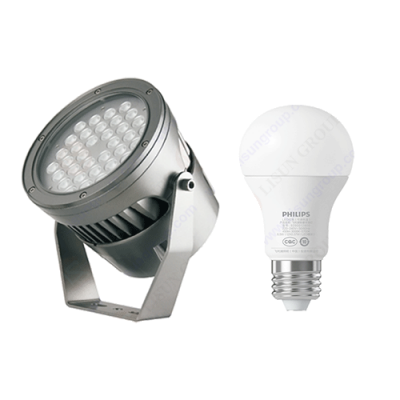 LEDs and Luminaire Test Solutions
 LM-79 and LM-80 Test Solutions
 LED Driver Test Solutions
 Household Appliances Test Solutions
 Mobile and Network Test Solutions
 Automotive Electronics Test Solutions
 Audio-Video and IT Test Solutions
 Cable and Wire Test Solutions
 Plugs and Sockets Test Solutions
 Power Switch Test Solutions
 Transformer Test Solutions
 Electric Toys Test Solutions
 Energy Meter Test Solutions
 Motor-Operated Tool Test Solutions
Select an organization
to browse standards
Abstract:
The temperature and humidity test chamber is essential equipment to verify the environmental adaptability and reliability of electronic products, LED lamps, and components under natural conditions. Taking the LISUN GDJS-015B high-low temperature humidity alternating test chamber as an example, this paper describes the working principle and technical points of how the temperature and humidity test chamber simulates multiple climatic scenarios including low temperature, high temperature, damp heat, and alternating dry-wet conditions. Quantitative support is provided via the parameter table, demonstrating its application value in product R&D, quality inspection and compliance certification.
1. Introduction
Temperature and humidity in natural environments change dynamically. Severe cold in winter, extreme heat in summer, humid and rainy weather, and alternating dry and wet conditions will significantly affect product performance and service life. If products are launched into the market without sufficient environmental assessment, failures such as material aging, electrical malfunction and sealing damage may easily occur during transportation, storage or operation. The temperature and humidity test chamber is a core instrument that recreates the above climatic environments in the laboratory to accelerate reliability evaluation of products. As a typical type of temperature and humidity test chamber, the LISUN GDJS-015B high-low temperature humidity alternating test chamber precisely controls the temperature and humidity inside the cabinet. It can fully simulate multiple climatic conditions including low-temperature resistance, high-temperature heat resistance, humidity aging, and dry-wet alternation.
2. Working Principle of the Temperature and Humidity Test Chamber for Climatic Simulation
Essentially, the temperature and humidity test chamber builds a programmatically controlled closed microclimate system. Its core function lies in decoupled independent control of temperature and humidity. The chamber consists of heat insulation layers, heating system, refrigeration system, humidification & dehumidification system and circulating air duct. Nickel-chromium alloy electric heaters support rapid heating, while the fully enclosed air-cooled compression refrigeration system realizes cooling and low-temperature holding. The humidification and dehumidification unit adjusts relative humidity according to the correlation between temperature and humidity. For GDJS-015B, PT100 platinum resistance is adopted as the temperature sensor and Vaisala humidity sensor from Finland is used for humidity measurement. Combined with self-developed temperature controller and PLC dual-core control, the equipment can automatically run following preset curves in both temperature and humidity dimensions. Therefore, it realistically reproduces the coupled variation of temperature and humidity under different climatic conditions instead of simple constant-temperature testing.
3. Main Technical Parameters of GDJS-015B
The working chamber dimension of LISUN GDJS-015B high-low temperature humidity alternating test chamber is 100×100×150 cm. Its temperature range covers -40℃~150℃ and humidity range is 20%~98%RH. The main technical parameters are listed in the table below:
| Item | Technical Specification (GDJS-015B) |
| Inner Chamber Size (cm) | 100×100×150 |
| Outer Dimension (cm) | 245×160×231 |
| Rated Power | 16.5 kW |
| Temperature Range | -40℃ ~ 150℃ |
| Temperature Fluctuation / Uniformity | ±0.5℃ / ±2℃ |
| Heating Rate | 1.0 ~ 3.0℃/min |
| Cooling Rate | 0.7 ~ 1.0℃/min |
| Humidity Range | 20% ~ 98%RH |
| Humidity Deviation | -2% ~ -3%RH |
| Inner Tank Material | SUS304 Stainless Steel |
| Temperature Sensor | PT100Ω/MV Platinum Resistance |
| Humidity Sensor | Vaisala Humidity Sensor (Finland) |
| Refrigeration Type | Fully Enclosed Air-cooled Compressor, TECUMSEH (France) |
| Power Supply | AC 380V±10% Three-phase, 50Hz/60Hz |
| Ambient Operating Condition | 5℃~30℃, ≤85%RH (non-condensing) |
As shown in the table, this temperature and humidity test chamber features wide temperature coverage and high-precision temperature & humidity control. Temperature fluctuation of ±0.5℃ and uniformity of ±2℃ guarantee consistent conditions inside the chamber and avoid interference on test results caused by local uneven temperature and humidity. The wide humidity range of 20%~98%RH covers most damp-heat operating conditions from dry to nearly saturated atmosphere.
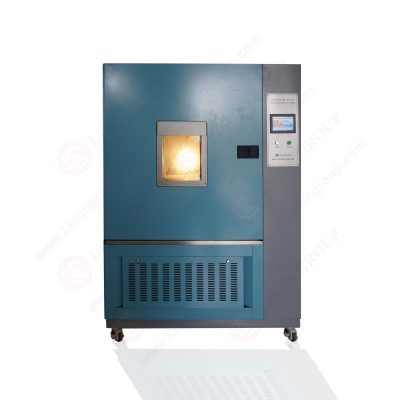
GDJS-015B Temperature Humidity Chamber | Thermal Chamber
4. Typical Climatic Simulation Scenarios and Corresponding Standards
According to practical applications, the GDJS-015B temperature and humidity test chamber can carry out the following typical climatic simulation tests:
1. Low Temperature Test: Simulates severe cold or low-temperature environment, to assess low-temperature embrittlement of materials and cold-start performance of electronic components. Corresponding standards: GB/T 2423.1, IEC 60068-2-1.
2. High Temperature Test: Simulates summer heat and temperature rise during long-time operation, to evaluate thermal aging and thermal deformation of materials. Corresponding standards: GB/T 2423.2, IEC 60068-2-2.
3. Damp Heat Test (Alternating Damp Heat): Adopts 12h+12h cycle mode to simulate high-humidity environment, checking moisture resistance, insulation performance and sealing integrity of products. Corresponding standards: GB/T 2423.4, IEC 60068-2-30.
4. Temperature Change Test: Simulates day-night temperature difference and sudden environmental change, verifying structural reliability under thermal expansion and contraction. Corresponding standards: IEC 60068-2-14, GB/T 28046.4, ISO 16750-4.
In addition, this temperature and humidity test chamber meets test requirements such as LED lumen maintenance test (IES LM-80-08), semiconductor electronic stress test (AEC-Q102), and general requirements for luminaires (GB 7000.1, IEC 60598-1).
5. Application Value and Conclusion
Throughout the whole product lifecycle, the temperature and humidity test chamber plays a vital role in exposing potential defects in advance and reducing after-sales risks. For the LED lighting industry, long-term temperature and humidity aging test directly reflects lumen maintenance of light sources and provides data basis for lumen depreciation prediction and warranty evaluation. For electrical and electronic products, alternating damp heat test can detect hidden dangers such as PCB corrosion and insulation breakdown in advance. Equipped with SUS304 stainless steel inner tank, composite insulation of polyurethane and fiberglass, multi-safety protection system (leakage, short circuit, overheat, compressor overpressure/overload/overcurrent), as well as USB/RS-232/RS-485 remote monitoring interface, the GDJS-015B high-low temperature humidity alternating test chamber balances accuracy, stability and traceability. It serves as a reliable climatic environment simulation instrument for R&D verification, production quality inspection and third-party compliance certification. As environmental adaptability requirements for products become increasingly stringent, such temperature and humidity test chamber will maintain growing importance in industrial manufacturing and quality assurance.
Tags:GDJS-015BYour email address will not be published. Required fields are marked *

 English
 中文简体
 English
 Русский
 Español
 Português
 Türkçe
 العربية
 Deutsch
 Polski
 Italiano
 Français
 한국어
 ไทย
 Tiếng Việt
 日本語