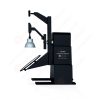
LM-79 Moving Detector Goniophotometer (Mirror Type C)
LSG-6000
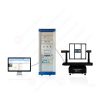
High Precision Rotation Luminaire Goniophotometer
LSG-1890B
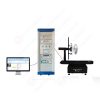
High Precision Rotation Luminaire Goniospectroradiometer
LSG-1890BCCD

Goniophotometer for Automotive and Signal Lamps
LSG-1950
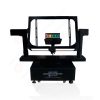
Goniophotometer for Traffic Signal Lamps (Economical Model)
LSG-1950S
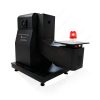
VAD Fire Alarm Visual Alert Device Goniophotometer
LSG-1930
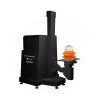
Goniophotometer for Airfield Lighting
LSG-1940
Compact Goniophotometer
LSG-1200A
LED Goniophotometer
LSG-1100
Near Field Moving Detector Goniophotometer
LSG-1900B
 LEDs and Luminaire Test Solutions
 LM-79 and LM-80 Test Solutions
 LED Driver Test Solutions
 Household Appliances Test Solutions
 Mobile and Network Test Solutions
 Automotive Electronics Test Solutions
 Audio-Video and IT Test Solutions
 Cable and Wire Test Solutions
 Plugs and Sockets Test Solutions
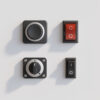 Power Switch Test Solutions
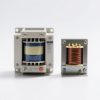 Transformer Test Solutions
 Electric Toys Test Solutions
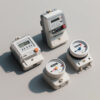 Energy Meter Test Solutions
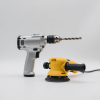 Motor-Operated Tool Test Solutions
Select an organization
to browse standards
Abstract:
Ozone in the near-surface atmosphere is one of the main factors causing rubber cracking, textile discoloration and cable sheath failure. The LISUN OTC-150A ozone aging test chamber adopts silent discharge tubes to generate ozone with controllable concentration. Combined with an accurate temperature and humidity control system, static/dynamic stretching devices, it reproduces the oxidation process of materials exposed to ozone in the natural environment in the laboratory. This paper introduces its mechanism, working principle, key parameters and test procedures, and provides typical test data for reference in the evaluation of material weather resistance.
1. Introduction
In the near-ground atmosphere, ozone is generated by ultraviolet radiation, corona discharge and photochemical reactions, and its concentration normally fluctuates within several to tens of pphm. Ozone molecules have strong oxidizing properties, which preferentially attack carbon-carbon double bonds on the main chain of vulcanized rubber, breaking molecular chains and damaging crosslinking structures. At positions where the material is subjected to tensile stress, once cracks initiate, they expand rapidly perpendicular to the stress direction and form typical “crazing”. Increasing temperature accelerates the reaction rate, while humidity affects ozone adsorption and the reaction path under the water film condition.
Therefore, natural exposure alone cannot obtain repeatable conclusions within a short period. It is necessary to use an ozone aging test chamber to simultaneously fix the three variables: ozone concentration, temperature and humidity, so that the test results can be comparable.
2. Working Principle and Structure of Ozone Aging Test Chamber
The core of the ozone aging test chamber forms a closed loop of “generation – mixing – circulation – monitoring”. The OTC-150A uses silent discharge tubes as the ozone source: under a high-voltage electric field, oxygen is converted into ozone via silent discharge. By adjusting discharge power and intake flow, the concentration can be continuously set in the range of 10~1,000 pphm with a control deviation of approximately ±2~3 pphm. Forced air circulation is adopted inside the chamber with an airflow velocity of 600±100 mm/s, ensuring uniform ozone distribution in the working chamber (500×500×600 mm) and avoiding inconsistent aging degrees of samples caused by local concentration differences.
Temperature is controlled by heating and refrigeration systems ranging from 0~60℃ (±1℃), and humidity is adjustable from 20%~90% RH (based on 20~40℃ working condition, ±5% RH). Together with ozone concentration, they constitute the three key factors for material aging. The sample holder supports three stress modes: static stretching, dynamic stretching and intermittent dynamic stretching. Sample elongation ranges from 5%~45%, rotating speed 8~25 mm/s, stretching frequency 0~30 times per minute, and maximum stretching length 0~90 mm adjustable. Accordingly, the test can fix the combination of “ozone concentration + strain” in accordance with standard requirements. The controller is a 7-inch touch screen, which displays and records concentration, temperature and humidity curves in real time. Data can be exported to EXCEL via USB or transmitted to the upper computer for archiving through the RJ45 port.
Table 1 Main Technical Parameters of LISUN OTC-150A Ozone Aging Test Chamber
| Item | Parameter |
| Working chamber dimension | 500×500×600 mm |
| Ozone concentration range | 10~1,000 pphm (±2~3 pphm) |
| Gas flow velocity | 600±100 mm/s (forced circulation) |
| Temperature range | 0~60℃ (±1℃) |
| Humidity range | 20%~90% RH (20~40℃ reference, ±5% RH) |
| Stretching mode | Static / Dynamic / Intermittent dynamic |
| Sample elongation | 5%~45% |
| Stretching frequency | 0~30 times per minute |
| Maximum stretching length | 0~90 mm (adjustable) |
| Control & data output | 7-inch touch screen, USB export to EXCEL, RJ45 network |

OTC-150A_Ozone Test Chamber
3. Test Method and Procedure
Before the test, samples are prepared in accordance with relevant standards. Initial values of color difference, gloss and tensile strength are recorded by spectrophotometer, gloss meter and tensile testing machine respectively. Static samples are fixed on clamps with spacing no less than 15 mm, while dynamic samples are pre-stretched before clamping. Close the chamber door and start the ozone generator after temperature and humidity stabilize. Timing starts once all parameters reach the target within 30 minutes. Avoid opening the chamber door during testing. After the test, exhaust for 30 minutes until the internal ozone concentration drops to ≤0.1 ppm before taking out samples. Afterwards, condition the samples for 4 hours in a standard environment of 23℃±2℃ and 50%±5% RH, re-measure the above three indicators, compare with initial values and calculate the aging rate.
4. Typical Test Data
Table 2 Example of Typical Ozone Aging Tests for Three Types of Materials (for reference only)
| Sample | Ozone Concentration | Temp. / Humidity | Strain | Duration | Performance after Test |
| Automotive rubber seal (EPDM) | 50 pphm | 40℃ / 65% RH | Static 20% | 72 h | Fine cracks appear on surface; tensile strength decreases by approx. 18% |
| Outdoor polyester fabric | 100 pphm | 30℃ / 85% RH | No stress | 24 h | Color difference ΔE ≈ 2.6; gloss decreases by approx. 12% |
| Cable sheath (elastomer) | 50 pphm | 25℃ / 60% RH | Static 15% | 168 h | No penetrating cracks; elongation at break retained at 82% |
The data shows that under the same ozone concentration, increasing temperature or humidity will significantly accelerate crack initiation. Under tensile state above critical strain, the occurrence time of cracks is greatly advanced. This reflects the core value of the ozone aging test chamber: shortening the test cycle while retaining real failure modes.
5. Application and Relevant Standards
This equipment is suitable for ozone resistance evaluation of rubber seals, hoses, textiles, cable sheaths and other materials. It complies with GB/T 7762-2014, GB/T 13642-2015, GB/T 2951.21-2008, GB/T 11039.3-2005, ISO 1431-1:2012, ISO 105-G03, ASTM D1149, IEC 60811-403 and other standards. Since different standards specify different requirements for concentration, strain and duration, it is recommended to confirm the final configuration with LISUN engineers.
6. Conclusion
The ozone aging test chamber converts the slow and random ozone oxidation process occurring in nature into laboratory tests with reproducible concentration, temperature, humidity and stress. Equipped with silent discharge tubes for stable ozone purity and concentration, precise temperature and humidity control to restore real climatic conditions, and static/dynamic stretching functions to simulate material stress state, OTC-150A provides consistent and traceable data support for material R&D, incoming inspection and product life assessment.
Tags:OTC-150AYour email address will not be published. Required fields are marked *

 English
 中文简体
 English
 Русский
 Español
 Português
 Türkçe
 العربية
 Deutsch
 Polski
 Italiano
 Français
 한국어
 ไทย
 Tiếng Việt
 日本語