LM-79 Moving Detector Goniophotometer (Mirror Type C)
LSG-6000
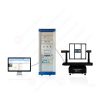
High Precision Rotation Luminaire Goniophotometer
LSG-1890B
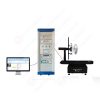
High Precision Rotation Luminaire Goniospectroradiometer
LSG-1890BCCD

Goniophotometer for Automotive and Signal Lamps
LSG-1950
Goniophotometer for Traffic Signal Lamps (Economical Model)
LSG-1950S
VAD Fire Alarm Visual Alert Device Goniophotometer
LSG-1930
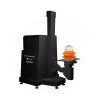
Goniophotometer for Airfield Lighting
LSG-1940
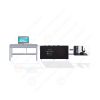
Compact Goniophotometer
LSG-1200A
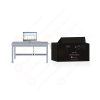
LED Goniophotometer
LSG-1100
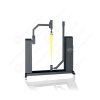
Near Field Moving Detector Goniophotometer
LSG-1900B
 LEDs and Luminaire Test Solutions
 LM-79 and LM-80 Test Solutions
 LED Driver Test Solutions
 Household Appliances Test Solutions
 Mobile and Network Test Solutions
 Automotive Electronics Test Solutions
 Audio-Video and IT Test Solutions
 Cable and Wire Test Solutions
 Plugs and Sockets Test Solutions
 Power Switch Test Solutions
 Transformer Test Solutions
 Electric Toys Test Solutions
 Energy Meter Test Solutions
 Motor-Operated Tool Test Solutions
Select an organization
to browse standards
Abstract: Insulation performance serves as a core indicator for the safety and reliability of electrical and electronic equipment. Transient lightning pulses and switching overvoltages impose short-duration high-voltage stress on the insulation structure of devices, which cannot be adequately replicated by conventional power-frequency withstand voltage tests. The Impulse Withstand Voltage Tester, also referred to as pulse withstand voltage tester or high voltage pulse tester, is specially designed to reproduce such steep-front short-duration high-voltage pulses and acts as the key instrument for insulation impulse withstand tests in accordance with IEC 60255-5. Taking the LISUN SUG255 Impulse Withstand Voltage Tester as the research object, this paper introduces its working principle, pulse waveform parameters, hardware configuration and operation logic. It sorts out the IEC 60255-5 requirements regarding waveform, test arrangement and acceptance criteria for impulse voltage tests, compares the differences between impulse withstand tests and power-frequency withstand voltage tests, and explains the application methods of the Impulse Withstand Voltage Tester in R&D validation, incoming inspection and type tests for relays, industrial control modules, power assemblies and low-voltage electrical equipment. This document provides a reference for laboratory technicians to build a compliant impulse withstand voltage test station and complete standardized insulation verification.
The core working principle of the Impulse Withstand Voltage Tester relies on energy storage within an internal capacitor bank. Electric energy is accumulated and then released through a waveform shaping circuit to generate the standard 1.2/50μs lightning impulse waveform. This waveform features a front time of 1.2 microseconds and a time to half-value of 50 microseconds, which is the classic lightning-induced overvoltage waveform preferred in IEC 60255-5. In real power grid environments, lightning induction and switching operations of high-power equipment couple this type of short high-voltage pulse into circuits. Although the pulse lasts for an extremely short period, its high amplitude may break down micro-defects inside insulation and cause latent insulation damage. Such damage may not appear immediately under normal operating voltage, yet it will gradually develop into safety hazards including electric leakage, short circuits and fire after continuous accumulation. The Impulse Withstand Voltage Tester artificially reproduces this transient high voltage to expose weak insulation points in advance.

SUG255_Impulse Withstand Voltage Tester
The LISUN SUG255 Impulse Withstand Voltage Tester integrates a high-voltage energy storage unit, precision waveform shaping circuit, voltage divider sampling module and programmable control system. It can stably output the 1.2/50μs pulse defined by the standard. Operators are allowed to set parameters such as pulse voltage amplitude, impulse count, impulse interval and polarity switching. A built-in voltage sampling circuit records the actual peak voltage after each impulse. This prevents waveform distortion caused by parasitic parameters of the test loop and ensures that every pulse applied to the equipment under test falls within the tolerance range specified by the standard. Unlike power-frequency withstand voltage tests which apply pressure slowly and continuously, the energy output by the Impulse Withstand Voltage Tester concentrates within a very short time frame. It mainly evaluates breakdown, flashover and partial discharge characteristics of insulation under instantaneous high voltage. These two test methods complement each other and cannot replace one another.
The Impulse Withstand Voltage Tester belongs to high-voltage test equipment, so safety protection is prioritized in its design. The SUG255 Impulse Withstand Voltage Tester is equipped with an interlock safety circuit. High-voltage output cannot be activated if the test chamber door or protective cover of high-voltage terminals remains open, which prevents accidental contact with high-voltage circuits. An automatic discharge circuit is embedded in the device. After each impulse or test termination, residual charges stored on the energy storage capacitor are released to eliminate residual high voltage and reduce electric shock risks. The front panel includes status indicators and an emergency stop button. When abnormal breakdown or flashover occurs, the system quickly cuts off the energy storage loop and stops further pulse output.
A high-precision voltage divider is adopted for signal sampling. The voltage divider is calibrated by metrology institutions to feed back real-time impulse peak voltage. The test software synchronously records the waveform and peak value of every impulse and supports report export and data traceability. The high-voltage output terminals of the Impulse Withstand Voltage Tester are compatible with high-voltage test cables and isolation fixtures. Users may apply impulse voltage between windings, between winding and earth, or between input and output circuits according to the structure of samples. Proper earthing of the test circuit is critical. Poor grounding changes the inductance and capacitance parameters of the loop, directly distorting the 1.2/50μs waveform and invalidating the test. This is one of the most frequently overlooked points when performing IEC 60255-5 tests with an Impulse Withstand Voltage Tester.
IEC 60255-5 is the insulation test standard for electrical relays. It clearly specifies applicable conditions, waveform tolerances, test voltage levels, impulse counts, polarity requirements and result judgment rules for impulse voltage tests. The standard requires that the front time and time to half-value of lightning impulse waveforms must stay within specified error ranges. Tests generally apply both positive and negative polarity pulses in turn for a defined number of shots at each polarity. Operators observe whether breakdown, surface flashover or continuous partial discharge takes place on the equipment under test.
Before starting a test with the Impulse Withstand Voltage Tester, technicians must confirm that the sample is de-energized. All independent circuits on the sample shall be shorted or left open-circuited as required by the standard, to avoid extra components affecting the distributed capacitance of the insulation loop. Ambient temperature and humidity also influence the withstand capability of insulating materials. A conductive water film easily forms on material surfaces under high humidity and reduces flashover voltage, so environmental parameters should be recorded and controlled. During testing, the Impulse Withstand Voltage Tester captures the peak voltage of each impulse. Once breakdown or flashover is detected, the instrument records the abnormal waveform. Operators need to distinguish genuine insulation failure from air gap discharge and judge results following standard clauses. Complete type tests require retention of all impulse waveform records for review by certification bodies, to prove that the whole test procedure complies with IEC 60255-5.

| Item | Specification of SUG255 Impulse Withstand Voltage Tester | Corresponding Test Requirements of IEC 60255-5 |
|---|---|---|
| Standard Output Waveform | 1.2/50μs lightning impulse pulse | Lightning impulse voltage waveform specified by the standard |
| Impulse Voltage Range | 0~25kV | Covers most impulse test levels for relays and low-voltage assemblies defined in the standard |
| Polarity Setting | Automatic switching between positive and negative polarity | Supports test sequences with alternating positive and negative impulses |
| Impulse Count & Interval | Adjustable from 1 to 999 shots, configurable impulse interval | Meets requirements for impulse quantity and resting interval stated in the standard |
| Data Recording Function | Peak voltage acquisition, waveform storage, report export | Test data is traceable and available for certification audit |
| Safety Mechanisms | Door interlock, automatic discharge, emergency stop protection | Safety protection for high-voltage tests and reduction of operational risks |
With the expanding application scenarios of industrial control relays, smart meter modules, switching power supplies and low-voltage new energy components, such devices often operate in areas prone to grid fluctuations and lightning strikes. Insulation withstand capacity directly determines the long-term safety performance of products. Power-frequency withstand voltage tests mainly assess insulation status under steady-state AC high voltage, while the Impulse Withstand Voltage Tester targets transient pulse overvoltage scenarios. The two test types must be combined to fully cover all insulation verification items defined in standards such as IEC 60255-5.
At the R&D stage, engineers can quickly identify insulation design defects using the Impulse Withstand Voltage Tester and adjust insulation thickness, insulation materials, creepage distances and clearances. During production inspection, it screens out defective semi-finished products with bubbles, impurities or cracks inside insulation layers and prevents non-conforming goods from entering the market. Third-party testing laboratories rely on this instrument to complete type tests and issue test reports compliant with international standards to support product safety certification. Featuring stable waveform, adjustable parameters and comprehensive data recording functions, the LISUN SUG255 Impulse Withstand Voltage Tester reliably performs IEC 60255-5 impulse insulation tests. It is indispensable testing equipment for laboratories focused on low-voltage electrical appliances and industrial relays, helping enterprises reduce safety accident risks caused by insulation breakdown at the application site.
Tags:SUG255Your email address will not be published. Required fields are marked *

 English
 中文简体
 English
 Русский
 Español
 Português
 Türkçe
 العربية
 Deutsch
 Polski
 Italiano
 Français
 한국어
 ไทย
 Tiếng Việt
 日本語