LM-79 Moving Detector Goniophotometer (Mirror Type C)
LSG-6000
High Precision Rotation Luminaire Goniophotometer
LSG-1890B
High Precision Rotation Luminaire Goniospectroradiometer
LSG-1890BCCD

Goniophotometer for Automotive and Signal Lamps
LSG-1950
Goniophotometer for Traffic Signal Lamps (Economical Model)
LSG-1950S
VAD Fire Alarm Visual Alert Device Goniophotometer
LSG-1930
Goniophotometer for Airfield Lighting
LSG-1940
Compact Goniophotometer
LSG-1200A
LED Goniophotometer
LSG-1100
Near Field Moving Detector Goniophotometer
LSG-1900B
 LEDs and Luminaire Test Solutions
 LM-79 and LM-80 Test Solutions
 LED Driver Test Solutions
 Household Appliances Test Solutions
 Mobile and Network Test Solutions
 Automotive Electronics Test Solutions
 Audio-Video and IT Test Solutions
 Cable and Wire Test Solutions
 Plugs and Sockets Test Solutions
 Power Switch Test Solutions
 Transformer Test Solutions
 Electric Toys Test Solutions
 Energy Meter Test Solutions
 Motor-Operated Tool Test Solutions
Select an organization
to browse standards
Abstract
LED lumen maintenance is a critical indicator for evaluating the service life and reliability of light sources. As an internationally accepted method for measuring lumen maintenance of LED sources, IES LM-80-08 imposes strict requirements on the long-term stability of test ambient temperature and humidity as well as cavity temperature uniformity. The High and Low Temperature Humidity Chamber serves as the core environmental simulation equipment for this type of reliability aging test. It can replicate various climate conditions including constant temperature and alternating humidity and heat, providing a controllable experimental environment for long-term LED source aging tests. This paper takes the LISUN GDJS-015B High and Low Temperature Humidity Alternating Chamber as the research object. Combined with the test requirements specified in IES LM-80-08, it elaborates on the application logic, key equipment performance and test implementation points of the High and Low Temperature Humidity Chamber in LED lumen maintenance testing. Meanwhile, this article expands the application scenarios of this equipment in reliability verification for electrical and electronic products and electronic components. It offers reference for LED laboratories to carry out compliant lumen maintenance tests.
With the rapid development of the LED lighting industry, export certification and energy efficiency evaluation of luminaires require valid lumen maintenance test data as supporting evidence. IES LM-80-08 specifies that LED packages, arrays or modules shall undergo continuous aging tests for no less than 6000 hours. Luminous flux, chromaticity coordinates and other key data are collected at an interval of every 1000 hours. Some R&D verification projects extend the test duration to more than 10000 hours to calculate the long-term attenuation characteristics of light sources. During the entire test cycle, ambient temperature fluctuation and uneven temperature distribution inside the chamber will directly interfere with lumen attenuation data and invalidate test reports. Ordinary aging ovens lack an accurate and stable closed-loop temperature and humidity control system and can hardly meet the operating conditions of thousands of hours of uninterrupted operation.
The High and Low Temperature Humidity Chamber can simulate various environmental conditions including low temperature, high temperature, constant humidity and alternating humidity-heat. Besides lumen maintenance testing of LED luminaires, it can provide environmental adaptability verification for electrical and electronic appliances, semiconductor components, automotive electronics and other products, and complete climate environmental tests specified in domestic and international standards such as GB/T 2423 series, IEC 60068 and AEC-Q102. LISUN GDJS-015B belongs to the GDJS series High and Low Temperature Humidity Alternating Chamber. Validated by more than ten years of field operation, it is suitable for long-term continuous aging tests, fully meeting the environmental control requirements of IES LM-80-08. Meanwhile, it supports high and low temperature cycling and alternating humidity-heat reliability assessment of electronic components. It is an important environmental simulation test instrument for industrial laboratories.
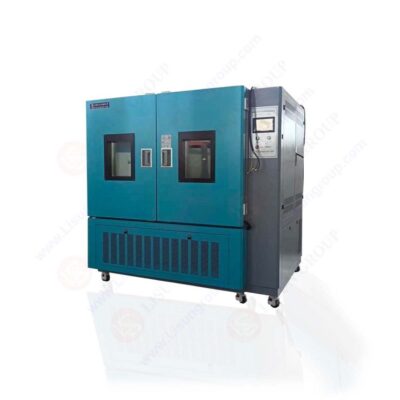
Figure: Humidity chamber
IES LM-80-08 requires LED light sources to carry out parallel aging tests under multiple gradient temperature conditions. Commonly used test temperatures include 25℃, 55℃ and 85℃. Some enterprises add 105℃ as an accelerated aging condition. The test ambient temperature must be maintained within a small fluctuation range, and the temperature inside the cavity shall be uniform to avoid inconsistent heating of samples at different positions, which may lead to deviation of lumen decay data. The standard also limits the relative humidity of the test environment to prevent the LED packaging material from moisture corrosion caused by excessive humidity and interference with the inherent failure mechanism of the light source.
Conventional laboratory ovens can only realize high-temperature working conditions, lack the capability to simulate low-temperature environments and have insufficient temperature and humidity control accuracy, so they cannot be compatible with alternating humidity-heat tests. A qualified High and Low Temperature Humidity Chamber can, on the one hand, achieve a wide range of temperature settings and switch between each constant-temperature aging point required by the LM-80 standard. On the other hand, it features long-term uninterrupted operation capacity without frequent shutdown and calibration, minimizing data error brought by manual intervention. In addition, the High and Low Temperature Humidity Chamber can be expanded to conduct double 85 humidity-heat aging tests to evaluate lumen attenuation of LED products under high temperature and high humidity conditions, supplementing humidity-heat reliability data besides constant-temperature aging.
The GDJS-015B High and Low Temperature Humidity Alternating Chamber adopts a self-developed temperature controller combined with PLC dual-core control architecture. The system supports Chinese and English operation interfaces and is equipped with USB, RS-232 and RS-485 communication interfaces. It can connect with upper computer software to realize remote monitoring and automatic storage and traceability of all test data, meeting the data archiving requirements of long-term tests. Platinum resistance PT100Ω/MV sensors are selected for temperature acquisition with strong anti-interference performance. The humidity measurement adopts Vaisala humidity sensors from Finland. Compared with the traditional wet and dry bulb method, it delivers higher measurement accuracy and requires less frequent maintenance, reducing operation workload for long-term tests. The refrigeration system is equipped with original fully enclosed air-cooled compressors from France TECUMSEH to guarantee the stability of long-term continuous operation. The inner chamber is made of SUS304 stainless steel, resistant to humidity and heat corrosion and suitable for thousands of hours of uninterrupted aging tests. The thermal insulation layer of the cabinet adopts a composite structure of rigid polyurethane foam and superfine glass fiber. The door frame is fitted with high-temperature silicone rubber sealing strips to reduce temperature and humidity leakage. The circulating air system is equipped with a low-noise air-conditioning motor and multi-blade centrifugal wheel to drive sufficient air circulation inside the cabinet and ensure uniform temperature and humidity at each position of the cavity. The device integrates multiple safety protections including electric leakage, short circuit, heater overheat, motor overheat, compressor overpressure, overload and overcurrent. During unattended long-time tests, it can avoid sample damage caused by equipment failure.
The table below lists key specifications of partial models in the GDJS series. Among them, GDJS-015B is suitable for medium and large batches of LED light sources and luminaire samples for LM-80 lumen maintenance aging tests. It has sufficient cavity volume to place multiple groups of parallel test samples at the same time and improve laboratory test efficiency.
| Parameter Item | GDJS-100 | GDJS-225 | GDJS-500 | GDJS-010 | GDJS-015B | GDJS-020 |
|---|---|---|---|---|---|---|
| Inner Chamber Dimension (cm) | 41×55×45 | 50×60×75 | 70×80×90 | 100×100×100 | 100×100×150 | 100×100×200 |
| Outer Dimension (cm) | 105×105×156 | 105×102×200 | 132×132×217 | 167×152×231 | 245×160×231 | 160×254×214 |
| Operating Power (kW) | 5.5 | 7.0 | 13.5 | 15.0 | 16.5 | 26.5 |
| Temperature Range | A:-20℃~150℃ B:-40℃~150℃ C:-60℃~150℃ D:-70℃~150℃ | |||||
| Temperature Fluctuation / Uniformity | ±0.5℃ / ±2℃ | |||||
| Temperature Rising Rate | 1.0℃~3.0℃/min | |||||
| Temperature Falling Rate | 0.7℃~1.0℃/min | |||||
| Humidity Range | 20%~98%RH | |||||
Before starting the formal lumen maintenance aging test, equipment verification of the High and Low Temperature Humidity Chamber shall be completed. First, confirm the operating environment of the equipment. The chamber shall be placed in a laboratory space with ambient temperature of 5‑30℃, ambient humidity no higher than 85%RH, good ventilation and no condensation. Heat dissipation clearance shall be reserved to prevent temperature and humidity drift caused by poor heat dissipation of the equipment. Second, perform no-load calibration of temperature and humidity inside the cavity, verify that the temperature fluctuation and temperature uniformity are within the allowable error range specified by the standard, and confirm normal data collection of sensors and that communication and data recording functions can normally store historical curves. When placing samples, do not block the air duct circulation of the cabinet. Leave sufficient gaps between samples to ensure airflow can pass each tested LED sample and avoid local heat accumulation which causes inconsistency between actual sample temperature and set temperature.
For test program setup, set the constant aging temperature in accordance with IES LM-80-08, disable unnecessary humidity output and control the chamber humidity within the range permitted by the standard. Enable the equipment data logging function to continuously record environmental parameters inside the chamber. At every 1000-hour node as specified by the standard, take out samples, measure luminous flux and chromaticity coordinates under standard test environment, then put samples back into the High and Low Temperature Humidity Chamber to continue aging until the basic 6000-hour test cycle is completed. If it is necessary to simultaneously evaluate the impact of humidity and heat on LED lumen decay, the High and Low Temperature Humidity Chamber can be used for double 85 tests, setting conditions of 85℃ and 85%RH for humidity-heat aging. Compare the difference in lumen maintenance under constant temperature aging and analyze the moisture-heat aging resistance performance of packaged devices.
In addition to the LED lighting industry, this High and Low Temperature Humidity Chamber can also carry out other environmental reliability tests for electrical and electronic appliances and semiconductor components, implementing GB/T 2423.1 low temperature test, GB/T 2423.2 high temperature test, GB/T 2423.4 alternating humidity-heat test, as well as AEC-Q102 optoelectronic device stress test and climate load test for road vehicle electronic equipment. One unit can cover environmental verification requirements for multiple categories of products and improve the comprehensive utilization rate of laboratory equipment.
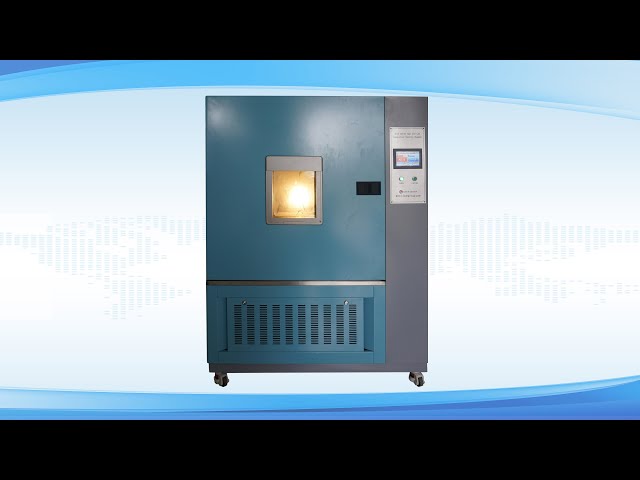
When the High and Low Temperature Humidity Chamber performs continuous tests lasting thousands of hours, daily maintenance of the equipment will directly affect the validity of test data. Regularly inspect the water supply system to check the purified water supply device and ensure clean water supply under humidity mode to prevent water circuit blockage. Check heat dissipation of the condenser regularly and remove dust to guarantee stable long-term operation of the refrigeration system. Do not manually disable the multiple safety protection functions of the equipment. In case of overheat, overcurrent alarm, troubles shall be eliminated before resuming aging tests. For long uninterrupted LM-80 tests, it is recommended to export temperature and humidity historical curves periodically, recheck whether environmental parameters comply with standard requirements throughout the cycle, and keep complete equipment operation records to facilitate traceability of test reports.
The IES LM-80-08 lumen maintenance test is a key test item for LED product certification and R&D evaluation. The success of the test largely depends on the long-term stability, temperature and humidity control precision and cavity temperature uniformity of the High and Low Temperature Humidity Chamber. LISUN GDJS-015B High and Low Temperature Humidity Alternating Chamber features wide temperature range coverage, high-precision temperature and humidity control, imported core components and a complete safety protection system. It can meet thousands of hours of uninterrupted aging tests for LED light sources, deliver stable and qualified environmental conditions and obtain compliant and valid lumen maintenance test data. Meanwhile, this High and Low Temperature Humidity Chamber is compatible with general environmental test standards for electrical and electronic appliances and components. It not only serves the special LM-80 test for the lighting industry, but also completes general reliability verification such as high-low temperature and alternating humidity-heat tests for electrical and electronic products. It is an important environmental simulation instrument for R&D, quality inspection and third-party testing laboratories. In practical testing work, operators need to fully understand the constraints of environmental conditions specified by standards, complete pre-test equipment calibration, reasonable sample arrangement, process data retention and regular maintenance. Only in this way can operators give full play to the performance of the High and Low Temperature Humidity Chamber and ensure authenticity and credibility of test results.
Tags:GDJS-015BYour email address will not be published. Required fields are marked *

 English
 中文简体
 English
 Русский
 Español
 Português
 Türkçe
 العربية
 Deutsch
 Polski
 Italiano
 Français
 한국어
 ไทย
 Tiếng Việt
 日本語