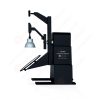
LM-79 Moving Detector Goniophotometer (Mirror Type C)
LSG-6000
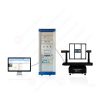
High Precision Rotation Luminaire Goniophotometer
LSG-1890B
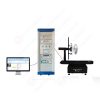
High Precision Rotation Luminaire Goniospectroradiometer
LSG-1890BCCD

Goniophotometer for Automotive and Signal Lamps
LSG-1950
Goniophotometer for Traffic Signal Lamps (Economical Model)
LSG-1950S
VAD Fire Alarm Visual Alert Device Goniophotometer
LSG-1930
Goniophotometer for Airfield Lighting
LSG-1940
Compact Goniophotometer
LSG-1200A
LED Goniophotometer
LSG-1100
Near Field Moving Detector Goniophotometer
LSG-1900B
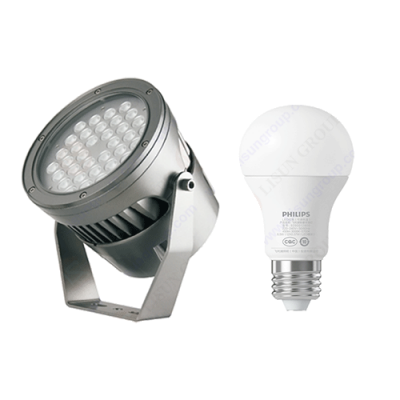 LEDs and Luminaire Test Solutions
 LM-79 and LM-80 Test Solutions
 LED Driver Test Solutions
 Household Appliances Test Solutions
 Mobile and Network Test Solutions
 Automotive Electronics Test Solutions
 Audio-Video and IT Test Solutions
 Cable and Wire Test Solutions
 Plugs and Sockets Test Solutions
 Power Switch Test Solutions
 Transformer Test Solutions
 Electric Toys Test Solutions
 Energy Meter Test Solutions
 Motor-Operated Tool Test Solutions
Select an organization
to browse standards
Abstract
Salt spray corrosion is a major cause of product failure in marine, coastal and some industrial environments. As core environmental test equipment for simulating accelerated corrosion artificially, the Salt Spray Test Chamber is widely used to verify the corrosion resistance of metal plating, coatings, electronic components, hardware products and other specimens. This paper takes the LISUN YWX/Q‑010 Salt Spray Test Chamber as the research object. It explains the hardware structure of the Salt Spray Test Chamber, the technical principles of three mainstream salt spray test modes including NSS neutral salt spray, AASS acetic acid salt spray and CASS copper-accelerated acetic acid salt spray. It also introduces the intelligent functions of the equipment, basic operation procedures and practical application scenarios across various industries. Key technical parameters of the unit are listed to provide references for laboratory equipment selection, test implementation and result evaluation.
Salt spray corrosion is essentially electrochemical corrosion. Chloride ions in the surrounding environment penetrate the passive oxide layer on metal surfaces and form micro-cell reactions on the material surface, which gradually dissolve the metal substrate and eventually lead to rusting, blistering and peeling of coatings. Natural corrosion takes an extremely long period of time. By creating a controlled atomized environment inside a closed cavity, the Salt Spray Test Chamber artificially replicates a salty and humid atmosphere to accelerate the corrosion process. Defects such as pores and microcracks in protective coatings can be exposed within a short timeframe. It helps compare the protection performance of different plating and coating processes and provides data support for material selection, process improvement and reliability validation of products.
The chamber body of the LISUN YWX/Q‑010 Salt Spray Test Chamber is integrally molded from imported corrosion-resistant PP plates without welded seams to effectively prevent leakage of salt solution. The PP material itself resists erosion by acids, alkalis and salt mist. It does not easily age or crack under long-term contact with test reagents such as sodium chloride, acetic acid and copper chloride, ensuring sealing performance during long-term operation. The unit is equipped with a high-precision temperature control system and an automatic atomizing device. The temperature control unit separately manages the temperatures of the test chamber and the saturation tower. The saturation tower heats and filters the incoming compressed air to reduce the risk of nozzle blockage caused by salt crystallization. The automatic atomizing module can generate fine and uniform salt mist stably and guarantee consistent salt spray distribution inside the cavity.
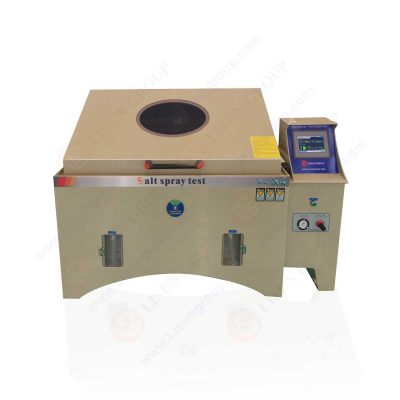
YWXQ-010 Salt Spray Test Chamber
This Salt Spray Test Chamber can reliably carry out three mainstream test modes: Neutral Salt Spray (NSS), Acetic Acid Salt Spray (AASS) and Copper-Accelerated Acetic Acid Salt Spray (CASS). It complies with Chinese GB/T standards as well as international standards including IEC, ISO and ASTM. In terms of intelligent configuration, this Salt Spray Test Chamber is fitted with an automatic salt spray settling rate monitoring module, which collects the volume of salt solution in an 80 cm² collection vessel in real time. The test duration can be set from 0 h to 9999 h to meet the requirements of long-duration durability tests. It also integrates water shortage alarm, dual electronic and mechanical overtemperature audible and visual alarm, as well as low air pressure alarm. When the brine supply is insufficient, the cavity temperature exceeds the set limit or the inlet air pressure fails to reach the threshold, the equipment triggers audible and visual reminders. Under certain abnormal conditions, the test will be paused automatically to avoid specimen damage and component failure. Continuous spraying, intermittent spraying and programmable segmented test cycles are supported. Researchers can set alternating spray start-stop sequences in accordance with standard requirements to better simulate real alternating outdoor environments.
| Parameter Item | Specification |
|---|---|
| Model | YWX/Q‑010 |
| Inner Chamber Dimension | 1200*800*500 mm |
| Test Chamber Volume | 480 L |
| Brine Tank Volume | 32 L |
| Power Supply & Rated Power | Single-phase AC220V/50Hz, 2.5KW; 60Hz available on request |
| Test Chamber Temperature Range | Ambient ~ +55℃ |
| Saturation Tower Temperature Range | Ambient ~ +70℃ |
| Temperature Uniformity & Fluctuation | Uniformity ≤2℃, Fluctuation ≤±0.5℃ |
| Salt Spray Settling Rate | 1‑2 ml/80cm²/h (average value measured over 16 hours) |
| Supported Test Types | NSS Neutral Salt Spray, AASS Acetic Acid Salt Spray, CASS Copper-Accelerated Acetic Acid Salt Spray |
| Spray Mode | Continuous, Intermittent, Programmable Test |
| Safety Protection | Water Shortage Alarm, Dual Overtemperature Alarm, Low Air Pressure Audible & Visual Alarm |
| Air Source Requirement | Inlet pressure ≥0.4 MPa, spray pressure adjustable between 0.07‑0.17 MPa |
The NSS neutral salt spray test is the most widely used basic test method. It uses 5% sodium chloride aqueous solution with the collected solution pH kept at 6.5‑7.2 and the test temperature set to 35℃. It simulates ordinary marine atmospheric salt spray conditions with relatively mild corrosion intensity. It is suitable for hardware screws, conventional zinc-plated and nickel-plated workpieces, electronic connectors, ordinary paint coatings and other specimens, corresponding to standards such as GB/T 2423.17‑2021 and ISO 3768. It is mostly adopted for routine corrosion resistance screening of products.
The AASS acetic acid salt spray test adds glacial acetic acid to sodium chloride brine to adjust the pH of collected solution to 3.1‑3.3 while maintaining the test temperature at 35℃. The acidic environment accelerates electrochemical corrosion and delivers a higher corrosion rate than NSS. It applies to decorative electroplating layers and aluminum anodized films to evaluate the resistance of workpieces to industrial atmospheres containing acidic pollutants, in compliance with ISO 3769 and GB/T 10125‑2021.
The CASS copper-accelerated acetic acid salt spray test adds a fixed amount of copper(II) chloride dihydrate into the acidic brine system. Copper ions serve as a cathode catalyst to further boost the corrosion effect and raise the test temperature, which brings the strongest acceleration effect and greatly shortens the test cycle. This test is mainly used for multi-layer decorative electroplated parts of copper-nickel-chromium, bathroom hardware, automotive decorative coatings and similar products, following ASTM B368 and ISO 3770. This mode is not suitable for zinc-based plating specimens.
When running tests inside the Salt Spray Test Chamber, besides selecting the corresponding test mode, the specimen placement angle should be controlled. The equipment is equipped with V-shaped grooves and O-shaped round bar specimen racks. Specimens shall be placed at an angle of 20°±5° so that salt mist can flow freely and local abnormal corrosion caused by accumulated liquid can be avoided. Before the test, operators need to check brine level, pure water supply and air source pressure, set the test mode, temperature, spray scheme and operation duration, and activate the settling rate collector. After the test is completed, take out the specimens, rinse residual salt on the surface in accordance with relevant standards, dry them and observe rust spots, blistering and peeling. Record the corroded area and the time when corrosion appears to complete performance judgment.
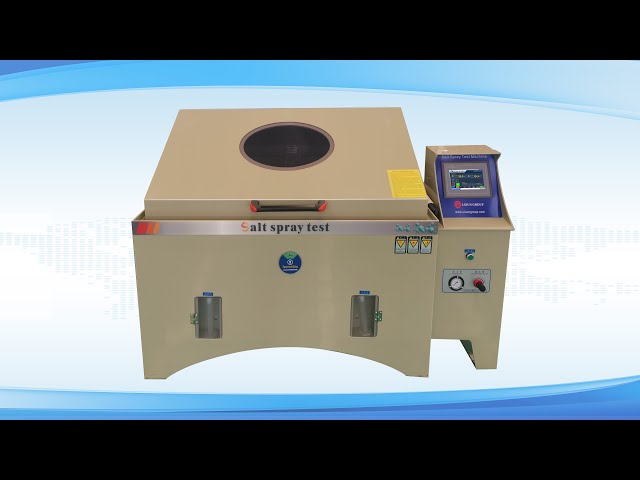
In the electronics and electrical industry, the Salt Spray Test Chamber is used to test chip pins, connectors, sensors, power adapters, switch housings and other samples. It evaluates plating reliability and shell protection performance, and troubleshoot risks such as poor contact, reduced insulation and short circuits induced by salt mist for outdoor electrical equipment deployed in coastal computer rooms. In the metal hardware processing sector, screws, springs, hinges, aluminum alloy profiles and other workpieces are tested in the Salt Spray Test Chamber to compare the advantages and disadvantages of surface treatment processes including zinc plating, chromium plating and passivation, so as to select processing solutions suitable for humid coastal working conditions. For coatings and surface treatment industries, coating panels and powder-coated workpieces are placed into the Salt Spray Test Chamber to observe coating blistering, discoloration and rusting, assess coating adhesion and corrosion resistance indicators and support the R&D and production of automotive and furniture coatings.
Home appliances such as outdoor air conditioner casings, outdoor metal furniture and lamp housings, as well as new energy products including photovoltaic frames, communication base station enclosures and wind power components, can all undergo accelerated corrosion testing with the Salt Spray Test Chamber to simulate long-term outdoor saline environments and identify protection weaknesses in advance. For the LISUN YWX/Q‑010 Salt Spray Test Chamber, an air compressor and YWX/Q‑ETD salt spray waste gas treatment unit can be selected as optional accessories. The waste gas treatment device washes and neutralizes salt spray exhaust to prevent corrosive gas from damaging other laboratory equipment and enable safe indoor discharge.
The Salt Spray Test Chamber is indispensable equipment for material corrosion reliability testing. Chamber material, temperature and spray control systems and intelligent protection functions directly determine the repeatability of test data and service life of the machine. The LISUN YWX/Q‑010 Salt Spray Test Chamber features an integrally molded PP cavity without welding seams and high-precision control units. It fully supports the three mainstream salt spray tests of NSS, AASS and CASS, and rich alarm protection functions reduce test risks. During practical testing, technicians shall select the proper salt spray mode according to product standards and strictly control settling rate, temperature, pH value and specimen placement conditions to guarantee compliant test conditions and obtain credible evaluation results for corrosion resistance. It should be noted that results from accelerated salt spray tests are only for comparative reference and cannot be directly converted into the service life under long-term natural exposure. Final product performance assessment shall be combined with outdoor field exposure tests.
Tags:YWX/Q-015Your email address will not be published. Required fields are marked *

 English
 中文简体
 English
 Русский
 Español
 Português
 Türkçe
 العربية
 Deutsch
 Polski
 Italiano
 Français
 한국어
 ไทย
 Tiếng Việt
 日本語