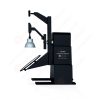
LM-79 Moving Detector Goniophotometer (Mirror Type C)
LSG-6000
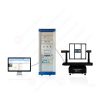
High Precision Rotation Luminaire Goniophotometer
LSG-1890B
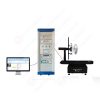
High Precision Rotation Luminaire Goniospectroradiometer
LSG-1890BCCD

Goniophotometer for Automotive and Signal Lamps
LSG-1950
Goniophotometer for Traffic Signal Lamps (Economical Model)
LSG-1950S
VAD Fire Alarm Visual Alert Device Goniophotometer
LSG-1930
Goniophotometer for Airfield Lighting
LSG-1940
Compact Goniophotometer
LSG-1200A
LED Goniophotometer
LSG-1100
Near Field Moving Detector Goniophotometer
LSG-1900B
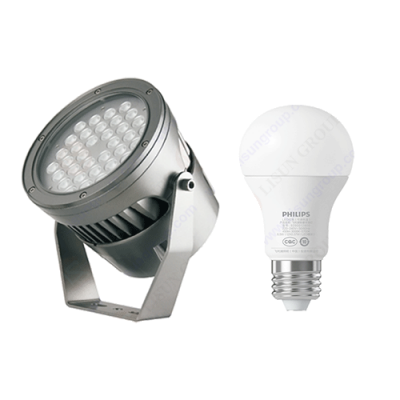 LEDs and Luminaire Test Solutions
 LM-79 and LM-80 Test Solutions
 LED Driver Test Solutions
 Household Appliances Test Solutions
 Mobile and Network Test Solutions
 Automotive Electronics Test Solutions
 Audio-Video and IT Test Solutions
 Cable and Wire Test Solutions
 Plugs and Sockets Test Solutions
 Power Switch Test Solutions
 Transformer Test Solutions
 Electric Toys Test Solutions
 Energy Meter Test Solutions
 Motor-Operated Tool Test Solutions
Select an organization
to browse standards
Abstract
Luminous intensity curve measurement is the fundamental step for luminaire optical performance evaluation, product certification and lighting simulation design. According to mechanical motion structure, goniophotometers are mainly divided into Rotation Luminaire Goniophotometer and moving mirror goniophotometer. These two types show obvious differences in mechanical motion logic, coordinate‑system adaptability and source of test errors. The Rotation Luminaire Goniophotometer adopts the test principle of fixed photometric probe with rotating test luminaire. The device under test can achieve continuous rotation from ‑180° to +180° along horizontal and vertical axes, and its hardware mechanism supports two sets of CIE‑standard measurement coordinate systems: C‑γ (single‑arm structure) and B‑β (double‑arm structure). LISUN LSG‑1890B high‑precision goniophotometer is a typical Rotation Luminaire Goniophotometer. It fully complies with CIE‑70, LM‑79‑19, EN13032‑1 Clause 6.1.1.3 Type 1 goniophotometer specifications and can acquire full‑space photometric parameters for various lighting products such as LED luminaires, HID light sources and fluorescent lamps. This paper illustrates the test principle and hardware characteristics of the Rotation Luminaire Goniophotometer, compares applicable conditions between Rotation Luminaire Goniophotometer and moving mirror goniophotometer, and provides references for instrument selection of lighting testing laboratories.
For quality control of lighting products, photometric parameters such as luminous intensity curve, luminous intensity distribution, zonal luminous flux and UGR glare value directly determine practical lighting performance of luminaires, and they are also mandatory test data required by domestic and international certification standards. According to relative movement between sample and detector, CIE 121 and EN13032‑1 classify goniophotometers into different categories. Type 1 refers to Rotation Luminaire Goniophotometer while Type 4 is moving‑mirror vertical goniophotometer. Both instruments can obtain full‑space luminous intensity distribution data, yet mechanical movement modes lead to different systematic errors. The Rotation Luminaire Goniophotometer drives the test luminaire for dual‑axis rotation via turntable while the photometric probe remains stationary. By changing luminaire posture, the probe can capture optical signals from all directions on the spherical surface. For moving mirror goniophotometer, the test luminaire keeps static, and the probe together with reflecting mirror performs circular scanning around the luminaire. Different structures impose distinct requirements on burning posture stability of test sample, heat dissipation and dark‑room dimension. Laboratories need to select proper equipment based on product portfolio, standard items and site conditions. As a representative model of Rotation Luminaire Goniophotometer, LSG‑1890B features dual‑coordinate‑system compatibility of C‑γ and B‑β and is widely applied in floodlight, projector luminaire and conventional gas‑discharge light source testing scenarios.
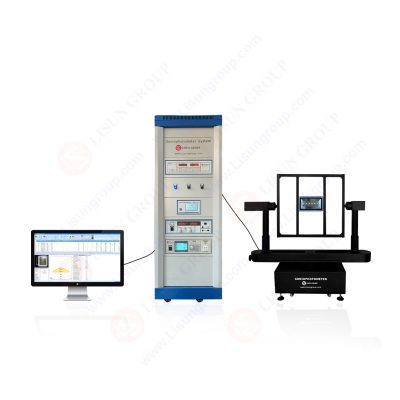
High Precision Rotation Luminaire Goniophotometer LSG 1890B
The core working principle of Rotation Luminaire Goniophotometer is fixed installation of photometric probe, and the test luminaire is driven for spatial rotation by dual‑axis turntable. The device under test can realize continuous rotation from ‑180° to +180° along horizontal and vertical axes, covering complete 0‑360° full‑space spherical angle without scanning blind zone. Equipped with multi‑functional fixture, the hardware structure can switch between two standard measurement modes: C‑γ (single‑arm structure) and B‑β (double‑arm structure). The C‑γ coordinate system, also known as C‑plane coordinate system, is mostly used for indoor luminaires, street lights and general lighting products. The B‑β coordinate system is suitable for floodlights and stadium projector luminaires and is the recommended coordinate system for photometric testing of high‑power projection products. Supporting two coordinate systems on one single unit eliminates extra investment for additional test devices and reduces laboratory hardware cost.
LISUN LSG‑1890B Rotation Luminaire Goniophotometer is fitted with constant‑temperature photometric probe, Japanese Mitsubishi servo motor and German decoder to guarantee angular control accuracy during dual‑axis rotation. The angular accuracy of LSG‑1890B reaches 0.1°, and the counterpart LSG‑1800A achieves 0.2°. The standard photometric probe is CIE Class A, and Class L high‑precision probe is optional to further minimize measurement deviation caused by photoelectric acquisition. The system communicates with computer via RS485 or USB interface. Bilingual Chinese‑English operation software is compatible with Windows 7 to Windows 11. Test results can be exported in multiple file formats including IES, LDT, CIE, CIB, TM4, CEN and EXCEL. Output files can be directly imported into DiaLux lighting simulation software for simulation calculation. Measurable parameters contain luminous intensity data, luminous intensity distribution, zonal luminous flux, luminaire efficacy, utilization factor, luminance limiting curve, UGR glare rating, effective beam angle, EEI and other complete photometric indicators. Optional accessories support luminance distribution test. In addition, this Rotation Luminaire Goniophotometer can be equipped with optional UVA, UVB, UVC dedicated ultraviolet probes to expand light distribution testing for UV disinfection luminaires.

For luminaires with different sizes and weights, LISUN provides two Rotation Luminaire Goniophotometer models: LSG‑1890B and LSG‑1800A. Both models share identical core motion principle and mainly differ in angular accuracy, maximum outer dimension and load‑bearing weight of test sample. Basic specifications are listed in the table below.
| LISUN Model | Angular Accuracy | Max DUT Dimension (Diameter × Thickness) | Max Load Weight | Standard Photometric Probe Class |
|---|---|---|---|---|
| LSG‑1890B | 0.1° | Φ2000*600mm | 60Kg | CIE Class A, Class L optional |
| LSG‑1800A | 0.2° | Φ1600*600mm | 50Kg | CIE Class A, Class L optional |
LSG‑1890B supports test samples with larger diameter and heavier weight, suitable for high‑power outdoor floodlights and large‑size projector luminaires. LSG‑1800A is designed for medium‑and‑small‑size LED luminaires and indoor lighting fixtures, and it is widely adopted in small‑and‑medium‑sized enterprise laboratories with limited budget. Both models fully support C‑γ single‑arm and B‑β double‑arm coordinate systems and satisfy equipment requirements of CIE‑70, LM‑79‑19, IES‑LM‑75 and EN13032‑1 Type 1 standards.
During testing on Rotation Luminaire Goniophotometer, the test luminaire keeps tilting and flipping with continuously changed burning posture. For conventional light sources such as HID lamps and fluorescent lamps which are insensitive to burning posture, posture variation barely affects light output and temperature, and stable measurement results can be obtained. Nevertheless, for high‑power LED luminaires, heat dissipation of LED modules is strongly correlated with gravity posture. Continuous tilting and flipping of luminaires will alter internal heat‑dissipation conditions and cause drift of chip junction temperature, further bringing test deviation of luminous flux and luminous intensity distribution. This is the main limitation of Type 1 rotating‑luminaire structure when testing high‑power SSL solid‑state lighting products.
Moving mirror goniophotometer, such as LSG‑6000 Type 4 vertical goniophotometer, maintains fixed burning posture of test luminaire throughout the whole test cycle. The probe and reflecting mirror perform rotational scanning, so thermal condition of LED luminaire will not be disturbed by mechanical movement. This type is more suitable for high‑power LED solid‑state lighting product test under LM‑79 standard. However, moving mirror goniophotometer requires higher overall equipment height and imposes stricter construction requirements on dark‑room ceiling height.
For practical instrument selection, if the laboratory mainly tests traditional light sources, projectors and floodlights, Rotation Luminaire Goniophotometer is a cost‑effective option. If major samples are high‑power LED street lights, panel lights with strict requirements on LED junction‑temperature stability, moving mirror goniophotometer shall be preferred. Some comprehensive third‑party testing laboratories deploy both types of goniophotometers and select corresponding test equipment for different luminaire categories to avoid systematic errors caused by mechanical structure.
As a classic luminous‑distribution test instrument complying with EN13032‑1 Type 1, Rotation Luminaire Goniophotometer adopts fixed‑probe principle with dual‑axis rotating test luminaire. With ‑180°~+180° continuous dual‑axis rotation capability, it supports two CIE‑standard coordinate systems including C‑γ single‑arm structure and B‑β double‑arm structure. Represented by LSG‑1890B Rotation Luminaire Goniophotometer covers photometric testing requirements for most traditional‑source luminaires, floodlights and projector lamps, and output photometric files can be used for global product certification. Nevertheless, it has inherent limitation: continuous posture change of test luminaire may reduce measurement accuracy for high‑power LED products sensitive to temperature and posture. Moving mirror goniophotometer can eliminate temperature drift caused by luminaire flipping but demands larger dark‑room space. When purchasing goniophotometer, laboratories should not only focus on nominal instrument accuracy, but also make comprehensive evaluation considering luminaire types, product structures, relevant standard clauses and dark‑room site conditions, so as to select the most suitable test equipment and guarantee reliability of luminous‑distribution test data.
Tags:LSG-1890BYour email address will not be published. Required fields are marked *

 English
 中文简体
 English
 Русский
 Español
 Português
 Türkçe
 العربية
 Deutsch
 Polski
 Italiano
 Français
 한국어
 ไทย
 Tiếng Việt
 日本語