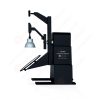
LM-79 Moving Detector Goniophotometer (Mirror Type C)
LSG-6000
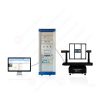
High Precision Rotation Luminaire Goniophotometer
LSG-1890B
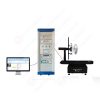
High Precision Rotation Luminaire Goniospectroradiometer
LSG-1890BCCD

Goniophotometer for Automotive and Signal Lamps
LSG-1950
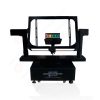
Goniophotometer for Traffic Signal Lamps (Economical Model)
LSG-1950S
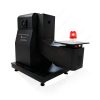
VAD Fire Alarm Visual Alert Device Goniophotometer
LSG-1930
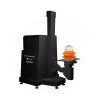
Goniophotometer for Airfield Lighting
LSG-1940
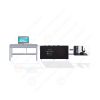
Compact Goniophotometer
LSG-1200A
LED Goniophotometer
LSG-1100
Near Field Moving Detector Goniophotometer
LSG-1900B
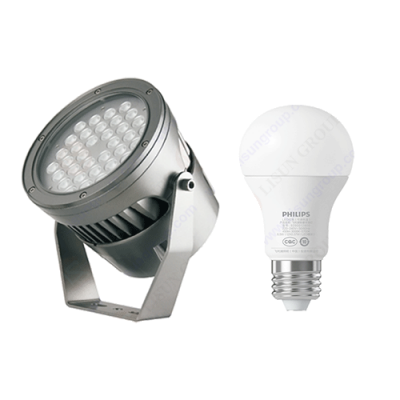 LEDs and Luminaire Test Solutions
 LM-79 and LM-80 Test Solutions
 LED Driver Test Solutions
 Household Appliances Test Solutions
 Mobile and Network Test Solutions
 Automotive Electronics Test Solutions
 Audio-Video and IT Test Solutions
 Cable and Wire Test Solutions
 Plugs and Sockets Test Solutions
 Power Switch Test Solutions
 Transformer Test Solutions
 Electric Toys Test Solutions
 Energy Meter Test Solutions
 Motor-Operated Tool Test Solutions
Select an organization
to browse standards
Abstract
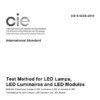
Photometric performance testing of lighting products is an indispensable part of luminaire R&D, quality control and export certification. As the core instrument for obtaining full‑space luminous intensity distribution data of luminaires, the compliance of goniophotometer with domestic and international standards directly determines the validity of test results. The LISUN LSG‑6000 LM‑79 Goniophotometer System is a rotating‑probe full‑space goniophotometer. This instrument fully complies with LM‑79‑24, LM‑79‑19, EN13032‑1 Clause 6.1.1.3 Goniophotometer Type 4, CIE S025, SASO2902, IS16106 and GB‑series domestic standards for optical parameter testing. It can automatically acquire 3D luminous intensity distribution curves with customizable test distance according to customer requirements, and perform photometric measurement for various light sources including LED light sources, horticultural grow lights, HID light sources, indoor & outdoor lighting fixtures, street lights and floodlights. This paper discusses standard compliance, hardware architecture, measurement capability, model classification and industrial application of the LM‑79 Goniophotometer, providing references for laboratory goniophotometer selection and photometric testing work for lighting industry.
With continuous development of solid‑state lighting technology, categories of LED luminaires, horticultural grow lights and high‑power flood & road lighting fixtures keep expanding, raising higher requirements on spatial photometric parameter testing for lighting products. As an important specification for optoelectronic measurement of solid‑state lighting products, LM‑79 has released LM‑79‑19 and LM‑79‑24 versions, specifying constraints on goniophotometer type, angular accuracy, probe class and test conditions. Meanwhile European EN13032‑1, CIE 121, CIE S025 and other international codes define detailed rules for luminaire luminous distribution measurement procedure and data output format. Conventional test instruments suffer from drawbacks such as large measurement blind zones, light source temperature drift caused by rotating test luminaire and insufficient angular control accuracy, which may bring deviation to test data including luminous intensity distribution, zonal luminous flux and glare parameters. Adopting stationary‑luminaire design with moving probe and mirror, the LM‑79 Goniophotometer eliminates operational disturbance induced by luminaire rotation and becomes mainstream solution for Type‑C full‑space photometric testing. LSG‑6000 is a representative model of this category and has been widely adopted in lighting testing laboratories worldwide.
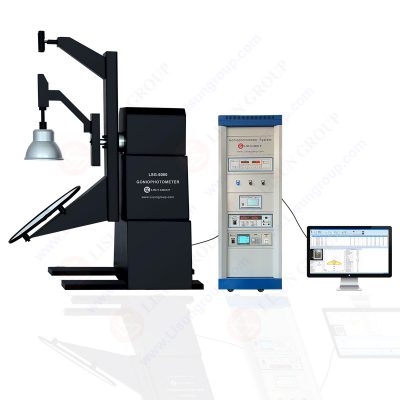
LM-79 Moving Detector Goniophotometer (Mirror Type C)
The LSG‑6000 rotating‑probe vertical goniophotometer works with near‑field probe and mirror moving circumferentially around DUT (device under test), while far‑field probe and mirror perform synchronous rotation. The test luminaire remains fully stationary throughout whole testing cycle so that working temperature and electrical condition of light source will not be altered by mechanical rotation, ensuring authenticity and repeatability of raw 3D luminous intensity distribution data. This structural design satisfies Type 4 goniophotometer requirements defined in Clause 7.3.1 of LM‑79‑19 standard. The drive unit adopts Mitsubishi servo motor with German decoder for motion control. The complete mechanical system runs smoothly and suppresses angular measurement error introduced by mechanical jitter. Cross‑shaped laser alignment tool is equipped for fast center positioning of test light source, minimizing goniometric error caused by off‑center installation and reducing human‑induced system deviation.
Angular specification: angular accuracy 0.05°, angular resolution 0.001°, γ‑angle scanning range ±180° for full‑space 0‑360° scanning without blind spot. Photometric probe is Class L compliant with DIN5032‑6 and CIE Pub. No.69, f1′ less than 1.5% to guarantee accuracy of luminous intensity acquisition. The system can be integrated with high‑precision CCD spectroradiometer to form LSG‑6000CCD spatial spectral distribution goniophotometer. Besides conventional photometric parameters, extended tests for spatial correlated color temperature distribution, horticultural lighting PAR, PPF and spatial PPFD distribution are available to broaden testing scope. Via RS‑485 or USB communication interface, software supports Windows 7‑11 with bilingual English‑Chinese UI. Test data can be exported in CIE, IES and LDT formats, directly imported into professional lighting simulation software such as DiaLux for subsequent illumination calculation.

LISUN LSG‑6000 LM‑79 Goniophotometer System measures luminous intensity, luminous intensity distribution, zonal luminous flux and luminous efficacy. Optional configuration supports luminance distribution test. Software computes derived parameters including utilization factor, luminance limiting curve, UGR glare rating, maximum spacing‑height ratio, isolux diagram, upward & downward luminous flux, isolux & isocandela curve, effective beam angle and EEI. It covers most photometric indicators required for R&D and certification of conventional lighting luminaires. According to dimension and weight of DUT, multiple variants including small‑size, standard, large‑size and extra‑large models are offered to fit different luminaire specifications and dark‑room conditions. Basic specifications of each model are shown in table below.
| LISUN Model | DUT Dimension (Diameter × Thickness) | Max Electrical Rating | Max Load Weight | Minimum Darkroom Height |
|---|---|---|---|---|
| LSG‑6000S / LSG‑6000SCCD (Small‑size) | max Φ1200*500mm | max 600V/10A, AC/DC | 40kg | 3.0m |
| LSG‑6000 / LSG‑6000CCD (Standard) | max Φ1600*600mm | max 600V/10A, AC/DC | 50kg | 4.1m |
| LSG‑6000B / LSG‑6000BCCD (Large‑size) | max Φ1800*800mm | max 600V/10A, AC/DC | 60kg | 4.7m |
| LSG‑6000L / LSG‑6000LCCD (Extra‑large) | max Φ2000*900mm | max 600V/10A, AC/DC | 80kg | 80kg |
Apart from standard visible‑light photometric test, this LM‑79 Goniophotometer can be equipped with optional Class‑A UVA, UVB, UVC photometric probes to extend testing capability for UV disinfection luminaires. There is no fixed test distance for this equipment; test distance can be custom‑designed based on customer dark‑room space and optical characteristics of DUT, flexibly accommodating test requirements from small spotlights to high‑power floodlights.
The LISUN LSG‑6000 LM‑79 Goniophotometer System fully satisfies requirements of LM‑79‑24, LM‑79‑19, EN13032‑1 Clause 6.1.1.3 Goniophotometer Type 4, CIE S025, SASO2902, IS16106, CIE 121 and GB‑series national photometric standards. It can be used for domestic type‑approval test as well as certification testing for lighting products exported to Saudi Arabia, India, Europe and America. Generated photometric files support compliance assessment for different countries. It is compatible with a wide range of light sources: LED light sources, horticultural grow lights, HID discharge sources, indoor commercial luminaires, street lights and outdoor floodlights can all be measured with this system.
For luminaire R&D, the 3D luminous intensity distribution curve automatically generated by this LM‑79 Goniophotometer allows optical engineers to evaluate lighting performance and optimize reflector & lens design. For quality control, it verifies photometric consistency of mass‑production products. Third‑party testing laboratories adopt this instrument for commissioned test and certification. Real‑world deployments have been completed in laboratories across India, Malaysia, Turkey and other countries, proving practicality and stability of this equipment under different laboratory environments.
Continuous updates of global lighting standard system impose stricter requirements on goniophotometer regarding measurement accuracy, functional expandability and standard compatibility. Featuring Type 4 goniophotometer architecture with stationary DUT and moving probe, LISUN LSG‑6000 LM‑79 Goniophotometer adopts high‑precision mechanical transmission system and standard‑compliant photometric probe. Hardware specifications and software output capability fully align with LM‑79, EN13032‑1, CIE series and multi‑national standards. It automatically acquires 3D luminous intensity distribution data with customizable test distance. Multiple model variants cover testing demands from small to extra‑large luminaires, with optional extensions for spectrum, ultraviolet and horticultural lighting parameter measurement. This equipment delivers complete full‑space photometric testing solution for luminaire R&D optimization, factory quality inspection and global certification testing, and delivers practical engineering value for standardization of photometric measurement in lighting industry. With further innovation of lighting products, goniophotometer will keep evolving toward multi‑parameter integrated inspection and intelligent data processing.
Tags:LSG-6000Your email address will not be published. Required fields are marked *

 English
 中文简体
 English
 Русский
 Español
 Português
 Türkçe
 العربية
 Deutsch
 Polski
 Italiano
 Français
 한국어
 ไทย
 Tiếng Việt
 日本語