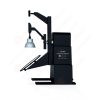
LM-79 Moving Detector Goniophotometer (Mirror Type C)
LSG-6000
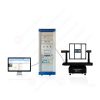
High Precision Rotation Luminaire Goniophotometer
LSG-1890B
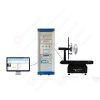
High Precision Rotation Luminaire Goniospectroradiometer
LSG-1890BCCD

Goniophotometer for Automotive and Signal Lamps
LSG-1950
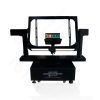
Goniophotometer for Traffic Signal Lamps (Economical Model)
LSG-1950S
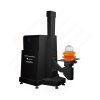
Goniophotometer for Airfield Lighting
LSG-1940
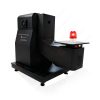
VAD Fire Alarm Visual Alert Device Goniophotometer
LSG-1930
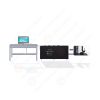
Compact Goniophotometer
LSG-1200A
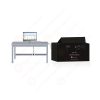
LED Goniophotometer
LSG-1100
Near Field Moving Detector Goniophotometer
LSG-1900B
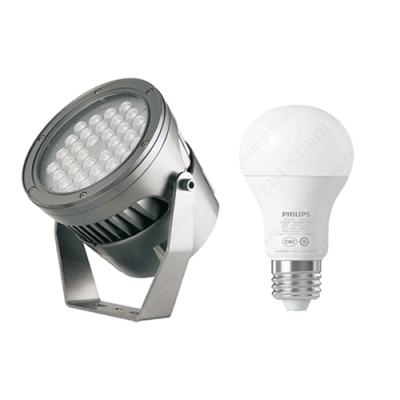 LEDs and Luminaire Test Solutions
 LM-79 and LM-80 Test Solutions
 LED Driver Test Solutions
 Household Appliances Test Solutions
 Mobile and Network Test Solutions
 Automotive Electronics Test Solutions
 Audio-Video and IT Test Solutions
 Cable and Wire Test Solutions
 Plugs and Sockets Test Solutions
 Power Switch Test Solutions
 Transformer Test Solutions
 Electric Toys Test Solutions
 Energy Meter Test Solutions
 Motor-Operated Tool Test Solutions
Select an organization
to browse standards
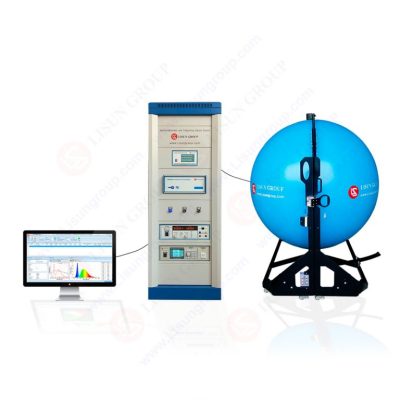
The correct light output measurement is essential to determine the actual output of the current lighting products. An Integrating sphere is a dedicated device specialized to quantify total luminous flux in a controlled and repeatable fashion, and therefore used as a required apparatus in checking both initial output and long-term stability. The lumen sphere in illumination is important in professional lighting laboratories not only in establishing the value of light output of a source, but also in measuring changes in its output with time. Such features are particularly valuable because the use of LED technology prevails in commercial, industrial and outdoor lighting.
An integrating sphere receives all emitted light independent of a beam angle, or of optical geometry, in contrast to a directional measurement system. This enables the engineers to test actual luminous performance without the effects of the geometry in the fixtures. Where output consistency and lumen maintenance are the important issues of quality, the integrating sphere offers a degree of consistency and repeatability that no other method of measurement can relatively assure.
The lumen maintenance is a measure of the ability of a light source to retain the original luminous output in the course of time. Degraded thermal and material aging and optical wear cause stable output gradual devaluation of all sources of light. In the case of LEDs, the degradation will tend to be slower than traditional lamps though, still it happens, and it needs to be figured properly.
Manufacturers use lumen maintenance information as an aid in making performance claims, warranty and compliance reports. Minimal errors in measurement can greatly misdirect long-term forecasts. Integrating sphere allows the uniformity of measurement conditions to allow an output variation to reflect actual degradation, and not changes in measurement.
The ability to gauge the essence of a total luminous flux at certain intervals would enable engineers to observe the trend of performance with a reasonable degree of certainty and anticipates when the current scenario becomes unachievable.
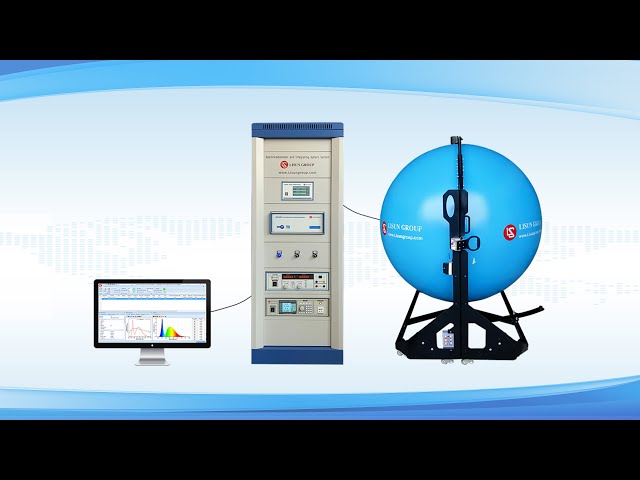
The main advantage of a integrating sphere is the property to spatially combine light using a combination of numerous reflective internal bounces. The light scattering in the inside coating removes reliance on the source orientation, beam shape or optical complexity.
This standardization is critical in the ensuring consistency in the output verification. Minor shifts in source position or optical position may cause source measurement errors in directional systems. A integrating sphere is a spherical detector that reduces these effects by diffusing directional emission into a field of light that is evenly diffused before it is detected.
Consistency is essential when lumen maintenance testing is to be conducted, and measurements are to be made months or years later. Integrating sphere offers a consistent reference environment in which meaningful comparison of test points are possible.
Directional photometric systems can be useful in the analysis of beam distribution, and are less appropriate in the determination of total output. Directional measurements can be distorted by beam shape changes, or small optical losses that require no reflection of the actual lumen loss.
An Integrating sphere is a measurement of total luminous flux regardless of distribution. This is because it is best in monitoring the output decrease that is caused by true lumen depreciation and not redistribution of the light optically.
This difference is especially important in products where the maintenance of the lumen is a contractual or regulatory obligation. This is done by the lumen sphere of illumination which is used to take into account reported lumen values created as a total light production and not directional.
The LED life testing usually has continuous product operation at higher temperature and electric continuous stresses. In such tests, degradation should be measured periodically by measuring the luminous output.
This is enabled through the use of a integrating sphere that provides environment of repeatable measurements to reduce outside variables. Direct comparison of measurements at various ages it was possible to make, which provides possible calculation of lumen maintenance measures.
Since the LEDs can have short time variations in their output depending on the surroundings temperature, the integrating sphere set-up allows the distinguishing of long-term variations and short-term variations.
RF Thermal conditions also have important effects on LED output. Too much heat in the process of measurement might cause luminous flux to decrease temporarily producing lower performance estimates. The thermal management is facilitated by a properly designed design, which has enough internal volume and is ventilated and measured in time.
Bigger spheres are also quite useful in high-power sources, since they conduct heat more uniformly, and lower the heat differences. This thermal stability improves repeatability and accuracy in measurement in long test programs.
The manufacturer LISUN plans integrating sphere systems based on consideration of thermal behavior so that the output verification is not due to thermal effects but results in steady-state behavior of the build.
Several lighting standards and certification schemes demand documented lumen production and maintaining information. A integrating sphere gives the measurement basis of these requirements, the provision of results that are traceable and repeatable.
Output verification is also essential in quality assurance programs to keep track of the consistency in production. Manufacturers can use testing samples of the various batches to identify the drift in processes or the change in the components at an early stage.
A lumen sphere in lighting turns out to be a key quality control measure, and it helps not only to qualify but also constantly monitor production.
The lighting products take different sizes, power and optical shapes. Integrating sphere can support a wide range of products, small and big, with little complexity in the setups.
Since the process of measuring is independent of the beam angle and the beam orientation, engineers do not have to significantly reconfigure their product tests. Such flexibility enhances efficiency in the laboratory and minimizes the chances of errors in setting up the laboratory.
Sliding interchangeable ports as well as mounting options are additional to support the flexibility such that the same system can promote several test programs.
Proper calibration is essential in the accurate lumen measurement. The integration spheres are calibrated with known traceable reference source in order to determine a known relationship between detector response and luminous flux.
There are stable mechanical designs and long-lasting internal coating, which make the calibration valid in the long-term. Frequent checks would guarantee that measurements are within reasonable uncertainty levels.
Lumen maintenance studies tend to be a particular concern in long-term reliability because stability in the long run is necessary. An integrating sphere that has been maintained ensures that data integrity is maintained along the product lifecycle.
Design decisions are based on reliable measurement which builds confidence. When the engineers have confidence in their data, then they can do an optimized heat control, current, and optical design with composure.
Reliable data in the maintenance of lumen corroborates realistic lifetime claims, and minimizes the likelihood of exaggerating performance. It also allows trade-offs in terms of efficiency, durability, and price to be done knowingly.
Manufacturers make decisions based on facts rather than assumptions or proxy indicators because they use a sphere of integrating to verify their output.
An Integrating sphere is important in precision of lumen maintenance and output verifying that measures of total luminous flux are geometry-independent. It allows a clear follow-up of the output with time due to equal light integration, thermal stability, and repeatability. Lumen sphere in illumination is hence an essential aid in the research on the aging of LEDs, product quality, and compliance.
Having very powerful system designs by other manufacturers like LISUN, sphere testing would provide dependable information that would facilitate assertive performances and durability of products over time. The integrating sphere is a foundation of professional photometric assessment in an industry where the stability of output and the ability to stay consistent determines success.
Your email address will not be published. Required fields are marked *

 English
 中文简体
中文简体 English
 Русский
 Español
 Português
 Türkçe
 العربية
 Deutsch
 Polski
 Italiano
 Français
 한국어
한국어 ไทย
ไทย Tiếng Việt
 日本語
日本語