LM-79 Moving Detector Goniophotometer (Mirror Type C)
LSG-6000
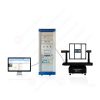
High Precision Rotation Luminaire Goniophotometer
LSG-1890B
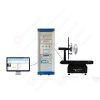
High Precision Rotation Luminaire Goniospectroradiometer
LSG-1890BCCD

Goniophotometer for Automotive and Signal Lamps
LSG-1950
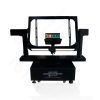
Goniophotometer for Traffic Signal Lamps (Economical Model)
LSG-1950S
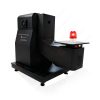
VAD Fire Alarm Visual Alert Device Goniophotometer
LSG-1930
Goniophotometer for Airfield Lighting
LSG-1940
Compact Goniophotometer
LSG-1200A
LED Goniophotometer
LSG-1100
Near Field Moving Detector Goniophotometer
LSG-1900B
 LEDs and Luminaire Test Solutions
 LM-79 and LM-80 Test Solutions
 LED Driver Test Solutions
 Household Appliances Test Solutions
 Mobile and Network Test Solutions
 Automotive Electronics Test Solutions
 Audio-Video and IT Test Solutions
 Cable and Wire Test Solutions
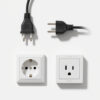 Plugs and Sockets Test Solutions
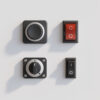 Power Switch Test Solutions
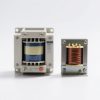 Transformer Test Solutions
 Electric Toys Test Solutions
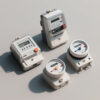 Energy Meter Test Solutions
 Motor-Operated Tool Test Solutions
Select an organization
to browse standards
The ingress protection testing has been significantly changed in the past 10 years with the push of industries among outdoor-rated electronics, sealed industrial controls, marine-rated automation, and battery-powered equipment. The IPX5 level is one of the commonest waterproof levels that are very practical in real-life applications in consumer electronics, lighting, outdoor power equipment, wall-mounted instrumentation, and machinery controller models. In order to provide credible assessment procedures, laboratories will use IP test chamber, which is equipped with controlled-high pressure water jet.
Global IPX5 compliance cannot be achieved by merely misting the sample by placing water pressure in a nozzle. The difficulty with this is repeatability: the same exposure must be carried out between samples, even between production batches, and between laboratories. This article reveals how to operate to ensure the required calibration, procedures, and engineering principles required to attain oral repetition of the same published article on IP chambers or spray-based engineering techniques that have already been published.
IPX5 is the measure of water that is projected on a nozzle at a given pressure, volume flow, and time. Although lower IP levels approximate dripping or oscillation-based spraying, IPX5 has dynamic energy that is capable of detecting weak sealing interfaces, cable gland leakage, improperly formed gaskets, and vent membrane failures.
Products subject to IPX5 testing might not be full immersion products, but it is typical to subject them to water jet exposure during:
• Cleaning and maintenance
• Wind pressure influence of rain impact
• Hose-based rinsing applications
• Externally placed near irrigation areas
Thus, a regular assessment becomes vital.

Nozzle distance, nozzle angle, spray flow variation, pressure, and incident surface geometry variation will affect the probability of water getting into seams along the enclosure. When such conditions are replicated wrongly by the laboratories, two products which are identical can exhibit opposite results.
An IP test chamber with high precision gets rid of uncertainty by offering:
• A fixed nozzle system
• Calibrated water pressure
• Controlled flow rate
• Defined test duration
• Supported acoustic fixtures.
• Target distance/orientation Repeatable.
The particular chamber where IPX5 is to be tested is a chamber that incorporates the structural, hydraulic and electronic control systems that do not degrade with time even when exposed to pressurized conditions repeated in a cycle.
Systems of professional quality like those that have been created by LISUN usually include:
• Digital provision of pressure that is high-precision.
• Tolerances in the calibration of nozzles.
• Standardized stainless steel inside building.
• Water-free water drainage logic.
• Fixed sample mounting holders
The most highly designed design types are capable of retaining these attributes even in many tests without drift.
Five parameters should not be altered during a test cycle in order to guarantee the consistency of the IPX5 results.
1. Water flow rate accuracy: Flow rate has an effect on jet energy. Variations outside of ±5% undermine compliance.
2. Pressure delivery stability: Temporary pressure bumps can push water over sealing paths which otherwise cannot allow uniform flow.
3. Nozzle angle alignment: The slight deviation of alignment alters the jet impact geometry.
4. Distance consistency: The chamber should not rely on manual estimation to use but fixed rails, arm brackets or spatial reference marks.
5. Exposure time control: Time error distorts cumulative water quantity supplied in the enclosure.
Flat surfaces do not behave in the same way as the multi-angled, recessed, stepped and curved surfaces. Non-linear water accumulation when a high velocity jet collides with such geometries is due to redirection patterns.
For example:
• Recessed port leads to concentration of the water at the perimeter.
• With large radius curvature, jet energy is dispersed.
• Continuous impact zones are accumulated as vertical fins
This implies that it is not allowed to alter the orientation of sample mounting between repetitions of the test in an IP test chamber.
Points of measurement are marked by engineers on:
• Cable entry locations
• Hinged joints
• Access doors
• Display areas
• Connector panels
This enables the same jet strike geometry in samples of production.
Jet streams at high flow rates consist of air holes that are unpredictable. The effect of air entrainment is added to asymmetric impact and turbulence is amplified when pulses of pressure are contained in water lines.
In order to avoid that, modern chambers apply:
• The pipe routing on the inside is smooth.
• Damping elements against pressure.
• Low pulsation valve systems.
• Instant start-stop logic
High turbulence on early jet cycles could be observed as compared to mid-cycle flows without these, as will be the case with repeatability.
Although there are numerous standards of standard IP enabling flexibility, internal fixed referencing is taken up by the laboratories to enhance uniformity. The test operators make a position of a sample with respect to fixed indicators within the chamber. The lighting must not contribute to the stress of its featuring and should not be able to store water, and needs to be able to rotate at a variety of angles when it is required in sequence exposure.
Professionals do not like to hold samples in hand because there is an angular variation contributed by movement of the operator. Rather, structured positioning is reliable in repeating.
The accumulation of water under the enclosure flange raises the pressure of stress particularly in gasket lips or cable end seal. When the drainage is slow in the chamber, the load of residual water will build up, affecting the sealing system in a manner that it was not designed to take into consideration in IPX5.
In order to avoid it, drainage zones should:
• Fully evacuate water
• Avoid stagnation
• Maintain dry support levels
This is particularly significant to the units that experience constant rotation in jet form.
The biggest challenge is to make sure that the IPX5 test done in the prototype assessment will be consistent when the same is retested several months later in the quality audit of the mass production.
In order to accomplish this, laboratories record:
• Pressure setpoint
• Stabilization period of pre-test water.
• Nozzle servicing intervals
• Equipment calibration logs
• Water supply environmental temperature.
This keeps the operating range constant.
IPX5 is not made as a separate conduct in some organizations. In its place, they relate it with parallel test programs like thermal aging, sunlight exposure, vibration stress dynamic, and electrical endurance functioning.
Under this form of methodology, IPX5 exposure falls under not pass-fail but rather under a gradual lifecycle matrix.
For example:
1. Pre-cycle function test
2. IPX5 water jet
3. Hot temperature test run operational.
4. Cold storage condition
5. Envelope retesting
The accuracy of the chamber makes sure that generated failure mechanisms are a result of the product- not the drift in the environment.
Hose based tests are manual and give erratic pressure, erratic aim, and erratic movement. The operators tilt, move or narrow the angle unconsciously when tired. Further indicated, the human operator is not able to maintain a constant nozzle motion speed over 5 minutes or 15 minutes sequence.
An IP test chamber does not compromise on this by:
• Movement which is automated or non-programmable.
• Stable hydraulic feed
• Recorded cycle logs
• Determined nozzle to sample velocities.
This is what enables the laboratories to provide credible results whenever one is seeking external certification.
The IPX5 is more based on the regularity of the water jet delivery. The difference in the nozzle movement, angle of interest, hydraulic behavior and the time of exposure produces a significant difference in the stress that is applied on product seals and structural points. To have a valid enclosure protection the repeatability required is offered by a professional-grade IP test chamber. IPX5 can be a scientifically justifiable test when the laboratories take stringent responsibility of mounting geometry, pressure condition, nozzle alignment, operational records, and maintenance schedule of equipment.
Lisun Instruments Limited was found by LISUN GROUP in 2003. LISUN quality system has been strictly certified by ISO9001:2015. As a CIE Membership, LISUN products are designed based on CIE, IEC and other international or national standards. All products passed CE certificate and authenticated by the third party lab.
Our main products are Goniophotometer, Integrating Sphere, Spectroradiometer, Surge Generator, ESD Simulator Guns, EMI Receiver, EMC Test Equipment, Electrical Safety Tester, Environmental Chamber, Temperature Chamber, Climate Chamber, Thermal Chamber, Salt Spray Test, Dust Test Chamber, Waterproof Test, RoHS Test (EDXRF), Glow Wire Test and Needle Flame Test.
Please feel free to contact us if you need any support.
Tech Dep: Service@Lisungroup.com, Cell/WhatsApp:+8615317907381
Sales Dep: Sales@Lisungroup.com, Cell/WhatsApp:+8618117273997
Your email address will not be published. Required fields are marked *

 English
 中文简体
中文简体 English
 Русский
 Español
 Português
 Türkçe
 العربية
 Deutsch
 Polski
 Italiano
 Français
 한국어
한국어 ไทย
ไทย Tiếng Việt
 日本語
日本語