LM-79 Moving Detector Goniophotometer (Mirror Type C)
LSG-6000
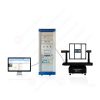
High Precision Rotation Luminaire Goniophotometer
LSG-1890B
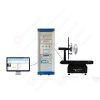
High Precision Rotation Luminaire Goniospectroradiometer
LSG-1890BCCD

Goniophotometer for Automotive and Signal Lamps
LSG-1950

Goniophotometer for Traffic Signal Lamps
LSG-1950S
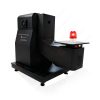
VAD Fire Alarm Visual Alert Device Goniophotometer
LSG-1930
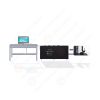
Compact Goniophotometer
LSG-1200A
LED Goniophotometer
LSG-1100
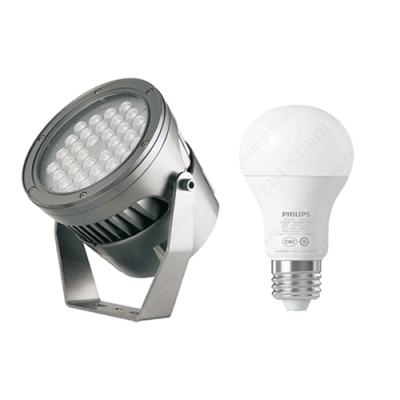 LEDs and Luminaire Test Solutions
 LM-79 and LM-80 Test Solutions
 LED Driver Test Solutions
 Household Appliances Test Solutions
 Mobile and Network Test Solutions
 Automotive Electronics Test Solutions
 Audio-Video and IT Test Solutions
 Cable and Wire Test Solutions
 Plugs and Sockets Test Solutions
 Power Switch Test Solutions
 Transformer Test Solutions
 Electric Toys Test Solutions
 Energy Meter Test Solutions
 Motor-Operated Tool Test Solutions
Select an organization
to browse standards
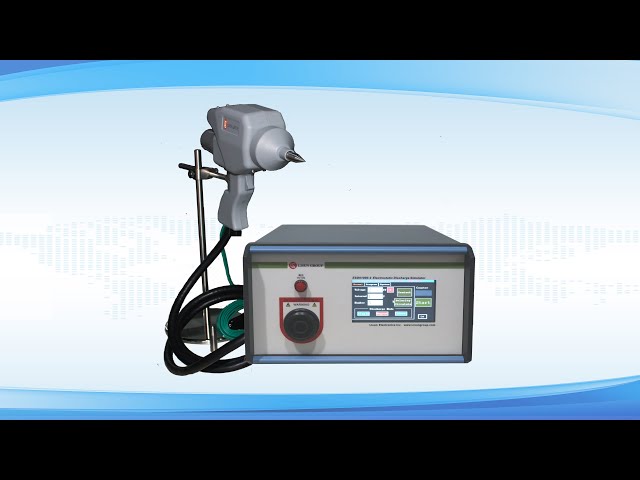
One of the most unpredictable failures in the modern electronics is the electrostatic discharge. The smaller, faster and denser the device, the lower the components capability of surviving high-voltage pulses. This ensures ESD testing is an important process in the product validation process particularly when the consumer requirement entails reliability in various settings. Economic factors like assessing price alternatives of ESD guns also affect the decisions of the laboratories although the price is not the only factor that determines the quality of the test. It is the consistency of the waveforms, accuracy of rise-time and voltage stability that are exhibited by an ESD simulator during repetitive discharge operations that count. The ESD61000-2 family is designed to operate in laboratories which require stable, repeatable ESD performance over thousands of pulses without a waveform drift or a calibration loss.
The mystery of the ESD events tends to startle newcomers. Even a few nanoseconds discharge can cause a number of kilovolts of potential difference, high frequency currents well beyond gigahertz frequencies and significant levels of electromagnetic energy which radiates into neighboring circuits. These effects should be replicated to a controlled level in order to have any meaning in the testing. Standardization can provide that every test event produces a reproducible waveform form, peak voltage and current fall. In the absence of this, it will be impossible to make comparisons across laboratories and even across test sessions.
ESD is discontinuous, as opposed to conducted or radiated EMC phenomena. It is a temporary phenomenon that depends on human activities, humidity of environment, composition of materials and their grounding quality. ESD currents increase rapidly away, as short as 1 nanosecond, and decays with several exponential time constants. The standard of the form of the waveform desired is specified by IEC 61000-4-2 standard, which specifies the peak current; rise time (around 0.8-1.0 ns); and the secondary breaks at 30 and 60 ns.
Such very rigid timing requirements to obtain a stable waveform will necessitate very specialized discharge networks. When the humidity is varied within the laboratory, the degradation nature of the air gap also varies. That is why ESD testing should be based on humidity-controlled conditions and clearly-defined grounding paths in order to prevent the instability of the waveforms.
Another challenge is that of voltage stability. The internal high voltage capacitors and resistors reduce as the discharge circuit age. Their effective resistance or capacitance can be slightly changed to alter the energy in each discharge. A precision current probe may be necessary to notice these variations as they are usually unable to be seen by the user. To comply such drift is not acceptable.
The ESD61000-2 is designed in such a way that it minimizes these uncertainties by way of regular voltage conditioning, spark gap control and automated compensation mechanisms. It keeps the discharge network on well controlled conditions by keeping all the test pulses to be close to IEC reference waveform.
The device is powered to provide high-voltage output based on stabilized charging circuits. The generator requires active feedback loops instead of accepting fluctuation in voltage due to variation of power supplies or heating of components. These loops identify charging energy on the real time and regulate the output voltage. Such approach corrects drift associated with long-test sessions, particularly relevant in the case of verification laboratory where multiple discharges can run per hour.
The distance between the spark gaps is critical in the simulation of ESD. Minor changes in arc voltage threshold occur with even a microscopic shift, and rise time changes. ESD61000-2 contains high precision machined electrodes which limits geometric tolerance errors. Older lab systems are known to have slow corrosion of electrodes, which silently leads to inaccuracy; the material composition lowers the long-term drifting errors of this model considerably.
The most challenging part of simulation of ESD is to maintain high-frequency content of discharge waveform. Real-life ESD events have extended spectral contents with very high-speed transient peaks which oscillate sensitive circuits at random. When a simulator removes these peaks due to naivety, a test can then look successful although it was just a mask over internal susceptibilities.
This is taken care of in the ESD61000-2 through controlled impedance of the cable, maximized geometry of discharge networks and high rate switching characteristics. At the 30Ns and 60Ns checkpoints, the measured current waveforms have high correlation with the IEC template. These points will be necessary since they are energy decay areas which have repercussions on microcontroller resets, latch up situations and RF module interruptions.
Technical analyses indicated that it is not uncommon to find the variation of the waveforms in waveforms conducted through ESD61000-2 multiple discharge pulses varying by no more than a few percentage points of the reference curve. At this stability level, confidence is ensured in making compliance decisions, as fail or pass margins are often minimal.
Humidity is very critical to ESD behavior. Dry air enhances the breakdown resistance and causes energetic discharges whereas wet air reduces the resistance and decreases peak voltage. ESD testing regulations outline the range of humidity but, even then, it might prove difficult to stabilize the humidity within a test room.
ESD61000-2 has an embedded monitoring system which recounts the state of the environment as far as discharge reliability is concerned. The indication is not a direct way of controlling the environment; however, it makes operators sensitive to when the humidity should modify the properties of the waveforms. This is of particular value in the facilities that are not strict in climate regulation, so that anomalous differences in measurements may be misinterpreted.
Other manufacturers like LISUN have made considerable investment in development of ESD equipment whose functionality does not reduce quickly with intense use. Quite a number of laboratories perform thousands of ESD pulses per certification cycle. Internal components may become hot with time, material interfaces become old and more or less accurate with regard to calibration. Hostile elements LISUN uses thermally stable resistive materials, long life capacitors and reinforced electrode assemblies to stem out cumulative degradations.
The calibration process by LISUN involves high accuracy current measurement fixtures to calibrate the actual waveform shape through a series of voltages. This is used to check that every ESD61000-2 unit continues to work in the same manner throughout its useful life. Refinements in engineering also lower the recalibration frequency which lowers the long term operational expenses despite the cubical ESD gun price differences appearing high.
The test setup is one of the most underestimated problems of ESD testing, and not the generator. Ground impedance, cable configuration, equipment location and operator handling all have impacts. Equally, improper discharge cable routing is unpredictable in terms of rise time.
The ESD61000-2 has guided set-up instructions that are in line with the IEC test bench requirements. It maintains some reasonable spacing between horizontal coupling planes, vertical coupling planes and the device under test. The instrument provides better repeatability compared to operator-dependent variation and minimizes the possibility of subjective errors.
Even though ESD events are in the form of nanosecond, their impact on electronics can be devastating. This takes more than a high-voltage generator to get an exact reproduction of these events, stability of waveforms, environmental consciousness, a narrow spark geometry and a stable network of discharges. Contemporary ESD testing mechanisms like the ESD61000-2 utilize these challenges with various sophisticate charging circuits, high machinery electrode machining and real-time compensation applications.
The ESD61000-2 can work with a stability engineered to make every discharge within the stringent IEC tolerances, that means that the long-term robustness of the product can be meaningful evaluated. Interaction with other manufacturers such as LISUN also increases the dependability by offering long lasting parts, proven calibration procedures and minimized error with longer use cycles. Meanwhile, ESD gun price can be considered a tradeoff between long-term stability, waveform precision and accuracy, and test configurations, with any evaluation of testing-laboratories. Finally, regular ESD simulation is necessary not only to comply with it but also to ensure the real-life resilience of the devices.
Your email address will not be published. Required fields are marked *

 English
 中文简体
中文简体 English
 Русский
 Español
 Português
 Türkçe
 العربية
 Deutsch
 Polski
 Italiano
 Français
 한국어
한국어 ไทย
ไทย Tiếng Việt
 日本語
日本語