LM-79 Moving Detector Goniophotometer (Mirror Type C)
LSG-6000
High Precision Rotation Luminaire Goniophotometer
LSG-1890B
High Precision Rotation Luminaire Goniospectroradiometer
LSG-1890BCCD

Goniophotometer for Automotive and Signal Lamps
LSG-1950
Goniophotometer for Traffic Signal Lamps (Economical Model)
LSG-1950S
VAD Fire Alarm Visual Alert Device Goniophotometer
LSG-1930
Goniophotometer for Airfield Lighting
LSG-1940
Compact Goniophotometer
LSG-1200A
LED Goniophotometer
LSG-1100
Near Field Moving Detector Goniophotometer
LSG-1900B
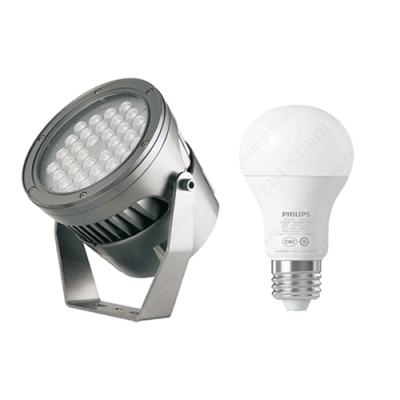 LEDs and Luminaire Test Solutions
 LM-79 and LM-80 Test Solutions
 LED Driver Test Solutions
 Household Appliances Test Solutions
 Mobile and Network Test Solutions
 Automotive Electronics Test Solutions
 Audio-Video and IT Test Solutions
 Cable and Wire Test Solutions
 Plugs and Sockets Test Solutions
 Power Switch Test Solutions
 Transformer Test Solutions
 Electric Toys Test Solutions
 Energy Meter Test Solutions
 Motor-Operated Tool Test Solutions
Select an organization
to browse standards
Abstract: The systematic evaluation of the waterproof performance of electronic and electrical products is a critical step in ensuring product reliability and market compliance. As the core equipment of this evaluation system, the IPX waterproof test chamber design specifications and selection methods directly impact the validity and compliance of test results. The International Electrotechnical Commission standard IEC 60529, “Degrees of protection provided by enclosures (IP Code),” specifies eight liquid ingress protection levels, from IPX1 to IPX8.
Among these, IPX1 to IPX6 cover the primary water exposure scenarios, from light dripping to powerful water jets, applicable to a wide range of fields including lighting fixtures, automotive electronics, and communication equipment. Starting from the principles of the standard, this article systematically reviews the test physics, technical parameters, and equipment structural requirements for each level from IPX1 to IPX6.
Combined with the engineering practice of Lisun’s JL-X series waterproof test equipment, an in-depth analysis is conducted on test chamber structural design, the selection of SUS304 stainless steel material, and multi-level compatible configuration schemes. Research indicates that the appropriate selection of a comprehensive waterproof test system compatible with multiple test levels can significantly improve laboratory testing efficiency, reduce duplicate equipment procurement costs, while ensuring the repeatability and compliance of test results.
As the application scenarios for electronic products become increasingly complex, the product’s ability to withstand environmental factors has become a core indicator of reliability design. Liquid ingress protection—the ability of a product’s enclosure to prevent water ingress under different water pressures, volumes, and flow directions—directly impacts the product’s service life, user safety, and regulatory compliance.
IEC 60529 is currently the most authoritative international standard for enclosure protection ratings. It has been equivalently adopted as the Chinese national standard GB/T 4208 and is widely referenced in industry standards such as IEC 60598 (Luminaires), IEC 60335 (Household appliances), and ISO 20653 (Road vehicles – Degrees of protection). This standard uses the “IP Code” system to characterize protection levels hierarchically, where the second characteristic numeral (the suffix X, i.e., IPX) specifically describes the liquid ingress protection capability, ranging from levels 0 to 8.
Although the standard text clearly defines the test conditions for each level, engineering practice still encounters issues such as improper selection of test equipment, deviations in parameter settings, and chamber materials not conforming to specifications, leading to distorted test results. This article aims to provide engineering technicians with a scientific basis for selecting IPX waterproof test chambers and designing test schemes through a systematic analysis of the test principles for IPX1 to IPX6. It also introduces Lisun’s JL-X series products’ engineering practices in meeting these standards.

JL-X Waterproof Test System
IEC 60529 was initially published in 1976. The current version is IEC 60529:1989 + A1:1999 + A2:2013, with the Chinese equivalent adoption being GB/T 4208-2017. The standard specifies the degrees of protection provided by enclosures (composed of conductive or non-conductive parts) against ingress of solid foreign objects and liquids, and provides the corresponding test methods and equipment requirements.
The scope of the standard covers enclosures for electrical equipment with a rated voltage not exceeding 72.5 kV. However, it does not include special protection requirements such as protection against explosive gas atmospheres (explosion-proof) or prevention of mechanical damage. It is important to note that the liquid ingress protection levels (IPX) in the IP code are graded independently, and the levels are not entirely cumulative—for example, a product passing the IPX6 test may not necessarily pass the IPX7 test, as they assess completely different physical scenarios.
The IP code consists of the letters “IP” followed by two characteristic numerals (e.g., IP65): the first numeral indicates the degree of protection against solid foreign objects (levels 0 to 6); the second numeral indicates the degree of protection against liquid ingress (levels 0 to 8, i.e., the IPX grading system studied in this article). When protection for a particular dimension has not been tested or does not need to be specified, the letter “X” is used (e.g., IPX5 indicates that only liquid ingress protection has been certified).
Based on the provisions of Clauses 14.2.1 to 14.2.6 of IEC 60529:2013, this section systematically reviews the test physics, quantitative technical parameters, and equipment structural requirements for each level from IPX1 to IPX6. The results are summarized in the table below.
|
Protection Level |
Protection Description |
Test Conditions |
Water Spray Device |
Typical Applications |
|
IPX1 |
Protection against vertically falling drops |
Vertically falling drops, duration 10 min, water flow rate 1.0~1.5 mm/min |
JL-12 Drip Box |
Indoor luminaires, household appliances |
|
IPX2 |
Protection against vertically falling drops when tilted up to 15° |
Sample tilted 15°, dripping from all directions, total duration 10 min |
JL-12 Drip Box (with turntable) |
Handheld devices, industrial controllers |
|
IPX3 |
Protection against spraying water |
Oscillating tube spray, angle ±60°, water flow rate 10 L/min, at least 5 min |
JL-34 Oscillating Tube Water Spray Test Equipment |
Outdoor lighting, construction equipment |
|
IPX4 |
Protection against splashing water |
Splashing water from all directions, flow rate same as IPX3, at least 5 min |
JL-34 Oscillating Tube Water Spray Test Equipment (full angle) |
Automotive electronics, terrace equipment |
|
IPX5 |
Protection against water jets |
φ6.3 mm nozzle, flow rate 12.5±0.625 L/min, at least 3 min |
JL-56 Waterproof Jet Test Device |
Marine equipment, outdoor cameras |
|
IPX6 |
Protection against powerful water jets |
φ12.5 mm nozzle, flow rate 100±5 L/min, at least 3 min |
JL-56 Waterproof Jet Test Device |
Offshore equipment, fire-fighting equipment |
The IPX1 test simulates vertical dripping conditions, requiring the product, when installed in its normal operating position, to withstand vertically falling water drops without harmful effects. The test duration is 10 minutes, with the water flow rate controlled between 1.0 and 1.5 mm/min (averaged over the test area). IPX2 adds a tilted condition; the sample must be subjected to dripping water for 2.5 minutes in each of four 15° tilted positions, totaling 10 minutes, to assess the product’s protection capability when installed in non-horizontal orientations.
The core requirements for equipment used in these two test levels are: uniformly distributed drip holes (hole spacing 20 mm, hole diameter 0.4 mm), and equipped with a rotating turntable capable of holding the test sample to ensure full coverage. After the test, the sample must be inspected for internal water accumulation, electrical short circuits, or functional failures.
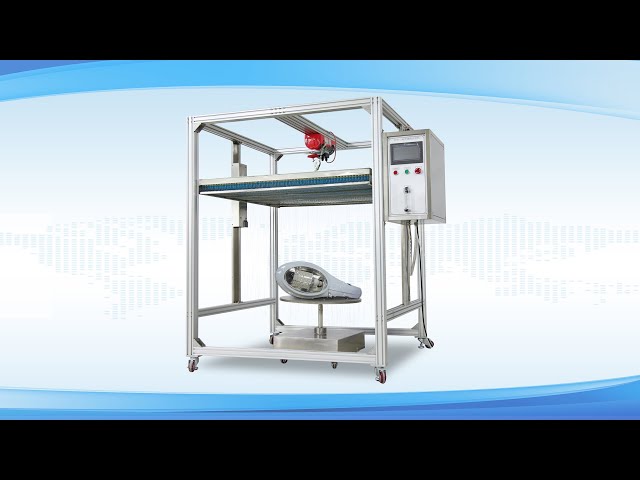
IPX3 and IPX4 tests use the oscillating tube spray method, with the core equipment being the oscillating tube spray device. The oscillating tube swings back and forth along a hemispherical arc at a specified speed, simulating natural rainfall and water splash conditions. The swing angle for IPX3 is ±60°, while for IPX4 it extends to full 360° to cover splash scenarios from any direction. The water flow rate for both test levels is approximately 10 L/min (adjusted according to the number of tube holes and radius), and the minimum test duration is 5 minutes for both.
A key engineering challenge for this type of test lies in the precision control of the oscillating tube drive mechanism. A stepper motor drive solution enables precise adjustment of swing speed and angle and effectively avoids accidents where the oscillating tube collides with the turntable shaft due to loss of synchronization common in traditional gear drives, thus ensuring test repeatability and equipment safety.

IPX5 and IPX6 tests introduce directional water flow with a certain flow velocity and pressure, representing a higher intensity assessment of the product enclosure’s sealing integrity. Both test levels use a fixed nozzle to spray the test sample from all directions. The difference lies in the nozzle diameter and flow rate: IPX5 uses a φ6.3 mm nozzle with a flow rate of 12.5±0.625 L/min; IPX6 uses a φ12.5 mm nozzle with a flow rate of 100±5 L/min, approximately 8 times higher than IPX5.
The standard requires that at a distance of 2.5 m from the nozzle, the diameter of the concentrated water jet area for IPX5 is approximately 40 mm, and for IPX6 it is approximately 120 mm. The test duration is calculated based on the surface area of the enclosure under test, approximately 1 minute per square meter, with a minimum of not less than 3 minutes. The water pressure must be stably adjusted according to the specified flow rate; fixed pressure parameters should not replace flow control.

Waterproof test equipment operates long-term in environments characterized by high humidity, water accumulation, and even high-pressure water jet impact. This imposes strict requirements on the chamber material’s corrosion resistance, structural strength, and ease of cleaning and maintenance. SUS304 (i.e., 0Cr18Ni9) austenitic stainless steel, with its excellent corrosion resistance, good formability, and stable surface quality, has become the engineering material of choice for the inner chamber, turntable, and water inlet components of waterproof test equipment.
Compared to ordinary carbon steel, SUS304 stainless steel does not rust under prolonged water contact, preventing rust stains from contaminating test samples or clogging nozzle orifices. Compared to aluminum alloys, it offers better structural integrity under high-pressure water impact, making it suitable for thin-walled chamber structures with a thickness of 1.2 mm or more, meeting pressure requirements while controlling the overall equipment weight.
In laboratory configuration practice, independently procuring dedicated equipment for IPX1/2, IPX3/4, IPX5/6, etc., while offering straightforward individual operation, often leads to issues such as large floor space occupation, high initial investment, and higher management and maintenance costs. A comprehensive waterproof test system addresses these problems effectively by integrating multi-level test functions on a single platform through modular design.
From a test procedure perspective, another significant value of multi-level compatible design is the ability to complete tests for multiple levels continuously on the same device according to the sequence specified in the standard. This reduces potential changes in the sample’s condition during transfer between different devices, enhancing the consistency of test conditions and the comparability of results.
Founded in 2003, Lisun Group operates a Quality Management System certified to ISO 9001:2015. As a member of the International Commission on Illumination (CIE), its product designs adhere to international standards such as CIE and IEC, and all products are CE certified. The JL-X series waterproof test system, a core product line within Lisun’s environmental testing portfolio, meets the test requirements of multiple standards including IEC 60529, IEC 60598, IEC 60335, GB/T 4208, and GB 7000.1, covering all levels from IPX1 to IPX8.
The JL-X series consists of the following core units:
The JL-XC series IP waterproof test chamber is specifically designed for laboratory scenarios requiring multi-level waterproof testing on a single device. It is one of the few comprehensive chamber solutions on the market that integrates the full test process for IPX1 to IPX6 on a single unit. Its outer shell is made of high-quality steel plate with a baked enamel finish, while the inner chamber, turntable, and water inlet components are all constructed from SUS304 stainless steel plate (inner chamber thickness 1.2 mm), ensuring no rust formation over long-term use.
In terms of functional design, the IPX1/2 module is equipped with a compressed air drying function, which can automatically drain residual water from the drip tray after testing, preventing long-term water accumulation that could cause scaling and microbial growth. The IPX3/4 module utilizes a high-quality servo stepper motor to drive the oscillation mechanism, completely eliminating the risk of equipment damage caused by the oscillating tube striking the turntable shaft due to loss of synchronization, a risk associated with traditional motor drive solutions. The IPX5/6 module features an integrated monolithic structural design, simplifying piping connections and improving system sealing reliability.
JL-X series equipment is widely used in the following scenarios: Factory production line testing and type testing of LED lighting fixtures (IEC 60598-1); IP rating verification for automotive electronics and components (ISO 20653); R&D phase waterproof performance evaluation of consumer electronics (mobile phones, tablets, wearables); Third-party waterproof compliance testing by certification bodies (e.g., CQC, TÜV, SGS); and quality control for protection levels of industrial control cabinets and outdoor communication equipment.
In the selection process for waterproof test equipment, beyond basic technical parameters like flow rate and pressure, the following dimensions warrant special attention from engineering personnel.
First, Standard Compliance. Equipment manufacturers should be able to provide calibration certificates verified by third-party laboratories, proving that parameters such as flow rate, nozzle size, and swing speed under specified conditions meet the requirements of IEC 60529. Lisun provides calibration certificates issued by independent metrology institutions for main models like the JL-34, JL-56, and JL-7, which can serve as compliance documentation.
Second, Chamber Material and Reliability. Equipment intended for long-term commercial testing operations should feature a SUS304 stainless steel inner chamber to avoid contamination of test results or nozzle blockage caused by rust from ordinary steel plate chambers. Additionally, the drive mechanism (especially for IPX3/4 oscillating tubes) should prioritize stepper motor solutions to ensure motion control precision and long-term reliability.
Third, Test Efficiency and Operating Costs. For scenarios requiring multi-level sequential testing on the same product family, comprehensive chamber equipment typically offers advantages in Total Cost of Ownership (TCO) compared to combinations of multiple single-level dedicated devices. Furthermore, automated control systems (including automatic timing, alarms, and parameter recording functions) can effectively reduce reliance on operator experience and enhance the repeatability of test results.
This article systematically reviewed the physical mechanisms and quantitative technical parameters for IPX1 to IPX6 waterproof tests under the IEC 60529 standard framework. It analyzed the engineering requirements concerning material selection and multi-level compatible design for waterproof test chambers, and provided an in-depth analysis based on the engineering practice of Lisun’s JL-X series products.
The research indicates that there are significant differences in the physical conditions, equipment structures, and test parameters across the IPX1 to IPX6 test levels, meaning a single general-purpose device configuration is unsuitable. The SUS304 stainless steel chamber construction and high-precision stepper motor drive scheme are identified as key engineering elements ensuring test result compliance and long-term reliability. In the engineering selection of IPX waterproof test chamber, the Lisun JL-X series, through its modular compatible design, provides a comprehensive solution that meets the full set of IEC 60529 test requirements while balancing test efficiency and operating costs, making it suitable for quality control in manufacturing enterprises and professional testing needs in third-party certification and inspection laboratories.
Tags:JL-XYour email address will not be published. Required fields are marked *

 English
 中文简体
中文简体 English
 Русский
 Español
 Português
 Türkçe
 العربية
 Deutsch
 Polski
 Italiano
 Français
 한국어
한국어 ไทย
ไทย Tiếng Việt
 日本語
日本語