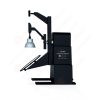
LM-79 Moving Detector Goniophotometer (Mirror Type C)
LSG-6000
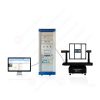
High Precision Rotation Luminaire Goniophotometer
LSG-1890B
High Precision Rotation Luminaire Goniospectroradiometer
LSG-1890BCCD

Goniophotometer for Automotive and Signal Lamps
LSG-1950
Goniophotometer for Traffic Signal Lamps (Economical Model)
LSG-1950S
Goniophotometer for Airfield Lighting
LSG-1940
VAD Fire Alarm Visual Alert Device Goniophotometer
LSG-1930
Compact Goniophotometer
LSG-1200A
LED Goniophotometer
LSG-1100
Near Field Moving Detector Goniophotometer
LSG-1900B
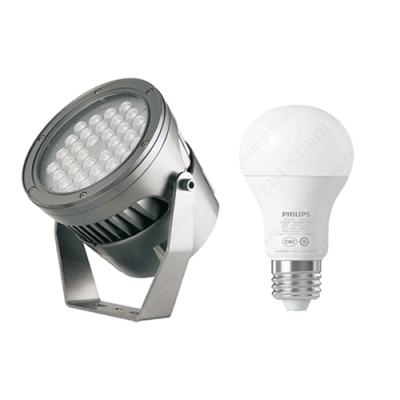 LEDs and Luminaire Test Solutions
 LM-79 and LM-80 Test Solutions
 LED Driver Test Solutions
 Household Appliances Test Solutions
 Mobile and Network Test Solutions
 Automotive Electronics Test Solutions
 Audio-Video and IT Test Solutions
 Cable and Wire Test Solutions
 Plugs and Sockets Test Solutions
 Power Switch Test Solutions
 Transformer Test Solutions
 Electric Toys Test Solutions
 Energy Meter Test Solutions
 Motor-Operated Tool Test Solutions
Select an organization
to browse standards
Abstract:
As the core basis for photoelectric performance compliance certification of solid-state lighting products, the LM-79 Test Report has become a key technical document for products to enter the global market. The LISUN LPCE-2 High-Precision Spectroradiometer & Integrating Sphere System is a professional comprehensive testing instrument for optical, color and electrical parameters of lighting products. It can accurately perform full-parameter testing on energy-saving lamps, fluorescent lamps, HID lamps, cold cathode fluorescent lamps, LED lamps and other products. The test results fully meet the requirements of LM-79-19, LM-79-24 and a number of international and domestic standards for photometry and colorimetry, and can directly generate standardized LM-79 Test Reports, providing full-process technical support for R&D, production quality control and market access of lighting products. This paper introduces the technical characteristics, testing capabilities and standard compatibility of the LPCE-2 system, and analyzes its application value in issuing LM-79 Test Reports with practical test cases, so as to provide a reference for lighting enterprises to improve testing efficiency and product compliance.
1. Industrial Value and Testing Requirements of LM-79 Test Report
Against the background of the globalization of the solid-state lighting industry, standardized testing of photoelectric performance has become a core threshold for product market access. The LM-79 Test Report is formulated by the American National Standards Institute (ANSI) and the Illuminating Engineering Society (IES). It is an authoritative document for evaluating the photoelectric performance of solid-state lighting products such as LED luminaires and OLED luminaires. The latest version, LM-79-24, was officially released in 2025, with optimized revisions in beam center definition, test circuit capacitance limits, and harmonic collection requirements. The report is not only a mandatory basis for Energy Star, DLC certification and California CEC energy efficiency regulations in the United States, but also adopted by energy efficiency certification systems in Australia, Brazil, Malaysia and many other countries, becoming a “passport” for lighting products to enter the international market.
The LM-79 Test Report has strict specifications on the scope, test items and environmental conditions of solid-state lighting products. It applies to integrated LED luminaires, integrated LED bulbs, LED light engines and other finished products with integrated drive circuits and heat dissipation structures, excluding LED chips, modules without complete integrated structures and other semi-finished products. The test covers three core dimensions: photometry, colorimetry and electrical parameters. Photometry requires testing total luminous flux, luminous efficacy, luminous intensity distribution and other indicators. Colorimetry requires accurate measurement of chromaticity coordinates, correlated color temperature, color rendering index and other parameters. Electrical parameters include voltage, current, power, power factor and 2nd to 50th harmonic analysis. At the same time, the test must be carried out in a darkroom at a constant temperature of 25±1℃ and humidity of 10%–65% without ambient light interference to ensure the accuracy and comparability of test data.
For lighting manufacturers, R&D centers and third-party testing institutions, the ability to quickly issue a standard-compliant LM-79 Test Report directly affects product R&D progress, quality control efficiency and market access speed. This requires testing equipment with wide product adaptability, high-precision measurement capability, full standard compatibility, and the ability to directly generate standardized report files. The LISUN LPCE-2 High-Precision Spectroradiometer & Integrating Sphere System is a professional testing device designed based on the above requirements, and has become core equipment for issuing LM-79 Test Reports.
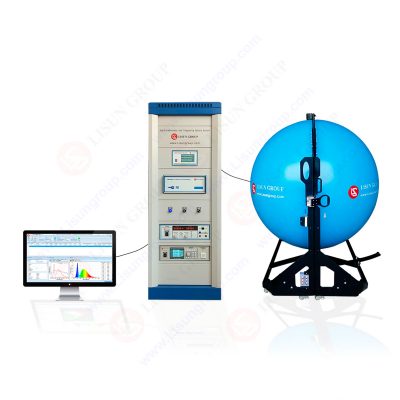
High Precision Spectroradiometer Integrating Sphere System
2. Technical Characteristics and Standard Compatibility of LISUN LPCE-2 System
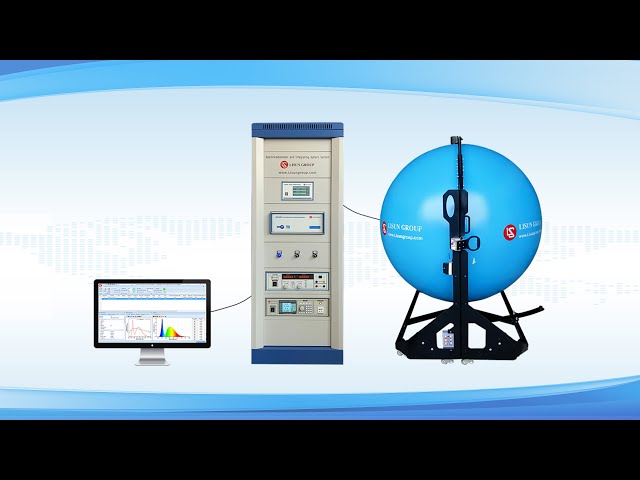
The LISUN LPCE-2 LED CCD Fast Optical-Color-Electrical Comprehensive Test System is an intelligent testing device integrating photometry, colorimetry and electrical parameter measurement. It is specially designed for various lighting products such as energy-saving lamps, fluorescent lamps, HID lamps (high-pressure sodium lamps and high-pressure mercury lamps), cold cathode fluorescent lamps and LED lamps. Its core technical design and parameter indicators fully match the testing requirements of the LM-79 Test Report, and meet a number of international and domestic authoritative standards, providing a reliable guarantee for standardized testing.
2.1 Core Hardware Design and Testing Accuracy Advantages
The LPCE-2 system is equipped with the LMS-9000C high-precision fast spectroradiometer or LMS-9500C scientific-grade fast spectroradiometer, matched with a new-type integrating sphere with a loading platform produced by one-time molding technology. Compared with traditional spliced integrating spheres, the one-piece integrating sphere effectively avoids light reflection errors caused by splicing gaps, and greatly improves the testing accuracy of key indicators such as luminous flux and luminous efficacy. The LMS-9500C is equipped with a high-sensitivity back-illuminated CCD detector from Hamamatsu, Japan, with a temperature control accuracy of -10℃±0.05℃, which can effectively reduce the influence of detector noise on measurement results and achieve ultra-fine spectral scanning.
The key technical parameters of the system accurately match the testing requirements of the LM-79 Test Report: wavelength accuracy up to ±0.2 nm, sample scanning interval as low as ±0.1 nm, which can accurately capture spectral details; chromaticity coordinate accuracy under standard light source A reaches ±0.0015; correlated color temperature ranges from 1500 K to 100000 K with an accuracy of ±0.2%, which can accurately characterize the chromaticity characteristics of products; luminous flux ranges from 0.01 lm to 200000 lm, photometric linearity up to ±0.2%, stray light controlled at <0.015% (600 nm) and <0.03% (435 nm), ensuring the accuracy of photometric parameter measurement.
2.2 Full-Dimensional Measurement Parameters Matching LM-79 Testing Requirements
The LPCE-2 system can realize full-dimensional synchronous detection of photometry, colorimetry and electrical parameters, and the measurement parameters fully cover the core requirements of the LM-79 Test Report: Colorimetric parameters include chromaticity coordinates, correlated color temperature (CCT), color rendering index (Ra), CQS, TM-30-24 (Rf, Rg), etc., which can comprehensively evaluate the color performance of products; Photometric parameters include total luminous flux, luminous efficacy, radiant power, EEI energy efficiency level, etc., which accurately reflect the light output performance of products; Electrical parameters can test voltage, current, power, power factor and harmonics, meeting the latest requirements of LM-79-24 for 2nd to 50th harmonic collection.
At the same time, the system also supports LM-80 LED luminous flux maintenance testing, which can realize continuous monitoring of changes in luminous flux, color temperature, color rendering index and other parameters over time, forming a complement to LM-79 testing and comprehensively evaluating product performance.
2.3 Multi-Standard Compatibility and Direct Generation of LM-79 Test Report
The test results of the LPCE-2 system fully meet a number of international and domestic photometric and colorimetric standards, including CIE177, CIE-13.3, CIE-84, ANSI-C78.377, GB/T 24824, IESNA-LM-63-2, Optical-Engineering-49-3-033602, (EU) 2019/2015, LM-80, LM-79-19 and LM-79-24. It is one of the few testing equipment in the industry that supports both versions of the LM-79 standard.
The system is equipped with Chinese and English operating software certified by Microsoft USB driver, compatible with Win7 to Win11 operating systems. The built-in standardized report generation module can directly export PDF-format LM-79 Test Reports without secondary data processing. The report includes test purpose, standard method, sample information, environmental conditions, full-parameter test results, chart analysis, etc., which fully comply with ANSI/IES specifications.
2.4 Dual-Version Configuration and Multi-Scene Adaptation
For the testing needs of different users, the LPCE-2 system provides two configuration versions: LPCE-2 (LMS-9000C) high-precision version is suitable for small and medium-sized enterprises and general testing institutions, equipped with core components such as LMS-9000C high-precision CCD spectrometer, digital electrical parameter measuring instrument, and AC variable frequency power supply, which can meet conventional LM-79 testing requirements; LPCE-2 (LMS-9500C) scientific-grade version is designed for large and medium-sized enterprises and third-party testing institutions, equipped with a scientific-grade CCD spectrometer, with higher measurement accuracy and wide wavelength range detection, which can cope with high-demand full-item LM-79 testing and international certification testing.
In addition, the system can be equipped with IS-1.5MT constant temperature integrating sphere and TMP-8 multi-channel temperature patrol instrument to meet the requirements of IES LM-82 temperature impact assessment, realizing coordinated development with LM-79 testing.
3. Application Case of LPCE-2 System in Issuing LM-79 Test Report
To intuitively reflect the actual application effect of the LISUN LPCE-2 system in issuing LM-79 Test Reports, a 30 W LED panel light of a certain brand was taken as the tested object, and full-parameter optical-color-electrical testing was carried out in accordance with the LM-79-24 standard. The LPCE-2 (LMS-9500C) scientific-grade system was used to complete the test and directly generate the LM-79 Test Report. The core test results are shown in the table below.
| Test Category | Key Index | Test Result | LM-79-24 Standard Requirement | Compliance |
| Colorimetric | Correlated Color Temperature (CCT) | 4025 K | Nominal value ±5% | Qualified |
| Colorimetric | Color Rendering Index (Ra) | 89.2 | ≥80 | Qualified |
| Colorimetric | Chromaticity Coordinates (x,y) | (0.3821, 0.3785) | Nominal value ±0.004 | Qualified |
| Photometric | Total Luminous Flux (lm) | 2865 | ≥90% of nominal value (2700 lm) | Qualified |
| Photometric | Luminous Efficacy (lm/W) | 95.5 | No mandatory limit | Qualified |
| Electrical | Input Power (W) | 30.02 | Nominal value ±10% | Qualified |
| Electrical | Power Factor (PF) | 0.96 | ≥0.9 | Qualified |
| Electrical | Total Harmonic Distortion (%) | 3.2 | ≤10 | Qualified |
The test was carried out in a darkroom at a constant temperature of 25℃, fully meeting the environmental requirements of LM-79-24. It can be seen from the test results that all indicators of the 30 W LED panel light meet the standard requirements. The LPCE-2 system achieves a test accuracy of four decimal places for chromaticity coordinates and correlated color temperature, and the luminous flux test error is within 0.5%, accurately capturing the real photoelectric performance of the product.
After the test, the system directly generated a PDF-format LM-79 Test Report within 5 minutes. The report includes spectra, luminous intensity distribution curves, full-parameter test data tables and other contents, which can be directly used for Energy Star certification application. Compared with the traditional mode of manual data sorting and report making, the efficiency is improved by more than 80%.
In practical applications, an LED lighting enterprise completed LM-79 testing of all series products through the LPCE-2 system, and completed the testing and report issuance in only 15 days, which originally took 45 days, successfully passing the US DLC certification and smoothly entering the North American market. At the same time, in the product R&D stage, the enterprise found that the luminous efficacy of a certain spotlight was low through the accurate testing of the LPCE-2 system, and the problem was located in the unreasonable matching of the light source and the lens. After optimizing the design, the product luminous efficacy increased by 12%, and all indicators in the LM-79 Test Report reached excellent standards.
4. Core Value and Industrial Significance of LPCE-2 System for LM-79 Testing
With high-precision measurement capability, full-standard compatibility and intelligent report generation function, the LISUN LPCE-2 system shows significant technical advantages in issuing LM-79 Test Reports. Its core value is reflected in three links: R&D optimization, production quality control and market access, providing important technical support for the high-quality development of the lighting industry.
In the product R&D stage, the LPCE-2 system can quickly complete LM-79 standard testing of multiple batches of samples, accurately capture subtle changes in optical-color-electrical parameters, help R&D personnel optimize the design of light sources, drivers and optical structures, improve product photoelectric performance and shorten the R&D cycle.
In the production quality control link, the system can realize rapid random inspection on the production line, timely find batch quality problems such as low luminous flux and excessive color temperature deviation, ensure that factory products meet the requirements of LM-79 testing, and improve the product yield rate.
In the market access link, the system can directly generate standardized LM-79 Test Reports without secondary testing by third-party institutions, greatly reducing enterprise certification costs and accelerating the speed of products entering the international market.
From the perspective of industrial development, the popularization and application of the LPCE-2 system have promoted the localization and intellectualization of LM-79 testing for lighting products, broken the market monopoly of foreign high-end testing equipment, and reduced the testing equipment investment cost of small and medium-sized enterprises. At the same time, the high-precision testing capability of the system helps to standardize the industry market order, reduce the circulation of low-quality and fake products, and promote the industry to develop towards high quality and high energy efficiency. In addition, the system’s rapid adaptation to the latest LM-79-24 standard also helps domestic enterprises keep up with the update pace of international standards in a timely manner and enhance the international competitiveness of domestic lighting products.
5. Conclusion
As an authoritative certification basis for the photoelectric performance of solid-state lighting products, the standardization and accuracy of LM-79 Test Report testing are core requirements for lighting enterprises to participate in international competition. With advanced hardware design, ultra-high measurement accuracy, full-dimensional parameter detection capability and intelligent report generation function, the LISUN LPCE-2 High-Precision Spectroradiometer & Integrating Sphere System has become a professional solution for issuing LM-79 Test Reports. It can fully meet the testing needs of various lighting products such as energy-saving lamps, fluorescent lamps and LED lamps, and the test results comply with LM-79-19, LM-79-24 and a number of international and domestic authoritative standards.
Under the trend that the global lighting industry is developing towards solid-state, intelligent and high energy efficiency, the requirements of the LM-79 testing standard will continue to increase, posing higher challenges to the technical level of testing equipment. With continuous technical iteration and standard adaptation capability, the LISUN LPCE-2 system will continue to provide better optical-color-electrical testing services for lighting enterprises, help enterprises quickly issue LM-79 Test Reports that meet international standards, reduce R&D and certification costs, and improve product market competitiveness.
At the same time, with the continuous progress of domestic testing equipment technology, it will further promote the development of standardized testing in China’s lighting industry and help more domestic lighting products go global.
Tags:LPCE-2 (LMS-9000)Your email address will not be published. Required fields are marked *

 English
 中文简体
中文简体 English
 Русский
 Español
 Português
 Türkçe
 العربية
 Deutsch
 Polski
 Italiano
 Français
 한국어
한국어 ไทย
ไทย Tiếng Việt
 日本語
日本語