LM-79 Moving Detector Goniophotometer (Mirror Type C)
LSG-6000
High Precision Rotation Luminaire Goniophotometer
LSG-1890B
High Precision Rotation Luminaire Goniospectroradiometer
LSG-1890BCCD

Goniophotometer for Automotive and Signal Lamps
LSG-1950
Goniophotometer for Traffic Signal Lamps (Economical Model)
LSG-1950S
VAD Fire Alarm Visual Alert Device Goniophotometer
LSG-1930
Goniophotometer for Airfield Lighting
LSG-1940
Compact Goniophotometer
LSG-1200A
LED Goniophotometer
LSG-1100
Near Field Moving Detector Goniophotometer
LSG-1900B
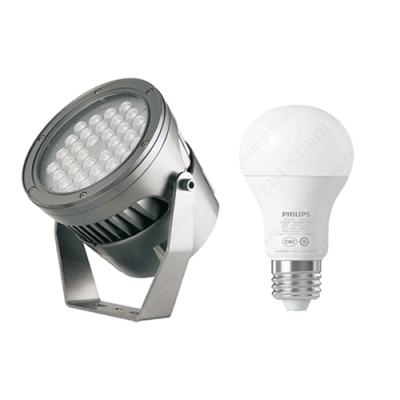 LEDs and Luminaire Test Solutions
 LM-79 and LM-80 Test Solutions
 LED Driver Test Solutions
 Household Appliances Test Solutions
 Mobile and Network Test Solutions
 Automotive Electronics Test Solutions
 Audio-Video and IT Test Solutions
 Cable and Wire Test Solutions
 Plugs and Sockets Test Solutions
 Power Switch Test Solutions
 Transformer Test Solutions
 Electric Toys Test Solutions
 Energy Meter Test Solutions
 Motor-Operated Tool Test Solutions
Select an organization
to browse standards
Abstract:
Electromagnetic Interference (EMI) is a core factor restricting the electromagnetic compatibility (EMC) of electrical and electronic products. As a key part of product compliance certification and quality control, EMI test can accurately quantify conducted and radiated interference generated by equipment during operation. Taking LISUN EMI-9KB Conducted and Radiated Interference Test System as the research object, this paper expounds its technical characteristics, system configuration and application scenarios in EMI test, analyzes its advantages in interference source location and non-compliance rectification, and illustrates its practical value in information technology equipment, household appliances, lighting products and other fields, so as to provide technical reference for enterprises’ EMC compliance certification and R&D optimization.
1. Industrial Value and Technical Requirements of EMI Test
With the trend of miniaturization, high frequency and intelligence of electronic equipment, the complexity of the electromagnetic environment continues to increase. Electromagnetic interference has become an important cause of equipment malfunction and safety risks. Laboratory data shows that more than 30% of electronic equipment failures are caused by electromagnetic interference. As a core component of electromagnetic compatibility testing, EMI test quantitatively measures conducted interference (transmitted through power/signal lines) and radiated interference (propagated through space) during equipment operation, providing a scientific basis for product compliance verification, interference source location and design optimization.
From the perspective of industrial development, EMI test has become a mandatory pass for global market access. Certifications such as EU CE, US FCC and China CCC all take EMI test results as core judgment criteria. Products failing EMI test cannot obtain market access qualification, and may also cause equipment crashes, safety accidents, or even face risks such as customs detention and market recall. At the same time, carrying out EMI test in the product R&D stage can expose design defects such as switching power supply noise and motor radiated interference in advance, reducing after-sales maintenance costs and brand reputation losses. Statistics show that the average after-sales maintenance cost of products failing EMI test is 5.8 times that of qualified products, and investment in EMI test during R&D can reduce later losses by 5–10 times.
The current market core demands for EMI test equipment focus on three aspects: measurement accuracy, standard compatibility and scene adaptability. The equipment is required to cover a wide frequency range for low-error quantitative measurement, comply with mainstream international and domestic EMI test standards and output universal report formats, adapt to test requirements of different product types, and quickly locate interference sources. LISUN EMI-9KB Conducted and Radiated Interference Test System is a full-automatic EMI test device designed based on the above demands, and has become core equipment for EMI test in the industry.
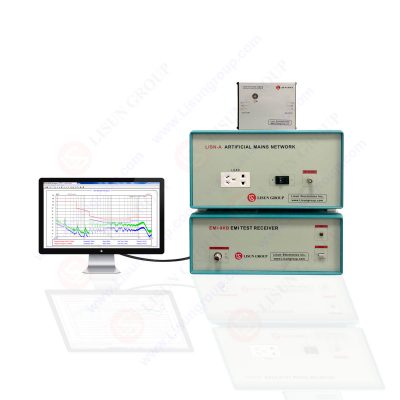
EMI-9KB EMI Test Receiver
2. Technical Characteristics and System Configuration of LISUN EMI-9KB System
LISUN EMI-9KB is a full-automatic test system dedicated to EMI test of electrical and electronic products. Its core function is to quantitatively measure conducted and radiated interference of equipment. From hardware design, parameter indicators to standard adaptation, it meets high-end industrial EMI test requirements and provides comprehensive technical support for product EMC compliance detection and interference source location.
2.1 Core Hardware Design and Structural Advantages
The core component of the EMI-9KB system is the EMI-9KB Electromagnetic Interference Receiver, which adopts a fully enclosed structure. The body is made of high-conductivity materials with excellent shielding effect, which fundamentally eliminates the influence of the test equipment’s own interference on measurement results and ensures the accuracy of EMI test data. The system has high integration and can realize integrated test with special test accessories without complex external debugging, greatly improving EMI test efficiency.
2.2 Key Technical Parameters
The technical parameters of the EMI-9KB system accurately match the EMI test requirements of electrical and electronic products. The core indicators are as follows: the detection frequency range covers 9 kHz~300 MHz, suitable for EMI test of mainstream products such as lighting products, household appliances and information technology equipment; frequency stability reaches 1×10⁻⁶, with frequency resolution of 30 Hz in 9 kHz~150 kHz and 1 kHz in 150 kHz~30 MHz, realizing fine scanning in high frequency bands; test error is only ±2 dB; detection modes support three mainstream modes: PK, QP and AV; level range covers 20 dBμV~140 dBμV, which can accurately quantify electromagnetic interference of different intensities. Meanwhile, the system is equipped with Chinese and English operation software, compatible with Win7, Win8, Win10, Win11 and other operating systems, reducing the operation threshold.
2.3 System Configuration and Supporting Equipment
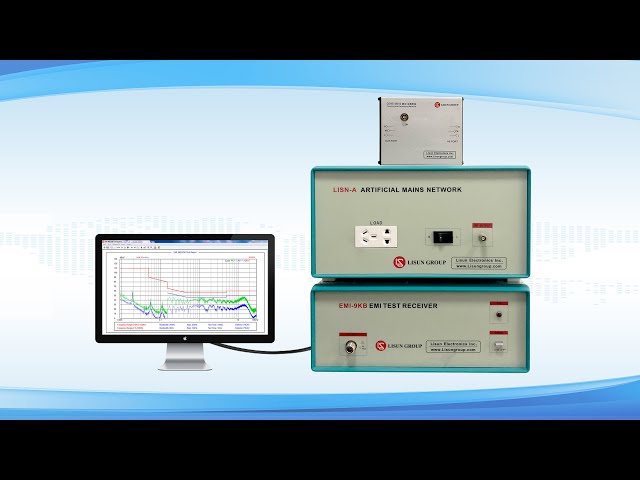
EMI-9KB system is an integrated test solution. The basic configuration includes EMI-9KB Electromagnetic Interference Receiver, LISN Line Impedance Stabilization Network, CDNE-M316 Coupling/Decoupling Network, isolation transformer, attenuator and coaxial cable. Among them, LISN simulates the power impedance of actual working conditions and accurately measures power line conducted interference; CDNE-M316 is designed according to CISPR15:2018, which can equivalently test radiated electromagnetic interference of electrical lighting equipment in 30 MHz–300 MHz, replacing traditional CDN equipment and improving the accuracy of radiated interference test.
To adapt to EMI test in different scenarios, EMI-9KB can be equipped with a variety of special instruments: LISUN LSP-500VARC/LSP-1KVARC programmable pure sine wave power supply provides stable power for Equipment Under Test (EUT); SDR-2000B EMI Shielding Room creates an interference-free EMI test environment; VVLA-30M triple-loop antenna enhances radiated test capability in 9 kHz–30 MHz; AB-CLP Absorption Clamp is suitable for EMI test of household appliances and power tools; VOL-CP RF current probe accurately measures disturbance voltage of interfaces to realize precise interference source location.
2.4 Standard Compatibility
EMI-9KB system fully complies with mainstream international and domestic EMI test standards, including CISPR16-1, CISPR15, GB17743, FCC, EN55015, EN55022, etc. The measurement results are in internationally universal report format, which can be directly used for EU CE, US FCC, China CCC and other certification applications without secondary conversion, greatly improving enterprise product certification efficiency.
3. Application Scenarios and Core Value of EMI-9KB System in EMI Test
With accurate measurement capability, wide standard compatibility and flexible scene adaptability, EMI-9KB system has become the core EMI test equipment for manufacturers, R&D centers and third-party testing institutions in information technology equipment, household appliances, lighting products and other fields. Its application value is mainly reflected in three aspects: compliance testing, interference source location and R&D optimization, which are analyzed with typical application scenarios below.
3.1 EMI Test and Compliance Certification for Lighting Products
Lighting products (such as LED lamps, fluorescent lamps) are high-incidence categories of electromagnetic interference. The switching noise of internal driving power supplies easily causes conducted and radiated interference to exceed limits, while standards such as CISPR15, GB17743, EN55015 have clear requirements for EMI limits of lighting products. EMI-9KB system provides a special test scheme for lighting products. Through CDNE-M316, it can accurately test radiated interference in 30 MHz–300 MHz, and cooperate with LISN to realize quantitative measurement of power line conducted interference. In actual test, an LED manufacturer detected that the conducted interference of the product exceeded the limit by 8 dBμV at 150 kHz through EMI-9KB system, located the interference source as the design defect of the filter circuit of the driving power supply. After optimizing filter capacitor parameters, the product passed EMI test and obtained CE certification smoothly.
3.2 Interference Source Location and Rectification for Household Appliances
Motors and switching power supplies of household appliances (microwave ovens, washing machines, air conditioners, etc.) are main electromagnetic interference sources. Radiated interference during motor operation and high-frequency noise of switching power supplies easily lead to failed EMI test. EMI-9KB system can quickly locate the position and frequency characteristics of interference sources through spectrum scanning + special probes. For example, a washing machine manufacturer detected that the product’s radiated interference exceeded the limit at 30 MHz in R&D stage. Using VOL-CP RF current probe, the interference source was located as the “antenna effect” of motor power cables. By adding magnetic rings on cables and optimizing grounding, radiated interference was reduced below the standard limit, avoiding after-sales problems after product launch.
3.3 EMI Test and R&D Optimization for Information Technology Equipment
Information technology equipment (computers, routers, printers, etc.) has extremely high requirements for electromagnetic compatibility. Its high-frequency circuits are prone to radiated interference and sensitive to external electromagnetic interference. The wide frequency coverage (9 kHz~300 MHz) and fine frequency resolution of EMI-9KB system enable full-band EMI fine test of information technology equipment. A router manufacturer found that the product’s radiated interference exceeded the limit at 5.8 GHz in R&D stage. Through the spectrum analysis function of EMI-9KB system, the interference source was located as coupling between Wi-Fi module and power module. By increasing module spacing and adding metal shielding covers, electromagnetic interference was effectively reduced, and the product passed FCC certification at one time.
3.4 General EMI Test Service for Third-Party Testing Institutions
Third-party testing institutions face EMI test requirements of different categories and standards, and have extremely high requirements for equipment compatibility and adaptability. EMI-9KB system supports multi-standard test and universal report output, which can meet EMI test requirements of CCC, CE, FCC and other certifications at the same time, becoming a universal test platform for third-party testing institutions. Meanwhile, the fully automatic operation mode improves test efficiency. A single device can complete EMI test of 15–20 products per day, greatly reducing operating costs of testing institutions.
4. Typical Data and Analysis of EMI Test by EMI-9KB System
To intuitively reflect the EMI test capability of EMI-9KB system, an LED spotlight was taken as the test object to carry out conducted and radiated interference test in accordance with GB17743-2007 Limits and Methods of Measurement of Radio Disturbance Characteristics of Electrical Lighting and Similar Equipment. The test results are shown in the table below.
| Test Type | Test Frequency Band | Standard Limit (dBμV) | Measured Value (dBμV) | Test Result | Interference Source Analysis |
| Conducted Interference | 9 kHz~150 kHz | 79 | 72 | Pass | No obvious interference |
| Conducted Interference | 150 kHz~30 MHz | 66 | 68 | Fail | Insufficient filtering of driver power supply |
| Radiated Interference | 30 MHz~100 MHz | 54 | 49 | Pass | No obvious interference |
| Radiated Interference | 100 MHz~300 MHz | 50 | 47 | Pass | No obvious interference |
The test results show that the conducted interference of the LED spotlight exceeded the limit by 2 dBμV in 150 kHz~30 MHz, while other frequency bands were qualified. Through the spectrum scanning function of EMI-9KB system, the interference source was located as the small capacitance of X capacitor in the π-type filter circuit of the driving power supply, resulting in ineffective filtering of high-frequency noise. After adjusting the X capacitor from 0.1 μF to 0.47 μF, the measured value in this frequency band dropped to 63 dBμV in re-test by EMI-9KB system, meeting the standard limit. This case fully reflects the core advantages of accurate measurement and fast interference source location of EMI-9KB system in EMI test, providing a clear technical direction for product rectification.
5. Conclusion
As a core part of electromagnetic compatibility compliance of electrical and electronic products, EMI test and the technical level of test equipment directly affect product certification efficiency and R&D optimization effect. With accurate measurement, wide standard compatibility and flexible scene adaptability, LISUN EMI-9KB Conducted and Radiated Interference Test System has become a high-quality solution for industrial EMI test. It can quantitatively measure conducted and radiated interference, quickly locate non-compliance problems such as switching power supply noise and motor radiated interference, and provide full-process technical support from R&D test to compliance certification for enterprises in information technology equipment, household appliances, lighting products and other fields.
With the rapid development of 5G, Internet of Things, smart home and other technologies, the complexity of the electromagnetic environment will continue to increase, and the market will have higher requirements for accuracy and efficiency of EMI test. In the future, EMI test equipment will develop towards higher frequency, intelligence and integration. As a mainstream device in the current industry, LISUN EMI-9KB system provides a reference for the R&D of subsequent EMI test equipment with its technical design and application practice. Meanwhile, enterprises should integrate EMI test into the whole product R&D process, optimize product design through scientific EMI test, and improve electromagnetic compatibility. This will not only help products pass global market access certification smoothly, but also fundamentally improve product quality and market competitiveness, avoiding safety risks and economic losses caused by electromagnetic interference.
Tags:EMI-9KBYour email address will not be published. Required fields are marked *

 English
 中文简体
中文简体 English
 Русский
 Español
 Português
 Türkçe
 العربية
 Deutsch
 Polski
 Italiano
 Français
 한국어
한국어 ไทย
ไทย Tiếng Việt
 日本語
日本語