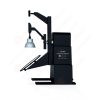
LM-79 Moving Detector Goniophotometer (Mirror Type C)
LSG-6000
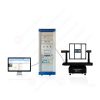
High Precision Rotation Luminaire Goniophotometer
LSG-1890B
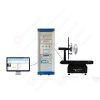
High Precision Rotation Luminaire Goniospectroradiometer
LSG-1890BCCD

Goniophotometer for Automotive and Signal Lamps
LSG-1950
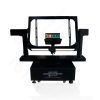
Goniophotometer for Traffic Signal Lamps
LSG-1950S
VAD Fire Alarm Visual Alert Device Goniophotometer
LSG-1930
Compact Goniophotometer
LSG-1200A
LED Goniophotometer
LSG-1100
 LEDs and Luminaire Test Solutions
 LM-79 and LM-80 Test Solutions
 LED Driver Test Solutions
 Household Appliances Test Solutions
 Mobile and Network Test Solutions
 Automotive Electronics Test Solutions
 Audio-Video and IT Test Solutions
 Cable and Wire Test Solutions
 Plugs and Sockets Test Solutions
 Power Switch Test Solutions
 Transformer Test Solutions
 Electric Toys Test Solutions
 Energy Meter Test Solutions
 Motor-Operated Tool Test Solutions
Select an organization
to browse standards
The devices of electricity and electronic equipment which are attached to power and signal line are prone to the transient overvoltage occurrence as a result of lightning strike, switching in the grid, and inductive load interrupt. In order to test immunity to these disturbances, a 10kV surge generator that can reproduce controlled high-energy pulses is used to test immunity in laboratories. In professional testing applications, this equipments are used as a combination wave generator, that is, they generate a specified voltage waveform, and a current waveform which has a close relationship to actual surge phenomena in the real world.
A surge generator cannot be just another high-voltage source, but the pulses generated by it have to be repeatable with respect to rise time, decay characteristics and energy content. These parameters are not random. Those are defined in an international standard in line with which the immunity testing implies realistic electrical stress instead of exaggerated or simplified conditions. The realization of the mechanisms using a 10kV surge generator to form these standardized combination wave pulses is vital to engineers, who interpret a test result, and confirm protective circuit design.
The combination wave is a term to describe the association of two correlated characteristics of a surge. The open-circuit voltage waveform is the characterization of the rate at which voltage is increasing and decreasing when there is no load across. Short-circuit current waveform The current waveform that is used to characterize the amount of current flowing when the output is shorted. A combination of these waveforms characterizes the energy supply capacity of the surge.
A combination wave generator makes certain that the voltage and current parameters are adjusted at the same time. This two-fold definition is essential as actual surge events always constitute both evil current flow and voltage stress. None of the aspects would give a complete picture of the device robustness when tested alone.
To test equipment exposed to extreme overvoltage conditions at higher stress levels, a 10kV surge generator is intended to test this behavior with higher stress levels, but without reducing waveform quality.
The essential part of a 10kV surge generator is an energy storage network, which is a high-voltage capacitor network. These capacitors are filled up to an exact voltage level prior to each test pulse. The stored energy qualifies the highest voltage and current that can be provided in the surge.
The energy is subsequently liberated by the action of a controlled switching. This switch should have a very high switching speed and uniformity so that a given rise time of the surge waveform is reached. The discharge path has a chosen path of resistive and inductive components that define the waveform as per the standard requirements.
These components are coordinated to enable the generator to generate repeatable pulses at high levels of voltage. Accuracy during this step is very critical since slight changes in switching or component values might cause substantial distortion in the waveform.
A combination wave generator results in a voltage waveform that has a quick rise and a slow fall. Such a shape models the voltage stress due to lightning induced or switching induced surges on power lines.
Rise time in a 10kV surge generator is regulated by internal resistance and internal inductance and the decay time is regulated by discharge resistance and energy dissipation properties. The design will make sure that waveform remains to the same shape under various load conditions.
Correct voltage shaping guarantees that the insulation systems, protection parts and spacing requirements are strained in a fashion that is agreeable with practical operating conditions; as opposed to those that are ideal under lab work conditions.
In the case of surge generator output being connected to a load, current will be delivered based on the impedance of the device being tested. The short-circuit current waveform is a characteristic of the upper capacity of the generator and displays the energy supplying capability of the surge.
In a combination wave generator, the voltage waveform is by definition proportionate to the current waveform by the internal impedance of the generator. This impedance is also designed to have standard values of values and thus the nature of voltage and current acts in a consistent manner.
In a 10kV surge generator, it is especially difficult to maintain the accuracy of current waveforms at large voltages. Strong components selection and accurate adjustment of impedance is needed to avoid instability or distortion of the waveforms during the discharge.
The surges immunity standards are international in relation to which these are designated characteristics of the waveforms that the generator must be considered to have. These are rise time, half value time, peak current and peak voltage. A well-constructed 10kV surge generator should be able to repeat these parameters on repeated experiments.
Some typical standardized combination wave parameters are summarized in the table below and used in test of surge immunity:
| Parameter | Open-Circuit Voltage Waveform | Short-Circuit Current Waveform |
| Rise time | Microsecond-range | Faster microsecond-range |
| Decay to half value | Tens of microseconds | Tens of microseconds |
| Peak level | Up to 10 kV | Proportional to generator impedance |
| Energy content | Defined by capacitance | Defined by current waveform |
These parameters are in such a way as to assure that testing represents realistic surge energy as opposed to mere voltage spikes.
A characteristic of a standardized surge testing is repeatability. The pulse must be almost the same, in all the cases of application in the survey of the surge generator. The alteration of the form or amplitude of a wave form interferes with the validity of the test results and reduces the confidence in immunity testing.
A good quality 10kV surge generator is provided with the feedback control aspect, accurate components, and constant charging circuits in order to ensure the consistency of the waveforms. All drift has to be avoided by controlling temperature effects, aging of components and electrical noise.
Manufacturers like LISUN have been concerned with stability in the design of surge generators over an extended period of time, where the operation of the waveforms is still within the specification even at the end of the period.
It is not just a process of producing the surge waveform. The surge has to be applied to the test object in a realistic manner. The coupling and decoupling networks channel the surge energy to particular lines as well as safeguarding supporting equipment.
One of the wave generators assisting in various configurations of coupling is a combination wave generator which helps in applying surge to either power lines, signal lines or control interfaces. Proper coupling will make sure that the surge gets into the device as in real-life scenarios.
Misaligned coupling may compromise the protective components or may cause undue unrealistic stress distribution, which produces erroneous test results.
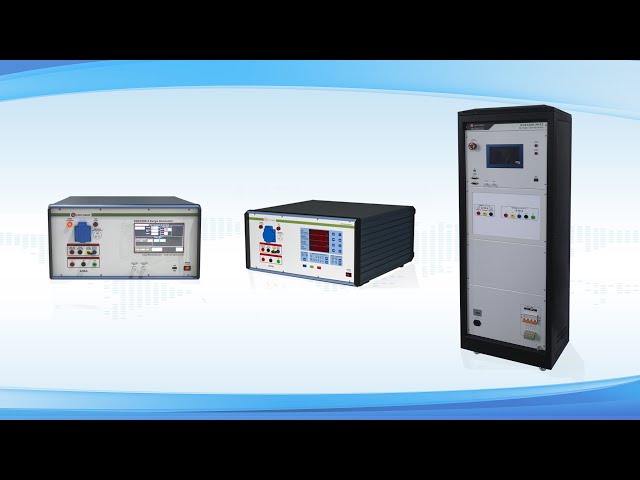
Surge testing in addition to a physical withstand capability, tests the functionality performance of a device when it is exposed and after exposure. A 10kV surge generator puts stress on it and engineers note continuity of operations, reset behaviour and recovery properties.
An electric surge can be passed through a device and remain intact, but can cause anomaly in its functionality or safety. Standardized testing thus takes into consideration the electrical integrity as well as operational performance.
The surge generator may demonstrate the efficiency of the approaches towards protecting design in extreme environments by producing realistic combination wave pulses.
The surge generators are being employed in the lifecycle of the products. Early design testing finds weak spots of protection circuits. Pre-compliance test verifies margin within the normal range. Final compliance tests show the adherence to regulation requirements.
A combination wave generator is sensitive to the precision of the generation and this aspect determines test confidence. When parameter criteria of the waveforms are right, engineers may be assured that passing outcomes depict actual sturdiness and not measurement error.
A 10kV surge generator is very important in the testing of the immunity to overvoltage as it generates standardized combination wave pulses that represent real life electrical stress. It is a combination wave generator, providing both controlled current and voltage waveforms, allowing the overall evaluation of insulation strength and protection circuits and functional resilience.
Surge generators change abstract standard definitions into realistic test conditions through specific energy storage, shape of the waveform, and discharge control. Strong designs available through manufactures like LISUN allow laboratories to count on reliable, double surge pulse to certify product activity, assist conformity as well as enhance longevity of dependability in electrically intense setups.
Your email address will not be published. Required fields are marked *

 English
 中文简体
中文简体 English
 Русский
 Español
 Português
 Türkçe
 العربية
 Deutsch
 Polski
 Italiano
 Français
 한국어
한국어 ไทย
ไทย Tiếng Việt
 日本語
日本語