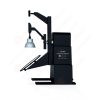
LM-79 Moving Detector Goniophotometer (Mirror Type C)
LSG-6000
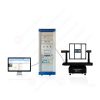
High Precision Rotation Luminaire Goniophotometer
LSG-1890B
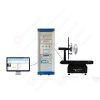
High Precision Rotation Luminaire Goniospectroradiometer
LSG-1890BCCD

Goniophotometer for Automotive and Signal Lamps
LSG-1950
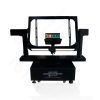
Goniophotometer for Traffic Signal Lamps
LSG-1950S
VAD Fire Alarm Visual Alert Device Goniophotometer
LSG-1930
Compact Goniophotometer
LSG-1200A
LED Goniophotometer
LSG-1100
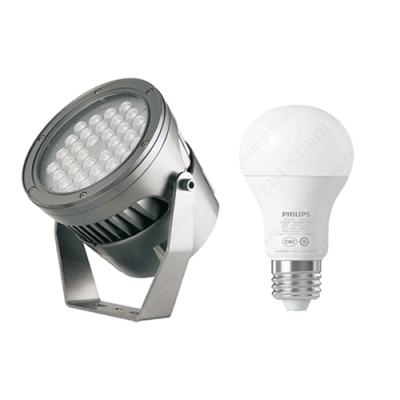 LEDs and Luminaire Test Solutions
 LM-79 and LM-80 Test Solutions
 LED Driver Test Solutions
 Household Appliances Test Solutions
 Mobile and Network Test Solutions
 Automotive Electronics Test Solutions
 Audio-Video and IT Test Solutions
 Cable and Wire Test Solutions
 Plugs and Sockets Test Solutions
 Power Switch Test Solutions
 Transformer Test Solutions
 Electric Toys Test Solutions
 Energy Meter Test Solutions
 Motor-Operated Tool Test Solutions
Select an organization
to browse standards
Fire safety has been one of the factors that are very relevant in designing electrical and electronic products. The size of circuits is decreasing and heating the components quicker, the plastics are now used to make the enclosures and so the need to make the tests with current flame-resistance to be more and more precise. A glow wire tester is a special tool that is used to test the reaction of materials to extreme heat caused by electrical faults. The test is a simulation of ignition due to overheated conductors, resistive failures, overloaded components, or poor contact of the electrical contact. When manufacturers subject materials to a heated wire element, they are able to know whether an enclosure is going to ignite, self-extinguish, or melt-off without creating secondary fires.
This is analyzed based on the globally standardized glow wire standard, mainly the IEC 60695-2 series, which regulates the glow wire temperature levels, test conditions and performance requirements. The world industries depend on this form of testing to make their products safe in the extraordinary operating circumstances. This paper will discuss the key industry applications of glow wire testing and the reasons why it is a crucial part of the current product development.
This is the case with electrical failures, which are the causes of fires in residential, commercial, and industrial environment most of the time. Plastics can also be used to set fire in the surroundings when they overheat, melt or drip, or they spread fire to the surrounding materials. Glow wire test allows the engineers to detect fire hazards prior to a product going to the market. Rather than using open flame test alone, the glow wire tester offers a source of controlled and constant heat supply and thus the results can be measured and repeated.
Manufacturers use the test-to-test ignition resistance, flame propagation, time to combustion, and self-extinguishing capability of materials. It is particularly effective in plastics utilized in envelops, connectors, switches, insulating components and cable assemblies.

The highest amount of glow wire testing is performed in consumer electronics and house appliances. Internal wiring, switching components, transformers and control boards found in appliances like refrigerator, washing machine, microwave, televisions, chargers and air conditioner can overheat in case of fault.
Glow wire testing, also known as glow wire testing, is a test used to measure materials used in housing, terminal blocks, plastic mounts, power inlet modules and insulation supports. In case a glow wire element that has a definite temperature can heat the material, the product design should be re-designed. Self-extinguishing materials: These materials that melt without producing flame or metals that extinguish themselves within a specific period of time are considered to be safer.
This will safeguard homes against fire outbreak either through the breakdown of insulation or overheated joints.
Glow wire testing is also conducted on lighting systems since LED drivers, ballasts, and power supplies create localized heat, particularly in compact fixtures.
LED lamp companies, downlights, industrial floodlights and street lights manufacturers test glow wire using glow wire testers to test:
• Lamp holders
• Reflector frames
• Optical housing materials
• Wire support components
• Plastic insulators Fixed within the body
Given that the lights are frequently located either in ceilings or though closed compartments, development of a fire is highly hazardous. Glow wire test is a guarantee that despite overheating of the driver, the enclosure will not be on fire or in fact carry flame. The testing systems of glow wire used by LISUN are very popular in lighting laboratories.
The advanced automotive systems incorporate hundreds of various electrical modules which must work within high temperatures. Engines, battery systems and climate exposure risk raise the opportunities of plastic ignition. Components that are tested using glow wire in vehicles include:
• Connector housings
• Fuse blocks
• Control panel assemblies
• Dashboard components
• Sensor housings
• Electric cars have charging modules
Glow wire standard establishes special temperature standards in the automobile system. As an illustration, components that are in contact with engine chambers may be required to have a high capability of resisting the dose of glow wires beyond 850°C. Complications in these domains might result in car fires, and it is obligatory to test manufacturers of cars.
Electrical cabinets, switchgear, motor drives, relays, power modules, and PLC systems are very important in factories and industrial facilities. These appliances are associated with high-level electrical loads and can become overheated when they have deviant work.
Glow wire testing is used to test enclosure panels, terminal insulators, cable brackets, and polymer components that are utilized within industrial control systems. Fire resistance is also important since industrial rooms are full of flammable dust, chemicals and many machineries.
Engineers determine which materials can withstand excess heat of an overload without burning and starting a fire by using a glow wire tester to eliminate the use of materials that catch fire and propagate throughout control cabinets resulting in expensive industrial incidents.
Electrical installations have switchboards, circuit breakers, sockets, plugs, and connectors, as probable points of ignition. The testing with glow wire assists in testing:
• Switch housings
• Fuse carriers
• Power outlet modules
• Distribution board covers
• Components of plastic insulation
The materials should be of the required glow wire temperature of the installation category. This makes residential and commercial buildings safe in performance by eliminating the likelihood of arcing ignition, electrical fires, overload, or loose connections.
Routers, distribution cabinets, base station enclosures and fiber distribution boxes run 24/7 and usually in hot settings. These units may also heat a lot with the electronic modules, transformers and power converters within them. The glow wire testing aims at ensuring that polymer housings do not burn when subjected to abnormal thermal overload.
The entrance points of the cables, plastic frames, optical modules mounts are also tested. Combined glow wire and environmental aging tests are applied to outdoor telecom equipment in order to guarantee the materials their fire resistance even when they are years old subjected to UV and moist climate.
Glow wire evaluation is needed in printer housings, PC power modules, UPS cabinets, server chassis components, connector blocks, and equipment racks are some examples. Big systems of computers always produce heat and therefore, spontaneous thermal events may occur and provide ignition sources. Glow wire tests are a requirement to ensure that during the overload condition, the enclosures are not flammable, and thus sensitive equipment is not destroyed due to fire in offices and data centers.
Glow wire testing offers controlled thermal simulation, which is a more realistic representation of internal electrical heating, unlike the open flame tests where gas ignition is used.
A glow wire tester permits engineers to:
• Apply precise temperatures
• Have regular heating cycles.
• Evaluate ignition behavior
• Look at the dripping and melting patterns.
• Measuring flame extinction time.
This uniformity will enhance safety of adherence to the glow wire standard and assist manufacturers to use fire safe materials during the initial design stages.
Glow wire testing is very essential in the safety of electrical fires in various industrial settings. Consumer appliances and lighting products, automotive parts, industrial regulation systems, telecommunications equipment, and office machines are just a few of the products that manufacturers look upon when testing the material response to unbearable heat using a glow wire tester that is accurate and repeatable. Glow wire standard offers systematic approach to recognize the risk of ignition, enhance the quality of design and prevent the end user of fire accidents. The glow wire testing is one of the most crucial safety tests in the contemporary product development, which is supported by reliable systems such as the LISUN, to ascertain that the enclosures and the components can withstand the tough thermal conditions of the applications in the real world.
Lisun Instruments Limited was found by LISUN GROUP in 2003. LISUN quality system has been strictly certified by ISO9001:2015. As a CIE Membership, LISUN products are designed based on CIE, IEC and other international or national standards. All products passed CE certificate and authenticated by the third party lab.
Our main products are Goniophotometer, Integrating Sphere, Spectroradiometer, Surge Generator, ESD Simulator Guns, EMI Receiver, EMC Test Equipment, Electrical Safety Tester, Environmental Chamber, Temperature Chamber, Climate Chamber, Thermal Chamber, Salt Spray Test, Dust Test Chamber, Waterproof Test, RoHS Test (EDXRF), Glow Wire Test and Needle Flame Test.
Please feel free to contact us if you need any support.
Tech Dep: [email protected], Cell/WhatsApp:+8615317907381
Sales Dep: [email protected], Cell/WhatsApp:+8618117273997
Your email address will not be published. Required fields are marked *

 English
 中文简体
中文简体 English
 Русский
 Español
 Português
 Türkçe
 العربية
 Deutsch
 Polski
 Italiano
 Français
 한국어
한국어 ไทย
ไทย Tiếng Việt
 日本語
日本語