LM-79 Moving Detector Goniophotometer (Mirror Type C)
LSG-6000
High Precision Rotation Luminaire Goniophotometer
LSG-1890B
High Precision Rotation Luminaire Goniospectroradiometer
LSG-1890BCCD

Goniophotometer for Automotive and Signal Lamps
LSG-1950
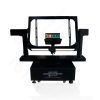
Goniophotometer for Traffic Signal Lamps (Economical Model)
LSG-1950S
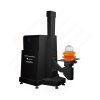
Goniophotometer for Airfield Lighting
LSG-1940
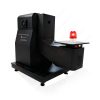
VAD Fire Alarm Visual Alert Device Goniophotometer
LSG-1930
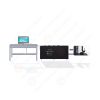
Compact Goniophotometer
LSG-1200A
LED Goniophotometer
LSG-1100
Near Field Moving Detector Goniophotometer
LSG-1900B
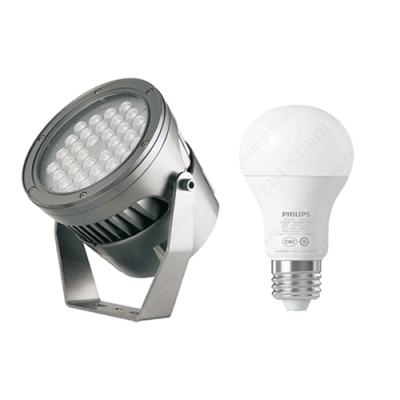 LEDs and Luminaire Test Solutions
 LM-79 and LM-80 Test Solutions
 LED Driver Test Solutions
 Household Appliances Test Solutions
 Mobile and Network Test Solutions
 Automotive Electronics Test Solutions
 Audio-Video and IT Test Solutions
 Cable and Wire Test Solutions
 Plugs and Sockets Test Solutions
 Power Switch Test Solutions
 Transformer Test Solutions
 Electric Toys Test Solutions
 Energy Meter Test Solutions
 Motor-Operated Tool Test Solutions
Select an organization
to browse standards
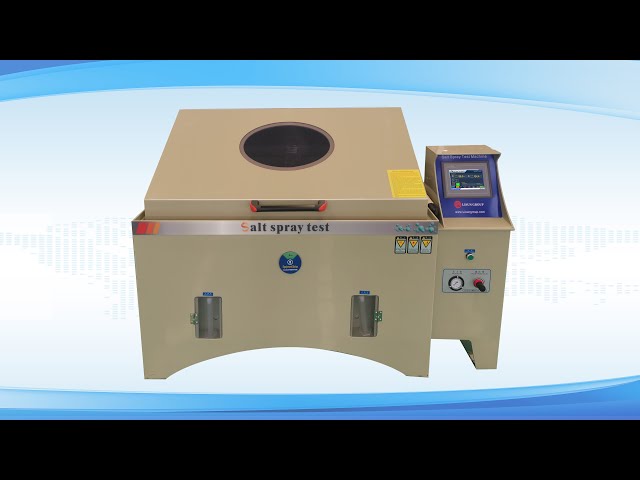
A cornerstone test that is used in the accelerated simulation of corrosion in the aerospace industry where reference is given to structural integrity surface protection and longtime reliability is subjected to a fog test. Elements of aircraft are subjected to saline exposure due to coastal operation deicing resources of the runways and air pollutants at altitude and ground level. In order to measure resistance at controlled but aggressive conditions laboratories use set standardized salt corrosion tests protocols which squeeze years of exposure in the environment into realistic test time. Not just to get corrosion fast but in a manner that would expose real failure modes of alloys fasteners coating and bonded assemblies on aerospace platforms is not the challenge.
The other type of neutral salt spray methods common in aerospace qualification is based on ASTM and ISO standards with any specified adaptations. A neutral mist test is a test conducted in a finely atomized sodium chloride solution by keeping the components in a controlled temperature and pH to produce a continuous wetting film. This is allowed to facilitate electrochemical reactions inside coating defects and galvanic couples that are common in mixed assemblies of metals.
The test is seldom carried out as a generic pass-fail exercise to aerospace hardware. Rather it is incorporated in a sequence of qualification where the criteria of exposure duration inspection and post-test evaluation are very specific. Printer components can be randomly exposed with medium time in-between rinsing and drying to approximate operating schedules. This method can be used to differentiate between cosmetic appearance attack and corrosion resulting in fatigue strength or joint integrity compromise.
Variants of the salt corrosion test that are made acidic are used at times to assess the susceptibility in more adverse chemical environments such as exhaust affected environment or industrial pollutants in the airports. These are however cautiously applied by aerospace programs since too much acidity may cause other failure modes that are not service representative. The choice of the fog chemistry hence presupposes the engineering judgment in accordance with the planned operation scope of the component.
And there is a great variety of materials aerospace structures are made of such as aluminum alloys titanium stainless alloys magnesium alloys and composite structures made up of metallic inserts. They have a different response in a fog test setting. Aluminum alloys can exhibit pitting and intergranular attacks particularly at locations of fasteners and high strength steels tend to develop rapid red rust in the event that protective finishes are broken. Alloys of magnesium are highly aggressive in corrosion and demand special coatings, which are commonly tested by exposure to a long time period in fog.
The centrality of coating systems allows the protection of corrosion and testing of salt moths demonstrates the quality of adhesion and performance of the barrier. Underfilm corrosion on scratch and sides is initiated by conversion coatings primers that anodic layers and topcoats experience constant stress due to exposure to electrolytes. Blister and filiform corrosion length are common metrics of evaluation in aerospace qualification scribe creep measurements. The galvanic interactions also display in the fog test in which dissimilar metals are electrically contacted and wetted by the saline film. Sealants isolators and drainage paths are some design features that are hence evaluated indirectly by their functionality in the chamber.
Important factors are geometry of assembly. The joints between the crevices and the interfaces of fasteners retain electrolyte and maintain localized corrosion despite cessation of exposure. A properly designed fog test program exposes the specimens under orientations that would promote worst case wetting as opposed to idealistic drainage. The practice enhances prediction worthiness of the results in regard to actual aircraft service.
The validity of a fog test relies on the rigorous restriction of the conditions in chambers. The rate of solution concentration temperature atomization, and the uniformity of deposition needs to be observed and recorded during the exposure. Minor variations may alter the kinetics of corrosion meaning that the results obtained in one test cannot be compared with those in another test or another laboratory. Aerospace programs thus focus on routine tests of collection rates stability of pH and nozzle functions.
Post exposure evaluation is also important. Rinsing schedules that dry time and schedule of inspection determine visualized harm. Late versus Early Corrosion propagation by residual salts can only be seen by immediate inspection because active corrosion is captured by late inspection. Formless assessment like microscopy mass loss determination and coating adhesion experiment supplementing visual assessment entails non-destructive evaluation. In the case of mechanical testing of load bearing components following exposure in a moist environment, it may be necessary to test the component after being exposed to moisture to deduce whether it has been corroded and its strength or fatigue life is diminished.
The fast nature of the test should be taken into consideration during data interpretation. The results of salt corrosion tests are not proportional to calendar life. They instead give comparisons on their performance relative to each other and the weaknesses. To establish a unified durable assessment, aerospace engineers match the results of the Mog test to the service experience and other environmental assessment tests including humidity cycling and temperatures.
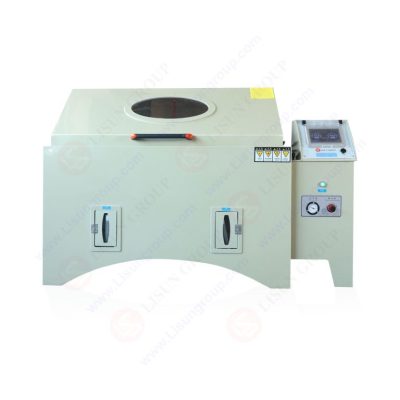
To conduct aerospace grade fog testing, chambers are needed where there is consistency in terms of control exposure and also good documentation. The size of the chamber should be representative so that there is no shadowing of any component or abnormal deposition. The environmental parameters need to be logged by control systems so as to facilitate traceability. To maintain repeatability throughout long qualification campaigns, it is necessary to maintain and calibrate the spray systems sensors and heaters.
To satisfy these demands, many laboratories choose systems among the existing suppliers. An example is the provision of salt fog chambers and salt fog chamber accessories by For example LISUN in activities that investigate corrosion with consistency and documentation being the most important factors. Whether supplier laboratories have to measure chamber performances against aerospace requirements and have to maintain comprehensive reports to be selected on audit and certification exercises.
In the planning and execution of salt corrosion test, it is an irreplaceable accelerated corrosion simulator of aerospace products when implemented in the discipline of the engineering science. When the right test chemistries are chosen to regulate exposure conditions and the results are discussed within the framework of protective coating applied to materials and their design as in an assembly, the real risks of corrosion can be revealed to the engineers. Combined with a more comprehensive environmental qualification strategy the salt fog test helps to provide safer and more durable aerospace systems without incredibly naive predictions as to their lifetime.
Tags:YWX/Q-015Your email address will not be published. Required fields are marked *

 English
 中文简体
中文简体 English
 Русский
 Español
 Português
 Türkçe
 العربية
 Deutsch
 Polski
 Italiano
 Français
 한국어
한국어 ไทย
ไทย Tiếng Việt
 日本語
日本語