LM-79 Moving Detector Goniophotometer (Mirror Type C)
LSG-6000
High Precision Rotation Luminaire Goniophotometer
LSG-1890B
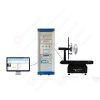
High Precision Rotation Luminaire Goniospectroradiometer
LSG-1890BCCD

Goniophotometer for Automotive and Signal Lamps
LSG-1950
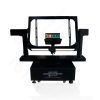
Goniophotometer for Traffic Signal Lamps (Economical Model)
LSG-1950S
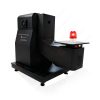
VAD Fire Alarm Visual Alert Device Goniophotometer
LSG-1930
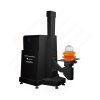
Goniophotometer for Airfield Lighting
LSG-1940
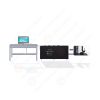
Compact Goniophotometer
LSG-1200A
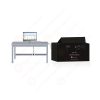
LED Goniophotometer
LSG-1100
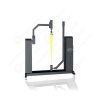
Near Field Moving Detector Goniophotometer
LSG-1900B
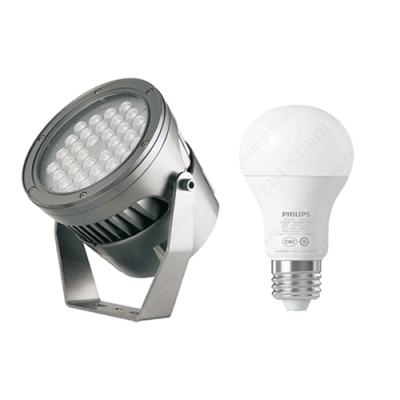 LEDs and Luminaire Test Solutions
 LM-79 and LM-80 Test Solutions
 LED Driver Test Solutions
 Household Appliances Test Solutions
 Mobile and Network Test Solutions
 Automotive Electronics Test Solutions
 Audio-Video and IT Test Solutions
 Cable and Wire Test Solutions
 Plugs and Sockets Test Solutions
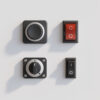 Power Switch Test Solutions
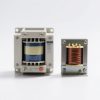 Transformer Test Solutions
 Electric Toys Test Solutions
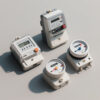
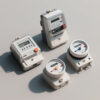 Energy Meter Test Solutions
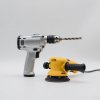 Motor-Operated Tool Test Solutions
Select an organization
to browse standards
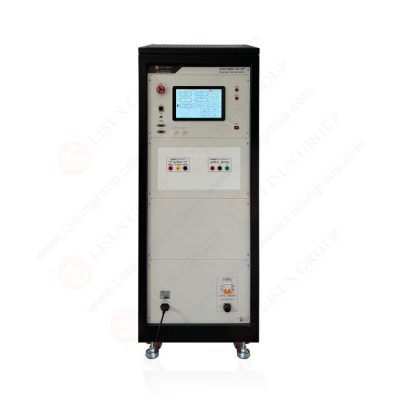
A surge tester is characterized not just by the voltage it is capable of reaching but also by its ability to duplicate standardized transient waveforms when under normal conditions. Credibility of the results with regard to immunity assessment lies on the accuracy of the pulse and the maximum energy rating of the usable generator. Customers tend to use specifications and value against a surge tester price and believe that high price corresponds to high performance. Practically what matters are waveform fidelity at real-to-world coupler conditions, the reproducibility of pulse trains and the power that can be applied to maintain the target shape in cases whereby the equipment being test circuited is powered. The knowledge of these factors assists laboratories to select a tester which yields a defensible data at the expense of an impressive but deceptive peak value.
Pulse accuracy is the measure of the degree to which the delivered surge is similar to target standard in time and amplitude. Accuracy has two dimensions. The former is open circuit waveform conformance. The second one behaves at loaded when there is a lineage between the coupling networks and the device under testing. A tester with a rise and decay of 1.2 microsecond in the open circuit and 50 microseconds may vary considerably when the current is flowing. Such a deviation is important since the stress in devices is determined by the history of combined voltage and current rather than by the unloaded specification.
The accuracy of the high-fidelity pulse output needs strict control of the charging stage of the switching element as well as the pulse shaping network. The effects of creep of capacitor tolerance temperature, switch jitter, all affect the rise time and crest factor. Sampling accuracy and measurement bandwidth are also important. When the internal monitor under clears the front edge the tester can show compliance when the pulse delivered is overshooting or ringing. Confirmation of accuracy against external high bandwidth probes and conformance between polarities and repetition rates should be done in laboratories.
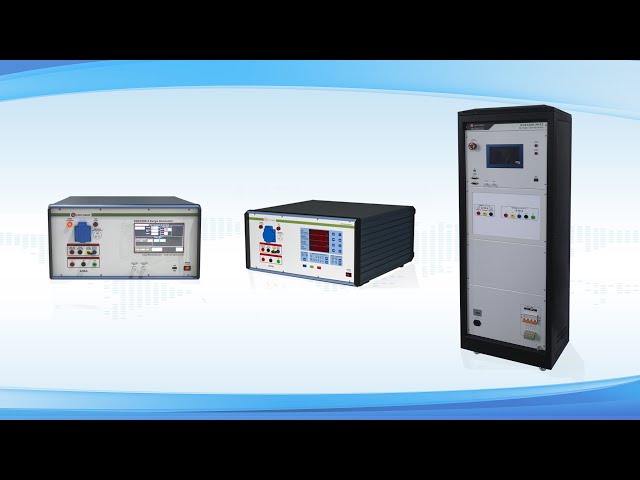
Generator energy rating is the ability of the tester to charge and discharge to next pulse the rated power of the waveform being used. Capacitance and charge voltage yield energy and the energy dictates the collapse of the pulse when the pulse encounters a low impedance path. The complex impedance of real equipment under test changes during the surge. Should the energy of the generator be less than adequate the voltage decreases and the current tail is shortened and the current relieves stress in a manner that is not typical of the standard.
One of the practical methods by which the adequacy of energy can be evaluated is to test short circuit current limit and current waveform duration at rated voltage. Strong tester allows the maintenance of 8 microsecond to 20 microsecond current profile with no clipping. Such capability is particularly significant in testing power ports and equipment whose surge protecting devices are clamping. The protector instead of the behavior behind the protector is also measured by the tester without sufficient energy.
According to practice, pulse accuracy and energy rating go hand in hand. A tester demonstrating a high score on paper and low score in the lab will be an excellent tester with high open circuit, but low-energy. On the other hand, a high energy tester with loose pulse shaping is capable of providing too much stress which contravenes the standard. The appropriate balance makes the pulse shape stay within that of a tolerance within a given load envelope. In assessing specifications, find statements that characterize accuracy loaded and across patterns of coupling instead of unloaded waveforms.
Coupling and decoupling networks convert the pulse generated to the port being tested and connects auxiliary equipment to safety. The flow of energy is determined by their impedance. A surge tester should be developed to be compatible with standardized networks in such a way that the total system passes the waveform requirements. The implications of poor impedance control are reflected ringing and unexpected common mode stress. Ensure that the tester provides the complete variety of connections needed to couple with power signals and telecom ports and that the vendor indicates accuracy with those networks connected.
The repeatability is the possibility to repeat the same pulse with tolerance during many shots and also with time. It relies on wear thermal management of charging stability switch and component aging. In production and certification laboratories hundreds of pulses can be used in one day. A drifting tester will interfere with sample-to-sample comparability. Proper designs have temperature compensated robust switches and self checks where the verification of amplitude and timing is done prior to a test sequence execution.
Surge testing has to be done with credible traceable measurements of voltage and current. Internal monitors are to be calibrated and their uncertainty provided. The maintenance plan should include external verification using traceable probes. In situations where there is uncertainty the lab is allowed to justify pass fail determinations and intersite comparison. Accuracy of pulse and no traceability cannot be used in compliance work.
Parts with high energy testers are stressful on electrical stress. To ensure the safety of operators and instruments proper design incorporates discharge paths interlocks and energy bleed. Pulse integrity is also affected by the safety provisions. As an illustration improperly developed protection may cut the waveform. Assess safety systems which conserve waveform and which are safe to use. The picture is finished with training and maintenance.
Depending on maximized voltage energy capability automation and programs, the surge tester price varies. The light duty screening with benign loads may be covered with entry level units. Stricter tests on compliance labs and manufacturers characterizing protective devices, require a higher energy rating and reduced accuracy that costs more. The tester that uses its worst case load setting, and is established as accurate, is the most cost effective alternative. Saving on the initial cost may be a cost when there is challenge of results or the results need to be re-tested.
Surge testing is hardly ever used single-handedly. It will save time and minimize error with integration with power analyzers current probes and automated reporting. Audits are supported by software which records the parameters of waveforms and environmental conditions. It is a compatibility of accessories. Due to these reasons many laboratories nowadays have surge testers in combination with fixtures and measurement instruments supplied by LISUN to simplify installation and documentation and to have similar calibration standards across EMC disciplines.
The accuracy of the pulse, under load, and the rating of the generator energy that can maintain the waveform is due to a surge tester is dictated by its effectiveness. Specifications are to be read thoroughly and checked practically. Maintaining pulse shape within tolerance over coupling networks and having enough energy to prevent collapse gives true immunity to the device when test results are taken. The combination of these technical requirements and surge tester price has resulted in rational purchasing and justifiable compliance results.
Tags:SG61000-5Your email address will not be published. Required fields are marked *

 English
 中文简体
中文简体 English
 Русский
 Español
 Português
 Türkçe
 العربية
 Deutsch
 Polski
 Italiano
 Français
 한국어
한국어 ไทย
ไทย Tiếng Việt
 日本語
日本語