LM-79 Moving Detector Goniophotometer (Mirror Type C)
LSG-6000
High Precision Rotation Luminaire Goniophotometer
LSG-1890B
High Precision Rotation Luminaire Goniospectroradiometer
LSG-1890BCCD

Goniophotometer for Automotive and Signal Lamps
LSG-1950
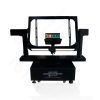
Goniophotometer for Traffic Signal Lamps (Economical Model)
LSG-1950S
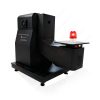
VAD Fire Alarm Visual Alert Device Goniophotometer
LSG-1930
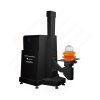
Goniophotometer for Airfield Lighting
LSG-1940
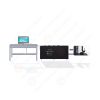
Compact Goniophotometer
LSG-1200A
LED Goniophotometer
LSG-1100
Near Field Moving Detector Goniophotometer
LSG-1900B
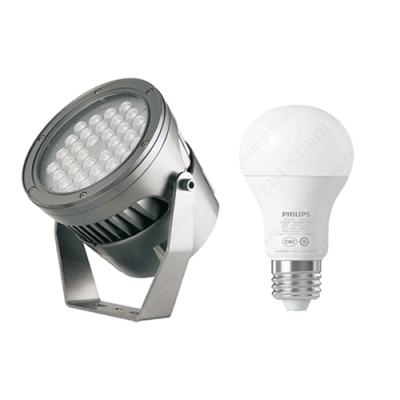 LEDs and Luminaire Test Solutions
 LM-79 and LM-80 Test Solutions
 LED Driver Test Solutions
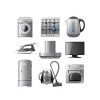 Household Appliances Test Solutions
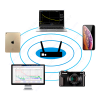 Mobile and Network Test Solutions
 Automotive Electronics Test Solutions
 Audio-Video and IT Test Solutions
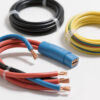 Cable and Wire Test Solutions
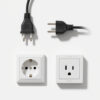 Plugs and Sockets Test Solutions
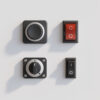 Power Switch Test Solutions
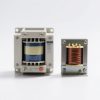 Transformer Test Solutions
 Electric Toys Test Solutions
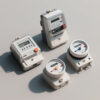 Energy Meter Test Solutions
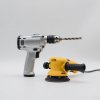 Motor-Operated Tool Test Solutions
Select an organization
to browse standards
One of the most frequently occurring reasons of failure in contemporary electronic systems is Electrostatic discharge and to effectively provide tests, proper calibration of an ESD gun is important. What makes the calibration of a product important in measuring this is whether a laboratory is doing compliance testing, pre compliance evaluation, or product validation. A typical 30kV ESD gun can offer much higher discharge capability than a typical gun and is therefore applicable to stress testing industrial equipment, power systems, lighting modules, automotive electronics, aerospace components, and high-capacity embedded designs. As a beginner in the field of ESD testing, calibration is one of the things to comprehend before generating reliable and consistent data.
Calibration is done to make sure that the ESD waveform corresponds to the prescribing parameters of IEC 61000-4-2. This ISO standard regulates the form, rise, peak current and energy of the ESD waveform. Failing to obtain the right waveform at the ESD gun will cause the engineers to arrive at erroneous conclusions regarding the product immunity and reliability.
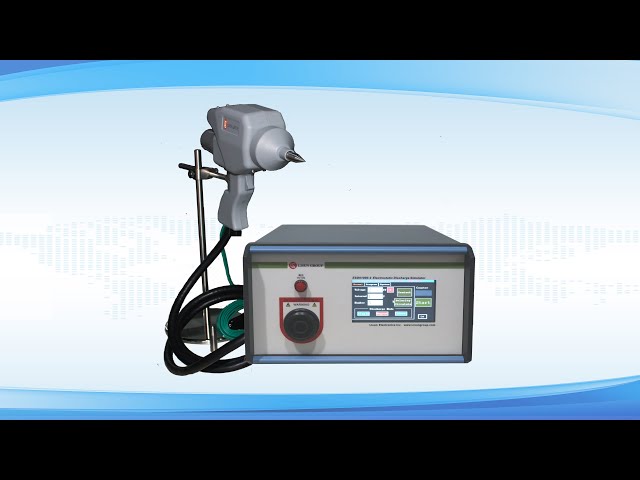
The idea behind an ESD gun is to simulate something that actually happens in the real world when a human being touches an object, two objects rub against each other or when an object charges up. In case of improper calibration of the gun it may be stressed or over-stressed to test the evaluating device. These two scenarios may result in wrong choices.
Stressing a product is a false alarm that the device is resistant to ESD occurrence. Over stressing may cause some destruction which would not be the case in the real world. Calibration guarantees that the waveform, breakout voltage and energy discharged of an ESD is the same as in repeated tests at any output level. Calibration accuracy is increasingly important in a 30kV ESD gun, with changes that may result in a large change in peak current or rise time.
In case of testing the same equipment in more than one lab, they have to get similar results given similar conditions. Manufacturers such as LISUN offer software set ups such as built in calibration checks and accessories designed to assist novices to ensure a steady performance levels without advanced technical skills understanding.
A number of characteristics are typical of an ESD pulse. All these parameters are checked with the help of the calibration process.
Peak current
Increasing the voltage increases the peak currents especially in a 30kV ESD gun.
Rise time
The duration of time it takes the pulse to climb between 10% and 90 percent of its maximum value.
Pulse width
The duration of discharge current time above some level.
Repetition accuracy
Ensures that multiple discharges at the same voltage produce similar waveforms.
Polarity switching
Assures that the multiple discharges of the same voltage result in similar waveforms.
Voltage accuracy
Checks that the instrument display has reached the desired level of voltage.
An ESD gun, calibrated can make sure that all these attributes do not go beyond the tolerances provided in the IEC 61000-4-2.
Table: Typical IEC calibration tolerances for ESD guns
| Parameter | IEC Requirement | Notes |
| Peak current | ±10 percent | Must stay within tolerance across all voltage levels |
| Rise time | 0.7 to 1.0 nanoseconds | Critical for accurate compliance testing |
| Pulse width | ±20 percent | Affects total discharge energy |
| Voltage accuracy | ±5 percent | Important for high output models like 30kV |
| Polarity variation | ±10 percent | Must be consistent in both polarities |
These values are universal criteria required in professional EMC labs, and they are very close to LISUN equipment and other vendors who have made compliant equipment.
The process of calibration of ESD gun needs special test equipment. Novices need to be able to get quality measurement instruments.
• Attenuators in order to shield the oscilloscope against high current
• Stable mechanical positioning calibration fixture.
• Ground reference plate
• Low noise coaxial cables
Standard current targets are used to make sure that the waveform measure matches the nature of discharge.
It can be automated calibration although novices can also go through a systematic procedure.
1. Prepare the test environment
Calibration must occur in a regulated condition. Discharge behaviour depends on temperature and humidity and both of them should be constant. No dust or moisture on the surfaces. The ground plane of reference is to be clean and good bonded.
2. Connect the gun to the calibration target
The discharge tip should firmly touch the calibration target. Free contact or misalignment modifies the waveform. First-timers have to ensure that the target is firmly attached to the oscilloscope using attenuators.
3. Select voltage and polarity
It is recommended that beginners be trained to initially use a middle range of voltage, i.e. 5 kV, and then experiment with higher levels of a 30kV ESD gun. There should be tests of both positive and negative polarities.
4. Trigger the discharge
A regulated flow of discharges should be used. With the oscilloscope every discharge is registered. To ensure consistency, beginners need to record no less than five pulses per level of voltages.
5. Evaluate the waveform
The waveform was superimposed on the IEC tolerance criterion on the oscilloscope. Deviations factor in adjustment requirement, tip cleaning or change of damaged internal parts.
6. Adjust and retest
In case measurements are not within the acceptable range, some changes have to be done. Certain ESD guns contain internal calibration screws or correction menu software. The test should be repeated until tolerance on the waveform is achieved.
7. Document calibration results
Any measurements should be recorded down to be referred to in the future. To ensure that ISO/IEC 17025 calibration conditions are adhered to, the laboratories frequently demand logs.
8. Safety considerations
ESD gun Calibration is not risk free. It needs to be properly insulated, grounded and properly trained on its operation. The discharge tip should not have hands around it. When not used, the gun should be put in a safe place. Novice workers are expected to be supervised during calibration, before they allow it to be done unsupervised.
Regular calibration enhances the accuracy of the test result and that the immunity tests should indicate the actual behavior, in the real world. Frequent calibration will also increase the life of the ESD gun particularly the high voltage ones. Laboratories which run LISUN-based systems also frequently have automatic calibration reminders and user-friendly interfaces which enable the systems to remain accurate without the need to be done by a specialist.
Calibration of ESD gun is very important to both a new person and an experienced engineer to conduct immunity testing of electronic products. Even more accuracy in calibration is necessary when using high voltage models, like a 30kV ESD gun, which has higher discharge energy, as well as that of waveform variations. Beginners can achieve controlled and reproducible calibration with good tools, a controlled test environment and a clear idea of the parameters that should be used in calibration. Calibration also enhances good test results and assists in the assessment that the immunity testing is a reflection of actual world electrostatic occurrences. With equipment supplied by such reputable producers as LISUN, the calibration process becomes available, consistent and very effective in any of the laboratories.
Lisun Instruments Limited was found by LISUN GROUP in 2003. LISUN quality system has been strictly certified by ISO9001:2015. As a CIE Membership, LISUN products are designed based on CIE, IEC and other international or national standards. All products passed CE certificate and authenticated by the third party lab.
Our main products are Goniophotometer, Integrating Sphere, Spectroradiometer, Surge Generator, ESD Simulator Guns, EMI Receiver, EMC Test Equipment, Electrical Safety Tester, Environmental Chamber, Temperature Chamber, Climate Chamber, Thermal Chamber, Salt Spray Test, Dust Test Chamber, Waterproof Test, RoHS Test (EDXRF), Glow Wire Test and Needle Flame Test.
Please feel free to contact us if you need any support.
Tech Dep: Service@Lisungroup.com, Cell/WhatsApp:+8615317907381
Sales Dep: Sales@Lisungroup.com, Cell/WhatsApp:+8618117273997
Your email address will not be published. Required fields are marked *

 English
 中文简体
中文简体 English
 Русский
 Español
 Português
 Türkçe
 العربية
 Deutsch
 Polski
 Italiano
 Français
 한국어
한국어 ไทย
ไทย Tiếng Việt
 日本語
日本語