LM-79 Moving Detector Goniophotometer (Mirror Type C)
LSG-6000
High Precision Rotation Luminaire Goniophotometer
LSG-1890B
High Precision Rotation Luminaire Goniospectroradiometer
LSG-1890BCCD

Goniophotometer for Automotive and Signal Lamps
LSG-1950
Goniophotometer for Traffic Signal Lamps (Economical Model)
LSG-1950S
VAD Fire Alarm Visual Alert Device Goniophotometer
LSG-1930
Goniophotometer for Airfield Lighting
LSG-1940
Compact Goniophotometer
LSG-1200A
LED Goniophotometer
LSG-1100
Near Field Moving Detector Goniophotometer
LSG-1900B
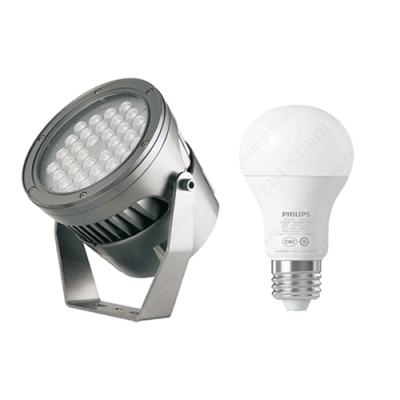 LEDs and Luminaire Test Solutions
 LM-79 and LM-80 Test Solutions
 LED Driver Test Solutions
 Household Appliances Test Solutions
 Mobile and Network Test Solutions
 Automotive Electronics Test Solutions
 Audio-Video and IT Test Solutions
 Cable and Wire Test Solutions
 Plugs and Sockets Test Solutions
 Power Switch Test Solutions
 Transformer Test Solutions
 Electric Toys Test Solutions
 Energy Meter Test Solutions
 Motor-Operated Tool Test Solutions
Select an organization
to browse standards
Abstract
Material aging, driven by sunlight, temperature, and humidity, poses significant challenges to product durability. The LISUN XD-150LS Xenon Lamp Aging Test Chamber addresses this by integrating the core principle of “natural simulation + accelerated aging”. Equipped with a xenon arc lamp that reproduces over 90% of natural sunlight’s full spectrum, this chamber accurately recreates destructive wavelengths (ultraviolet and visible light) from outdoor sunlight. Combined with temperature control, water spray, and humidity regulation modules, it establishes an alternating cycle of “light exposure – high temperature – spray – low temperature condensation”, fully simulating the three core aging factors. This study details the chamber’s working mechanism, technical specifications, test procedures, and practical applications, demonstrating its ability to compress months/years of outdoor aging into days/weeks, providing reliable data for material R&D, quality inspection, and industry compliance.
1. Introduction
In industries such as coatings, plastics, textiles, and automotive manufacturing, material weather resistance directly determines product service life. Traditional outdoor natural aging tests are time-consuming (taking months to years) and easily affected by uncontrollable factors (e.g., regional climate differences, seasonal changes), making them inefficient for rapid product development. The Xenon Lamp Aging Test Chamber, as a core equipment for artificial accelerated aging, solves this problem by simulating natural environmental factors in a laboratory. Among them, the LISUN XD-150LS Xenon Lamp Aging Test Chamber stands out for its high spectral similarity to natural light, precise environmental control, and compliance with multiple international standards. This article focuses on its design principles, technical parameters, and application scenarios to provide a reference for material weather resistance testing.
The operation of the LISUN XD-150LS Xenon Lamp Aging Test Chamber is based on two key concepts: full-spectrum sunlight simulation and multi-factor cyclic aging.
The chamber uses a 1.8KW Chinese-made xenon arc lamp (1200-hour lifespan) as the core light source. Unlike ordinary fluorescent lamps that only emit partial ultraviolet light, the xenon arc lamp, combined with a boric acid glass filter, can reproduce the full spectrum of natural sunlight (280~800nm wavelength range), including ultraviolet (UV, 280~400nm) and visible light (400~800nm). As shown in Figure 1, the spectral similarity between the xenon lamp and natural sunlight exceeds 90%, ensuring that the light-induced aging mechanism of materials in the chamber is consistent with outdoor natural aging. For example, the UV band (especially 340nm) in the xenon lamp spectrum can effectively simulate the photodegradation of polymer materials caused by short-wave UV in sunlight, which is crucial for evaluating the weather resistance of plastics and coatings.
Figure 1: Spectrum Comparison between Xenon Lamp (LISUN XD-150LS) and Natural Sunlight
| Wavelength Range (nm) | Natural Sunlight Irradiance (W/m²) | Xenon Lamp Irradiance (W/m²) | Spectral Similarity (%) |
| 280~340 (UV-B/C) | 0.15~0.40 | 0.12~0.38 | 85~95 |
| 340~400 (UV-A) | 0.30~0.60 | 0.28~0.57 | 92~95 |
| 400~800 (Visible Light) | 300~1200 | 280~1180 | 93~98 |
To fully simulate outdoor aging conditions, the chamber integrates three core environmental control modules (temperature, humidity, and water spray) to create an alternating cycle of “light exposure – high temperature – spray – low temperature condensation”. The specific cycle logic and control parameters are as follows:
• Light Exposure Stage: The xenon lamp is turned on, and the irradiance is adjustable within 0.30~0.57W/m² (at 340nm) or 0.66~1.22W/m² (at 420nm). The black panel temperature (BPT) is controlled at 45~85℃ to simulate the surface temperature rise of materials under sunlight.
• High Temperature Stage: Maintains the chamber temperature at RT~80℃ (RT = room temperature) with a temperature fluctuation of ≤±0.5℃, accelerating thermal oxidation of materials.
• Spray Stage: Uses a nozzle with a 0.8mm aperture to spray water at a pressure of 0.12~0.15Mpa. The spray time (1~9999mins) and cycle (1~240mins) are adjustable, simulating rain erosion.
• Low Temperature Condensation Stage: Reduces the chamber temperature to 50℃±2℃ (with lights off) and maintains humidity at 80~95% R.H., simulating dew formation on material surfaces at night, which promotes electrochemical corrosion of coatings and metals.
This cyclic environment fully covers the three core factors of material aging (sunlight, temperature, humidity) and enhances the intensity of key factors (e.g., increasing UV irradiance, expanding temperature/humidity ranges), thereby compressing the aging process. For instance, aging phenomena that take 6 months outdoors for automotive paint can be reproduced in the chamber in 2~3 weeks.
3. Technical Specifications of LISUN XD-150LS Xenon Lamp Aging Test Chamber
The performance of the LISUN XD-150LS is supported by strict technical parameters, which ensure test accuracy and repeatability. Table 2 lists its key specifications, along with comparisons with other LISUN models (XD-010LS/XD-010LF) for reference.
Table 2: Technical Specifications of LISUN Xenon Lamp Aging Test Chamber
| Parameter Category | Parameter Name | XD-150LS | XD-010LS | XD-010LF |
|---|---|---|---|---|
| Test Chamber Size | Inner Size (DWH, mm) | 500600500 | 100010001000 | 100010001000 |
| Outer Size (DWH, mm) | 103011301900 | 173014302100 | 173014302100 | |
| Sample Rack | Type | Flat Panel-Type | Flat Panel-Type | Drum-Type |
| Size/Capacity | 460*550mm | 960*960mm | 66 samples (190*70mm each) | |
| Distance to Lamp Center (mm) | 200~400 (Adjustable) | 260~300 (Fixed) | 260~300 (Fixed) | |
| Temperature Control | Chamber Temp. Range | RT~80℃ | RT~80℃ | RT~80℃ |
| Black Panel Temp. Range | 45~85℃ | 45~85℃ | 45~85℃ | |
| Temp. Fluctuation | ≤±0.5℃ | ≤±0.5℃ | ≤±0.5℃ | |
| Temp. Deviation (Lights Off) | ±2℃ | ±2℃ | ±2℃ | |
| Heating Power | 2KW | 4.5KW | 4.5KW | |
| Humidity Control | Humidity Range | 20~95% R.H. | 20~95% R.H. | 20~95% R.H. |
| Humidity Fluctuation | +2%, -3% R.H. | +2%, -3% R.H. | +2%, -3% R.H. | |
| Humidifying Power | 2KW | 3KW | 3KW | |
| Xenon Lamp System | Lamp Power/Quantity | 1*1.8KW | 3*1.8KW | 1*6.0KW |
| Lifespan | 1200 Hours | 1200 Hours | 1200 Hours | |
| Filter Type | Boric Acid Glass | Full Set Filter | Full Set Filter | |
| Cooling Method | Air Cooling | Water Cooling | Water Cooling | |
| Water Spray | Spray Pressure | 0.12~0.15Mpa | 0.12~0.15Mpa | 0.12~0.15Mpa |
| Spray Time/Cycle | 1~9999mins/1~240mins | 1~9999mins/1~240mins | 1~9999mins/1~240mins | |
| Power Supply | Type/Voltage/Frequency | Single Phase 220V 50Hz | Three Phases 380V 50Hz | Three Phases 380V 50Hz |
| Power Consumption | 7KW | 15KW | 17KW |
Key advantages of the XD-150LS include: (1) Adjustable distance between the sample rack and the lamp center, suitable for samples of different thicknesses; (2) Air cooling design, which is simpler to maintain than water cooling (used in XD-010LS/XD-010LF); (3) Compact inner size, ideal for small-batch R&D tests (e.g., new coating formula screening).

XD-150LS_AL
To ensure the reliability of test results, the LISUN XD-150LS requires strict adherence to standard procedures, which are divided into 7 steps (Figure 2):
Figure 2: Flowchart of LISUN XD-150LS Test Procedures
Sample Preparation → 2. Equipment Inspection → 3. Condition Setup → 4. Sample Placement → 5. Test Run → 6. Intermediate/Final Testing → 7. Result Evaluation
• Cut samples according to test standards (e.g., 75×150mm for plastics, 100×200mm for coatings) to ensure representativeness.
• Use LISUN auxiliary instruments to measure initial properties:
• HSCD-860 Portable Spectrophotometer: Test initial color difference (ΔE₀).
• AGM-500 Gloss Meter: Measure initial gloss (60° gloss value, G₀).
• PULL-500KG Tensile Tester: Determine initial tensile strength (σ₀).
• Package samples in clean, dry containers to avoid contamination.
• Check the xenon lamp lifespan (replace if >1200 hours) and filter integrity (no cracks/scratches).
• Verify the cooling system (air flow for XD-150LS) and water spray system (nozzle blockage, water tank level, conductivity <5μs/cm).
• Calibrate irradiance (using a standard irradiance meter) and temperature sensors (error ≤±2℃).
Take the automotive interior trim test (complying with SAE J2412) as an example:
• Irradiance: 0.55W/m² (at 340nm).
• Temperature: 63℃±3℃ (light phase), 50℃±2℃ (dark phase).
• Humidity: 50%±5% R.H. (light phase), 90%±5% R.H. (dark phase).
• Spray Cycle: 18mins spray/102mins pause.
• Fix samples on the flat panel rack (460×550mm) with the test surface facing the xenon lamp.
• Maintain a ≥10mm gap between samples to ensure uniform illumination/temperature.
• Cover empty rack areas with blackboards to avoid chamber environment fluctuations.
• Close the chamber door, start the equipment, and stabilize parameters for 30 minutes.
• Start the timer, and record data (irradiance, temperature, humidity) every 24 hours.
• Avoid frequent door openings; if necessary, pause the timer and restart after parameters stabilize.
• After 250 hours of testing, remove samples and condition them in a standard environment (23℃±2℃, 50%±5% R.H.) for 4 hours.
• Re-measure color difference (ΔE), gloss (G), and tensile strength (σ) using the same instruments.
• Appearance Assessment: Check for fading (ΔE > 3 indicates significant fading), chalking, or cracking.
• Performance Evaluation: Calculate tensile strength retention rate (σ/σ₀ × 100%); a retention rate <80% indicates poor weather resistance.
• Compliance Judgment: Compare results with standards (e.g., SAE J2412 requires ΔE ≤ 5 and σ retention rate ≥70% for qualified automotive interior trims).
The LISUN XD-150LS is widely used in multiple industries due to its compliance with international standards (e.g., ISO 4892-2, ASTM G155, SAE J2412) and flexible test conditions.
In the coatings industry, R&D personnel use the chamber to screen new anti-aging coating formulas. For example, compare the aging performance of two acrylic coating formulas (A and B) after 500 hours of testing:
• Formula A: ΔE = 6.2, gloss retention rate = 65%, tensile strength retention rate = 72%.
• Formula B: ΔE = 3.1, gloss retention rate = 88%, tensile strength retention rate = 90%.
• The results show that Formula B has better anti-aging performance, so it is selected for further development.
For building waterproof materials (complying with GB/T 16422.2), manufacturers use the XD-150LS to conduct pre-delivery tests. The chamber simulates 2000 hours of outdoor aging (equivalent to 5 years outdoors), and qualified products must meet:
• No cracking, bubbling, or peeling.
• Water absorption rate increase ≤10%.
• Tensile strength retention rate ≥85%.
For automotive exterior trims (e.g., bumpers, complying with SAE J2527), the chamber simulates high-temperature exposure (70℃) and rain spray cycles. After 1000 hours of testing, qualified bumpers must have:
• Color difference ΔE ≤ 4.
• Impact strength retention rate ≥75%.
• No discoloration or deformation.
6. Conclusion
The LISUN XD-150LS Xenon Lamp Aging Test Chamber, with “natural simulation + accelerated aging” as its core, effectively solves the inefficiency of traditional natural aging tests. Its high-spectral-similarity xenon arc lamp and multi-factor cyclic control system ensure that test results are consistent with real outdoor aging. Supported by strict technical specifications and standard procedures, the chamber provides reliable data for material R&D, quality inspection, and industry compliance in coatings, plastics, automotive, and other fields. As industries demand higher product durability, the Xenon Lamp Aging Test Chamber will play an increasingly important role in promoting the development of high-performance, weather-resistant materials.
Your email address will not be published. Required fields are marked *

 English
 中文简体
中文简体 English
 Русский
 Español
 Português
 Türkçe
 العربية
 Deutsch
 Polski
 Italiano
 Français
 한국어
한국어 ไทย
ไทย Tiếng Việt
 日本語
日本語