LM-79 Moving Detector Goniophotometer (Mirror Type C)
LSG-6000
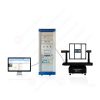
High Precision Rotation Luminaire Goniophotometer
LSG-1890B
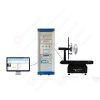
High Precision Rotation Luminaire Goniospectroradiometer
LSG-1890BCCD

Goniophotometer for Automotive and Signal Lamps
LSG-1950
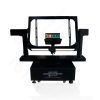
Goniophotometer for Traffic Signal Lamps (Economical Model)
LSG-1950S
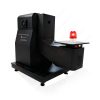
VAD Fire Alarm Visual Alert Device Goniophotometer
LSG-1930
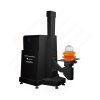
Goniophotometer for Airfield Lighting
LSG-1940
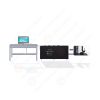
Compact Goniophotometer
LSG-1200A
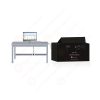
LED Goniophotometer
LSG-1100
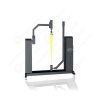
Near Field Moving Detector Goniophotometer
LSG-1900B
 LEDs and Luminaire Test Solutions
 LM-79 and LM-80 Test Solutions
 LED Driver Test Solutions
 Household Appliances Test Solutions
 Mobile and Network Test Solutions
 Automotive Electronics Test Solutions
 Audio-Video and IT Test Solutions
 Cable and Wire Test Solutions
 Plugs and Sockets Test Solutions
 Power Switch Test Solutions
 Transformer Test Solutions
 Electric Toys Test Solutions
 Energy Meter Test Solutions
 Motor-Operated Tool Test Solutions
Select an organization
to browse standards
Waterproofing is a critical design consideration to current electronic and mechanical designers that consider using their products in wet or outdoor environments. Consumer electronics, industrial controllers, LED outdoor systems, smart sensors, tracking accessories, power units as well as medical electronics should be resistant to frequent exposure to moisture, rainfall, humidity variability, pressure-based immersion and splashes without breaking down. Water resistant test confirms the integrity of sealing by modeling under real conditions in the controlled laboratory conditions. Regardless of whether enclosure compression is based upon gasket compression, ultrasonic welding, O-ring sealing, adhesive bonding or formed polymer barriers, leakage path measurements and leakage path identification of early signs of sealing fatigue occur prior to the irreversible.
The majority of the sealing failures cannot be spotted instantly. The diffusion of moisture usually starts at the microscopic pores surrounding screws, cable entry points, vent membranes and connector interfaces. When left undetected, moisture gradually gets to internal circuitry where corrosion starts to create permanent electrical decomposition. Regulated waterproof testing enables LISUN to identify vulnerabilities prior to rolling out of the products.
Water-based evaluation is not only intended to put samples in a liquid environment; however, it is intended to simulate conditions of stress that products normally experience during their conventional lifetime. In the installations that are outdoors there are forces of splashed rain and flow penetration through seams due to gravity, differentiation in cycling temperatures, slowness of diffusion through weak seals. These influences are replicated in a water resistant test using the directional flow, pressurized depth and sustained exposure times instead of just wetting the surface.
IPX8 waterproof products are subjected to constant submersion test to confirm that the internal chambers are dry. Whereas splash-resistant are subjected to few periods of exposure, IPX8 products endure longer exposures at stipulated depths.

Professional laboratory facilities design tests in three levels preliminary exposure, endurance exposure and post-exposure inspection. During preliminary exposure, a preliminary wetting of the sample on its surface is carried out in order to display prominent weak sealing areas.
When endurance exposure is induced, pressure rises and time values rise tremendously. At increased exposure period cycles exposure cycles causes seals to compress differently as a result of material elasticity. There are gaskets that swell and close thus and there are those gaskets that contract during extended wetness.
After exposure testing is used to check the presence of droplets in internal contact pads, PCB traces and metallic housing, battery terminals or optical windows. In more advanced verification procedures electrical continuity measurements are conducted as soon as the part is immersed and kept wet to code some actual user scenarios.
The tests are immersion tests where submersion is simulated in water tanks with temperature-regulated water which is not allowed to expand and leak. Sealing materials are subjected to compressive forces inwards when pressure rises. Dept in outdoor setting, hydrostatic pressure changes with depth, but not surface area. The IPX8 waterproof is attributed to this hydrostatic pressure that attributes depth and time. The values of endurance may range between half an hour and several hours.
The immersion technique discloses sealing the weak spots of button actuators, glass windows, charging and jointed covers. Air pockets created in adhesives are many of the causes of enclosure failures. Trapped pockets when immersed compress disproportionately and lead to the creation of micro-channels through which intrusion of water can occur.
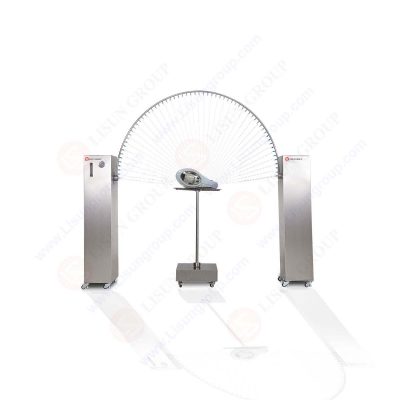
Directional flow is important as objects do not have homogenous water pooling. Rainfall and water splashes strike surfaces at angle that vary depending on the place of installation. As an example, one may have public access charging boxes, mounted upright with their trajectories facing downwards. Exterior lights under the eaves have face splash pressure as a result of surface deflection.
Directional exposure is also implemented in water resistant test procedures through administration of angled nozzles. This confirms resistance to flow based on momentum, and not just pressure soaking. According to equipment type, the flow rates, nozzle distances and pressures of impact vary.
Temperature is also a direct factor since seals swell or shrink in association with environmental change. When a machine has hot internal electronics and then all at once there is a drop in internal pressure as the machine is exposed to cold water. Surrounding water, in turn, tries to fill bullets made during contraction. This effect is modeled by the test, which pre-heats devices.
Cooling devices are also used to test condensation within enclosures when they are kept in humid air. Hydraulic condensation takes place along inner boundaries and opens vents. Waterproof check does not just stop at the immersion, but expands to dynamic parameter of temperature cycling.
Table: Representative values used in common waterproofing test cycles
| Test Method | Typical Conditions | Typical Purpose |
| Static tank immersion | 1–3 meters depth for 30–120 min | IPX8 waterproof validation |
| Splash simulation | Pressurized jet, 0.5–1.0 m distance | Outdoor enclosure sealing evaluation |
| Heated pre-conditioning | +45°C internal stabilization | Thermal contraction sealing test |
| Cold soak after wetting | 5–10°C exposure | Condensation-based leakage assessment |
In low-voltage electronics used outdoors like charging poles, safety beacons, sensor transmitters, roadside connectivity boxes and solar-powered nodes, environmental sealing is of great importance. Humidity at data ports or RF circuits results in change in structural impedance and unforeseen resets. Condensed metal oxidizes quickly into small metallic spots. Waterproof analysis allows data-communication to stay stable during the course of life.
Already, batteries locked in small compartments produce heat thus enhancing the creation of vapor. In case condensation continues in the pack, a terminal corrosion is confused. Thus, post-test conductivity measurements taken at once allow to ascertain battery-terminal lifetime reliability.
Customers are seeking smaller, portable types of electronics that have very long-life cycles and can be used in the beach, dropped in water or even used during the rain with ease. Smart watches, wireless earbud charging cases, handheld barcode devices and wearable controllers are fully immersion tested.
Although those devices incorporate miniature interfaces of sealing, their surfaces are more pressure sensitive. In the case of pressure equalization vents failure, unforeseen immersion causes irreparable failure. Venting system weaknesses are accurately detected by pre-conditioning the device at high temperatures and loading them as soon as possible.
Others have hydrophobic vent membrane that will permit air to pass but prevent the entry of liquid. Water resistant test programs indicate the integrity of membranes upon the completion of bending loads, vibration or repeated opening of hinged covers.
Waterproof testing of industrial assemblies is not done at the level of a small squirt of water but rather with intense use of great volumes of water pooling around the enclosures. Silicone gasketing systems, multi-layered O-ring systems or compression-sealed housings are heavy sealing structures that seem very strong at first, but exhibit a change in performance over time. Constant compression lowers elasticity of gasket surfaces particularly when subjected to heat cycles.
Gasket fatigue is exposed in water soaking over long period. Based on the test results, manufactures redesign groove depth, torque pressure, seal hardness rating or mounting plates thickness. When the housings of plastics distend under the influences of the chemical absorption of the water, dimensional variations distort the alignment of the gaskets and the water starts escaping through the side portions.
An organized water resistant test will not imply but certify scientifically sealing performance. Real-life exposure entails directional exposure, long periods of exposure, temperature, pressure induced deformation and leakage caused by condensation. It is only in the laboratory-controlled simulation that the weaknesses are manifested which would be realized too late when the field is operational.
Immersion testing becomes a continuity endurance test as opposed to a surface-wetting test when product developers are interested in IPX8 waterproof certification. With a combination of the exposure to the static tank, directional stream analysis, heat-shock preconditioning and subsequent inspection diagnostics, the waterproof study tends to be an engineering check but no longer a formality of compliance.
Using a precise reconstruction of environmental stresses, waterproof testing provides long-term reliable operation, corrosion protection of electronics, greater consumer safety and prevents water-induced field failures that usually manifest themselves following operation.
Lisun Instruments Limited was found by LISUN GROUP in 2003. LISUN quality system has been strictly certified by ISO9001:2015. As a CIE Membership, LISUN products are designed based on CIE, IEC and other international or national standards. All products passed CE certificate and authenticated by the third party lab.
Our main products are Goniophotometer, Integrating Sphere, Spectroradiometer, Surge Generator, ESD Simulator Guns, EMI Receiver, EMC Test Equipment, Electrical Safety Tester, Environmental Chamber, Temperature Chamber, Climate Chamber, Thermal Chamber, Salt Spray Test, Dust Test Chamber, Waterproof Test, RoHS Test (EDXRF), Glow Wire Test and Needle Flame Test.
Please feel free to contact us if you need any support.
Tech Dep: Service@Lisungroup.com, Cell/WhatsApp:+8615317907381
Sales Dep: Sales@Lisungroup.com, Cell/WhatsApp:+8618117273997
Your email address will not be published. Required fields are marked *

 English
 中文简体
中文简体 English
 Русский
 Español
 Português
 Türkçe
 العربية
 Deutsch
 Polski
 Italiano
 Français
 한국어
한국어 ไทย
ไทย Tiếng Việt
 日本語
日本語