LM-79 Moving Detector Goniophotometer (Mirror Type C)
LSG-6000
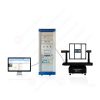
High Precision Rotation Luminaire Goniophotometer
LSG-1890B
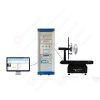
High Precision Rotation Luminaire Goniospectroradiometer
LSG-1890BCCD

Goniophotometer for Automotive and Signal Lamps
LSG-1950
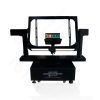
Goniophotometer for Traffic Signal Lamps (Economical Model)
LSG-1950S
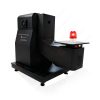
VAD Fire Alarm Visual Alert Device Goniophotometer
LSG-1930
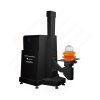
Goniophotometer for Airfield Lighting
LSG-1940
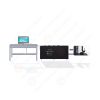
Compact Goniophotometer
LSG-1200A
LED Goniophotometer
LSG-1100
Near Field Moving Detector Goniophotometer
LSG-1900B
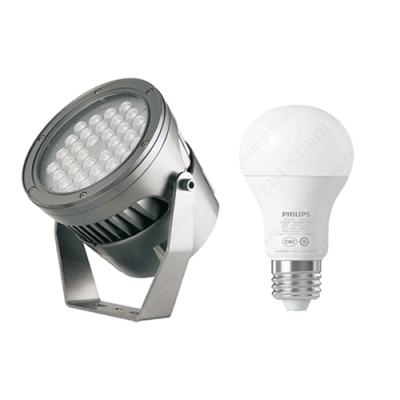 LEDs and Luminaire Test Solutions
 LM-79 and LM-80 Test Solutions
 LED Driver Test Solutions
 Household Appliances Test Solutions
 Mobile and Network Test Solutions
 Automotive Electronics Test Solutions
 Audio-Video and IT Test Solutions
 Cable and Wire Test Solutions
 Plugs and Sockets Test Solutions
 Power Switch Test Solutions
 Transformer Test Solutions
 Electric Toys Test Solutions
 Energy Meter Test Solutions
 Motor-Operated Tool Test Solutions
Select an organization
to browse standards
One of the most expensive and disruptive faults that have occurred in electrical systems is the insulation failure. Regardless of the application and the utility transformers, switchgear assemblies, rotating motors, GIS panels, surge arrestors or distribution relays, irrespective whether the dielectric systems have failed, this is reporting directly to extended outages, fire hazards, damaged equipment and non-compliance with regulations. Impulse voltage tester is still central in pre-qualification tests, field tests and production-line tests of reliability. It enables engineers to know the response of dielectrics to sudden events of high voltages instead of at steady-state stress. This difference is essential since insulation normally fails at various levels whereby energy is induced via rapid transients.
Surge event is not similar to continuous AC or DC overvoltage. Switching surges, lightning impulses, start sequences with motors, inductive load disconnections, or high-frequency resonance spikes are often the causes of real-world failures.
Controlled impulse injection does not aim at simply causing break down but to monitor the wave propagation, aging behavior of insulations, timing of charge build up and delay between the start of discharge and failure. Numerous insulation systems act differently when the voltage increases rapidly in the range of microseconds. Electric stress concentration takes place in the weak points of the dielectric layers that is not revealed under slow ramping test.
Epoxy filled transformer windings, oil-paper structures, and cross-linked polymer systems undergo a build-up of electric field distortion during cases of surge events due to high-voltage insulating composites. This distortion propagates on layers and interfaces. In the event of manufacturing errors, i.e. voids, moisture, microcracks, lack of resin bond or uneven thickness, the weaknesses can be detected instantly by measuring the impulse transient.
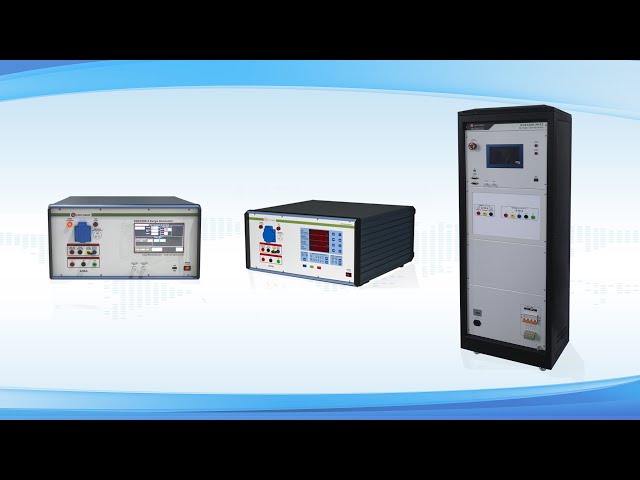
A normal impulse voltage signal is a short-rise time exponential decay signal. Industry specifications use terminology such as in 1.2/50 us or 8/20 us to specify wave shapes in terms of front time and tail time. In the case with an impulse voltage tester, insulation stress is characterized by the slope of the waveform when it is impacted by the impulse voltage tester.
Steep rise fronts represent lightning caused surges which pass over the transmission systems. Moderate slopes are transfers of switching surges between capacitor bank energization, substation load transfers or line reclosures. Replication of the waveform characteristics in reality is used to match the reproducibility of electrical events in the surge generator.
Section of an impulse system that releases is extremely engineered since energy shall be provided regularly and without distortion. The surge generator causes the storage charge to be emitted by series resistors which are calibrated and shaping elements to ensure waveform integrity. Minor variation in resistance changes the rise times and the decay constants, which varies the behavior of insulation stress.
Testing of power equipment insulation is done with a number of pulses instead of single-shot. Aging is observed when one witnesses deterioration in repetitive impulses. There are that equipment that can withstand the primary pulses but later develop a dielectric fatigue. Patterns of voltage withstand; discharge noise and partial discharge inception values are recorded by engineers and which point to the long-term probability of breakdown.
The positive and negative polarity impulses have to be considered. The majority of positive polarity tend to stress the insulation interfaces on the surfaces whereas the negative polarity concentrates electric field on the periphery of conductors. The use of modern impulse platforms provides the polarity of the output to be switched with ease without physical rewiring to maintain safety and precision. LISUN provides the best impulse voltage tester.
In the evaluation, the engineers use gradual increases in the magnitude of voltages. A sequence is normally initiated at lower levels and moves upwards. Multiple level increments are not aimed at confirmation of endurance over simple confirmation.
Certain equipment is partially internally discharged below complete breakdown. In the case of partial discharge inception voltage being much less than design values, insulation fatigue will occur probable under operating stress. The positive effect of controlled increase in impulse is that temporary effects display this phenomenon sooner than slow use of AC.
Impulse test does not necessarily ruin the insulation. Rated values will be in safe ranges, where in the normal range – instead of causing apparent damage, internal aging is just proved by the test. Non-destructive tests enable manufacturers of goods to pass the production samples prior to the shipment.
The intention during destructive evaluation changes to research of material innovation. The information of the breakdown point assists the engineers to compare their formulations or to predict accelerated aging.
Controlled breakdown process enables the engineers to determine the location of the failure mechanisms: edge discharge, bulk dielectric puncture, turn-to-turn insulation failure or surface tracking along contamination layers.
In modern systems, charge transfer counters, break-even monitoring units, and oscilloscope measurements are incorporated in the system. Assistance evaluation is no longer held on voltage threshold. The engineers analyze temporary distortion of the waveforms, waveform residue, pattern of ringing and failure time.
With advanced insulations micro-seconds before complete breakdown internal partial discharge takes place. Early detection at this time gives prospective information. A high-repeat surge generator has the potential to disclose the accuracy of repeat discharge, which then allows classification of defects to be categorized.
A grounded assessment of insulation encompasses temperature and moisture effect. Polymeric insulation when subjected to high temperatures have lower dielectric strength. In oil based systems, the voltage dependent shift in dissolved moisture is drastic due to the change in the speed of breakdown propagation by water.
When impulse voltage tester is applied together with environmental conditioning chambers or oil dehydration cycles, operational stress is simulated better. When engineers load-test an engine with impulses at higher winding temperature conditions it is equivalent to continuous load duty.
The windings of the transformer must be examined by impulse to ensure that there is an insulating layer between copper turns and the structure of the core. In like manner, repeated energy bursts need to be absorbed by surge arresters, without interfering with insulation spacing. Dielectric gap resistance in vacuum breaker contacts has to be justified at impulse energy.
Surge assessment of large rotating machines is done on a phase-by-phase basis. Propagation delay exposes tolerances to manufacturing (involving asymmetry), suffusion of coils, or a lack of compression of insulation on slots.
Insulation responds during an impulse which shows both mechanical and chemical health. Healthy insulation stops the propagation of corona immediately but aged insulation releases repeating corona pulses and subsequently fails.
Experts evaluate:
• Wavefront distortion
• Sudden step amplitude drops
• Rise-slope variation
• Post-discharge ring decay
Targeting is still focused on predictive maintenance and not on emergency maintenance. When early signs on the dielectric decay are evident, either equipment is serviced or resin applied again, or internal part is vacuum-treated.
The surge generator is incorporated into end of line quality on production floors. Manufacturers do impulse withstand tests at reduced levels instead of conducting those tests randomly on a sample of units to be destructively tested. This provides consistency of components.
As the quantity of production goes up, the reference of waveforms is stored away by engineers. In the future, when things fail in the field, history traces allow to trace priorities as to whether insulating problems started in the design or in the field.
Impulse withstand capability of equipment is categorized as mandatory rating according to electrical safety regulations. The test automatically produces series of reports in the certification laboratories. Such reports are then attached to exported equipment. It is needed to be certified by many global markets before installation to grid level systems.
By fulfilling these compliance standards, these products finding their way into the industrial sectors where impulse stress is inescapable is guaranteed.
Controlled impulse voltage tester is still one of the most useful devices that ensure the insulation reliability of electrical power equipment. The engineers extract useful reliability information by modeling the real conditions of the surge by accurately shaping the waveform, polarity switching, repetitive instillation on schedule, and detection of a controlled breakdown. An advanced surge generator coupled with the support of auxiliary diagnostics and the environmental influence control ensures predictive form of trouncing instead of reactive troubleshooting. This guarantees reliable operation of transformers, switchgear, rotating machines, arresters and cable systems over life cycles avoiding disastrous breakdown and minimizing downtime cost of maintenance.
Lisun Instruments Limited was found by LISUN GROUP in 2003. LISUN quality system has been strictly certified by ISO9001:2015. As a CIE Membership, LISUN products are designed based on CIE, IEC and other international or national standards. All products passed CE certificate and authenticated by the third party lab.
Our main products are Goniophotometer, Integrating Sphere, Spectroradiometer, Surge Generator, ESD Simulator Guns, EMI Receiver, EMC Test Equipment, Electrical Safety Tester, Environmental Chamber, Temperature Chamber, Climate Chamber, Thermal Chamber, Salt Spray Test, Dust Test Chamber, Waterproof Test, RoHS Test (EDXRF), Glow Wire Test and Needle Flame Test.
Please feel free to contact us if you need any support.
Tech Dep: Service@Lisungroup.com, Cell/WhatsApp:+8615317907381
Sales Dep: Sales@Lisungroup.com, Cell/WhatsApp:+8618117273997
Your email address will not be published. Required fields are marked *

 English
 中文简体
中文简体 English
 Русский
 Español
 Português
 Türkçe
 العربية
 Deutsch
 Polski
 Italiano
 Français
 한국어
한국어 ไทย
ไทย Tiếng Việt
 日本語
日本語