LM-79 Moving Detector Goniophotometer (Mirror Type C)
LSG-6000
High Precision Rotation Luminaire Goniophotometer
LSG-1890B
High Precision Rotation Luminaire Goniospectroradiometer
LSG-1890BCCD

Goniophotometer for Automotive and Signal Lamps
LSG-1950
Goniophotometer for Traffic Signal Lamps (Economical Model)
LSG-1950S
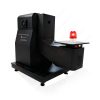
VAD Fire Alarm Visual Alert Device Goniophotometer
LSG-1930
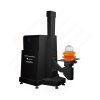
Goniophotometer for Airfield Lighting
LSG-1940
Compact Goniophotometer
LSG-1200A
LED Goniophotometer
LSG-1100
Near Field Moving Detector Goniophotometer
LSG-1900B
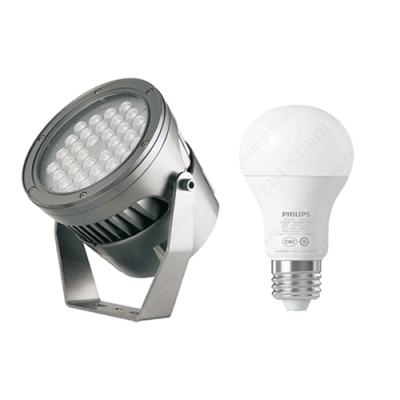 LEDs and Luminaire Test Solutions
 LM-79 and LM-80 Test Solutions
 LED Driver Test Solutions
 Household Appliances Test Solutions
 Mobile and Network Test Solutions
 Automotive Electronics Test Solutions
 Audio-Video and IT Test Solutions
 Cable and Wire Test Solutions
 Plugs and Sockets Test Solutions
 Power Switch Test Solutions
 Transformer Test Solutions
 Electric Toys Test Solutions
 Energy Meter Test Solutions
 Motor-Operated Tool Test Solutions
Select an organization
to browse standards
Abstract
How to Perform the Salt Spray Test? This is a core technical question in evaluating the corrosion resistance of metallic materials, coatings, electronic components, and various industrial products. The salt spray test is a standardized test method that uses a sodium chloride solution to simulate marine or salt-laden atmospheric environments, accelerating corrosion to assess a product’s long-term durability. This article systematically explains the fundamental principles of salt spray testing, its main types (e.g., Neutral Salt Spray – NSS, Acetic Acid Salt Spray – ASS, Copper-Accelerated Acetic Acid Salt Spray – CASS), and the key international and domestic standards they follow (such as GB/T 10125, IEC 60068-2-11). The article focuses on the technological evolution from traditional single-factor salt spray tests to more realistic Composite Salt Spray Testing (Cyclic Corrosion Testing) and provides an in-depth introduction on how to scientifically and efficiently perform corrosion resistance verification under complex conditions using a Composite Salt Spray Test Machine that integrates multiple functions like salt spray, humidity, drying, and standard climate simulation (e.g., the LISUN YWX/Q-*X series). This serves as comprehensive technical guidance for product R&D, quality control, and compliance certification.
Introduction
Corrosion is a major factor leading to the failure of metallic materials, degradation of product functionality, and aesthetic damage, particularly in coastal areas, industrial zones, or specific application environments like automotive underbodies and outdoor facilities. To rapidly predict a product’s corrosion behavior over months or even years of real-world exposure within a controlled laboratory setting, the Salt Spray Test was developed and has become a fundamental and critical reliability testing method. However, traditional continuous spray tests (like NSS), while providing consistent accelerated conditions, often struggle to fully simulate the real-world corrosion scenarios involving alternating dry/wet cycles and temperature/humidity fluctuations. Consequently, Composite Salt Spray Testing, which simulates alternating environments such as “salt spray – humidity – drying – ambient storage,” and the corresponding Composite Salt Spray Test Machine are increasingly becoming the preferred solution for corrosion assessment in high-demand industries like automotive, military, and aerospace. This article will systematically answer how to perform the salt spray test and demonstrate the capabilities of modern comprehensive environmental simulation technology.
1. Fundamental Principles and Main Types of Salt Spray Tests
The core of the Salt Spray Test involves atomizing a salt solution containing (5±1%) sodium chloride with compressed air to form a uniformly dispersed salt mist environment within a sealed test chamber, exposing specimens to it. The corrosion process is accelerated by controlling chamber temperature (typically 35°C), salt settlement rate (1~2ml/80cm²·h), and test duration.
Main Test Types:
• Neutral Salt Spray Test (NSS): Based on standards like GB/T 2423.17, IEC 60068-2-11, ASTM B117. It uses a pH-neutral (6.5~7.2) sodium chloride solution and is the most basic and widely applied test method.
• Acetic Acid Salt Spray Test (ASS): Based on standards like ISO 3769. Acetic acid is added to the salt solution to adjust the pH to an acidic range of 3.1~3.3. Corrosion proceeds faster than in NSS and is often used to simulate industrial pollution environments or accelerate testing of decorative coatings.
• Copper-Accelerated Acetic Acid Salt Spray Test (CASS): Based on adding copper chloride to the ASS solution, maintaining pH at 3.1~3.3 but with even stronger corrosivity, greatly accelerating the test process. It is commonly used for rapid quality inspection of nickel-chromium or copper-nickel-chromium electroplated layers.
2. From Single-Factor to Composite: The Technological Evolution of Cyclic Corrosion Testing
Traditional single-constant condition salt spray tests (e.g., NSS for 96h) are often questioned for their correlation with real environments due to significant differences. Composite Salt Spray Testing, or Cyclic Corrosion Testing, involves programming to cycle through multiple environmental phases—such as salt spray, high humidity, low-humidity drying, and ambient storage—in a specific sequence and duration.
Technical Advantages: This “dry-wet alternation” cycle better simulates real-world periodic corrosion caused by daily drying, nightly condensation, or exposure to rain and de-icing salts. It not only assesses uniform corrosion but also more effectively triggers localized corrosion forms like crevice corrosion and galvanic corrosion, significantly improving the correlation between test results and actual outdoor exposure.
Representative Standards: IEC 60068-2-52, GB/T 2423.18, and automotive industry standards like VDA 233-102, GMW 14872, and PV 1210 are typical cyclic corrosion test standards, each specifying particular environmental cycle profiles.
3. Standardized Operating Procedures and Key Control Points for Performing Salt Spray Tests
To properly perform the salt spray test, whether traditional or composite, a rigorous process must be followed with strict control over key parameters.
• Specimen Preparation: Specimens must be clean, dry, and cut edges protected if necessary. Record the initial state (photography, weighing, etc.). Specimens are typically placed at a 15°-30° angle to prevent direct droplet accumulation and ensure free mist settlement.
• Solution Preparation and Equipment Calibration: Prepare the salt solution using distilled or deionized water and analytical grade sodium chloride per standard requirements, adjusting the pH. Before testing, the Salt Spray Test Machine’s temperature, saturation tower temperature, and salt settlement rate must be calibrated to ensure they are within specified limits.
• Test Condition Setting and Operation:
For Single-Factor Tests: Set chamber temperature (e.g., 35°C), saturation tower temperature (e.g., 47°C), spray mode (continuous/intermittent), and total test duration.
For Composite Tests: Program the complete cyclic profile into the controller of the Composite Salt Spray Test Machine. For example: “Salt spray for 2 hours (35°C) → Humidity storage for 4 hours (60°C, 95%RH) → Drying for 2 hours (50°C, 30%RH) → Ambient storage…” The number of cycles is determined by the standard or agreement.
• Process Monitoring and Recording: Regularly check equipment operation status and record parameters like temperature and humidity. Tests should not be interrupted without cause.
• Post-Test Handling and Evaluation: Upon test completion, carefully remove specimens, gently rinse under running cold water to remove surface salt deposits, and then dry. Evaluate the corrosion rating according to the standard or product specification. Common methods include visual inspection (rust spots, blistering, peeling), weight loss after corrosion product removal, percentage of corroded area, and corrosion creep from a scribe line.
4. The Composite Salt Spray Test Machine: The Core Equipment for Complex Environmental Simulation
To accurately execute the aforementioned composite cyclic tests, a high-performance Composite Salt Spray Test Machine is indispensable. The LISUN YWX/Q-*X series is designed precisely for such advanced requirements.
This equipment transcends the single function of traditional salt spray chambers by integrating a precise salt spray generation system, a temperature/humidity control system, a dry air blast system, and a standard climate simulation function. Its core capability lies in using a Programmable Logic Controller (PLC) to combine different climatic conditions—”spray,” “humidity,” “dry,” “storage”—in any sequence and duration, enabling seamless transitions within a single chamber to accurately recreate complex natural or accelerated corrosion environments.
| Parameter Item / LISUN Model | YWX/Q-250X | YWX/Q-750X | YWX/Q-010X | YWX/Q-016X | YWX/Q-020X |
|---|---|---|---|---|---|
| Working Chamber Dimensions (WDH, mm) | 900*600*500 | 1100*750*500 | 1200*800*500 | 1600*1000*600 | 2000*1000*600 |
| Test Chamber Volume (L) | 270 | 412 | 480 | 960 | 1200 |
| Available Sample Space (mm) | 700*450*250 | 900*600*300 | 1000*600*300 | 1400*800*350 | 1800*800*350 |
| Temperature Range | Chamber: 15°C~65°C; Saturation Tower: RT~70°C | ||||
| Relative Humidity Range | 30%~98%RH (±3%) | ||||
| Salt Settlement Rate | 1-2 ml/80cm²·h (Adjustable) | ||||
| Testing Modes | Programmable Spray, Humidity, Drying, Standard Climate (Arbitrary combination and cycling of multi-condition profiles) | ||||
| Chamber Construction | Imported corrosion-resistant PP sheet, integral molding, no seams, leak-proof, long lifespan | ||||
| Typical Application Scenarios | Small components, electronic parts | Medium-small modules, assemblies | Automotive electronics, lighting fixtures | Large automotive parts, instrument panels | Vehicle components, large structural parts |
5. Application Fields and Standard Compliance
Due to their powerful simulation capabilities, Composite Salt Spray Test Machines have become core equipment in multiple high-end manufacturing and testing sectors:
• Automotive Industry: Meeting cyclic corrosion standards from OEMs like Volkswagen (PV 1210), General Motors (GMW 14872), and Ford, for testing bodies, chassis, lights, sensors, etc.
• Military and Aerospace: Verifying equipment adaptability in harsh environments according to standards like GJB 150.11A.
• Electrical and Electronics: Testing the protective performance of outdoor cabinets, photovoltaic equipment, and communication base stations per IEC 60068-2-52.
• Coatings and Surface Treatment: Accurately evaluating the corrosion resistance of platings and paints per ISO 9227, ASTM B368, etc.
Conclusion
How to Perform the Salt Spray Test? The answer has evolved from a simple, constant spray test to a comprehensive evaluation based on real-world environmental profiles involving the alternating action of multiple factors. Understanding the principles and scopes of different test types (NSS, ASS, CASS) and mastering the complete process from specimen preparation and condition control to result evaluation is fundamental to obtaining valid data. Facing increasingly stringent product reliability requirements, employing a Composite Salt Spray Test Machine like the LISUN YWX/Q-*X series enables one-stop, programmable simulation of complex environments, greatly enhancing the correlation between corrosion tests and actual service conditions. This provides a powerful and scientific tool for corrosion-resistant product design and quality verification. Correctly performing the Salt Spray Test, especially advanced Composite Salt Spray Testing, is a critical technical step in enhancing product competitiveness and winning market trust.
Your email address will not be published. Required fields are marked *

 English
 中文简体
中文简体 English
 Русский
 Español
 Português
 Türkçe
 العربية
 Deutsch
 Polski
 Italiano
 Français
 한국어
한국어 ไทย
ไทย Tiếng Việt
 日本語
日本語