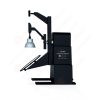
LM-79 Moving Detector Goniophotometer (Mirror Type C)
LSG-6000
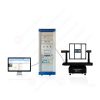
High Precision Rotation Luminaire Goniophotometer
LSG-1890B
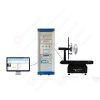
High Precision Rotation Luminaire Goniospectroradiometer
LSG-1890BCCD

Goniophotometer for Automotive and Signal Lamps
LSG-1950
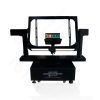
Goniophotometer for Traffic Signal Lamps (Economical Model)
LSG-1950S
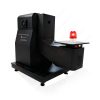
VAD Fire Alarm Visual Alert Device Goniophotometer
LSG-1930
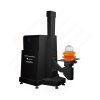
Goniophotometer for Airfield Lighting
LSG-1940
Compact Goniophotometer
LSG-1200A
LED Goniophotometer
LSG-1100
Near Field Moving Detector Goniophotometer
LSG-1900B
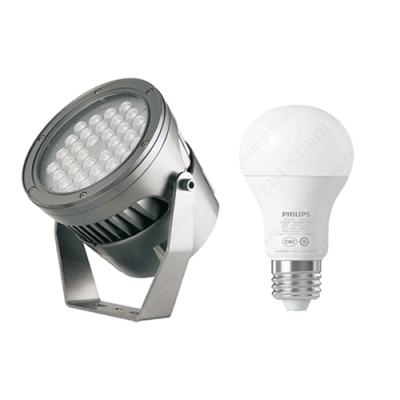 LEDs and Luminaire Test Solutions
 LM-79 and LM-80 Test Solutions
 LED Driver Test Solutions
 Household Appliances Test Solutions
 Mobile and Network Test Solutions
 Automotive Electronics Test Solutions
 Audio-Video and IT Test Solutions
 Cable and Wire Test Solutions
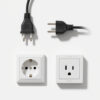 Plugs and Sockets Test Solutions
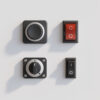 Power Switch Test Solutions
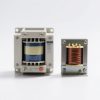 Transformer Test Solutions
 Electric Toys Test Solutions
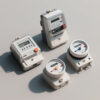 Energy Meter Test Solutions
 Motor-Operated Tool Test Solutions
Select an organization
to browse standards
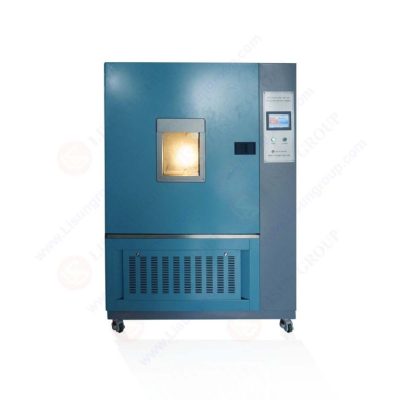
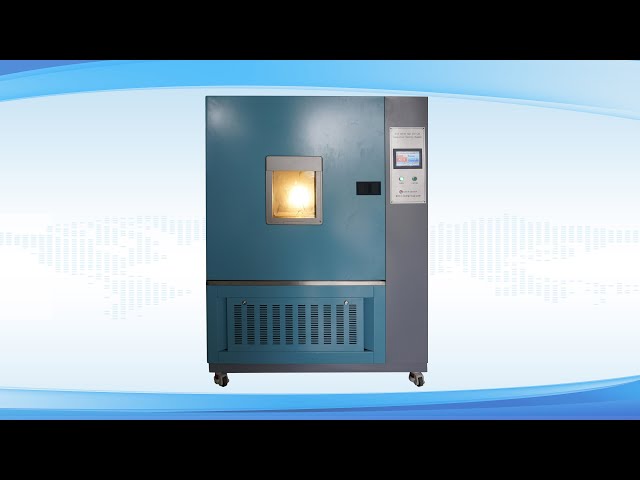
A humidity test chamber is one of the foundations of stability testing in which moisture-induced degradation is a believable risk. Water vapor undergoes interactions on its level of molecules and interface. It modifies the structure of polymers enhances corrosion speeds up, minimizes the level of insulation and changes mechanical properties during service. Stability programs are thus based on controlled exposure of humidity to determine stability changes of products to the long term or cyclic stress of moisture. Its aim is not just to witness failure but to comprehend rate mechanism limits and recovery pattern because engineers may establish margins and control.
The performance of moisture sensitivity varies with the industry. Electronics encounter leakage and corrosion and package delamination. Drugs and medical equipment face hydrolysis and permeability. Underfilm corrosion and loss of adhesion occur in coated metals. A humidity test chamber gives the repeatability atmosphere that is necessitated to make comparisons of materials designs and process variants subject to the same stress histories.
Humidity predictive value process requires fidelity of control. Relative humidity is dependent on temperature due to which humidity control should also be synchronized with thermal control in order to have a fixed dew point. In modern chambers, humidity is controlled by closed loop control (chilled mirror sensors and capacitive sensors), proportional dehumidification of the chamber, and proportional humidification. The stability is important since even small deviations will alter equilibrium in muscle water uptake.
Consistency throughout the entire usable volume is as important as is setpoint accuracy. The airflow design must be made uniform and without creating localized drying or condensation. Mapping exercises confirm that specimens go through conditions that are similar at any position. The main risk is long duration stability tests which drift away after a week or month. Control needs to be maintained by Chambers without vibrating or slow bias.
Another factor that affects test design is capacity and responsiveness. Fast switches facilitate the cyclic profiles that investigate the behavior at absorption and desorption. Deliberate slower ramps might be a better choice with respect to steady state equilibration. In many laboratories, large walk in systems are made to be complemented with a benchtop environmental chamber that can be used in focusing developmental work where fast turn around and limited cost of operation can be vital. The benchtop units allow parallel screening but they leave the bigger chambers to be used in qualification campaigns.
The profile design converts the product inquiries into the environmental stress. The naked diffusion caused by constant exposure to humidity at high temperature and long term drift are revealed. The cyclic humidity switches between high and the average value to stress interfaces by swelling and shrinkage. A temperature humidity profile in combination reveals interactions in which moisture effect increases with heat.
Dew point control is required. Condensation may add liquid water and lead to non-representative failure modes which are not pre-emptively needed without specific requests. Before dwell timing commences procedures should describe the state of condensation and the definition of stabilization. When electronics moisture sensitivity testing is being conducted, an evaluation with stepped humidity levels is typically applied to determine the cutoff points at which leakage or delamination starts to occur.
Duration choice is to present activation of the mechanisms as opposed to hours that are arbitrary. The early time behavior can demonstrate rapid pick up and early degradation and the longer exposure demonstrates saturation effects. Trend analysis and model fitting is supported with sampling at specified intervals.
Set the baseline, preparation of the specimen. Elements are supposed to reflect the condition of production such as coating seals and packaging. Drying preconditions the known moist state. The baseline measures like mass electrical parameters or adhesion are made available as benchmarks of comparison.
It is affected by mounting and orientation in the movement of moisture. Lighting should be non-toxic and not clogging up airways. The effect of orientation on the behavior of condensates and interfaces exposure. Comparability is important due to consistency across specimens.
The latent problems are usually to be detected through operational bias during exposure. Operating electronics when stressed by humidity increases leakage and electrochemical migration. Mechanical assemblies may have their applied load see interaction with moisture to encourage creep. Achieving integrity of the chambers in terms of feedthroughs and cable routing should not result in accidental heat or moisture sinks. Causal inference is enhanced through matching of functional observation and environmental records.
Humidity tests result in rich datasets which have to be interpreted in a disciplined manner. Accelerated exposure cannot be considered to be directly proportional to service life unless validated models are present. Rather findings point to relative strength and prevailing mechanisms. Searching should be done to identify qualitative trends like humidity thresholds at the beginning of drying and recovery after stress elimination.
Quantitative measures enhance rigor. Mass change monitors uptake of moisture. Electrical impact is measured by insulating resistance and leakage current. Corrosion blistering or delamination is seen by visual inspection and microscopy. Laws of combination At the general design level, combining measures endorses unambiguous decisions.
Credibility is based on the integrity of data. The timestamps of a continuous logging of temperature humidity and dew point, which can be compared with the behavior of the specimen. Alarms safeguard the validity in the event of parameter drifts. Re analysis is possible since raw data is stored and then analyzed when criteria change. Audit is preparedness supported by documenting calibration and mapping.
The choice of a humidity test chamber is a resourceful choice. Uniformity of programmability of performance of control and service support are as important as range. Chambers needs to be incorporated with information gathering mechanisms and encouraged to accept standardized reporting. Senor calibration accessing and maintenance allow less downtime and maintain accuracy.
Application-suppliers have the capability of speeding up method development. An example LISUN has humidity and environmental chambers and control features and accessories that are configured to aid stability testing processes between benchtop screening through to qualification. A match of chamber capability to test intent prevents unnecessary specifications and yet maintains relevance.
Procedures and training is required in long term operation. Seals humidifiers and sensors are inspected regularly to ensure that performance is maintained. Good loading and layout are guaranteed by operator discipline. Environmental stability is ensured by periodic background checks.
A humidity test chamber allows tight stability test and moisture sensitivity test by providing controlled repeatable exposure to activate the response of the degradation mechanisms in question. Consistent and careful preparation and monitoring of specimens When carefully designed profiles will provide practical information about the behavior of materials and design margins. Throughout the enlargement of the systems, which are used together with a benchtop environmental chamber, can enhance throughput and flexibility. By careful control in accuracy measurements disciplined procedures and consistent equipment testing in terms of humidity the use of humidity in forecasting performance and enhancing durability becomes a decisive case.
Tags:GDJS-015BYour email address will not be published. Required fields are marked *

 English
 中文简体
中文简体 English
 Русский
 Español
 Português
 Türkçe
 العربية
 Deutsch
 Polski
 Italiano
 Français
 한국어
한국어 ไทย
ไทย Tiếng Việt
 日本語
日本語