LM-79 Moving Detector Goniophotometer (Mirror Type C)
LSG-6000
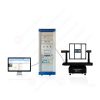
High Precision Rotation Luminaire Goniophotometer
LSG-1890B
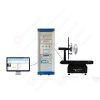
High Precision Rotation Luminaire Goniospectroradiometer
LSG-1890BCCD

Goniophotometer for Automotive and Signal Lamps
LSG-1950
Goniophotometer for Traffic Signal Lamps (Economical Model)
LSG-1950S
VAD Fire Alarm Visual Alert Device Goniophotometer
LSG-1930
Goniophotometer for Airfield Lighting
LSG-1940
Compact Goniophotometer
LSG-1200A
LED Goniophotometer
LSG-1100
Near Field Moving Detector Goniophotometer
LSG-1900B
 LEDs and Luminaire Test Solutions
 LM-79 and LM-80 Test Solutions
 LED Driver Test Solutions
 Household Appliances Test Solutions
 Mobile and Network Test Solutions
 Automotive Electronics Test Solutions
 Audio-Video and IT Test Solutions
 Cable and Wire Test Solutions
 Plugs and Sockets Test Solutions
 Power Switch Test Solutions
 Transformer Test Solutions
 Electric Toys Test Solutions
 Energy Meter Test Solutions
 Motor-Operated Tool Test Solutions
Select an organization
to browse standards
Modern products have to resist environment conditions up to soft rains and jets of high pressure as well as short-term immersion. It does not matter whether it is a household electronic, an industrial control panel, an outdoor sensor, a lighting module, or a communication device, waterproof reliability is critical to the performance and safety. An enclosure water spray test chamber is a controlled and reproducible environment that can be used to test the response of enclosures to water. This will enable the engineers to determine whether a design is up to the international requirements of IP standards and also internal quality requirements. Additionally, in numerous instances, manufacturers do more testing including IPX7 waterproof testing where it is sprayed temporarily, although spray testing is the basis of the learning on the weakness of enclosures.
A flotation tank shaped like a chamber is constructed in order to produce various forms of water exposure. These are light drizzle, direction jets, rotating nozzle jets, oscillating arms and the controlled patterns of flow arrangements. Chambers have consistent conditions unlike manual spraying, which is spotty and inaccurate to repeat. This makes sure that the results will be the same sample of a batch of products and also in different testing sites.
Electronic products are getting smaller, stronger and more common in the moist environments. Conventional cages which only used physical housings are inadequate. Seals, gaskets, adhesives, ventilation membranes, connectors should collaborate in order to exclude penetration of water. The failure of these components can result in corrosion of internal circuitry, oxidation of metal, weakening of insulation and malfunction of sensors.
Water ingress failures are some of the costly failures to manufacturers since they tend to manifest many months after sales. The engineers can replicate decades of exposure to the environment in a few hours through a water spray test chamber. This quick testing is needed to verify the design, early failures are avoided as well as assuring products are ready to enter markets where high IP certification is needed.
The water spray chamber consists of regulated nozzles, water pumps, pressure controllers, oscillating arms and turntables. It enables users to adjust parameters which include water pressure, spray angle, nozzle diameter, rotation velocity, duration of tests and distance between the nozzle and apparatus. The interior of the chamber is composed of anticorrosive metallic material and the water inlet is also filtered to avoid the clogging of the nozzle.
The chamber produces extremely reproducible spray patterns. Engineers may choose drizzle mode, directional spray mode, rotating arm spray or jet mode depending on target IP rating. For example:
• The rainfall is simulated by spraying light.
• Directional spray tests analyze chambers of the gasket.
• Jet spray tests represent imitation of cleaning.
• Hose pressure spray tests test the rigidity of enclosures.
Laboratories that apply professional systems by vendors such as LISUN enjoy the advantage of control digital panels, calibrated nozzles, automatic pressure control and accurate time systems which enhance repeatability.

To explain how the chamber can ensure a waterproof capability, one ought to be aware of its inner components and their works.
Spray nozzles
Nozzles dictate patterns of sprays, size of droplets and speed of water. IPX3 and IPX4 involve oscillating arms whereas greater levels of jet involve sheet nozzles or circular nozzles.
Water pressure control
The pressure should be very constant as slight variations influence the power of penetration. This is particularly essential in checking the higher levels of IP jets.
Flow meters
Flow meters provide real time monitoring of water consumption. Accurate flow determines total exposure.
Turntable
Flow meters give real time control of the water usage. Flow is accurate to ascertain total exposure.
Drainage system
Devices are mounted on a rotary that is slowly rotated so as to expose the devices at all angles.
Digital controller
Water is removed excessively to avoid formation of floods in the chamber.
All these elements make the test consistent and comply with the international standards.
One of the greatest benefits of a water spray test chamber is that it may reveal where design defects lie. Even the enclosures that seem to be tight up can leak under pressure in a micro. Spray testing assists in detecting:
• Weak gasket bonding
• Malfunctioning compression of sealing rings.
• Misaligned covers
• Loose screws or fasteners
• Connector leakage
• Vent membrane weaknesses
• Tolerances from manufacturing cracks.
• The lack of proper sealing of interface in multi part assemblies.
The engineers will be able to make specific improvements then resulting in strong and more durable enclosures.
Table: Typical spray parameters used in IP evaluation
A useful technical guide demonstrating the common spray conditions that were used in standardized testing is presented below. They are not re-use of past articles and they are specifically chosen to be analyzed in spray chambers.
| IP Level | Nozzle Diameter | Water Flow | Pressure | Distance | Duration |
| IPX3 | 2 mm | 0.7 L/min | 80 kPa | 0.3 m | 5 min |
| IPX4 | 4 mm | 1.8 L/min | 100 kPa | 0.3 m | 10 min |
| IPX5 | 6.3 mm | 12.5 L/min | 30 kPa | 2.5 m | 3 min |
| IPX6 | 12.5 mm | 100 L/min | 100 kPa | 2.5 m | 3 min |
A water spray test chamber is mainly used to test IPX1 up to IPX6, but before subjecting to the more serious IPX7 waterproof immersion test, it is a significant procedure. When a product fails at spray levels the product will definitely fail on immersion. Spray testing is commonly applied by engineers to improve on enclosure design before progressing to immersion testing. This saves money, lessens the abuse of the product and assists teams to know the less effective areas without being thoroughly submerged.
Spray testing also shows actual performance in the field, as lots of products are subjected to splashes and jet spray than complete immersion. Early verification at the spray level can be very helpful in outdoor lighting and CCTV cameras, sensor modules, smartphones, and electrical boxes.
Engineers need to use a systematic process to effective use of the chamber..
1. Inspect the enclosure
There should be visual check of gaskets, connectors and covers.
2. Place the product on the turntable
The orientation has to be real world.
3. Set spray parameters
The pressure, flow rate, angle and duration should be in accordance with the desired IP level.
4. Run the test
The product spins at a slow rate with the spray pattern.
5. Dry and open the enclosure
The product has to be dried outside and then it has to be opened. Water droplets, traces of condensation or leakages are detected in internal inspection.
6. Document results
Engineers document test environments, conditions and test results which are passed or failed. Design improvement and certification are based on accurate documentation
This process of testing is necessary in a large number of industries.
Consumer electronics
Mobile phones, speakers, chargers, and even smart watches are products that use the spray test to ensure that the daily use is safe.
Industrial controls
Outdoor electrical panels, sensor housings and automation modules need resistance to water caused by clean-up.
Automotive systems
Cars are exposed to precipitation, pressure-hose, and road shots. Headlights, cameras and control units should be sprayed tested.
Lighting equipment
Floodlights, landscape fixtures, and outdoor LEDs are required to be sealed by functioning in the continuous weather conditions. LISUN water spray chambers are depended upon in a fair number of laboratories.
Telecom and IoT devices
The outdoor routers, antennas and node boxes are subjected to outdoor weather.
A water spray test chamber is an important instrument of checking reliability of enclosure waterproof. It can simulate realistic patterns of exposure to water with controlled variations of pressure, flow and spray angle and duration that enables engineers to identify weaknesses in a product during its early development. Although spray testing helps in evaluation of IPX1 through IPX6, it is also maintained as the basis towards preparing products to be exposed to more rigorous IPX7 waterproof immersion testing.
Lisun Instruments Limited was found by LISUN GROUP in 2003. LISUN quality system has been strictly certified by ISO9001:2015. As a CIE Membership, LISUN products are designed based on CIE, IEC and other international or national standards. All products passed CE certificate and authenticated by the third party lab.
Our main products are Goniophotometer, Integrating Sphere, Spectroradiometer, Surge Generator, ESD Simulator Guns, EMI Receiver, EMC Test Equipment, Electrical Safety Tester, Environmental Chamber, Temperature Chamber, Climate Chamber, Thermal Chamber, Salt Spray Test, Dust Test Chamber, Waterproof Test, RoHS Test (EDXRF), Glow Wire Test and Needle Flame Test.
Please feel free to contact us if you need any support.
Tech Dep: Service@Lisungroup.com, Cell/WhatsApp:+8615317907381
Sales Dep: Sales@Lisungroup.com, Cell/WhatsApp:+8618117273997
Your email address will not be published. Required fields are marked *

 English
 中文简体
中文简体 English
 Русский
 Español
 Português
 Türkçe
 العربية
 Deutsch
 Polski
 Italiano
 Français
 한국어
한국어 ไทย
ไทย Tiếng Việt
 日本語
日本語