LM-79 Moving Detector Goniophotometer (Mirror Type C)
LSG-6000
High Precision Rotation Luminaire Goniophotometer
LSG-1890B
High Precision Rotation Luminaire Goniospectroradiometer
LSG-1890BCCD

Goniophotometer for Automotive and Signal Lamps
LSG-1950
Goniophotometer for Traffic Signal Lamps (Economical Model)
LSG-1950S
VAD Fire Alarm Visual Alert Device Goniophotometer
LSG-1930
Goniophotometer for Airfield Lighting
LSG-1940
Compact Goniophotometer
LSG-1200A
LED Goniophotometer
LSG-1100
Near Field Moving Detector Goniophotometer
LSG-1900B
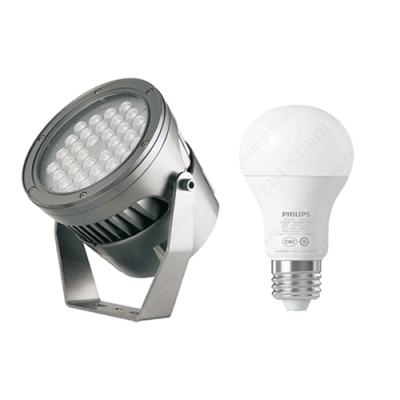 LEDs and Luminaire Test Solutions
 LM-79 and LM-80 Test Solutions
 LED Driver Test Solutions
 Household Appliances Test Solutions
 Mobile and Network Test Solutions
 Automotive Electronics Test Solutions
 Audio-Video and IT Test Solutions
 Cable and Wire Test Solutions
 Plugs and Sockets Test Solutions
 Power Switch Test Solutions
 Transformer Test Solutions
 Electric Toys Test Solutions
 Energy Meter Test Solutions
 Motor-Operated Tool Test Solutions
Select an organization
to browse standards
The glow wire test standard is the most broadly applied test to determine the ignition resistance of insulating materials, plastics and enclosure parts subjected to overheating electrical parts. Since such tests directly correspond to the risks of a fire, the accuracy of equipment is essential. Compliance wise, proper maintenance of glow wire tester should make the reference of glow wire flammability test results worthy of being valid, traceable and defensible in a product certification audit or audit of the product.
The testers of glow wire work under the severe thermal conditions. Components swell, oxidize and gradually wear out during recurrent cycles. Also, the glow wire system in contrast to most electrical test systems uses direct physical contact between the heated wire and a test specimen. This renders mechanical condition to be as important as electronic accuracy. All testing laboratories that conduct testing of glow wire should therefore embrace an organized maintenance strategy as opposed to applying the calibration between tests.
Calibration is used to assure a test set about the accuracy of temperature at any time. Maintenance is sufficient so that the tester will fulfill those requirements in the long term. Even a newly calibrated system can also give unreliable results in the event of mechanical wear or contamination. Even the glow wire loop itself is heated over and over again to temperatures possibly greater than 750°C. This eventually leads to oxidation, deformation and surface roughness that influence the heat transfer.
Mechanical alignment is also changed slowly. The standard defines the contact force that occurs between the glow wire and the specimen and deviations cause change in ignition behavior. A laboratory that does temperature calibration, but does not do the mechanical check-up, runs the risk of producing different repeatable results in a test run.

The glow wire loop can be considered as the most stressed part of the system. The material composition, surface finish and diameter of the same have a direct influence on uniformity of heating. As the wire gets older, there is oxidation coating which alters the emissivity and thermal conduction. This may lead to a change in temperature sensors and real heat transfer to the specimen.
Periodic inspection by visual observations underots with magnification assists in establishing pitting, flattening or unequal discoloration on the surface. Replacement should be carried out when these signs are visible even when the wire has not yet attained target temperature. Labs that operate at high duty systems like those provided by LISUN, tend to replace wires according to their work schedules, instead of failure.
Keeping a record of hours of wire consumption provides the ability to replace proactively and minimizes the test deviation occurrences.
Glow wire testers depend on the accurate temperature reading which is normally through thermocouples placed near the wire. With time, there is sensor drift or reducing insulation due to thermal cycling. The sensor junction could be covered with dust, polymer fumes and remnants of burn specimens that would reduce the response time. Response accuracy is maintained by cleaning sensor tips in a routine manner with non-abrasive means.
The routing of sensor cabling is also an issue. Exposure to heat and mechanical forces may generate micro-fractures in insulation, which creates noise or discontinuous measurements. Correct cable strain reliefs are known to extend the lifetime of the sensors.
The glow wire test standard does not only set temperature, but also the force exerted on the test specimen. This force guarantees uniform thermal contact with relatively small deformation. Positioning systems, whether spring or actuator or motorized, gradually become non-consistent as a result of fatigue or changes in the lubrication.
Contact force should be checked under periodical checks with calibrated force gauges to verify compliance. This is the action which is usually disregarded but is necessary to repeat. A reduced contact force can inhibit natural ignition whereas force that is excessive artificially raises the heat transfer.
Mechanical guides and rails are to be cleaned and lubricated to some degree using heat-resistant lubricants that are adopted by the manufacturer. The built up debris may lead to misalignment particularly where we are dealing with systems that test large volumes of samples.
The results of glow wire testing include smoke, melted polymers and carbon debris. Left uncontrolled, these byproducts pollute interior surfaces and indoor air and visibility. A build-up of residue around the specimen location can also pose undesirable ignition sources to the further tests.
Chamber cleaning should be done after some specified number of tests. Scheduling of cleaning is dependent on the volume of tests, and type of material. Plastics that are free of halogen are more likely to cause residue and they hasten pollution. Adequate ventilation filters should also be checked and changed where necessary in order to ensure the efficiency of airflow.
Glow wire testers consume much power on heating cycles. Weak connections, worn connectors or old-fashioned relays add a voltage drop that disturbs heating characteristics. Routine maintenance processes should include electrical inspection that is concerned with power connection, control relays and ground integrity.
Constant supply of power will guarantee that the temperature control systems are accurate. Abnormal heating delay or irregular ramping should be the focus of electrical inspection and not recalibration.
The manufacturers like LISUN ensure reinforcing their systems with power modules, still it is necessary to carry out routine inspection in high-use laboratories.
Scheduling of maintenance must be based on real-life usage as opposed to the calendar time. A laboratory performing constant flammability tests will need a higher rate of inspection as compared to those that perform periodic qualification tests. Providing usage-based intervals enhance reliability and minimizes the downtime.
General reference of glow wire tester maintenance activities is as listed in the table below:
| Maintenance Item | Recommended Interval | Purpose |
| Glow wire visual inspection | Every 50–100 tests | Detect oxidation and deformation |
| Temperature sensor cleaning | Monthly or after heavy testing | Maintain response accuracy |
| Contact force verification | Quarterly | Ensure standard compliance |
| Chamber cleaning | Weekly to monthly | Prevent residue interference |
| Electrical connection inspection | Semi-annually | Maintain power stability |
The maintenance works need to be recorded. Recording should involve date, action done, observations made, and corrective action. Such documentation helps in the audit requirements and prove due diligence in the conducting of compliance tests.
Traceability is particularly relevant when the test results are in doubt. Properly kept log enables laboratories to prove that the condition of equipment did not affect the results. Documentation also assists in determining the problems that are recurrent and ameliorating the process with time.
The finest maintenance program will not work without trained operators. Staff members need to appreciate the impact of inappropriate mishandling of test integrity. Compromises in actions may introduce oils that impact on heating behavior such as simple lighting of the glow wire with bare hands.
Proper handling and awareness of inspection and early detection of a fault are embedded within the regular training. Uncharacteristic behavior should be reported instantly by the operators instead of seeking another option to compensate with a change of settings.
Proper test environments are not the only basis of reliable fire-safety evaluation. Glow wire test standard presupposes that the equipment performs exactly as proposed, which can be considered only with the help of regular maintenance. With the glow wire condition and sensor accuracy up to mechanical alignment and cleanliness of chambers, all the parts have a part to play towards valid glow wire flammability test results.
Laboratories can produce congruent, defensible, and compliant test results by setting up regulated maintenance efforts and employing strong machinery provided by companies, including LISUN. Preventive maintenance minimizes unforeseen failures, enhances confidence on the findings and eventually promotes safer product designing in all industries.
Your email address will not be published. Required fields are marked *

 English
 中文简体
中文简体 English
 Русский
 Español
 Português
 Türkçe
 العربية
 Deutsch
 Polski
 Italiano
 Français
 한국어
한국어 ไทย
ไทย Tiếng Việt
 日本語
日本語