LM-79 Moving Detector Goniophotometer (Mirror Type C)
LSG-6000
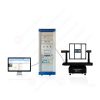
High Precision Rotation Luminaire Goniophotometer
LSG-1890B
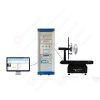
High Precision Rotation Luminaire Goniospectroradiometer
LSG-1890BCCD

Goniophotometer for Automotive and Signal Lamps
LSG-1950
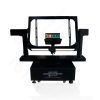
Goniophotometer for Traffic Signal Lamps
LSG-1950S
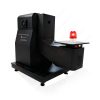
VAD Fire Alarm Visual Alert Device Goniophotometer
LSG-1930
Compact Goniophotometer
LSG-1200A
LED Goniophotometer
LSG-1100
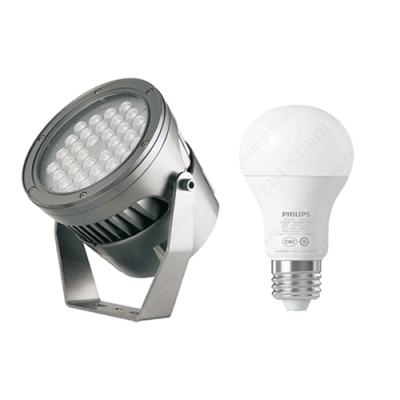 LEDs and Luminaire Test Solutions
 LM-79 and LM-80 Test Solutions
 LED Driver Test Solutions
 Household Appliances Test Solutions
 Mobile and Network Test Solutions
 Automotive Electronics Test Solutions
 Audio-Video and IT Test Solutions
 Cable and Wire Test Solutions
 Plugs and Sockets Test Solutions
 Power Switch Test Solutions
 Transformer Test Solutions
 Electric Toys Test Solutions
 Energy Meter Test Solutions
 Motor-Operated Tool Test Solutions
Select an organization
to browse standards
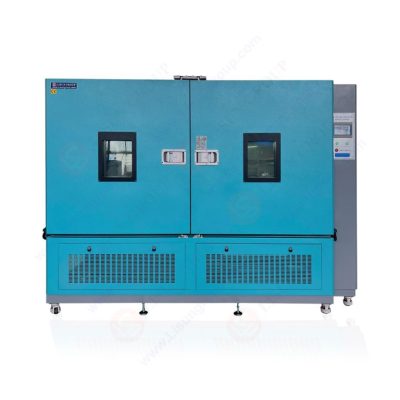
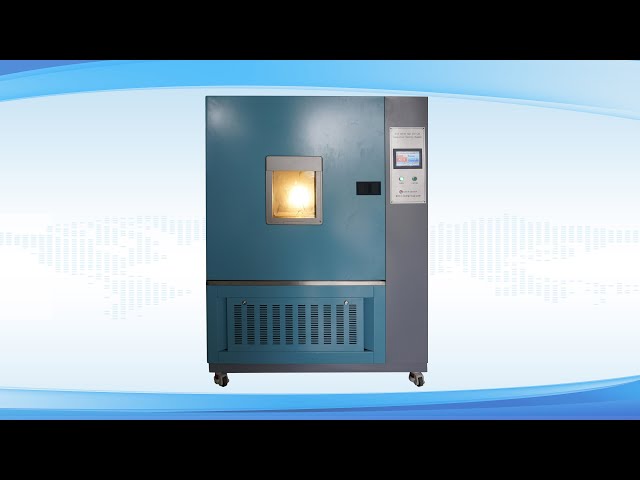
The thermal test chamber is a fundamental tool of accelerated aging and analysis of the heat stress due to the fact that the heat is among the most critical factors in the material and component degradation. Higher temperatures speed diffusion of chemical reactions as well as mechanical relaxation and temperature cycling causes expansion and contraction stress, which exposes fatigue as well as weaknesses of interface materials. The principles are applied in accelerated aging programs to condense the years of service exposure to laboratory manageable time.
Thermal cycling puts dynamic stress on a system whereas simple high temperature storage tests do not. The recurrent change of hot and moderate or cold conditions triggers the mechanisms of failure, which the continuous exposure is unable to reveal. These processes encompass solder joint fatigue seal crack propagation and abandonment. In conjunction with limited dwell time thermal cycling offers understanding of the peak stress tolerance, as well as cumulative damage behavior that is critical to consistent evaluation of life.
Great accelerated aging is initiated by the careful design of cycles. The temperatures extremes defined in thermal cycles are ramp rates and dwell times. The mechanisms of degradation are dominating with each parameter. Large temperature swings underline mechanical fatigue and coefficient differences whereas high peak temperature in certain degrees underlines chemical aging and oxidation.
Ramp rates should be chosen keenly. Extremely rapid ramps cause thermal shock that otherwise is not representative of the real service conditions unless it is explicitly specified. Middle-stance controlled ramps have internal temperatures following air temperature with closer precision creating homogenous stress. The thermal test chamber should be able to program ramps without overshoot since this will make the ramps more severe and difficult to interpret.
Whether the specimen attains thermal equilibrium depends on dwell periods. Short dwells prefer the effects of surfaces whereas long dwells enable the internal components to settle and expose bulk material behavior. In accelerated aging analyses dwell timing must be founded on the criteria of stabilization as opposed to an arbitrary minute. The sensors on representative specimens assists in determining the point of equilibrium.
The profile is completed with the number of cycles and time. Early cycles tend to indicate infant casualties’ abnormalities whereas subsequent cycles are used to detect wear out mechanisms. Recording performance periodically leads to trend analysis as opposed to using an end point outcome.
In the real world, it is common to have products exposed to heat and moisture at the same time. Humidity temperature chamber Thermal cycling is combined with regulated humidity to mimic these concomitant stresses. Wetness enhances the hydrolysis and insulation decay particularly in high temperature. Where humidity is either in or out of phase with temperature it causes absorption and desorption that strains interfaces.
Combined cycles are designed with dew point control. Condensation can be deliberate under the auspices of some analysis but has to be guided. Otherwise having a dew point margin avoids unwanted liquid water. coordinated control loops are necessary to have the predictability of the change of humidity follow the changes in temperature.
Combined cycles tend to indicate failures that pure thermal cycling does not detect. As an example corrosion can start to occur during hot humid dwells and the cracks can continue to spread during colder drying periods. In the process of sequencing these phases the chamber simulates interaction driven degradation which is more associated with field experience.
Preparation of specimens affects accelerated aging. Items of test are supposed to depict the state of production such as coating seals and assembly procedures. The preconditioning process like drying sets a familiar starting point. The assessment of change is based on baseline measurements.
Exposure is influenced by mounting and orientation. The fixtures ought to be heat-neutral and ventilated. Orientation does affect the behavior of the condensate in mixed tests. Comparability and statistical confidence are enhanced by consistency between specimens.
Latent problematic operations are usually realized during operational bias in cycling. Electromigration leakage and timing drift are faster in the event of powering electronics under thermal stress. Creep and relaxation are revealed in response to mechanical loading in conjunction with cycling. Cable routing and feedthroughs should not compromise the integrity of chambers, nor constitute heat sinks.
Hear stress analysis involves monitoring. Stress history performance change can be correlated to continuous logging of temperature and humidity and synchronized functional measurements. Alarms help ensure test validity since anomalies are detected early. The recovery of progressive damage that is temporary may be captured by intermediate inspections.
The accelerated aging data should be taken with care. The acceleration of temperature is not directly correlated to calendar life unless validated models are used. Instead results give thresholds of relative rankings and dominating mechanisms. Design under comparison given the same cycles gives actionable information even in the case where it is not clear how absolute life prediction.
Field data correlation enhances conclusion. Where feasible match cycle extremes and dwell patterns with familiar service profiles. Undertake complementary tests to confirm results. To ascertain active effects, say, in relation to thermal cycling, mechanical or electrical characterization is valuable.
Credibility is based upon equipment capacity. The thermal testing chamber should be able to provide long-campaign control uniformity and repeatability. Drift destroys confidence. Performance is maintained during calibration mapping and maintenance. Embarkation and alacrity supported by automation of data log and safety features in the chambers enhances mandated execution.
This capability is usually of the experienced suppliers to Labs. As an example LISUN is offering the thermal and humidity temperature chambers that are able to be used to cycle control of rigorous construction and full monitoring that will aid in acceleration of aging as well as analysis of heat stress in industries.
Accelerated aging and heat stress analysis have their requirements based on well programmed cycles used in a functional thermal test chamber. The choice of suitable temperature extremes ramp strategies and dwell criteria permits the engineers to activate the relevant degradation mechanisms efficiently. The effects of interaction that cannot be found in pure thermal cycling are obtained through the effects of humidity injected by using a humidity temperature chamber. Through well-trained specimen manufacture coordinated tracking and thoughtful analysis thermal cycling can be a potent predictor of durability to drive design enhancements and make effective decisions on qualification.
Tags:GDJS-015BYour email address will not be published. Required fields are marked *

 English
 中文简体
中文简体 English
 Русский
 Español
 Português
 Türkçe
 العربية
 Deutsch
 Polski
 Italiano
 Français
 한국어
한국어 ไทย
ไทย Tiếng Việt
 日本語
日本語