LM-79 Moving Detector Goniophotometer (Mirror Type C)
LSG-6000
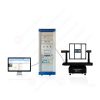
High Precision Rotation Luminaire Goniophotometer
LSG-1890B
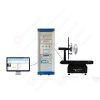
High Precision Rotation Luminaire Goniospectroradiometer
LSG-1890BCCD

Goniophotometer for Automotive and Signal Lamps
LSG-1950
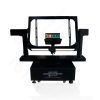
Goniophotometer for Traffic Signal Lamps (Economical Model)
LSG-1950S
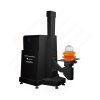
Goniophotometer for Airfield Lighting
LSG-1940
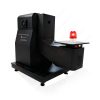
VAD Fire Alarm Visual Alert Device Goniophotometer
LSG-1930
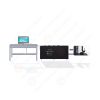
Compact Goniophotometer
LSG-1200A
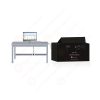
LED Goniophotometer
LSG-1100
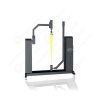
Near Field Moving Detector Goniophotometer
LSG-1900B
 LEDs and Luminaire Test Solutions
 LM-79 and LM-80 Test Solutions
 LED Driver Test Solutions
 Household Appliances Test Solutions
 Mobile and Network Test Solutions
 Automotive Electronics Test Solutions
 Audio-Video and IT Test Solutions
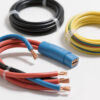 Cable and Wire Test Solutions
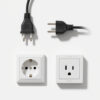 Plugs and Sockets Test Solutions
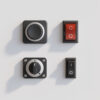 Power Switch Test Solutions
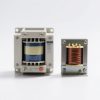 Transformer Test Solutions
 Electric Toys Test Solutions
 Energy Meter Test Solutions
 Motor-Operated Tool Test Solutions
Select an organization
to browse standards
IEC 60529 IPX3/IPX4 Testing establishes the definitive methodology for evaluating enclosure protection against sprayed water in luminaire applications. This comprehensive analysis examines five critical engineering parameters governing the oscillating tube test apparatus configuration, including spray nozzle geometry, water flow rates, rotational kinematics, and sample mounting protocols. Through systematic evaluation of IEC 60529 Figure 5 specifications, this study delineates the technical distinctions between IPX3 (spraying water) and IPX4 (splashing water) protection ratings essential for lighting fixture certification. The research further investigates modular open-type test equipment architectures that enable precise compliance with international standards while accommodating diverse luminaire geometries, providing quality assurance professionals with authoritative guidance on standardized ingress protection validation methodologies.
The proliferation of outdoor and damp-location lighting installations necessitates rigorous validation of enclosure integrity against water ingress. The International Electrotechnical Commission (IEC) 60529 standard provides the universally recognized framework for classifying degrees of protection (IP code) afforded by electrical equipment enclosures, with specific relevance to luminaire safety and performance longevity. Lighting fixtures deployed in commercial, industrial, and residential exterior applications must demonstrate reliable resistance to water spray and splashing conditions to prevent electrical hazards, optical degradation, and premature failure of LED modules or control gear.
The oscillating tube test methodology defined in IEC 60529 Figure 5 represents the definitive approach for IPX3 and IPX4 certification, utilizing specialized mechanical apparatus to simulate directional water spray under controlled laboratory conditions. This testing protocol subjects luminaire specimens to standardized hydraulic and mechanical stresses, enabling objective assessment of gasket efficacy, seam sealing integrity, and material resistance to moisture penetration. Mastering IEC 60529 IPX3/IPX4 Testing remains essential for manufacturers seeking authoritative compliance documentation and market access certification.
IEC 60529:1989+A1:1999+A2:2013 establishes the international classification system for enclosure protection against solid particle ingress (first characteristic numeral) and liquid ingress (second characteristic numeral). For lighting fixtures, the second characteristic numeral assumes critical importance, with IPX3 and IPX4 representing sequential levels of spray water protection:
These classifications mandate specific test apparatus configurations, water delivery parameters, and specimen orientation protocols to ensure reproducible evaluation results across testing laboratories worldwide. The standard delineates dimensional tolerances for oscillating tube construction, nozzle orifice specifications, and flow rate calculations based on tube radius and spray arc coverage requirements.
The fundamental distinction between IPX3 and IPX4 testing resides in the oscillation amplitude of the spray tube and the resulting water distribution pattern. IPX3 testing requires the oscillating tube to sweep through a 120° arc (60° on either side of the vertical center line), while IPX4 testing expands this sweep to nearly 360° coverage, simulating omni-directional water exposure conditions.
Table 1 delineates the critical parameter differentiations between these protection ratings:
Table 1. Comparative Test Parameters for IPX3 and IPX4 Luminaire Testing
| Parameter | IPX3 Requirement | IPX4 Requirement | Technical Significance |
| Oscillation Angle | 120° total (±60° from vertical) | 360° total (±180° from vertical) | Defines exposure symmetry and coverage completeness |
| Spray Arc Coverage | Partial circumferential exposure | Full circumferential exposure | Simulates directional vs. omnidirectional splashing |
| Test Duration | 10 minutes (minimum) | 10 minutes (minimum) | Ensures adequate stress duration for leak detection |
| Water Flow Rate | 0.07 L/min per nozzle (max) | 0.07 L/min per nozzle (max) | Standardized hydraulic loading condition |
| Nozzle Configuration | 40-50mm spray hole spacing | 40-50mm spray hole spacing | Uniform water distribution density |
These differential requirements necessitate test equipment capable of precise angular positioning and continuous oscillation control to maintain standardized testing protocols across multiple specimen evaluations.
IEC 60529 Figure 5 specifies the dimensional and operational characteristics of the oscillating tube apparatus, mandating an internal tube diameter of 15mm and spray nozzle orifices positioned at standardized intervals. The tube radius (R) determines the test apparatus scale, with the standard providing specifications for radii ranging from 200mm to 1600mm to accommodate various luminaire dimensions.
The spray holes, typically 0.4-0.8mm in diameter depending on tube radius, must provide uniform water distribution across the test specimen surface. The mechanical oscillation mechanism requires precise angular velocity control to maintain the specified sweep rates—approximately 23 seconds per 120° sweep for IPX3 testing and continuous 360° rotation for IPX4 evaluation. Gearbox assemblies or servo-driven actuation systems must provide smooth, jerk-free motion to prevent hydraulic shock loading that could compromise test repeatability.
Material selection for the oscillating tube assembly demands corrosion-resistant alloys, typically 304 or 316 stainless steel, to withstand continuous exposure to deionized or potable water test media while maintaining dimensional stability over extended operational periods.
The hydraulic system delivering water to the oscillating tube must maintain precise flow rate control to achieve the specified 0.07 L/min per nozzle discharge rate. This requirement necessitates calibrated flowmeters, pressure regulators, and filtration systems to prevent nozzle blockage by particulate contaminants. The water pressure at the tube inlet typically ranges from 50-100 kPa, depending on tube geometry and nozzle configuration, requiring real-time monitoring and feedback control systems.
Water quality management assumes critical importance, as mineral deposits from hard water can progressively enlarge nozzle orifices, altering spray patterns and flow characteristics. Standardized testing mandates water resistivity specifications and periodic calibration verification using volumetric collection methods to ensure compliance with IEC 60529 Annex specifications.
Temperature differentials between test water and luminaire specimens may create thermally induced pressure differentials within sealed enclosures, potentially influencing ingress pathways. Best practice protocols recommend ambient temperature water (15-25°C) to minimize thermal shock effects while maintaining standardized test conditions.
Luminaire specimens require precise positioning relative to the oscillating tube centerline to ensure representative exposure of vulnerable surfaces—including lens gaskets, housing seams, cable entry points, and ventilation apertures. The test apparatus must incorporate adjustable mounting fixtures capable of accommodating luminaires weighing up to 150kg or more, with provision for multi-axis positioning to evaluate critical ingress pathways.
For comprehensive IPX3 and IPX4 validation, specimens typically require evaluation in multiple mounting orientations (horizontal, vertical, and inclined) to simulate real-world installation conditions. Turntable mechanisms with 1-5 rpm rotation capability enable uniform exposure of all circumferential surfaces during the oscillating tube sweep cycle, ensuring that asymmetric spray patterns do not create false-negative test results.
The vertical positioning system must accommodate luminaires of varying heights while maintaining the critical relationship between the oscillating tube centerline and the specimen geometric center. Precision elevation control (±5mm accuracy) ensures consistent spray distance compliance across different product form factors.

The construction of reliable ingress protection test apparatus demands rigorous attention to material science, structural mechanics, and fluid dynamics principles. The oscillating tube assembly requires seamless stainless steel tubing with CNC-drilled spray orifices maintaining ±0.05mm positional tolerance to ensure uniform water distribution patterns. Frame structures supporting the mechanical oscillation mechanism must exhibit sufficient torsional rigidity to prevent flexural deflection under dynamic loading conditions, utilizing powder-coated carbon steel or aluminum alloy construction with corrosion-resistant finishing.
Water containment systems require integrated drainage infrastructure, splash guards, and recirculation capabilities to maintain laboratory safety and operational efficiency. Control system architectures utilizing PLC-based automation enable programmable test sequences, parameter monitoring, and data logging functions essential for quality management system documentation. Touchscreen human-machine interfaces facilitate precise parameter entry for oscillation speed, test duration, and flow rate calibration, while safety interlocks prevent operation with access panels open or water levels insufficient for pump operation.
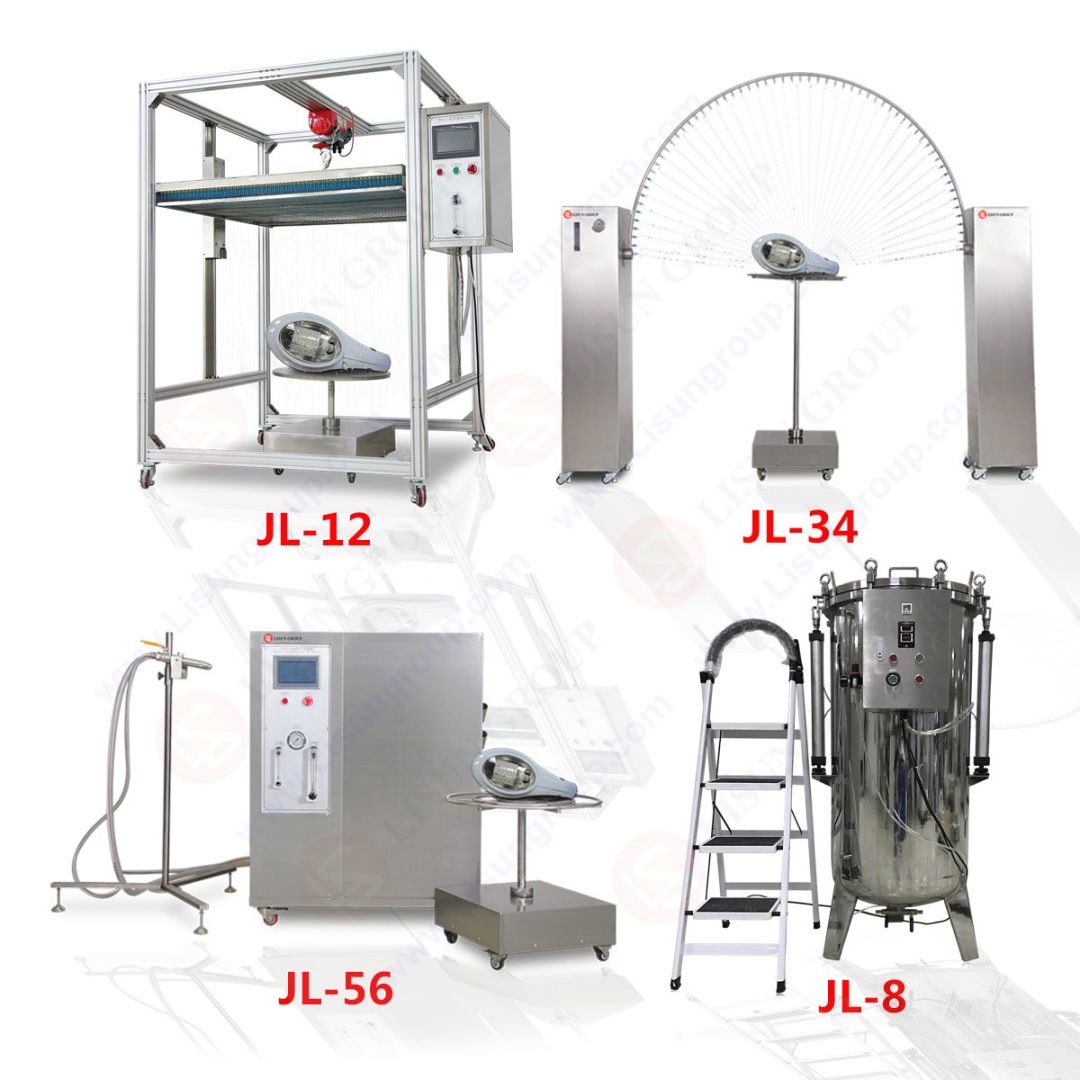
Contemporary laboratory environments demand flexible, modular test platforms capable of accommodating diverse ingress protection validation requirements while optimizing capital equipment utilization. The IP Waterproof Test Equipments (Open Type) Product No: JL-X represents an integrated modular architecture comprising discrete subsystems for comprehensive IPX1 through IPX8 testing capability, with specific configuration modules addressing IEC 60529 Figure 5 requirements.
The JL-X system incorporates the JL-34 Swing Pipe Water Spray Test Equipment specifically engineered for IPX3 and IPX4 compliance testing. This subsystem features a standardized 1-meter radius oscillating tube (customizable per specific luminaire dimensions) constructed from precision-machined stainless steel with optimized spray nozzle geometry. The internal tube diameter of 15mm conforms strictly to IEC 60529 Figure 5 specifications, while the integrated sample turntable (1000mm standard diameter, customizable configurations available) provides 1-5 rpm programmable rotation via PLC-controlled servo actuation.
Key technical specifications of the JL-34 module include height-adjustable mounting fixtures accommodating luminaires of varying scale, integrated water tank with recirculation and filtration systems, and precision flow control maintaining the 0.07 L/min per nozzle discharge rate critical for standard compliance. The open-type architecture facilitates specimen loading via overhead crane systems for large-format luminaires while providing unobstructed visual access during active testing phases for real-time ingress detection.
The JL-X platform’s modular design enables laboratories to configure test capabilities progressively, integrating JL-12 (IPX1/IPX2 drip testing), JL-56 (IPX5/IPX6 jet testing), and JL-7/JL-8 (IPX7/IPX8 immersion testing) modules as certification requirements expand. This scalability ensures long-term equipment investment protection while maintaining standardized metrology across all ingress protection validation protocols.
Laboratory managers and quality assurance engineers must evaluate multiple parameters when specifying ingress protection test equipment for luminaire certification programs. The physical scale of anticipated test specimens dictates oscillating tube radius requirements—while the JL-34 standard configuration provides 1-meter radius coverage, oversized luminaires may require extended radius tubes with proportionally adjusted water flow calculations to maintain standardized hydraulic loading per unit area.
Water supply infrastructure represents a critical planning consideration, as continuous IPX3/IPX4 testing consumes substantial water volumes requiring either municipal supply connections with adequate flow capacity or recirculation systems with filtration and temperature regulation capabilities. The JL-X integrated tank and pump configuration addresses these requirements through closed-loop hydraulic circuits with automatic level maintenance and debris filtration.
Calibration and metrology traceability constitute essential quality system requirements. Test equipment must accommodate periodic verification of oscillation angle, flow rate, and rotational speed parameters using certified measurement instruments, with calibration intervals typically established at 12-month frequencies or per laboratory accreditation specifications. The PLC-based control architecture of modern systems facilitates automated calibration routines and digital documentation of verification activities.
For high-volume production testing applications, equipment durability and maintenance accessibility assume heightened importance. Stainless steel construction, sealed bearing assemblies, and modular pump configurations minimize downtime and maintenance expenditure while ensuring consistent test repeatability across extended operational schedules.
The validation of luminaire enclosure integrity against water ingress represents a critical safety and reliability assessment mandated by international certification standards. IEC 60529 IPX3/IPX4 Testing provides the authoritative technical framework for standardized evaluation of spray and splash water protection, requiring precise control of oscillating tube geometry, hydraulic parameters, and specimen kinematics. The five essential specifications—oscillation angle configuration, nozzle flow dynamics, sample rotation protocols, material durability specifications, and calibration traceability—collectively determine test result reliability and regulatory compliance validity.
Modular open-type test equipment configurations, exemplified by the JL-X product ecosystem with its JL-34 oscillating tube subsystem, offer laboratories versatile, scalable platforms for comprehensive ingress protection validation. These engineered solutions integrate standardized mechanical designs with precision control systems, enabling consistent, repeatable testing protocols essential for lighting fixture certification in global markets. As luminaire designs evolve toward increased outdoor deployment and harsh environment applications, rigorous adherence to IEC 60529 Figure 5 testing methodologies remains fundamental to ensuring product safety, performance longevity, and regulatory compliance.
Tags:JL-XYour email address will not be published. Required fields are marked *

 English
 中文简体
中文简体 English
 Русский
 Español
 Português
 Türkçe
 العربية
 Deutsch
 Polski
 Italiano
 Français
 한국어
한국어 ไทย
ไทย Tiếng Việt
 日本語
日本語