LM-79 Moving Detector Goniophotometer (Mirror Type C)
LSG-6000
High Precision Rotation Luminaire Goniophotometer
LSG-1890B
High Precision Rotation Luminaire Goniospectroradiometer
LSG-1890BCCD

Goniophotometer for Automotive and Signal Lamps
LSG-1950
Goniophotometer for Traffic Signal Lamps
LSG-1950S
VAD Fire Alarm Visual Alert Device Goniophotometer
LSG-1930
Compact Goniophotometer
LSG-1200A
LED Goniophotometer
LSG-1100
 LEDs and Luminaire Test Solutions
 LM-79 and LM-80 Test Solutions
 LED Driver Test Solutions
 Household Appliances Test Solutions
 Mobile and Network Test Solutions
 Automotive Electronics Test Solutions
 Audio-Video and IT Test Solutions
 Cable and Wire Test Solutions
 Plugs and Sockets Test Solutions
 Power Switch Test Solutions
 Transformer Test Solutions
 Electric Toys Test Solutions
 Energy Meter Test Solutions
 Motor-Operated Tool Test Solutions
Select an organization
to browse standards
Abstract
Electrostatic discharge (ESD) is a common electromagnetic interference source during the operation of electrical and electronic equipment, which may easily cause abnormal performance, functional failure, or even permanent damage to the equipment. Its immunity test has become a core link in product reliability verification. As a key instrument for standardized testing, the ESD generator plays an irreplaceable role in ensuring the electromagnetic compatibility of products. This paper takes the ESD61000-2 ESD Generator, independently developed by LISUN for the electrostatic discharge immunity test of electrical and electronic equipment, as the research object. It systematically elaborates on the instrument’s technical principles, core parameters, and performance advantages, and conducts an in-depth analysis of its application scenarios and operational specifications in consumer electronics, automotive electronics, industrial control, and other fields. Verified by practical test cases and data tables, this ESD generator can accurately reproduce electrostatic discharge pulses with a wide output voltage range and stable pulse parameters. Complying with multiple international and domestic standards such as GB/T 17626.2 (IEC/EN 61000-4-2), it provides standardized test conditions for the operational stability of equipment under electrostatic interference, effectively addressing the electrostatic immunity evaluation needs of various products and offering scientific support for enterprise product R&D and quality control.
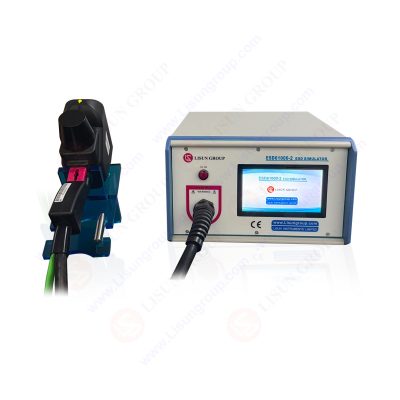
ESD61000-2_ESD Simulator Guns
1. Introduction
With the rapid development of electronic technology, various electrical and electronic equipment have been widely used in consumer, automotive, industrial, communication, and other fields. As equipment integration increases and internal component sizes shrink, their sensitivity to electrostatic interference has also risen. Electrostatic discharge (ESD), an instantaneous, high-intensity electromagnetic pulse phenomenon, though low in energy, has an extremely high peak current. It can invade equipment through contact discharge or air discharge, causing chip breakdown, program disorders, data loss, and other issues. Statistics show that more than 30% of product failures in the electronics manufacturing industry are caused by electrostatic discharge, with annual economic losses exceeding tens of billions of yuan.
Traditional electrostatic testing methods suffer from unstable pulse parameters, poor test repeatability, and inability to meet standardized requirements, making it difficult to accurately evaluate product immunity. To address this industry pain point, LISUN has developed the ESD61000-2 ESD Generator. Equipped with high-precision pulse generation technology, flexible test modes, and broad standard compatibility, this instrument has become the preferred choice for electrostatic immunity testing. Its core function is to provide standardized, repeatable test environments for different types of electrical and electronic equipment by accurately reproducing electrostatic discharge pulses in real-world scenarios. It helps enterprises identify electrostatic interference risks in advance, optimize product protection designs, and enhance market competitiveness.
2. Technical Principles and Core Parameters of the ESD61000-2 ESD Generator
2.1 Technical Principles
The core working principle of the ESD61000-2 ESD Generator is based on an energy storage-discharge pulse generation mechanism, realizing electrostatic discharge simulation through the following key links:
• High-Voltage Energy Storage Module: Adopts a high-precision high-voltage power supply to convert input commercial alternating current into direct high voltage, charging the energy storage capacitor. The voltage can be precisely adjusted within the range of 0.1~20kV, meeting the test requirements of different immunity levels;
• Discharge Resistance-Capacitance Network: Equipped with a standard replaceable 330Ω/150pF resistance-capacitance module. This parameter combination strictly complies with the IEC 61000-4-2 standard, accurately simulating the equivalent circuit of human body electrostatic discharge and ensuring the discharge pulse waveform conforms to international specifications;
• Pulse Triggering and Control: Controls the rapid conduction of switching devices through manual or automatic triggering modes, allowing the energy storage capacitor to release energy through the discharge electrode, forming a steep pulse with a rise time of 0.6~1ns and reproducing the transient characteristics of real electrostatic discharge;
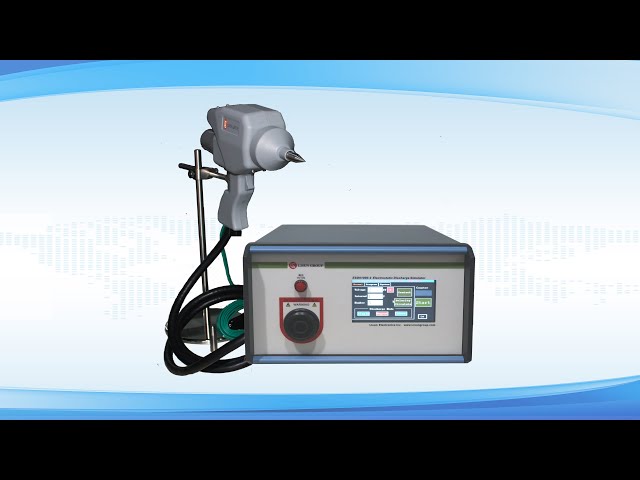
• Signal Detection and Feedback: Built-in high-precision current sensors and voltage detection circuits, real-time monitoring key parameters such as the peak current and leading edge time of the discharge pulse, and intuitively presenting them through an LCD display, ensuring the traceability and accuracy of the test process.
2.2 Core Parameters and Performance Advantages
The core parameters of the ESD61000-2 ESD Generator have undergone strict calibration, with performance indicators reaching the industry-leading level. The key parameters and comparisons with other models in the same series are shown in the following table:
| Technical Parameters | ESD61000-2 | ESD61000-2A | ESD61000-2C |
| Output Voltage Range | 0.1~20kV ±5% | 0.1~30kV ±5% | 0.1~30kV ±5% |
| Output Voltage Polarity | Positive, Negative, Alternating Positive and Negative | Positive, Negative, Alternating Positive and Negative | Positive, Negative, Alternating Positive and Negative |
| Discharge Resistance-Capacitance Module | 330Ω/150pF (Replaceable) | 330Ω/150pF (Replaceable) | 150pF/330Ω, 150pF/2000Ω, 330pF/2000Ω, 330pF/330Ω (Replaceable) |
| Discharge Current Rise Time | 0.6~1ns | 0.6~1ns | 0.6~1ns |
| Test Functions | Single Test, Count Test, 20PPS, IEC Level, Programming Mode, Custom Mode, Contact Discharge, Air Discharge, Interval Discharge | Same as ESD61000-2 | Same as ESD61000-2 |
| Trigger Modes | Manual/Auto | Manual/Auto | Manual/Auto |
| Discharge Count Setting | 1~9999 times | 1~9999 times | 1~9999 times |
| Discharge Interval Adjustment | 0.05s~99.99s | 0.05s~99.99s | 0.05s~99.99s |
| Discharge Electrode Configuration | Pointed Electrode (Contact Discharge), Round-Head Electrode (Air Discharge) | Same as ESD61000-2 | Pointed Electrode (Contact Discharge), Round-Head Electrode (Air Discharge), 30mm Diameter Large Round-Head Electrode (Air Discharge) |
| Power Supply | AC220V (Optional 110V) ±10%, 50/60Hz | Same as ESD61000-2 | Same as ESD61000-2 |
| Compliant Standards | GB/T 17626.2 (IEC/EN 61000-4-2) | GB/T 17626.2 (IEC/EN 61000-4-2) | Automotive Electronics GB/T 19951 (ISO 10605), GB/T 17626.2 (IEC/EN 61000-4-2) |
As shown in the table, the ESD61000-2 ESD Generator has the following core performance advantages:
• Comprehensive Voltage Coverage: The output voltage range of 0.1~20kV can meet the test requirements of Levels 1~4 in the IEC 61000-4-2 standard (Level 4 air discharge is 15kV), adapting to the test needs of most civil electrical and electronic equipment;
• Precise Pulse Parameters: The 0.6~1ns current rise time combined with the standard resistance-capacitance module ensures the discharge pulse waveform is highly consistent with real electrostatic discharge, and the test results are repeatable and comparable;
• Flexible Test Modes: Supports multiple test modes such as single, count, and programming. The discharge count and interval can be freely adjusted to simulate different scenarios such as continuous electrostatic interference and intermittent electrostatic impact;
• Strong Standard Compatibility: Strictly complies with the GB/T 17626.2 (IEC/EN 61000-4-2) standard, and the test results are widely recognized in the industry, providing strong support for product import and export certification;
• Intuitive and Easy Operation: Equipped with an LCD display with Chinese-English switching. Parameter settings and test status are clear at a glance, reducing the learning cost for operators.
In addition, this ESD generator can be paired with LISUN’s dedicated accessories such as the ESD-DESK ESD Test Table and ESD-CALA ESD Gun Calibration Kit, further improving the standardization and accuracy of tests and meeting the test needs of different scenarios.
3. Typical Application Scenarios of the ESD61000-2 ESD Generator
3.1 Testing in the Consumer Electronics Field
Consumer electronic products (such as mobile phones, laptops, tablets, smart wearable devices, etc.) are frequently exposed to human body electrostatic discharge during production, transportation, and use. Their electrostatic immunity directly affects user experience. The ESD61000-2 ESD Generator can perform contact discharge and air discharge tests on key parts of consumer electronic products such as casings, interfaces, and buttons.
During testing, in accordance with the GB/T 17626.2 standard, the equipment is placed on an ESD-DESK ESD Test Table, using a 330Ω/150pF resistance-capacitance module. The contact discharge voltage is set to ±8kV (Level 3 standard), and the air discharge voltage is set to ±15kV (Level 4 standard). Through the automatic triggering mode, 100 consecutive discharge tests are performed on the edge of the mobile phone screen, USB interface, power button, and other parts to observe whether the equipment exhibits abnormal phenomena such as screen flickering, functional failure, or automatic restart. For example, a certain smartphone experienced temporary touch failure during the 15kV air discharge voltage test. Multiple repeated tests were conducted using the programming mode of the ESD61000-2, identifying that the electrostatic protection circuit design of the screen touch chip was insufficient, providing an accurate basis for enterprises to optimize protection schemes.
3.2 Testing in the Automotive Electronics Field
Automotive electronic equipment (such as on-board navigation, ECU controllers, sensors, on-board entertainment systems, etc.) operates in complex environments. It not only endures human body static electricity but may also be affected by vehicle body static electricity and environmental static electricity, requiring stricter immunity requirements. The ESD61000-2C, a model in the same series as the ESD61000-2, can meet the requirements of the automotive electronics GB/T 19951 (ISO 10605) standard. Paired with the ESD-FCP Automotive Electronics ESD Field Coupling Plate, it realizes electrostatic field coupling testing of on-board electronic equipment.
Taking the on-board ECU controller test as an example, the ECU is fixed on the electrostatic field coupling plate, using a 150pF/2000Ω resistance-capacitance module. The discharge voltage is set to ±25kV, and air discharge tests are performed on the pin interfaces, casing gaps, and other parts of the ECU to monitor whether the communication stability and control signal output accuracy of the ECU are affected. Test results show that the ESD61000-2C can accurately simulate electrostatic interference during vehicle operation, helping enterprises identify electrostatic weak links in the internal circuits of ECUs and avoiding serious problems such as abnormal engine control and safety system failure caused by static electricity.
3.3 Testing of Industrial Control Equipment
Industrial control equipment (such as PLC controllers, inverters, sensors, industrial computers, etc.) is widely used in factory automated production lines. Its operational stability is directly related to production safety and efficiency. Such equipment often works in environments with multiple electromagnetic interferences. Electrostatic discharge may cause faults such as incorrect control commands and interrupted data transmission.
When testing a PLC controller using the ESD61000-2 ESD Generator, in accordance with industrial electromagnetic compatibility standards, the contact discharge voltage is set to ±6kV, and the air discharge voltage is set to ±10kV. The interval discharge mode (discharge interval of 1s) is adopted to perform 500 discharge tests on the input/output interfaces, power terminals, display screens, and other parts of the PLC. During the test, a data acquisition system is used to real-time monitor the operating status of the PLC. If phenomena such as delayed command execution or data loss occur, the count test function of the ESD61000-2 can be used to locate the discharge count and voltage level at which the fault occurs, providing data support for optimizing the electrostatic protection design of the equipment (such as adding ESD protection devices and optimizing grounding design).
4. Test Data and Analysis of the ESD61000-2 ESD Generator
To verify the testing accuracy and reliability of the ESD61000-2 ESD Generator, three typical electrical and electronic equipment (smartphones, on-board ECUs, PLC controllers) were selected for electrostatic discharge immunity tests in accordance with corresponding standards. The test data are shown in the following table:
| Test Samples | Test Standards | Test Modes | Discharge Types | Discharge Voltage (kV) | Resistance-Capacitance Modules | Discharge Count (times) | Test Result Description | Immunity Level Evaluation |
|---|---|---|---|---|---|---|---|---|
| Smartphone | GB/T 17626.2 (IEC 61000-4-2) | Auto Count | Contact Discharge | ±8 | 330Ω/150pF | 100 | No abnormalities, normal function | Level 3 Qualified |
| Smartphone | GB/T 17626.2 (IEC 61000-4-2) | Auto Count | Air Discharge | ±15 | 330Ω/150pF | 100 | Temporary touch failure twice, recovered within 1s | Level 4 Basically Qualified |
| On-board ECU | GB/T 19951 (ISO 10605) | Programming Mode | Air Discharge | ±25 | 150pF/2000Ω | 200 | No communication interruption, no deviation in control signal accuracy | Compliant with Automotive Electronics Standards |
| On-board ECU | GB/T 19951 (ISO 10605) | Programming Mode | Contact Discharge | ±20 | 150pF/2000Ω | 200 | No functional abnormalities, stable operation | Compliant with Automotive Electronics Standards |
| PLC Controller | GB/T 17626.2 (IEC 61000-4-2) | Interval Discharge | Contact Discharge | ±6 | 330Ω/150pF | 500 | No command errors, normal data transmission | Level 3 Qualified |
| PLC Controller | GB/T 17626.2 (IEC 61000-4-2) | Interval Discharge | Air Discharge | ±10 | 330Ω/150pF | 500 | No abnormalities, stable operation | Level 3 Qualified |
Data Analysis
• Smartphone Test: Performed excellently in the Level 3 contact discharge (±8kV) test with no functional abnormalities. Temporary touch failure occurred during the Level 4 air discharge (±15kV) test, indicating that the surface protection performance is good, but the electrostatic immunity of the internal touch circuit still has room for improvement. Enterprises can optimize the design by adding ESD protection devices to the touch chip;
• On-board ECU Test: Operated stably in high-voltage tests (±20kV contact discharge, ±25kV air discharge) in accordance with automotive electronics standards, with no communication interruption or control accuracy deviation. This shows that the electrostatic protection design of the ECU meets industrial application requirements and can be directly put into mass production;
• PLC Controller Test: No abnormalities throughout the industrial-grade Level 3 electrostatic discharge test, with stable command execution and data transmission. This indicates that the grounding design and shielding measures of the internal circuits are in place, enabling it to adapt to electrostatic interference in industrial environments.
The test data shows that the ESD61000-2 ESD Generator has stable pulse parameters and repeatable, traceable test results. It can accurately distinguish the electrostatic immunity levels of different products, providing a reliable quantitative basis for enterprise product quality evaluation and design optimization. Meanwhile, the instrument has strong adaptability to different types of products, meeting the test needs of consumer electronics, automotive electronics, industrial control, and other fields.
5. Conclusion
As a high-precision electrostatic immunity testing instrument, the LISUN ESD61000-2 ESD Generator provides a standardized and scientific testing solution for the immunity evaluation of electrical and electronic equipment by accurately reproducing electrostatic discharge pulses. Its core advantages are reflected in: first, precise and stable pulse parameters, complying with multiple international and domestic standards, and the test results are widely recognized; second, a wide voltage coverage range and flexible test modes, adapting to the test needs of different fields and levels; third, easy operation and strong compatibility, which can be paired with dedicated accessories to expand test scenarios and reduce enterprise test costs.
Verified by practical applications in consumer electronics, automotive electronics, industrial control, and other fields, this ESD generator can effectively identify product electrostatic protection defects, providing strong support for enterprises in optimizing designs during product R&D, quality control during production, and certification testing during market access. With the continuous improvement of the integration of electrical and electronic equipment and the continuous expansion of application scenarios, the importance of electrostatic immunity testing will become increasingly prominent. The LISUN ESD61000-2 ESD Generator, with its excellent performance and high cost-effectiveness, is expected to be widely used in more industries, playing an important role in improving the reliability and international competitiveness of China’s electrical and electronic products.
Tags:ESD61000-2Your email address will not be published. Required fields are marked *

 English
 中文简体
中文简体 English
 Русский
 Español
 Português
 Türkçe
 العربية
 Deutsch
 Polski
 Italiano
 Français
 한국어
한국어 ไทย
ไทย Tiếng Việt
 日本語
日本語