LM-79 Moving Detector Goniophotometer (Mirror Type C)
LSG-6000
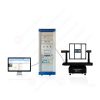
High Precision Rotation Luminaire Goniophotometer
LSG-1890B
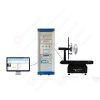
High Precision Rotation Luminaire Goniospectroradiometer
LSG-1890BCCD

Goniophotometer for Automotive and Signal Lamps
LSG-1950

Goniophotometer for Traffic Signal Lamps (Economical Model)
LSG-1950S
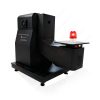
VAD Fire Alarm Visual Alert Device Goniophotometer
LSG-1930
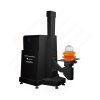
Goniophotometer for Airfield Lighting
LSG-1940
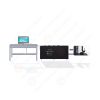
Compact Goniophotometer
LSG-1200A
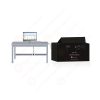
LED Goniophotometer
LSG-1100

Near Field Moving Detector Goniophotometer
LSG-1900B
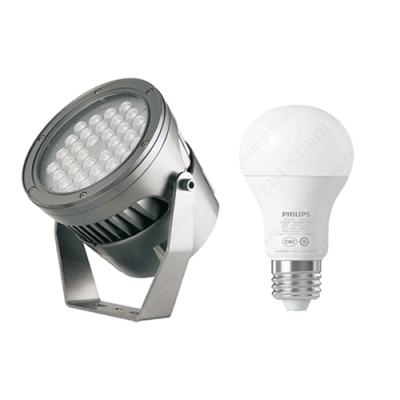 LEDs and Luminaire Test Solutions
 LM-79 and LM-80 Test Solutions
 LED Driver Test Solutions
 Household Appliances Test Solutions
 Mobile and Network Test Solutions
 Automotive Electronics Test Solutions
 Audio-Video and IT Test Solutions
 Cable and Wire Test Solutions
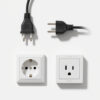 Plugs and Sockets Test Solutions
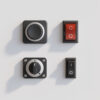 Power Switch Test Solutions
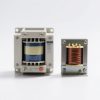 Transformer Test Solutions
 Electric Toys Test Solutions
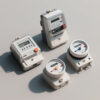 Energy Meter Test Solutions
 Motor-Operated Tool Test Solutions
Select an organization
to browse standards
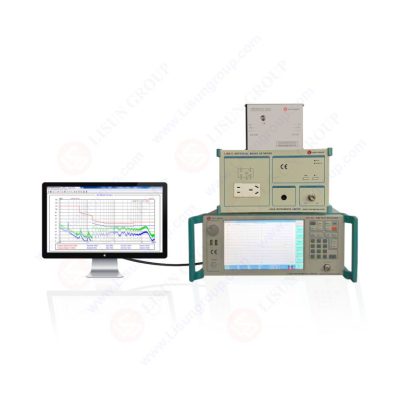
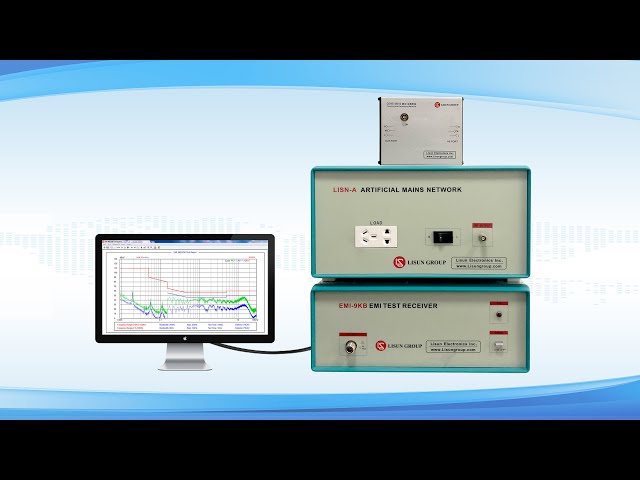
A good and consistent EMC measurement equipment is crucial in a lab doing compliance test and product development. One component of that ecosystem, which is critical, is the LISN which will serve to fix the line impedance and decouple the equipment under test with supply noise. When the routine maintenance is not taken care of, repeatability of measurements is lost, traceability, and safety are chronicled. The advice that would follow is clearly technical and practical steps that maintain the performance of instruments and minimise the concealed uncertainty throughout EMC test campaigns.
Maintenance begins with a documented plan, which delegates duties and frequency of certain tasks. Develop a maintenance schedule that will make a distinction between routine daily inspections and weekly, monthly, and annual inspection. Checks are made every day to ensure that the instruments are starting up and no evident malfunctions are evident. Verifying of connector integrity and basic checking of receivers and signal generators should be part of weekly tasks. Environmental checks and calibration checks can be done monthly. Complete instrument calibration and inspection of passive equipment should be checked on annual basis including attenuators and cables. Maintaining documentation of every activity makes a history of activities useful and thereby facilitates faster troubleshooting and in the auditing process, proves that good laboratory practices are being observed.
Most EMC devices take a time to stabilize their operation. Activate spectrum analyzers, receivers and preamplifiers at the beginning of the day and leave them to thermalize. Following a warm up, briefly run a functional verification program that verifies accuracy of frequency, linearity of amplitude and noise floor. Apply a signal source traceable and record changes of baseline. To CISPR style measurements To check the whole receive chain a rapid check with a known reference source at some representative frequencies is recommended before commencement of official tests.
Measurement drift and intermittent faults are common with connector and cable. Check connectors physically to look at corrosion or deformation and wipe contacts with proper solvents and lint free cloth. Excessive torque should be avoided when connecting connectors and torque wrenches should be used where necessary. Coax should be stored in high performance reels or soft loops to avoid sharp turns. Measure cable insertion loss and return loss periodically to ensure that they are within reasonable bounds. Do not attempt to limit repairs to cables which are physically damaged or have worn out (or degenerated) electrically.
A LISN is a fine instrument and it has to be handled so. Ensure that the LISN chassis is grounded appropriately to the laboratory reference plane and make sure that all mounting hardware is firmly in place. Disinvestigate the inside capacitors and ferrites either visually through the detection of overheating or mechanical damage. Check that the LISN certificate of calibration is of current version and verify casually by a known source to verify the desired impedance profile. In connecting mains cables route it as is indicated to prevent unintentional coupling. Spare fuses and mains connectors should be stored to allow a quick replacement of damaged ones to prevent time wastage during tests.
Calibration ranges need to be manufacturer instructions though they need to be altered based on instrument use and risk. The instruments that are used more often have to be calibrated more frequently. Record not only the values of correction, but the share of measurement uncertainty of each device, when calibrating. Records of calibration should be kept in a traceable form connecting calibration to a national metrology institute where feasible. When an instrument is no longer within tolerance limits then quarantine it, retesting any previously-dependent test data. Effective calibration program will minimize the chances of non-compliant results, in addition to assisting in the quantification of the total uncertainty budget of your test system.
Probes and antennas are frail and usually costly. The boom or the base should handle the antennas and not the radiating element. Checks on the prostitution of antenna radomes due to cracks and contamination. Confirm the stability of the antenna factor with a reference or calibration report with an antenna. Front end elements and preamplifiers should be dry and not allowed to exceed operating temperature. It is not advisable to introduce the strong signals in the input stage of a low noise amplifier without the attenuation option, which may cause irreversible damage to the input stage. Have a limited stock of spares of probes and preamplifiers to minimize the lost time when any unit is faulty and being repaired or calibrated.
Even test-site itself affects EMC measurements. Periodically test shielding integrity by achieving site attenuation inspection and door-gasket inspection. Identify punctures and cable access points that could compromise shielding. Ensure that the plane of the reference ground is smooth and flat and the ground connections are low impedance ones. Look at check pneumatic and vacuum lines, by checking them to leaks when they pass across the shielded environment because it may couple unwanted noise. Abandoned door seals and damaged panels are replaced and repaired immediately.
The firmware and software programs used in measuring should be handled with caution. Test new software on a controlled system and then deploy on production systems. Keep control of the version of the software and keep backups of successful configurations. Automatize recording of measurement records and ensure secondary storage. Use checksum or digital sign of raw data files to identify corruption. To comply testing will save the raw and processed data and instrument configuration to allow the reconstruction of reports years after the test.
Sensitive equipment is prone to environmental factors: temperature, humidity and dust. Maintain the laboratory specifics in manufacture requirements of environmental conditions and record. RF components accumulate dust which alters loss and radiation patterns thus it is important to keep a routine cleaning program. Instrument cooling should be done with clean dry air where feasible. In temperature sensitive tests e.g. narrow band receiver tests environmental data must be provided in the test report so that proper interpretation and comparison can be carried out.
Maintenance includes competent operators. Train employees to handle RF equipment properly, connect LISN and mains interface in a safe way and the methods to discharge capacitive parts in a safe way. Keep a stock of important spares such as coaxial adapters, fuses, connectors and a basic number of calibrated instruments which may be put in the service. Institute a high voltage and high current test safety checklist, and ensure interlocks and emergency stop functions are put to the test on a regular basis.
Periodically have internal audits to check the maintenance logs, calibration records and failure incidents. Whitelock Trend Analysis to detect problems that keep on re-occurring and take corrective action. Enlist the services of equipment suppliers as advisors and see service contracts on instruments that is vital to the compliance testing. With the aid of vendors like LISUN, you can get calibrated accessories and spare parts that are comparable with your measurement chain and helps to reduce variability as you would have to make replacements.
Maintaining EMC measurement equipment is not a task set. It is a structured program which incorporates preventive maintenance, traceable calibration, cautious handling and well-trained individuals. The test uncertainty is avoided by investing in such practices, it enhances throughput and avoids the destruction of the laboratory reputation.
Your email address will not be published. Required fields are marked *

 English
 中文简体
中文简体 English
 Русский
 Español
 Português
 Türkçe
 العربية
 Deutsch
 Polski
 Italiano
 Français
 한국어
한국어 ไทย
ไทย Tiếng Việt
 日本語
日本語