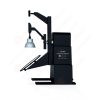
LM-79 Moving Detector Goniophotometer (Mirror Type C)
LSG-6000
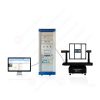
High Precision Rotation Luminaire Goniophotometer
LSG-1890B
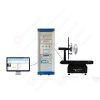
High Precision Rotation Luminaire Goniospectroradiometer
LSG-1890BCCD

Goniophotometer for Automotive and Signal Lamps
LSG-1950
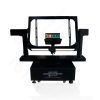
Goniophotometer for Traffic Signal Lamps
LSG-1950S
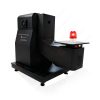
VAD Fire Alarm Visual Alert Device Goniophotometer
LSG-1930
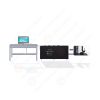
Compact Goniophotometer
LSG-1200A
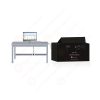
LED Goniophotometer
LSG-1100
 LEDs and Luminaire Test Solutions
 LM-79 and LM-80 Test Solutions
 LED Driver Test Solutions
 Household Appliances Test Solutions
 Mobile and Network Test Solutions
 Automotive Electronics Test Solutions
 Audio-Video and IT Test Solutions
 Cable and Wire Test Solutions
 Plugs and Sockets Test Solutions
 Power Switch Test Solutions
 Transformer Test Solutions
 Electric Toys Test Solutions
 Energy Meter Test Solutions
 Motor-Operated Tool Test Solutions
Select an organization
to browse standards
Abstract
Salt spray corrosion is one of the core factors leading to metal material failure and reduced product reliability in marine environments and industrial scenarios. Accurately evaluating the salt spray corrosion resistance of materials and products is crucial for ensuring product service life. As a key environmental simulation testing equipment, salt spray chambers play an irreplaceable role in material protection and product quality verification. This paper takes the YWX/Q-010 Salt Spray Chamber, developed by LISUN specifically for corrosion resistance testing of materials and products, as the research object. It systematically elaborates on the equipment’s technical principles, core parameters, and performance advantages, and conducts an in-depth analysis of its application scenarios and operational key points in the testing of metal platings, coatings, electronic components, and complete products. Verified by practical test cases and data tables, this salt spray chamber can accurately simulate marine and industrial salt spray environments, quickly expose material protection defects and product structural design vulnerabilities, and provide scientific basis for product reliability verification, material selection, and quality improvement. Its test results comply with multiple international and domestic standards, demonstrating wide industry applicability.

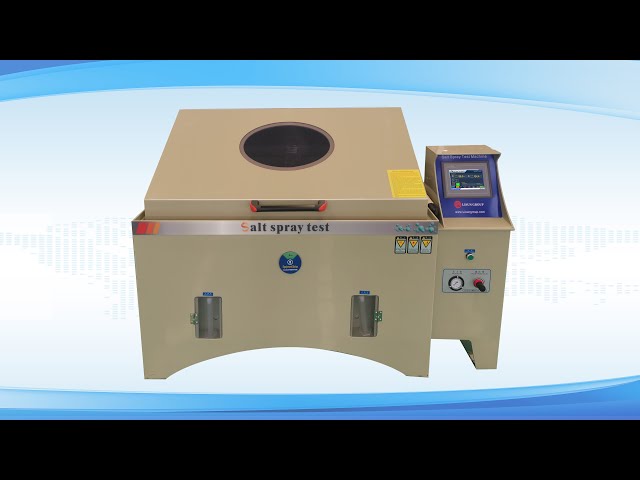
YWX/Q-010_Salt Spray Test Instrument
1. Introduction
In fields such as marine transportation, offshore engineering, and industrial manufacturing, metal materials and various products are long-term exposed to the erosion of salt spray environments. Chloride ions in salt spray have strong penetrability, which can damage the oxide layer and protective plating on metal surfaces, trigger electrochemical reactions, leading to material rust, performance degradation, and ultimately product failure. Statistics show that the global economic loss caused by salt spray corrosion exceeds hundreds of billions of US dollars annually, and the maintenance cost caused by component corrosion alone accounts for more than 30% of the total maintenance expenses in the automotive industry. Traditional natural exposure tests take months or even years, which are difficult to meet the rapid testing needs in product R&D and mass production. Salt spray chambers, by artificially simulating salt spray corrosion environments, can accelerate the corrosion process by dozens of times, realizing the assessment of product salt spray corrosion resistance in a short period.
As a professional R&D and manufacturer of environmental testing equipment, LISUN has launched the YWX/Q-010 Salt Spray Chamber to address industry pain points. Integrating precise temperature control, a stable spray system, and flexible test procedures, this equipment can simulate salt spray corrosion environments of different intensities, covering multiple testing needs such as Neutral Salt Spray (NSS), Acetic Acid Salt Spray (ASS), and Copper-Accelerated Acetic Acid Salt Spray (CASS). Its core value lies in quickly identifying weak links in material protection and defects in product structural design through scientific environmental simulation, providing data support for enterprises in material selection, process optimization, quality control, and other links, and helping to improve the reliability and durability of products in practical applications.
2 Technical Principles and Core Parameters of LISUN YWX/Q-010 Salt Spray Chambers
2.1 Technical Principles
The core working principle of the LISUN YWX/Q-010 Salt Spray Chamber is to artificially prepare salt solution (usually 5% sodium chloride solution), store it in a brine tank, atomize it under pressure to form a uniform and stable salt spray environment in a closed test chamber. At the same time, it accurately controls parameters such as test chamber temperature and saturation tank temperature to simulate marine or industrial corrosion scenarios. Its key technical links include:
• Salt Spray Generation System: Adopting a high-quality nozzle design, the spray pressure is controlled between 0.07~0.17MPa through two-stage pressure regulation, ensuring that the salt spray particles are uniformly fine (1~5μm in diameter), realizing uniform settlement of salt spray in the test chamber, with a stable sedimentation rate of 1-2ml/80cm²/h (average value of 16-hour test);
• Temperature Control System: The test chamber temperature can be precisely adjusted within the range of room temperature ~ +55℃, and the saturation tank temperature is controlled at room temperature ~ +70℃. Through dual temperature control technology (mechanical over-temperature protection + electronic over-temperature protection), the temperature uniformity is ≤2℃ and the fluctuation is ≤±0.5℃, providing stable thermodynamic conditions for salt spray corrosion reactions;
• Test Mode Switching: Supports three test modes: continuous spray, intermittent spray, and programmable spray. It can switch between three test types (Neutral Salt Spray (NSS), Acetic Acid Salt Spray (ASS), and Copper-Accelerated Acetic Acid Salt Spray (CASS)) according to different standard requirements, simulating conventional marine environments, acidic industrial environments, and harsh high-corrosion environments respectively;
• Safety Protection System: Equipped with multiple safety devices such as low water level alarm (to prevent dry burning of the brine tank), low air pressure alarm (to ensure stable spray), and over-temperature alarm. Meanwhile, the inner wall of the test chamber is made of corrosion-resistant PP material, avoiding equipment corrosion that may affect test results.
2.2 Core Parameters and Performance Advantages
The core parameters of the LISUN YWX/Q-010 Salt Spray Chamber strictly comply with more than 20 international and domestic standards such as GB/T2423.17, ASTM-B117, and ISO9227. The key technical parameters and comparisons with other models in the same series are shown in the following table:
| Technical Parameters | YWX/Q-150 | YWX/Q-250 | YWX/Q-750 | YWX/Q-010 (Core Model) | YWX/Q-016 | YWX/Q-020 |
| Working Chamber Size (mm) | 600*450*400 | 900*600*500 | 1100*750*500 | 1200*800*500 | 1600*1000*600 | 2000*1000*600 |
| Test Chamber Volume (L) | 108 | 270 | 412 | 480 | 960 | 1200 |
| Brine Tank Volume (L) | 15 | 25 | 30 | 32 | 40 | 45 |
| Power Supply | Single-phase AC 220V/50HZ (60Hz customizable) | Three-phase AC 380V/50HZ (60Hz customizable) | Three-phase AC 380V/50HZ (60Hz customizable) | Three-phase AC 380V/50HZ (60Hz customizable) | Three-phase AC 380V/50HZ (60Hz customizable) | Three-phase AC 380V/50HZ (60Hz customizable) |
| Rated Power (KW) | 1.5 | 2.0 | 2.5 | 2.5 | 5.0 | 6.0 |
| Sample Placement Space (mm) | 500300250 | 800450250 | 900600300 | 1000600300 | 1400800350 | 1800800350 |
| Chamber Cover Opening Method | Manual | Manual | Manual | Stainless Steel Gas Spring Assisted | Cylinder Assisted | Cylinder Assisted |
| Test Chamber Temperature Range | Room Temperature ~ +55℃ (Unified for the whole series) | Room Temperature ~ +55℃ | Room Temperature ~ +55℃ | Room Temperature ~ +55℃ | Room Temperature ~ +55℃ | Room Temperature ~ +55℃ |
| Salt Spray Sedimentation Rate | 1-2ml/80cm²/h (Unified for the whole series) | 1-2ml/80cm²/h | 1-2ml/80cm²/h | 1-2ml/80cm²/h | 1-2ml/80cm²/h | 1-2ml/80cm²/h |
| Test Types | NSS/ASS/CASS Supported (Unified for the whole series) | NSS/ASS/CASS Supported | NSS/ASS/CASS Supported | NSS/ASS/CASS Supported | NSS/ASS/CASS Supported | NSS/ASS/CASS Supported |
As shown in the table, the YWX/Q-010 Salt Spray Chamber has medium-scale testing capabilities in key parameters such as working chamber volume (480L) and sample placement space (1000600300mm), which not only meets the mass sample testing needs of small and medium-sized enterprises but also has flexible site adaptability. Compared with manually opened models, its stainless steel gas spring-assisted cover design is more convenient to operate and reduces labor intensity. The rated power of 2.5KW balances testing accuracy and energy efficiency, making it the preferred model in industrial production and scientific research testing.
In addition, the core performance advantage of this salt spray chamber is reflected in standard compatibility. It fully complies with more than 20 international and domestic standards such as GB/T2423.17, GB/T10125, ASTM-B117, and ISO9227, meeting the testing requirements of multiple industries including automotive, electronics, hardware, and home appliances. Its test results have wide recognition and comparability.
3. Typical Application Scenarios of LISUN YWX/Q-010 Salt Spray Chambers
3.1 Corrosion Resistance Testing of Metal Platings and Coatings
Protective layers such as galvanizing, chrome plating, electrophoresis, and spraying on metal surfaces are key barriers against salt spray corrosion, and their quality directly determines the service life of products. The YWX/Q-010 Salt Spray Chamber can assess the corrosion resistance of conventional protective layers through Neutral Salt Spray Test (NSS), simulate corrosion in acidic industrial environments through Acetic Acid Salt Spray Test (ASS), and quickly evaluate the corrosion resistance of products with high protection requirements through Copper-Accelerated Acetic Acid Salt Spray Test (CASS).
Taking the automotive parts industry as an example, three types of samples (hot-dip galvanized bolts, chrome-plated decorative parts, and sheet metal parts sprayed with anti-rust paint) were selected for Neutral Salt Spray Test using the YWX/Q-010. According to GB/T10125 standard, the temperature was set at 35℃ with continuous spray for 96 hours. During the test, the equipment could maintain the salt spray sedimentation rate at around 1.5ml/80cm²/h in real-time, and the temperature fluctuation was controlled within ±0.3℃. By regularly observing the surface state of the samples, defects such as insufficient plating adhesion and coating missed spraying can be quickly identified—for example, chrome-plated decorative parts showed pitting corrosion after 72 hours, indicating problems with their plating thickness or passivation treatment, requiring optimization of the electroplating process; while hot-dip galvanized bolts showed no obvious corrosion after 96 hours, indicating that their protective layer quality is qualified.
3.2 Protection Performance Verification of Electronic Components and Complete Products
For electronic components (such as connectors, circuit boards, sensors) and complete products (such as outdoor lamps, communication equipment), salt spray intrusion in marine or industrial environments may cause failures such as short circuits and poor contact. The YWX/Q-010 Salt Spray Chamber can simulate the salt spray environment in the actual use of products, assessing the rationality of their sealing structure design and protective material selection.
For example, a marine communication sensor was subjected to complete machine salt spray testing using an intermittent spray mode (8 hours of spray + 16 hours of standing as a cycle, totaling 3 cycles) in accordance with IEC60068-2-11 standard. After the test, by detecting the electrical performance of the sensor (such as signal transmission stability and insulation resistance) and combining with the corrosion status of the internal structure, the protective effect of the sealing strip and whether there are loopholes in the waterproof design of the shell can be judged. If corrosion traces appear on the internal circuit board of the sensor, it indicates that there are gaps in the sealing structure, requiring optimization of the shell assembly process or replacement of sealing materials with stronger corrosion resistance.
3.3 Scientific Basis for Material Selection and Quality Improvement
In the product R&D stage, the YWX/Q-010 Salt Spray Chamber can be used for comparative testing of different materials or protective processes, providing data support for material selection. For example, a home appliance enterprise plans to develop outdoor air conditioning outdoor units and needs to select the optimal solution between two candidate coating materials (Material A and Material B). By conducting Copper-Accelerated Acetic Acid Salt Spray Test (CASS) on samples of the two materials at a set temperature of 50℃ with continuous spray for 48 hours, the results showed that Material A had obvious corrosion spots on the surface, while Material B only had slight discoloration, indicating that Material B has better corrosion resistance and can be used as the preferred coating material for the outer shell of the outdoor unit.
At the same time, the equipment can also be used for quality improvement verification—for the problem of unqualified salt spray test of a batch of hardware parts, the enterprise optimized the galvanizing process parameters (increased plating thickness and improved passivation treatment). Repeated tests using the YWX/Q-010 showed that the salt spray resistance time of the optimized samples increased from 48 hours to 96 hours, indicating that the process improvement is effective and can be applied to mass production.
4. Test Data and Analysis of LISUN YWX/Q-010 Salt Spray Chambers
To further verify the testing accuracy and practicality of the LISUN YWX/Q-010 Salt Spray Chamber, four common industrial product samples (hot-dip galvanized steel plate, chrome-plated hardware, carbon steel sprayed with epoxy resin, and complete electronic connector) were selected for Neutral Salt Spray Test (NSS) using this equipment. The test standard was in accordance with GB/T10125-2012, with a set test temperature of 35℃, a salt spray sedimentation rate of 1.5ml/80cm²/h, and continuous spray for 120 hours.
Data Analysis
• Hot-dip Galvanized Steel Plate (Sample 1): During the 120-hour neutral salt spray test, only white corrosion products (zinc rust) appeared, with no red rust on the substrate. This indicates that the sacrificial anode protection of the hot-dip galvanized layer is effective, and the passivation treatment improves the initial protective capacity. This material can be applied to general marine or industrial environments;
• Chromium-plated Hardware (Sample 2): Pitting corrosion occurred after 48 hours, and substrate corrosion occurred after 120 hours, indicating that the 3μm-thick chromium plating has pinhole defects and insufficient protective performance. It is necessary to increase the chromium plating thickness or optimize the pre-electroplating treatment process to prevent chloride ions from penetrating the plating;
• Carbon Steel Sprayed with Epoxy Resin (Sample 3): Only slight warping at the coating edge appeared after 120 hours, with no rust, indicating that the epoxy resin coating has excellent corrosion resistance. However, the edge adhesion is a weak link in protection, and it is necessary to improve the spraying process (such as edge pretreatment and increasing coating thickness);
• Complete Electronic Connector (Sample 4): The electrical performance was normal after 120-hour test, with no internal corrosion, indicating that the combined design of the aluminum alloy shell and silicone sealing effectively resists salt spray intrusion, and the overall protective design meets the outdoor use requirements.
The above test data shows that the LISUN YWX/Q-010 Salt Spray Chamber can accurately capture the protective defects of different samples, with stable and repeatable test results, providing a reliable quantitative basis for material quality evaluation and product design optimization.
5. Conclusion
As an environmental simulation equipment developed by LISUN specifically for corrosion resistance testing, the YWX/Q-010 Salt Spray Chamber realizes the rapid assessment of the salt spray corrosion resistance of metal platings, coatings, electronic components, and complete products by accurately simulating salt spray corrosion environments. Its core advantages are reflected in: first, strong standard compatibility, complying with more than 20 international and domestic standards, and the test results have wide recognition; second, precise technical parameters, with temperature uniformity ≤2℃ and salt spray sedimentation rate stable at 1-2ml/80cm²/h, ensuring the scientificity of test data; third, wide application scenarios, meeting the needs of material selection, product R&D, and quality control in multiple industries.
Verified by practical test cases, this salt spray chamber can quickly identify material protection defects and product structural design vulnerabilities, providing strong support for enterprises to reduce product failure risks caused by corrosion and improve product reliability. With the continuous improvement of requirements for product corrosion resistance in industries such as offshore engineering and outdoor equipment, salt spray chambers will become core equipment in the quality control system. The LISUN YWX/Q-010, with its excellent performance and high cost-effectiveness, is expected to gain wider application in small and medium-sized enterprises and scientific research institutions.
Tags:YWX/Q-010Your email address will not be published. Required fields are marked *

 English
 中文简体
中文简体 English
 Русский
 Español
 Português
 Türkçe
 العربية
 Deutsch
 Polski
 Italiano
 Français
 한국어
한국어 ไทย
ไทย Tiếng Việt
 日本語
日本語