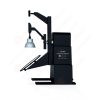
LM-79 Moving Detector Goniophotometer (Mirror Type C)
LSG-6000
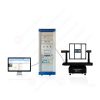
High Precision Rotation Luminaire Goniophotometer
LSG-1890B
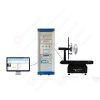
High Precision Rotation Luminaire Goniospectroradiometer
LSG-1890BCCD

Goniophotometer for Automotive and Signal Lamps
LSG-1950
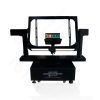
Goniophotometer for Traffic Signal Lamps (Economical Model)
LSG-1950S
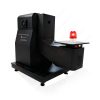
VAD Fire Alarm Visual Alert Device Goniophotometer
LSG-1930
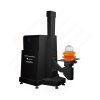
Goniophotometer for Airfield Lighting
LSG-1940
Compact Goniophotometer
LSG-1200A
LED Goniophotometer
LSG-1100
Near Field Moving Detector Goniophotometer
LSG-1900B
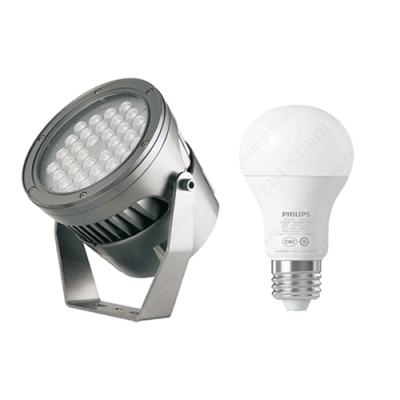 LEDs and Luminaire Test Solutions
 LM-79 and LM-80 Test Solutions
 LED Driver Test Solutions
 Household Appliances Test Solutions
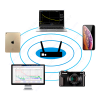 Mobile and Network Test Solutions
 Automotive Electronics Test Solutions
 Audio-Video and IT Test Solutions
 Cable and Wire Test Solutions
 Plugs and Sockets Test Solutions
 Power Switch Test Solutions
 Transformer Test Solutions
 Electric Toys Test Solutions
 Energy Meter Test Solutions
 Motor-Operated Tool Test Solutions
Select an organization
to browse standards
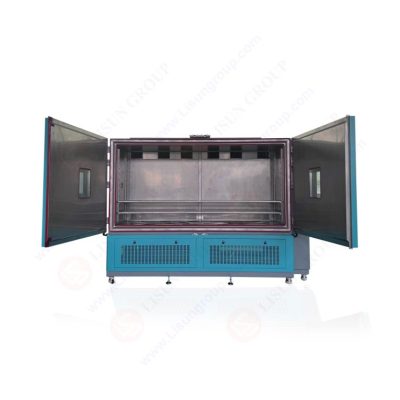
A thermal chamber is a key laboratory equipment that is utilized to analyze the product behavior under temperature stress. Diminished time, duration of thermal exposure In accelerated aging and durability tests fine control of ramps of temperatures and fine control of dwell times and cycling profiles to compress years of thermal exposure in weeks and months. Where humidity is also of great concern, laboratories combine temperature control with humidity chambers to investigate combined thermo hygroscopic behavior that propagates material deterioration electronic drift and mechanical fatigue. The article provides the usability of thermal chambers to obtain credible accelerated aging results with special consideration given to control strategy specimen preparation instrumentation as well as data integrity.
Accelerated aging tries to induce same failure patterns that are experienced during service but in a shorter time scale. This assumption only goes to hold provided that the chamber is driven in such a manner that the right physics is stressed. Failure modes introduced by excessive temperatures or too aggressive ramps would never be observed in the field whereas insufficient stabilization will give false benign results. The proper functioning then moderate appropriateness. An effective thermal chamber provides consistent stress histories to enable engineers to compare designs, justify materials as well as project life coverage at a defensible confidence.
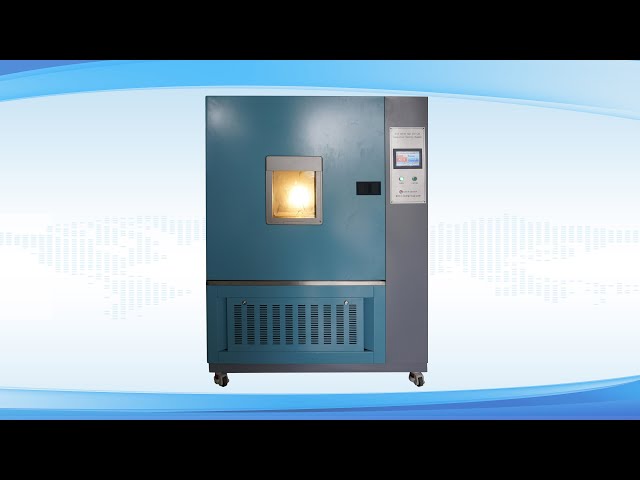
The contemporary thermal chambers have closed loop control and distributed sensors to control the stages of heaters refrigeration and airflow. Before an aging program can begin, the operator must ensure that the sensors are in place and calibrated. The control tuning should also suit the thermal mass and volume of the load. Rather extreme tuning may result in overshoot, killing specimens as well as normative tuning which increases stabilization times and decreases throughput. The patterns of airflow are important since stratification leads to the formation of little places of hotness and coldness. Periodic reviews of uniformity maps should be done to ascertain that the usable test volume is in specification.
Constant temperature exposure steps of stress or thermal cycling is usually employed as accelerated aging programs. Constant exposure assesses chemical and diffusion driven corrosion like polymer embrittlement or oxidation of lubricant. Stress increments raise temperature in discrete steps to display thresholds without direct disastrous harm. Thermal cycling loads interfaces and solder joints with expansion mismatch. Ramps should be selected to prevent non representative shock except in case shock is the mechanism of interest. It is necessary to document ramp rates and dwell times and tolerance bands since small variations affect the rate of damage accumulation.
Heat and moisture combination destroy many products. Humidity chambers provide controlled amounts of moisture to the air that accelerates corrosion hydrolysis and the swelling. When running with combined temperature humidity profiles, it is advised that dew point is controlled so as to avoid unwanted condensation which is not ordered by the test. Sensors must be covered with non-sprayed areas as well as be inspected on traceable standards. Change of dry and humid conditions requires stabilization period to allow the specimen to undergo the desired conditions instead of gradual shift.
The specimens should be used to reflect real assemblies such as interfaces, fasteners and coating. Fixturing also needs to hold the specimen and should not be a heat sink or moisture shield. Racks and holders materials must behave inert at the desired temperature and must not emit fumes or gases. The issue of orientation is important in convection and condensate drainage. Labeling should wear the wear and tear without dropping the debris. Preconditioning details e.g. drying or measuring baseline results should be noted to allow comparison before and after.
Electronics accelerated aging is frequently done under bias in order to simulate operating stress. Chamber temperatures must be rated on power supplies and loads and routed to contain thermal leakage. One should seal and strain relieve cable feedthroughs. Exposure functional monitoring is a method to give an early notice of drift and possible associations between change in performance and thermal history. Data acquisition systems are supposed to record timestamps that are controlled by the chamber telemetry in order to have a consistent record.
The data on aging will be significant when the specimen is put at steady state. The operators are supposed to establish conditions of stabilization like convergence of temperature within a tight range over a specified minimum period. Massive assemblies can also take a long time to cool down because it has an internal thermal inertia. Spot checks using auxiliary sensors on critical parts are used to ensure that the control air temperature indicates the specimen temperature. In humidity tests, ensure that before dwell timing, internal levels of moisture become equal.
The accelerated programs must have fuel inspection points scheduled to be included as opposed to end of tests. Early degradation tendencies can be identified by visual checks dimensional checks electrical tests and mass changes. It may be necessary to use non destructive techniques like impedance spectroscopy or acoustic emission in evaluating some products. In case of a failure document the actual thermal history leading to the failure and quarantine specimen so as to retain evidence to aid root cause analysis.
The high quality reporting system correlates the chamber settings sensor calibrations and environmental logs to specifications. Arrhenius or Eyring relations are life thermodynamics relation dependent on precise temperature histories and knowledge of activation energies. The operators are not to extrapolate out of validated ranges. Absolute life prediction is often not as dependable as comparing testing of designs across different designs. Irony between campaigns is thus a priority.
Chambers have to undergo a regular care to maintain accuracy. Components of refrigeration and filter seals affect stability and airflow. The intervals of sensor calibration ought to indicate usage and intensity. Inspection of door seals and ports should be done to avoid leakage which weakens humidity control. Control should be over software versions and recipes in order to avoid accidental modifications. Training makes the operators aware of alarms and know how to react correctly to avoid specimen and equipment damage.
The choice of a chamber entails control range of capacity uniformities and support of service. Established vendors that offer calibrated sensors that ensure reliable controllers and application instruction minimize the risk of setup. Chambers provided by suppliers like LISUN are often combined by many laboratories into larger reliability workflow since the presence of accessory compatibility and documentation makes audit and transfer of methods easier. The success of suppliers as a long term is not insensitive to flexible operation but the existence of headline specifications.
Successful accelerated aging relies on the operation of the thermal chamber as opposed to its existence in the laboratory. Good profile design consciously trying to stabilize and conscientiously record is critical to make sure that the temperature instigated damage behavior is similar in the field. When humidity comes into play great use of humidity chambers will provide realism without taking away from the control. By match to the physics of failure laboratories can present sustained understanding that can be used to enhance design and plausible life evaluation.
Tags:GDJS-015BYour email address will not be published. Required fields are marked *

 English
 中文简体
中文简体 English
 Русский
 Español
 Português
 Türkçe
 العربية
 Deutsch
 Polski
 Italiano
 Français
 한국어
한국어 ไทย
ไทย Tiếng Việt
 日本語
日本語