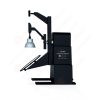
LM-79 Moving Detector Goniophotometer (Mirror Type C)
LSG-6000
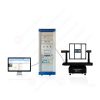
High Precision Rotation Luminaire Goniophotometer
LSG-1890B
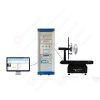
High Precision Rotation Luminaire Goniospectroradiometer
LSG-1890BCCD

Goniophotometer for Automotive and Signal Lamps
LSG-1950
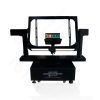
Goniophotometer for Traffic Signal Lamps
LSG-1950S
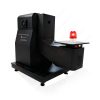
VAD Fire Alarm Visual Alert Device Goniophotometer
LSG-1930
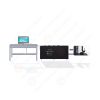
Compact Goniophotometer
LSG-1200A
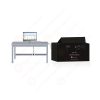
LED Goniophotometer
LSG-1100
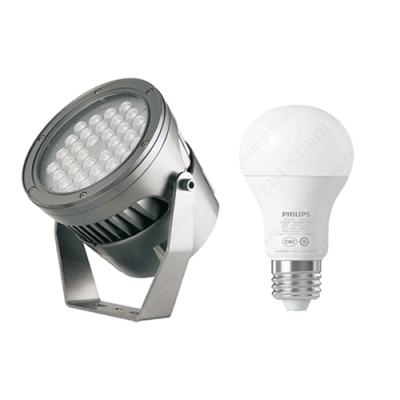 LEDs and Luminaire Test Solutions
 LM-79 and LM-80 Test Solutions
 LED Driver Test Solutions
 Household Appliances Test Solutions
 Mobile and Network Test Solutions
 Automotive Electronics Test Solutions
 Audio-Video and IT Test Solutions
 Cable and Wire Test Solutions
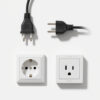 Plugs and Sockets Test Solutions
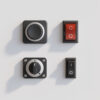 Power Switch Test Solutions
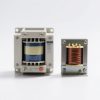 Transformer Test Solutions
 Electric Toys Test Solutions
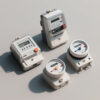 Energy Meter Test Solutions
 Motor-Operated Tool Test Solutions
Select an organization
to browse standards
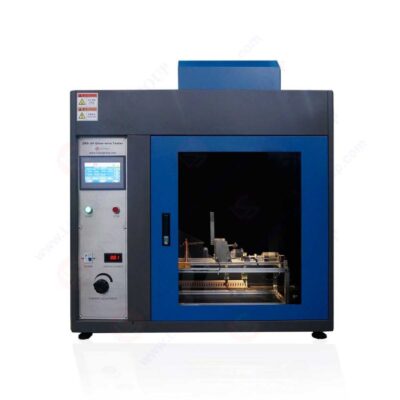
With the globalization of industries towards electrification, smart power distribution, automobile automation and electronics in consumer devices being smaller than ever, the demand has been put on verifying the fire-safe polymer materials more than any other time. The consumers, regulators and certification bodies have greater expectations towards manufactures in terms of material resistance to flammability in the year 2025. The glow wire test apparatus is still essential in assessing ignition hazards, spreading fire, melting property and heat tolerance of insulating components. Contrary to general flame application assessments, electrically powered glow-wire-based assessment specifically and carefully apply heat to replicate electrically heated surfaces.
Electrical loads are only increasing with the addition of more charging adapters, portable battery packs, remote-powered clusters, multi socket extensions, and high-density switching circuits to homes. At the same time companies are moving to such lighter housings and polymer cases to lessen weight and the cost of production. The glow-wire assessment is a test of the reaction of these polymer materials to hotspots that mimic overloaded conductors or terminal failures.
Recent regulatory changes attach importance to increased levels of reliability in junction box, connector, molded housings, driver modules, home appliance control board, and automated industrial hardware. Manufacturers implementing thermoplastics need to authenticate the fact that such materials do not only prevent ignition, but also the material should extinguish instantly. The abundance of glow wire test equipment offers objective analysis of these actions.

Electronic designs used in 2025 have higher density PCB designs together with smaller copper spaces, which localize heat when the current demand shoots up. Glow wire method is a method that is used to analyze the manner in which localized heating is conducted to the housing material. Numerous intelligent gadgets comprise heat-producing MOSFET phases, AC switch relay ferments, and miniature transformer windings. The evaluation also re-creates sustained heating instead of randomly exposing flames.
The glow wire test experiment establishes a controlled level of heating temperature usually 550°C, 650°C, 750°C or greater to be used at a specified period. The observed reaction is duration of burning when the source eliminates, extent of melting, dripping actions, and the risk of lighting fire on nearby surfaces. In 2025, the test criteria are more advanced in terms of ignition of surrounding paper or textile substance, which reflects the actual safety issue at home.
The electric mobility has become mainstream. Battery packs of high capacity, insulation blocks, carrier of fuses and covers of smart controllers should be able to withstand extreme heat especially in enclosed cavities. Electrical arcing increases the surface temperatures in region where a terminal press-fit is loosened or pin misaligned during thermal cycling. Glow wire test measures the rate in which the material starts igniting and the persistence of the flames after the heating source is withdrawn.
In high power EV modules, there are several polymer separators between terminal assemblies which must comply with Class GWIT (Glow-Wire Ignition Temperature) and GWFI (Glow-Wire Flammability Index). Only upon finding the apparatus tolerable in actual load temperatures, manufacturers choose resin grades and additives. These validations are not allowed and without it, one cannot have authorization to get in the automotive supply chain certification. LISUN has one of the best glow wire test apparatus.
The current smart-home systems where integrated gateways, IoT boards, and switching power packs are in use usually have an operative mode 24/7. Switching cycles cause contacts to get warm. When a coil driver has failed, its enclosures overheat to dangerous levels. There is a glow-wire based study utilizing the prediction of ignition start up rate in case of internal faults. Glow-wire is needed in control hubs, plug-in chargers, low profile adapters, smart lighting controllers, miniature home breakers, and compact relay clusters.
The manufactures of compact chargers depend on slim insulation rings polymer around the prong terminals. Testing of glow wire ensures that these rings do not take too long to ignite and compromise areas.
Designing modular appliances in 2025 will promote rapid changes of power-block, circuit-trays and display-module. These units bring about standardized slots made of polymers of flame resistance. Inability to assess the performance of ignition can cause permanent combustion in closed cavities. Glow wire analysis today confirms dripping characteristics because the large mass of the drop is associated with the probability of combustion propagation.
The compliance groups of heating appliances, refrigerator inverter boxes, cooker control switches and washer-dryer motor controllers demand that the housing must either self-examines or the droplets of molten metal, which breaks the spread of flames. A glow wire test equipment enables engineers to test these properties of droplets at controlled temperatures.
The use of long switching, relay activation, inductive load control and PLC-contact block connected contact blocks make industrial modules to run with high thermal loads. Hotspots Thermal hotspots develop at junction bars and control terminals. Unlike implementing blanket flammability tests, the contemporary automation suppliers utilize the process made up of glow-wire.
To check whether carbonization tracks developed below surface layers, inspection cycles in 2025 will involve a post-test evaluation of the same with a visual scoring and cross-section check. Micro-tracking is an antecedent of surface break-down; the use of glow-wires points out these fault.
The future of developing materials is focused on filled polymers with flame retardants, glass fibers or ceramic micro-additives. Test on glow wire shows the impact of filler on ignition and melting. Some resins are barely ignitable but drip when at low temperatures. Others start and are quickly snuffed out. Test data are used to determine compounding ratios as well as assisting manufacturers design enclosures that comply with fire-safety approvals provided by insurance.
The glow wire test process does not merely propose pass-fail determinations. The manufactures test propagation length of flame, formation of char patterns, visible concentration of smoke, and chemical odor. These properties have a close relationship with resin formulation.
The certification processes to be used by the year 2025 will require evidence that has been generated under standardized exposure to glow wires. The companies providing components to safety-critical areas should provide documented results. Some authorities need the independent validation instead of the in-house validation.
The equipment would be key in certification since other tests like open-flame exposure or hot-air endurance would not be predictable. The output of the glow-wire test is directly related to electrical malfunction conditions that arise on a regular basis: loose screw connections on the terminals, aging of internal conductors, oxidation of connector faces, and connector insulation fatigue.
In 2025, glow-wire design Company will use highly controlled heating coils, high-tech thermal controllers, temperature sensing loops of calibration, and consistent linear delivery of power. The heating rates should not be changing when they are in application, any slight changes will cause a variation in the response curves.
Current tools enforce the use of computer-assisted production of heat application time and surface contact traceability. This enables engineers to be able to correlate heating period correctly to flame onset behavior.
Glow-wire-based evaluation is used by manufacturers of socket assemblies, micro driver modules, compact embedded DC converters, and PCB-mounted terminals (as supply qualification). Since tolerances in the manufacturing of the terminals affect the pressure of the terminal seating, glow-wire-based assessment helps establish whether the materials of the enclosures balance the marginal fastening without posing a danger of fire.
In 2025, the electrical utility customers who buy the installation products make use of the glow-wire certification reports in purchasing the distribution modules. This will avert internally generated ignitions in houses and industrial installations.
The increasing number of electrical products, the development of polymeric packaging, and the rise in the connection of consumer and industrial equipment, has increased the significance of glow-wire testing. A glow wire test apparatus uses a simulated heating regulation that is significantly more realistic to electrical hot spot sources compared to using a generic open-flame exposure. In 2025, they are applied in industries to certify automotive modules, smart-home systems, industrial controls, polymer compounds that are aging resistant and modular appliance units. When applied strictly in a set glow wire test procedure, the outcomes prove useful in material selection, product certification, as well as prediction of the failure mode, enhancing the safety in these applications where ignition due to heat is a working hazard.
Lisun Instruments Limited was found by LISUN GROUP in 2003. LISUN quality system has been strictly certified by ISO9001:2015. As a CIE Membership, LISUN products are designed based on CIE, IEC and other international or national standards. All products passed CE certificate and authenticated by the third party lab.
Our main products are Goniophotometer, Integrating Sphere, Spectroradiometer, Surge Generator, ESD Simulator Guns, EMI Receiver, EMC Test Equipment, Electrical Safety Tester, Environmental Chamber, Temperature Chamber, Climate Chamber, Thermal Chamber, Salt Spray Test, Dust Test Chamber, Waterproof Test, RoHS Test (EDXRF), Glow Wire Test and Needle Flame Test.
Please feel free to contact us if you need any support.
Tech Dep: Service@Lisungroup.com, Cell/WhatsApp:+8615317907381
Sales Dep: Sales@Lisungroup.com, Cell/WhatsApp:+8618117273997
Your email address will not be published. Required fields are marked *

 English
 中文简体
中文简体 English
 Русский
 Español
 Português
 Türkçe
 العربية
 Deutsch
 Polski
 Italiano
 Français
 한국어
한국어 ไทย
ไทย Tiếng Việt
 日本語
日本語