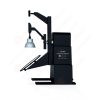
LM-79 Moving Detector Goniophotometer (Mirror Type C)
LSG-6000
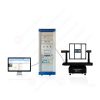
High Precision Rotation Luminaire Goniophotometer
LSG-1890B
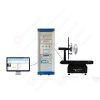
High Precision Rotation Luminaire Goniospectroradiometer
LSG-1890BCCD

Goniophotometer for Automotive and Signal Lamps
LSG-1950
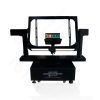
Goniophotometer for Traffic Signal Lamps
LSG-1950S
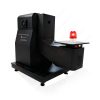
VAD Fire Alarm Visual Alert Device Goniophotometer
LSG-1930
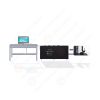
Compact Goniophotometer
LSG-1200A
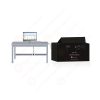
LED Goniophotometer
LSG-1100
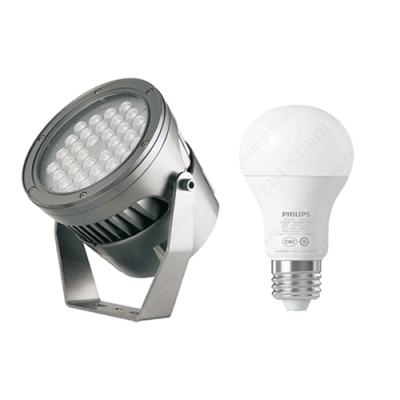 LEDs and Luminaire Test Solutions
 LM-79 and LM-80 Test Solutions
 LED Driver Test Solutions
 Household Appliances Test Solutions
 Mobile and Network Test Solutions
 Automotive Electronics Test Solutions
 Audio-Video and IT Test Solutions
 Cable and Wire Test Solutions
 Plugs and Sockets Test Solutions
 Power Switch Test Solutions
 Transformer Test Solutions
 Electric Toys Test Solutions
 Energy Meter Test Solutions
 Motor-Operated Tool Test Solutions
Select an organization
to browse standards
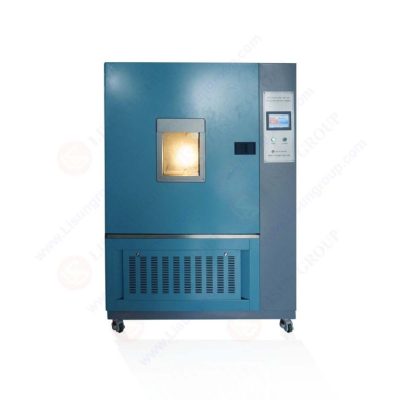
Environmental testing is essential in engineering industries including the automotive, defence, electronics manufacturing, industrial equipment and medical equipment and aerospace industries as it assures durability and safety. In this assessment, a thermal chamber assumes one of the key roles since the level of reliability in operations often varies radically when the products are subjected to various heat levels over time. Making the right choice of the chamber does not mean picking the biggest and the most powerful one, it is the one that gives the right temperature consistency and stability over time.
An effective environmental temperature chamber with proper control will make sure that all the samples of the products have the same temperature. Poor uniformity exposes parts of the device to hotter or colder air hence giving misleading conclusions. This is especially relevant when one examines the failure mode like expanding of the material, solder joint failure, shifting of mechanical tolerance, insulation breakage, and stress of thermal cycle
Uniformity describes the similarity of the temperature of one section of the chamber and the temperature of another section of the chamber. When testing assemblies that are safety-critical, it is not allowable that one sample position should be 5°C hotter than another or 4°C colder.
There is consistent temperature exposure which guarantees:
• Consistent material aging
• Stress resistant performance
• Repeatedness of batch-to-batch test output
• Competent comparisons among prototypes
• Reliable compliance data
Poor uniformity results in rejection of the product, over-stressing of the product followed by many delays in approval and batch retesting which is very expensive. An appropriate thermal chamber also incorporates fresh circulation of air, uniform heating of structures, in-place sensors, and proportional control platform which minimize the variation of temperature.
Premium chambers are not uniform, as they also differ in inner arrangement, airflow direction, power location of the heater, and distribution of product load. These factors affect accuracy: There are several features that affect design:
• Fan design and pressure balance.
• Direction of air recirculation.
• The quality of internal insulation.
• Sensor placement location
• Heater zone distribution
Advanced chambers like those designed by manufacturers like LISUN dynamically change the velocity of airflow to ensure that there is an equal flow of air in mixing during temperature increases and decreases.
Thermal chambers are controlled by a control architecture which dictates their efficiency to reach and maintain setpoints. One large risk during heating of high-thermal-mass samples is overshoot. Recent environmental temperature chamber methods employ multi-level controllers which combine PID algorithms, high-frequency thermal feedback, and predictive correction logic.
Simple ON-OFF switching relays have been avoided by professionals working in chambers with the reason being that such relays cause the temperature waveforms to oscillate. Such oscillation causes inaccurate information on the rate of degradation even in long-duration tests
A proper control system must:
• React fast on temperature imbalance.
• Avoid thermal overshoot
• Even without the heavy load on the specimen.
• Continuous temperature levels of narrow tolerances
Control consistency is particularly essential, when the test cycles take up to 7-30 days as it happens in endurance qualification.
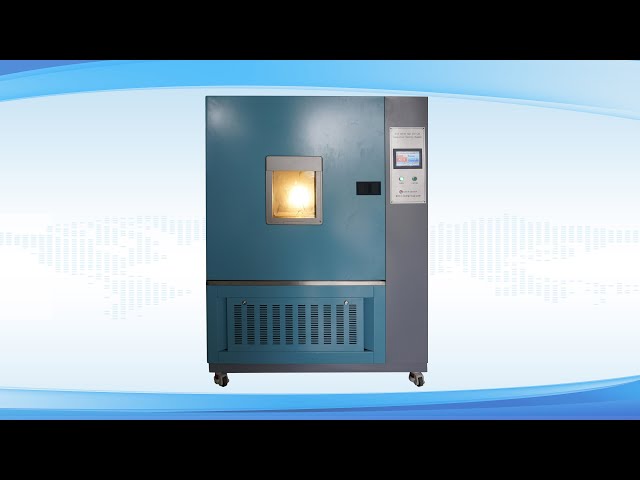
The reliability is tested over a long term not only in the first month of operation, but also on a number of years of constant use. Throughout this time a thermal chamber is used to cycle over thousands of times its compressors, valves, heaters, circulation motors and controller electronics. Reliability over a long period will be based on the integrity of compressors over extended soak periods, the life of refrigerant valves with frequent switching, the stability of fan bearings, the life of door sealing surface, and the positioning of mechanical assemblies at the cycles between thermal shifts. The stable engineering sources of chambers usually incorporate stainless steel interior, airflow, which is resistant to corrosion, service-accessible modules, high-grade insulation, and reinforced circulation assembly to eliminate drift in performance as the system grows old.
In various industries, there are varied loads in a thermal chamber. A testing chamber that is only used to test components is very ineffective in case full size equipment, motors, or cabinets containing circuits are placed. The given heat load capacity is a misconception in the selection.
Some of the criteria to be followed include choice of a chamber based on:
• Volume of product that will be tested/cycle.
• The experimental heat dissipation of the device being tested.
• Cycle of the equipment internally.
• DUT-induced airflow any-where interference
As an example, an operational power converter within the chamber produces internal heat which has to be offset with cooling capacity. Without adequate chamber capacity, accuracy of DUT exposure temperature will be higher than the setpoint, and will invalidate data.
Cycling is mandatory in long-term life evaluation. The environmental temperature room has to sustain cycle properties of days or weeks.
The repetition of cycles should provide:
• Same ramp rate on every cycle
• Same dwell duration
• The same amount of exposure to each plateau at temperatures.
• Very small drift between cycles.
• Stable logging resolution
Lack of being repeatable leads to scatter of data and poor cause-effect relationship.
Lots of laboratories are asking to report integration which records sensor readings both internally and externally on a sensor program. Others enable fast and technical export of cycle logs and integrated trend-following, among other LISUN-based advanced platforms.
Internal building of the chamber defines resistance to corrosion, consequences of condensation as well as mechanical expansion. Use of poor-quality insulation causes vapor penetration hence build up of moisture behind the walls. This consumes more power and decreases performance in terms of temperature recovery with the passing of time.
High-grade chambers use:
• Stainless steel SS304 interior
• Antioxidation-coated fasteners
• Polymer feed-throughs are rigid polymer seals.
The choice of material influences the durability as well as temperature uniformity.
The engineers are attracted to chambers which can be mounted stably, wired well, cables are to be run systematically, and grounds can be safely grounded without any risk of electrocution.
The considerations concerning usability are:
• Power line feed-through ports.
• Nondispersive internal lighting which has no effect on the heat profile of the chambers.
• Horizontal and vertical in-store tray layouts.
• Low heat loss coated clear glass windows.
A bad user interface results in leakage of temperatures or inconvenience of the operators, thus permitting variability in the performance of tests.
An effective selection strategy makes the chamber adaptable to the qualification requirements, which include:
• HALT-style endurance
• Fast-tracking of the field.
• Component wear predetermined by temperature.
• Checking stability of coating
• Long-life stress evaluation
Thermal stresses are also contributory to numerous field failures including broken solder joints, displaced tolerance components, adhesive failures and brittle plastics. With high uniformity of chambers, engineers are assured of isolating failure mechanisms, but never the environmental aberrations.
A thermal chamber is one of the fundamental instruments of reliability testing, but the choice of the chamber does not usually include uniformity and stability across time. A good environmental temperature chamber has high accuracy in terms of temperature distribution, ramp rates, good mechanical working and traceability of data. Monitored, installed and selected correctly the chamber can allow the engineering teams to conduct consistent life-cycle verification, certify products with ease and predict actual real-world failure actions.
Lisun Instruments Limited was found by LISUN GROUP in 2003. LISUN quality system has been strictly certified by ISO9001:2015. As a CIE Membership, LISUN products are designed based on CIE, IEC and other international or national standards. All products passed CE certificate and authenticated by the third party lab.
Our main products are Goniophotometer, Integrating Sphere, Spectroradiometer, Surge Generator, ESD Simulator Guns, EMI Receiver, EMC Test Equipment, Electrical Safety Tester, Environmental Chamber, Temperature Chamber, Climate Chamber, Thermal Chamber, Salt Spray Test, Dust Test Chamber, Waterproof Test, RoHS Test (EDXRF), Glow Wire Test and Needle Flame Test.
Please feel free to contact us if you need any support.
Tech Dep: [email protected], Cell/WhatsApp:+8615317907381
Sales Dep: [email protected], Cell/WhatsApp:+8618117273997
Your email address will not be published. Required fields are marked *

 English
 中文简体
中文简体 English
 Русский
 Español
 Português
 Türkçe
 العربية
 Deutsch
 Polski
 Italiano
 Français
 한국어
한국어 ไทย
ไทย Tiếng Việt
 日本語
日本語